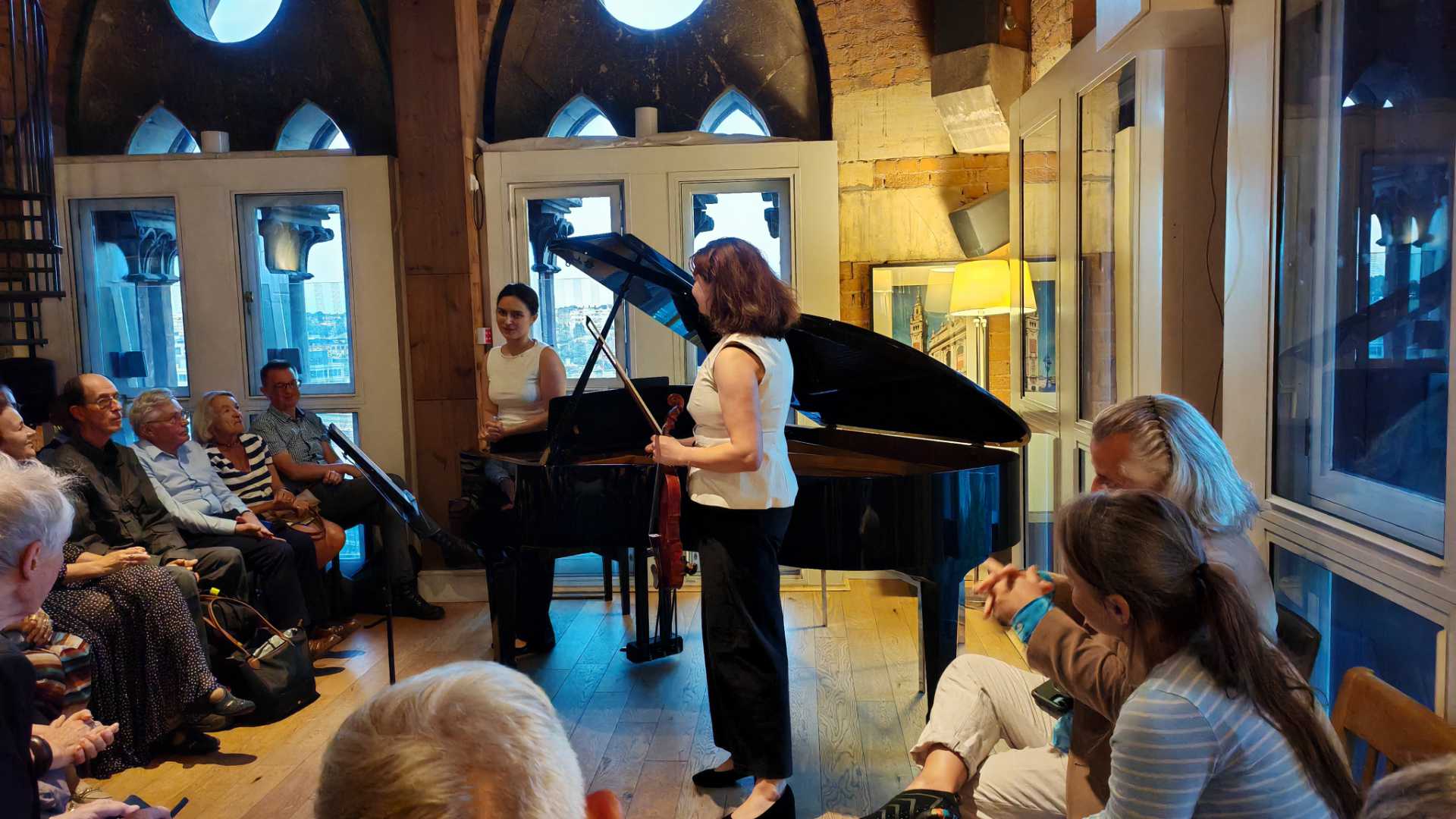
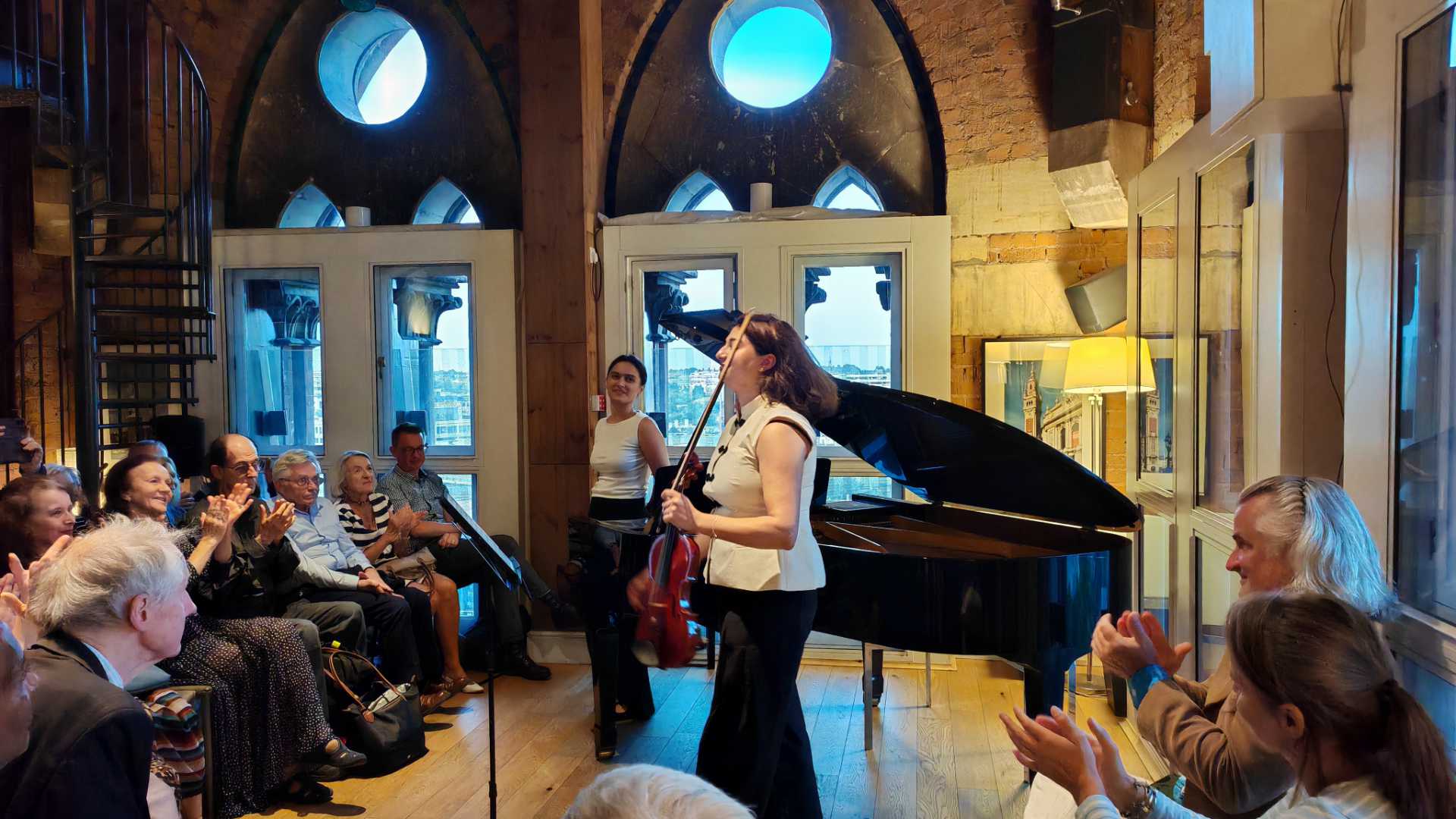
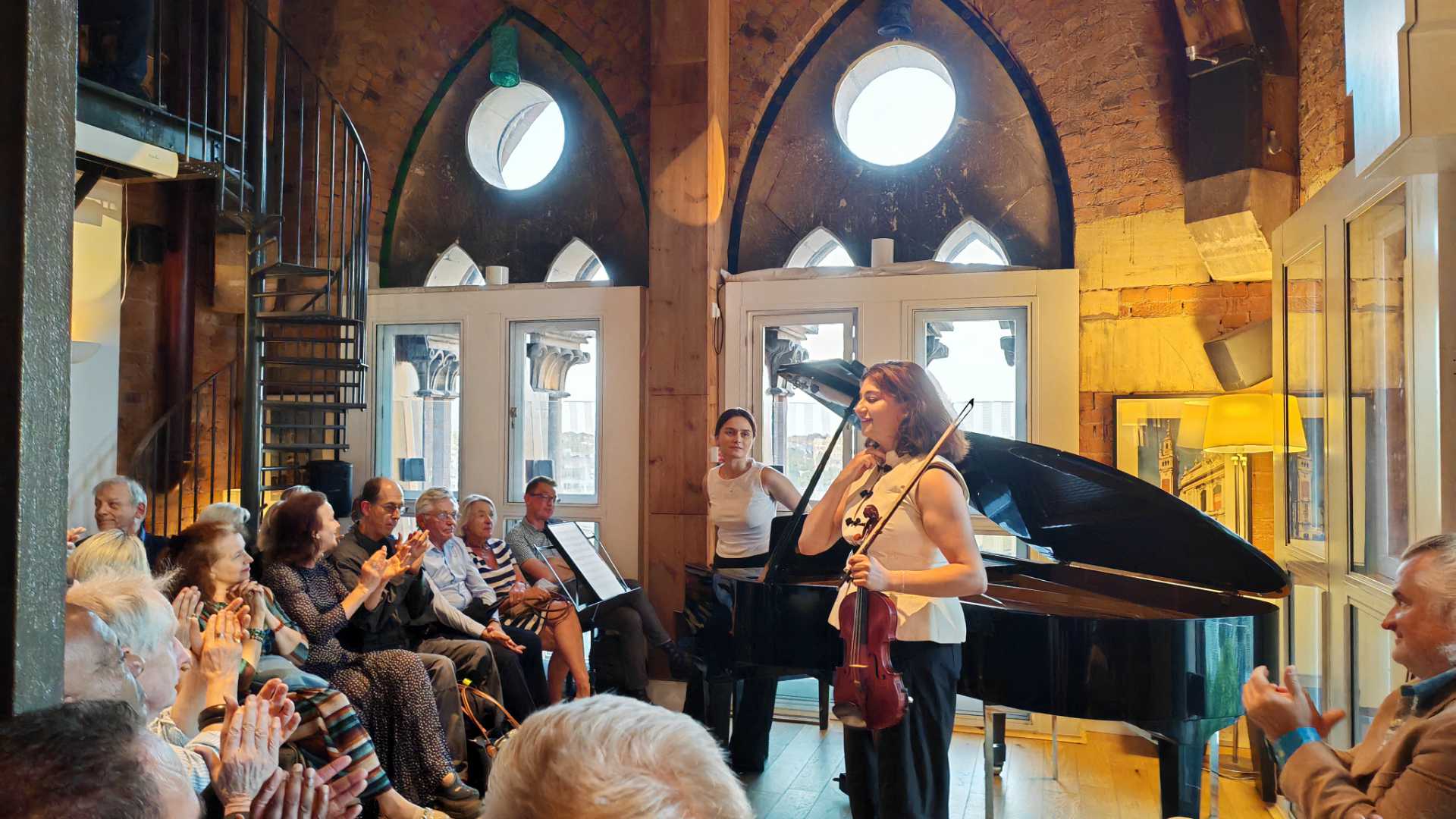
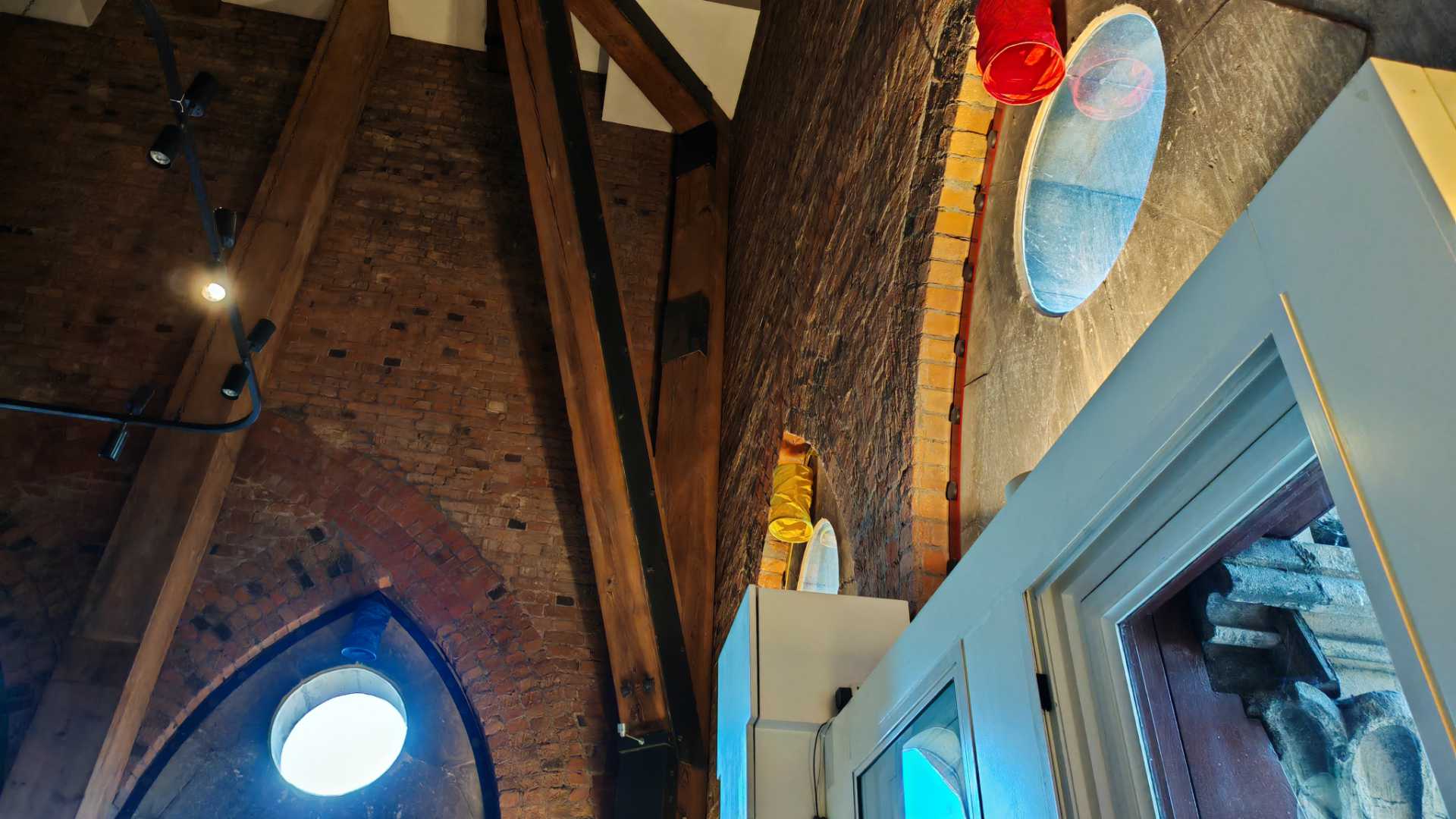
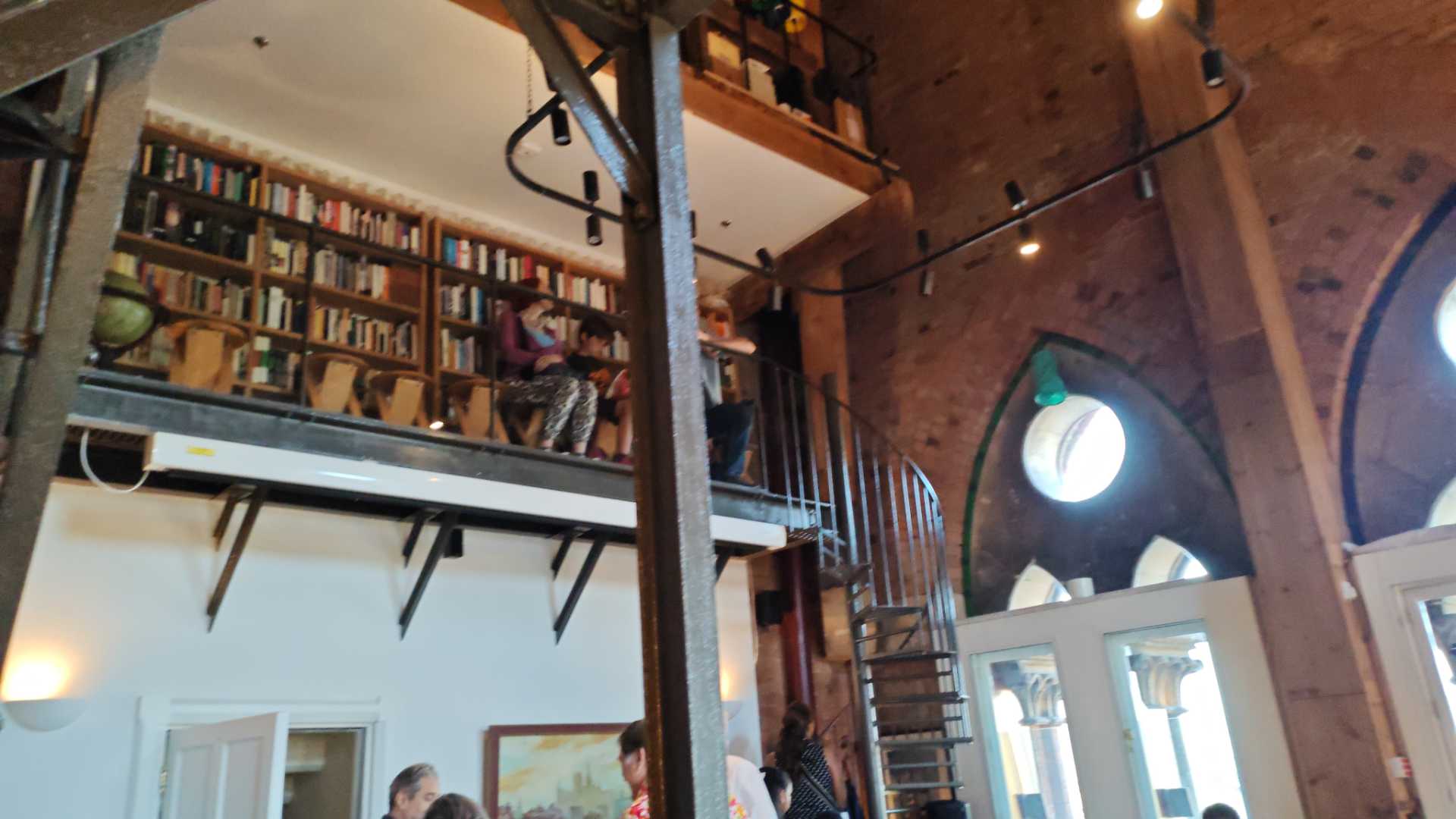
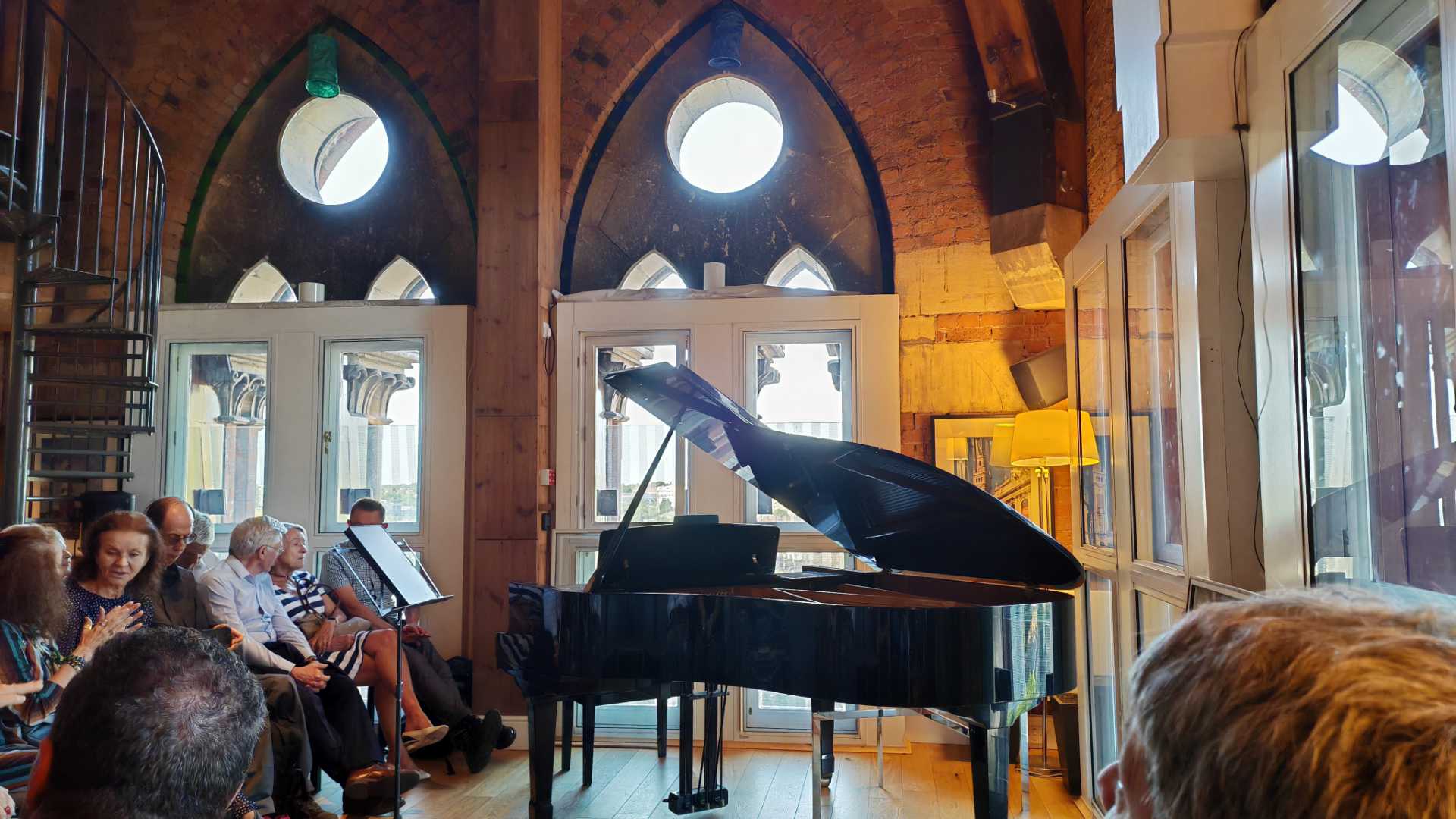
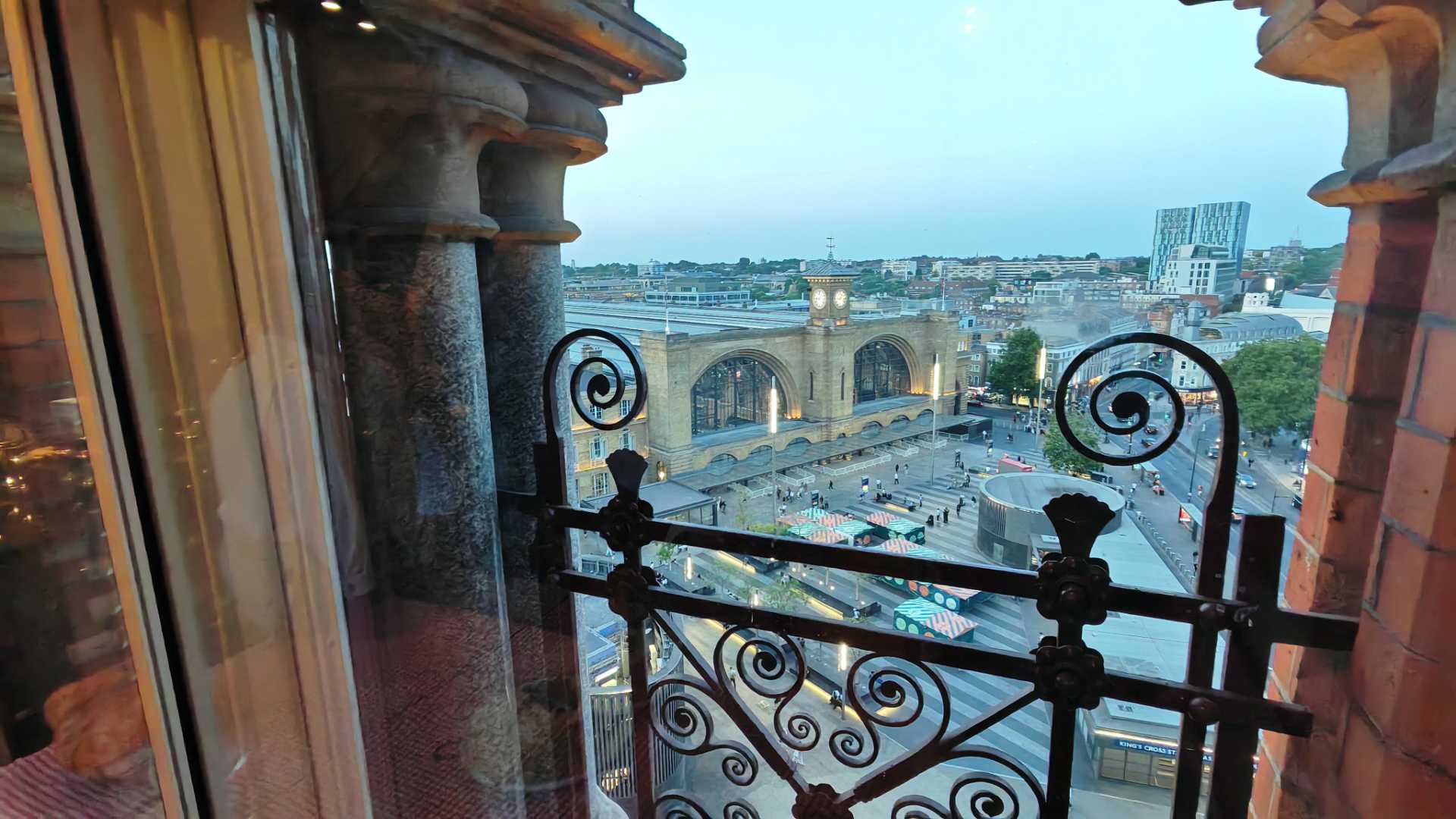
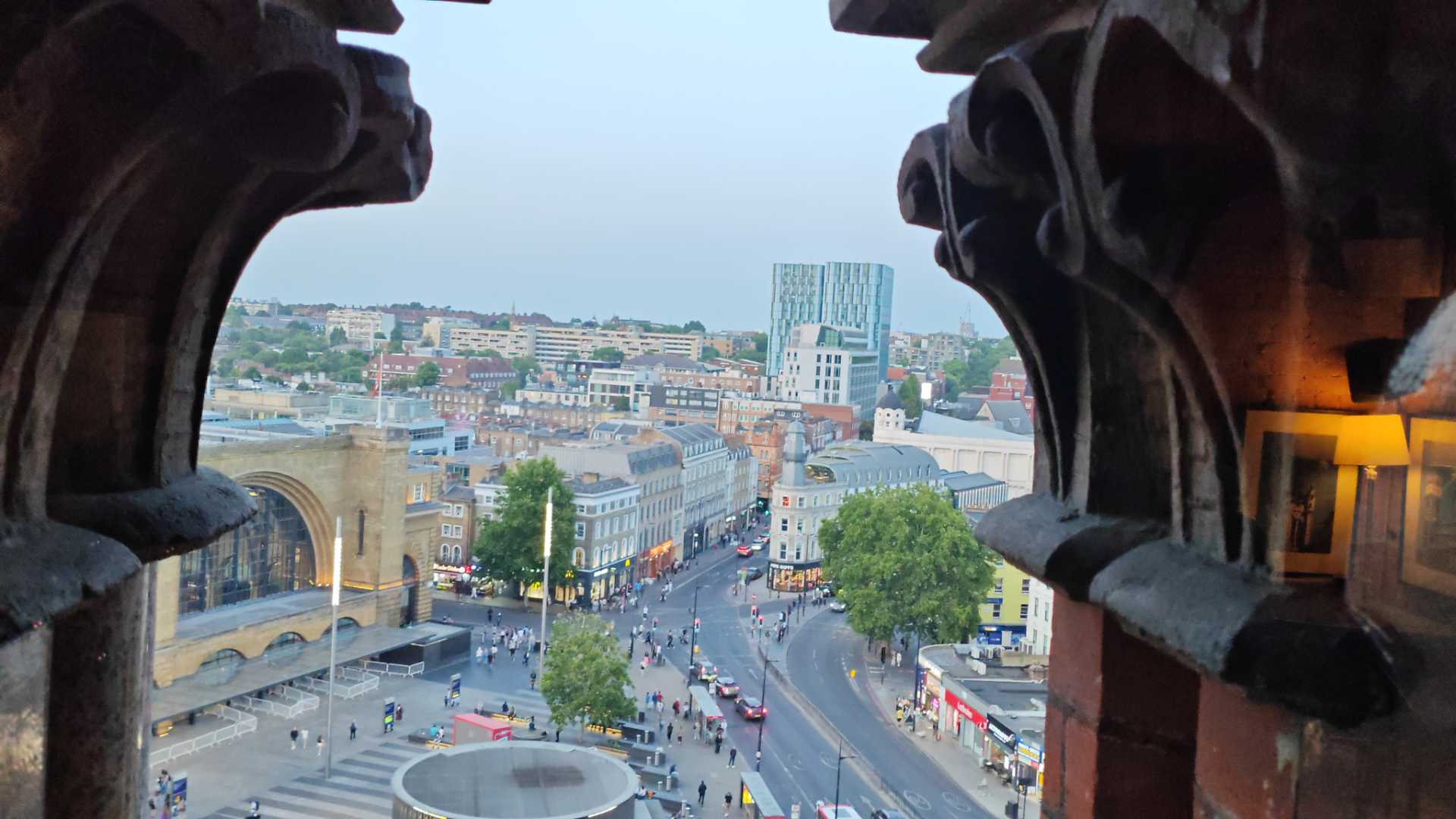
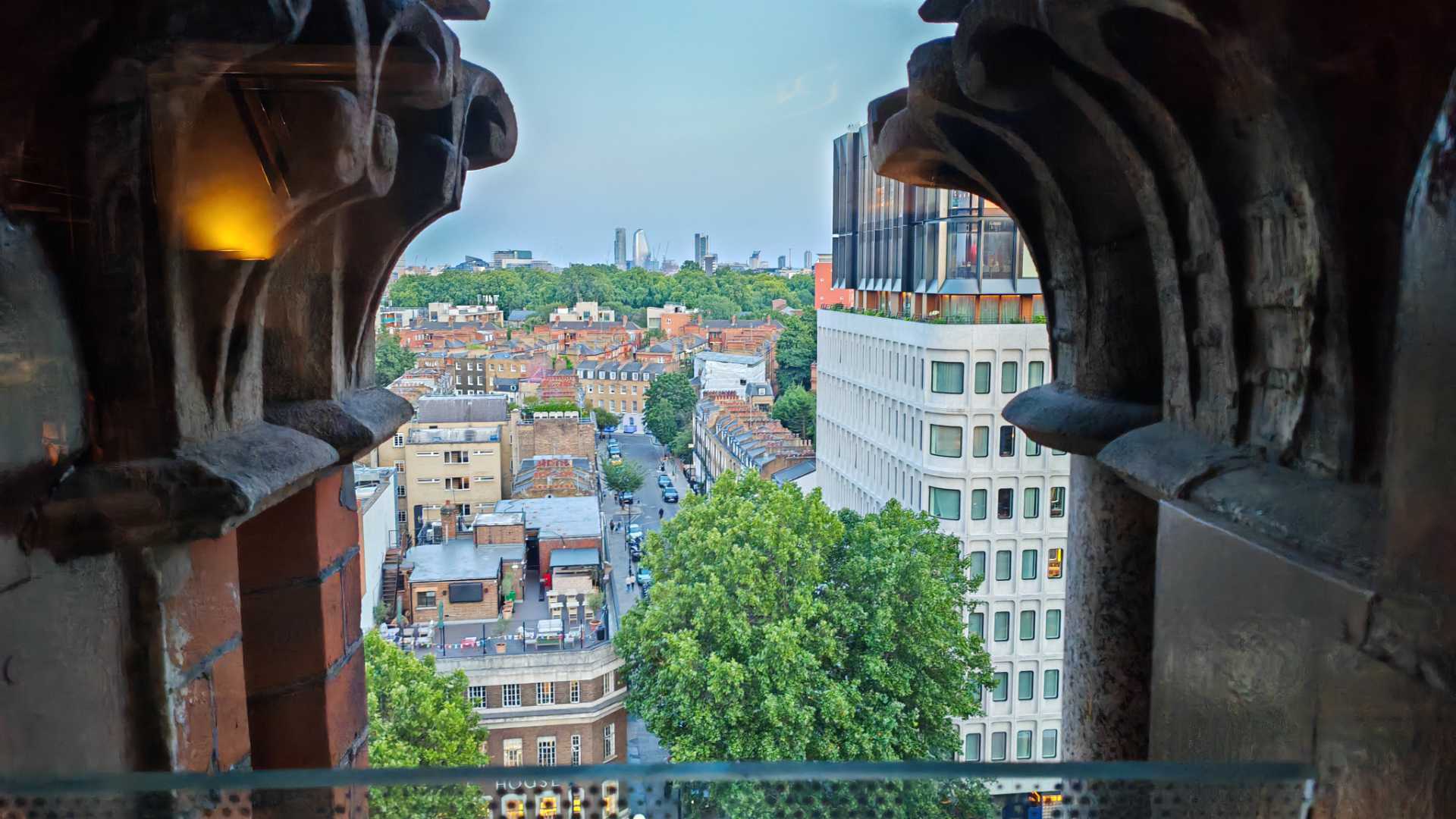
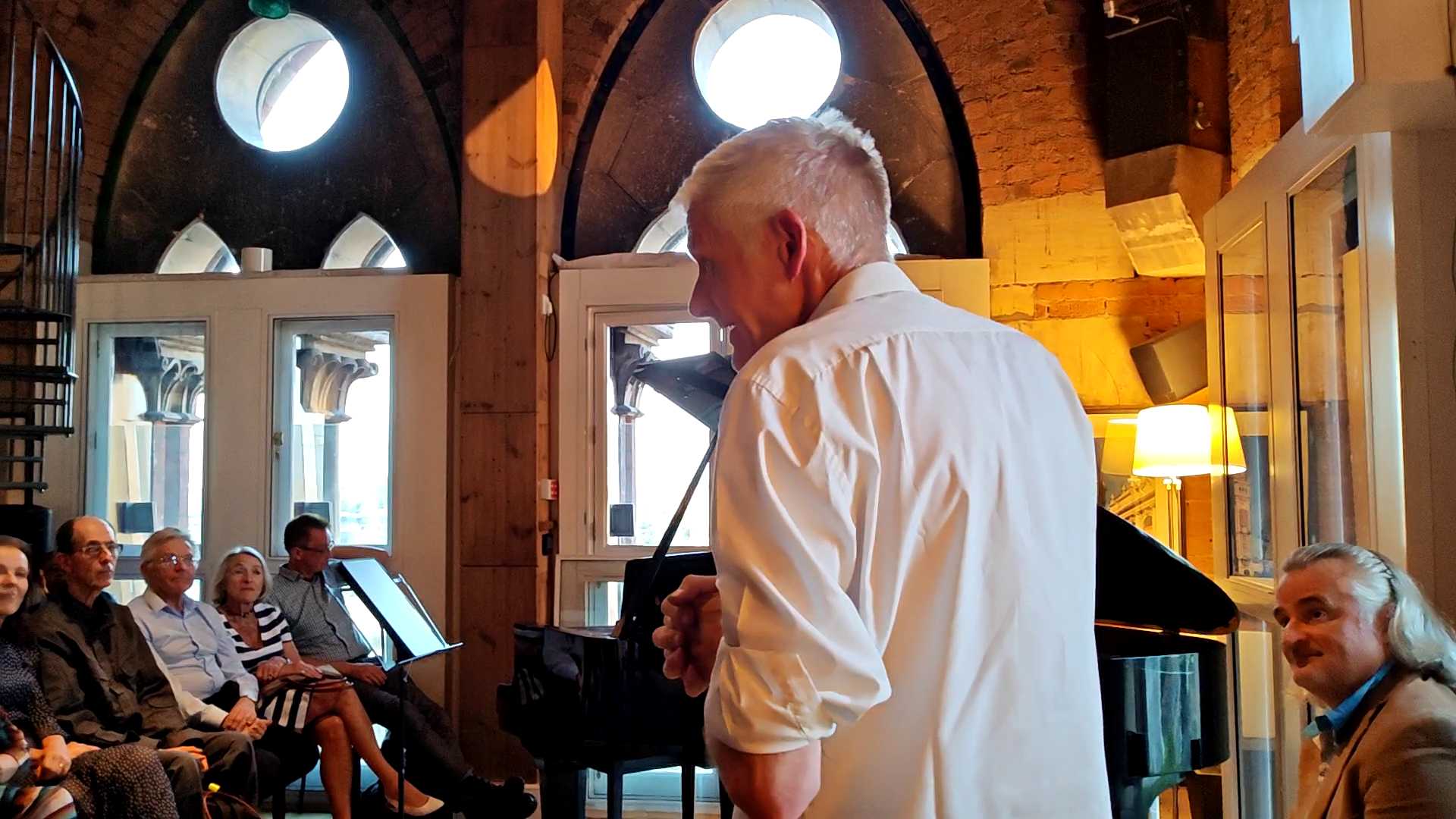
Entering St Pancras Clock Tower is an experience before a note has been played. A separate entrance beside the Renaissance Hotel leads into the private St Pancras Chambers apartments, followed by a lift to the fifth floor and a long corridor of residential doors. At its far end lies something wholly unexpected: a remarkable private home built into the tower of George Gilbert Scott’s Gothic Revival masterpiece.
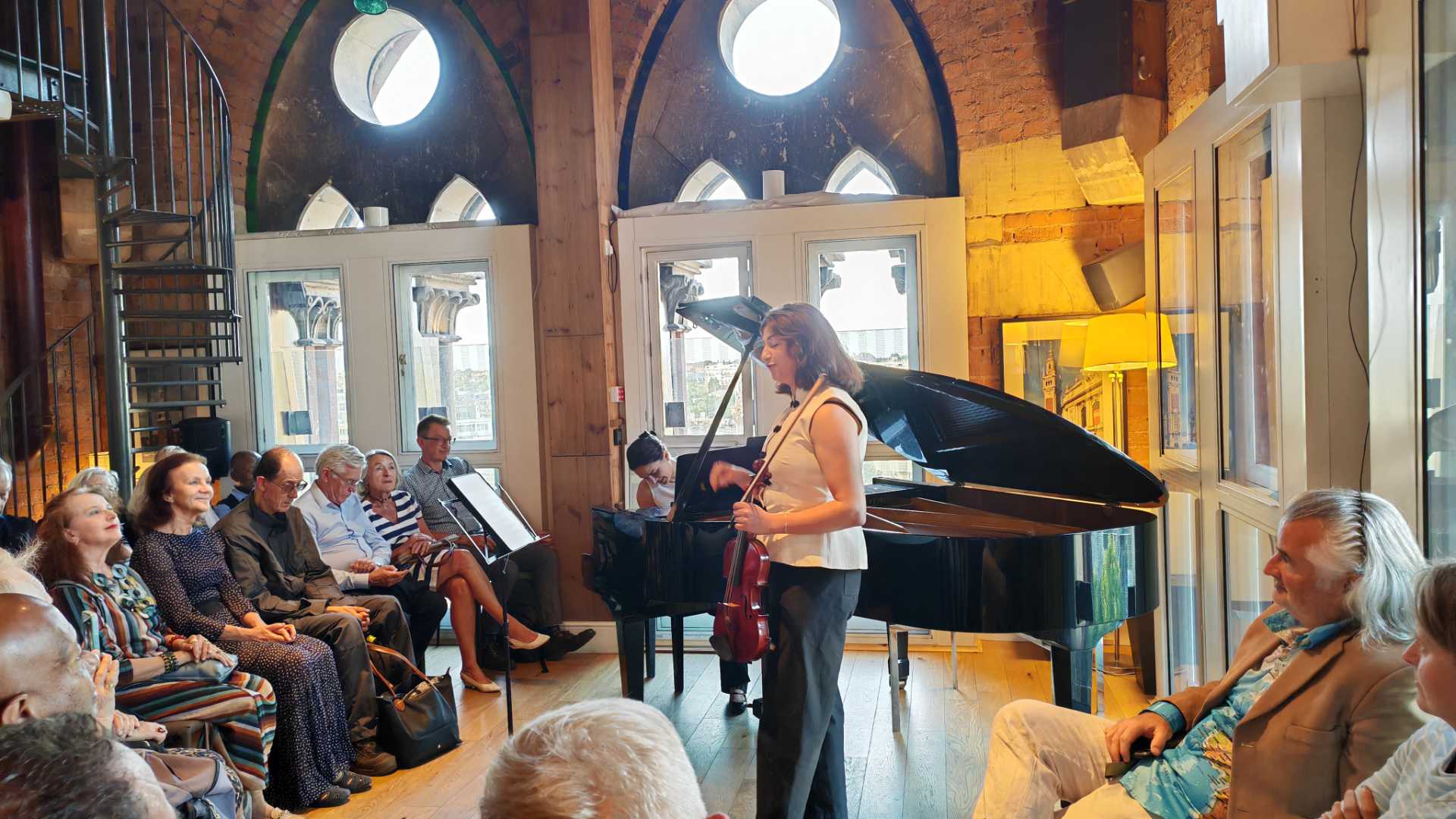
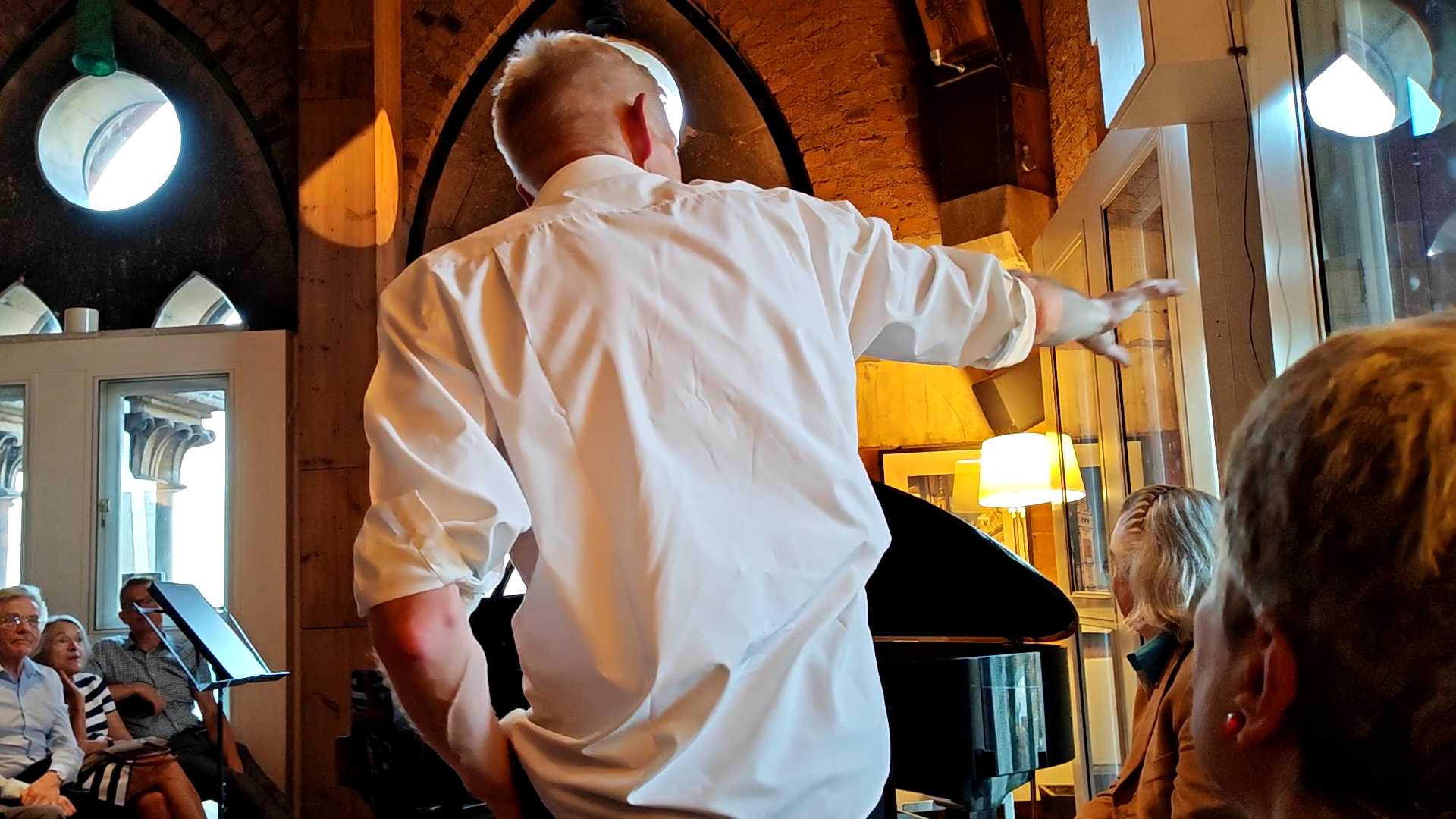
This unusual setting proved ideally suited to Duo Ekeš, comprising violinist Ezo Sarıcı and pianist Deniz Cengiz. With the audience seated only a short distance from the musicians, the concert had an intimacy rarely found in a conventional recital hall. Every shift in expression could be seen as well as heard.
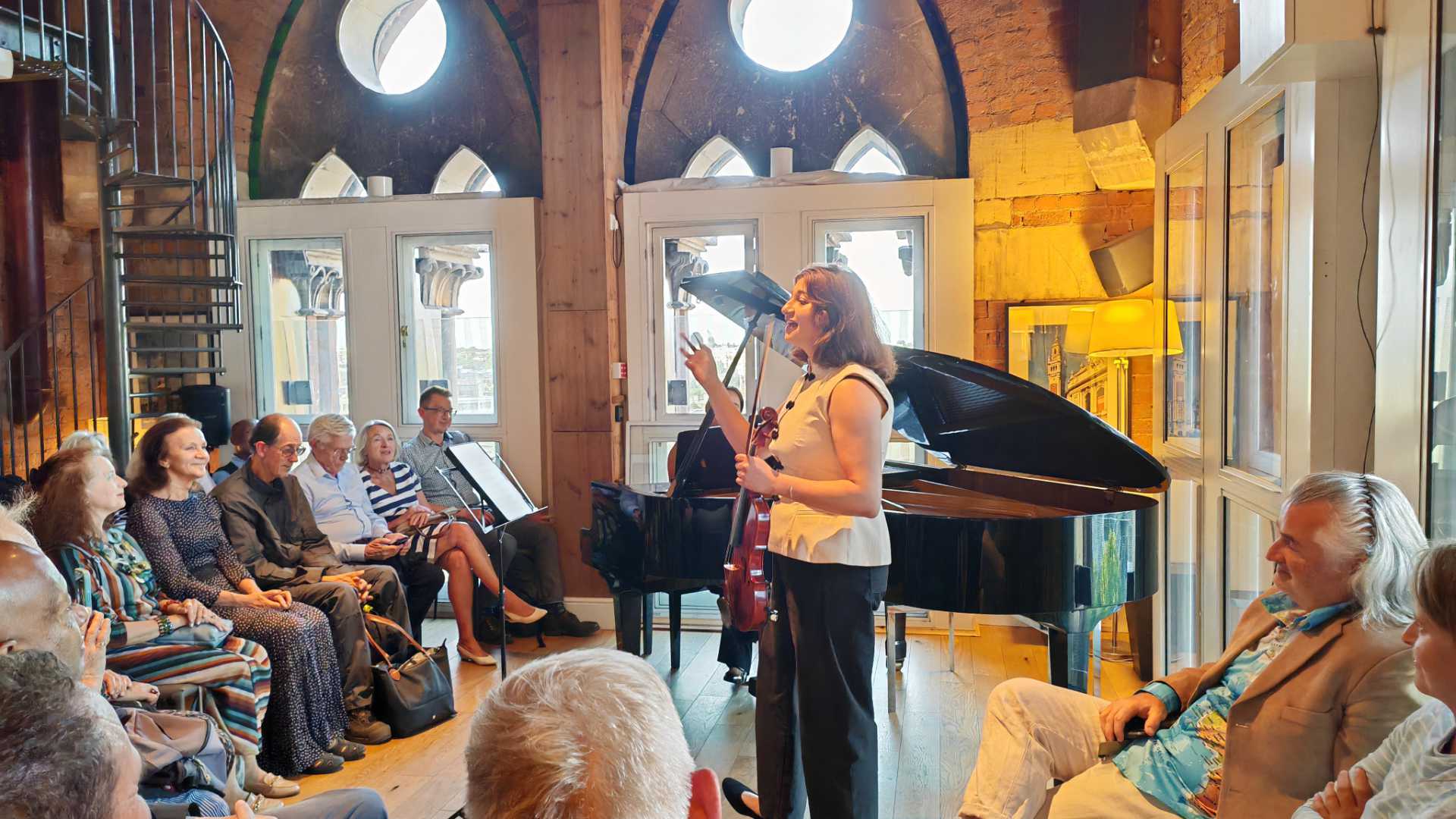
Sarıcı established the relaxed tone immediately by describing the duo’s many-sided relationship. “We fight like sisters, we argue like cousins, we act like best friends … and sometimes we have to pretend like we’re friends,” she joked. The two musicians also perform together extensively and jointly run the Pererinion Ysbrydol Festival Academy in Wales. Their affectionate teasing offered an early indication of the natural understanding between them.
More broadly, Duo Ekeš combine familiar chamber music with overlooked twentieth-century works, while maintaining a particular interest in Turkish composers and music reflecting their Turkish and Kurdish heritage.
The programme opened with Robert Schumann’s Violin Sonata No. 2 in D minor, Op. 121. Completed in 1851 and dedicated to the violinist Ferdinand David, it is an expansive four-movement work that moves between urgency, turbulence and more contemplative passages.
From the opening, Cengiz gave the piano writing considerable presence and weight, while Sarıcı’s violin carried the music’s searching, increasingly impassioned character. This was never a soloist supported by an accompanist. Violin and piano operated as equal voices, alternately leading, answering and pressing one another forward. The more forceful passages had genuine emotional charge, but the quieter changes of mood were given sufficient space to breathe. Their playing remained assured and finely balanced throughout.
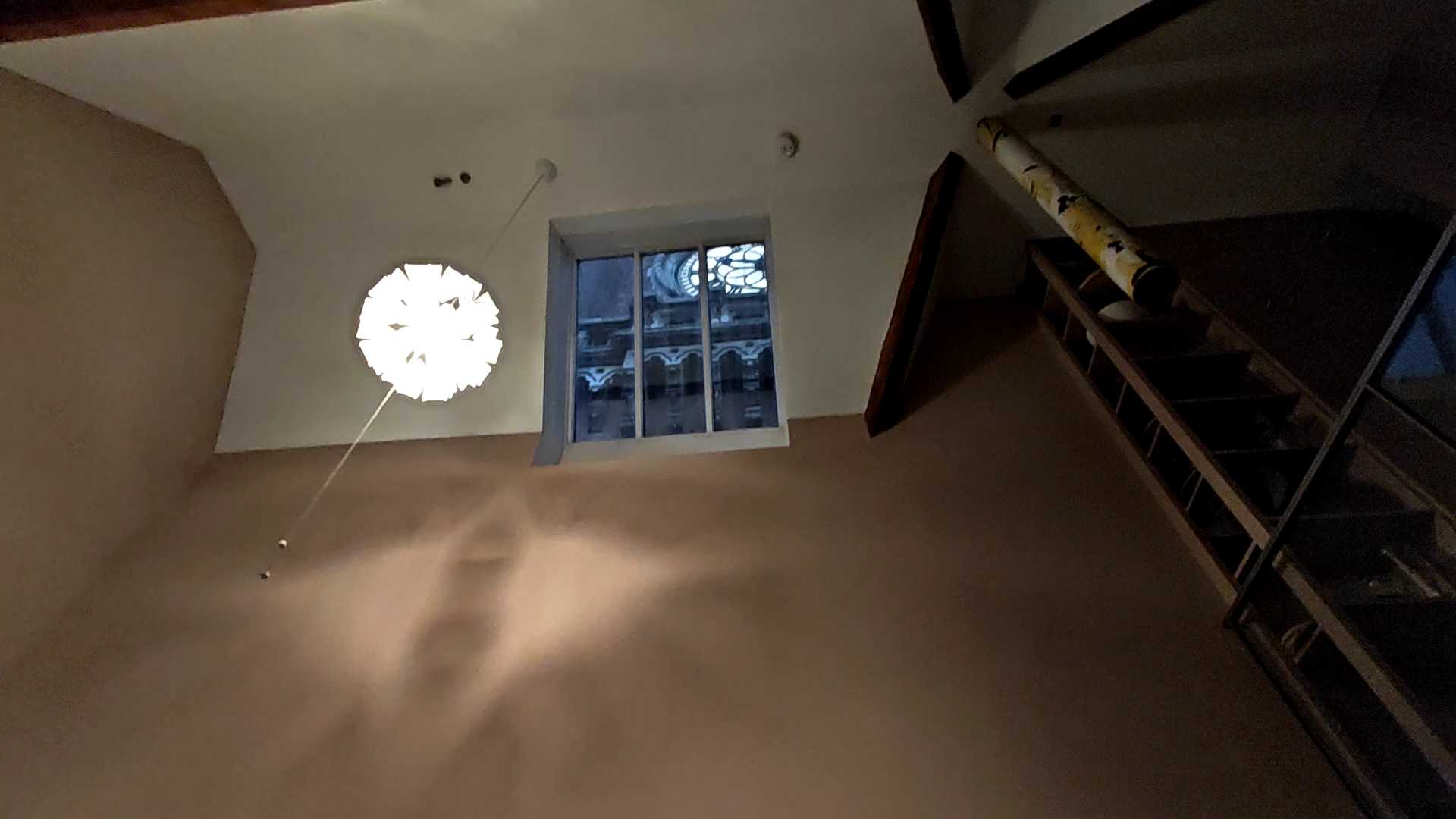
During a pause in the programme, owner Peter Tompkins was introduced and offered some history of the extraordinary room. He described it as “a bell chamber that never had any bells in it”, created to give the spire its commanding height. The chamber once accommodated the winding mechanism and descending weight that powered the mechanical clock for a week at a time.
Tompkins also explained how glass louvres had replaced the original wooden ones, allowing daylight into what had once been a dark hotel storeroom. The restoration has transformed it into a striking living and performance space, its domestic warmth sitting alongside the scale and architectural drama of the tower. Photographs of towers from around the world provided another pleasing detail around the walls.
Edward Elgar’s Violin Sonata in E minor, Op. 82 followed. Elgar composed the work at Brinkwells, his country retreat in Sussex, during the closing months of the First World War. More private and introspective than his grand orchestral music, its three movements contain unease, warmth and a deeply reflective central Romance.
Sarıcı brought a tender, singing quality to the more lyrical writing without overstating its sentiment, while Cengiz supplied both the underlying movement and its quieter emotional foundation. The piano could be delicate without receding into the background, and the violin expressive without dominating the partnership. At its most peaceful, the performance seemed especially well matched to the intimacy of the room; at more unsettled moments, the closeness intensified every change in tone.
The spoken introductions between works were informative without becoming formal lectures. Sarıcı led much of the conversation, with Cengiz regularly adding comments and corrections. Their stories included recent concert adventures on the Isles of Scilly, recounted with the same dry humour that ran through their exchanges throughout the evening. These moments gave the audience a sense of the lives surrounding the music and made the recital particularly welcoming.
The final substantial work was Miklós Rózsa’s Duo for Violin and Piano, Op. 7. Written in 1931 during Rózsa’s final year of study in Leipzig, the four-movement composition predates the Hollywood career that would bring him three Academy Awards for film scores including Spellbound, A Double Life and Ben-Hur. Its combination of Romantic expression, rhythmic vitality and the influence of Hungarian folk music already reveals a strong musical identity.
There was also an appealing personal connection. Cengiz’s own studies have taken her to Leipzig’s Hochschule für Musik und Theater “Felix Mendelssohn Bartholdy”, the modern successor to the conservatory where Rózsa trained nearly a century earlier.
The work allowed the duo’s strengths to come together particularly clearly. Sarıcı brought colour and agility to the violin writing, while Cengiz gave the piano part rhythmic definition, dramatic force and flashes of playfulness. Its folk-influenced character provided a lively contrast with the more inward Elgar, yet the performers still found room for tenderness and reflection. Once again, the pleasure came not simply from two individually accomplished musicians, but from their ability to listen and respond to one another.
A final encore extended the performance before the gathering moved into the apartment’s kitchen and dining area. Wine, soft drinks and nibbles were served as audience members mingled with Sarıcı, Cengiz and Tompkins. The absence of a formal divide between performers, host and audience felt entirely in keeping with the concert that had preceded it.
Duo Ekeš combined disciplined, expressive playing with warmth, humour and a refreshing lack of ceremony. The programme offered sufficient depth for experienced classical-music enthusiasts while remaining inviting to those less familiar with chamber music. In a beautiful and genuinely unusual setting, it made for a thoughtful, thoroughly entertaining and near-perfect evening.
Musicians & Host
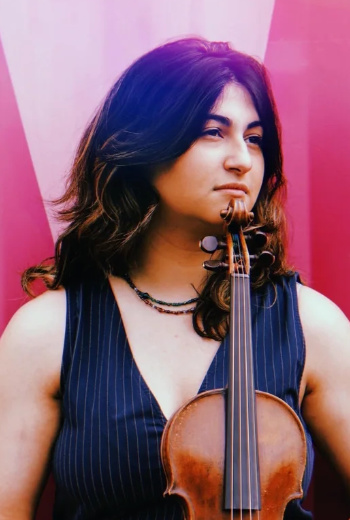
Ezo Sarıcı
VIOLINIST
London-born British-Turkish violinist, multi-instrumentalist, composer and artistic director Ezo Sarıcı is a graduate of the Yehudi Menuhin School and gained her Master’s with Distinction from the Royal Academy of Music. Her work crosses classical, jazz and folk traditions, with appearances at the Southbank Centre, Ronnie Scott’s, Buckingham Palace and the Barbican Centre. A former Southbank Young Artist and international competition prizewinner, she co-founded Duo Ekeš and the Pererinion Ysbrydol Festival Academy with Deniz Cengiz.
Deniz Cengiz
PIANIST
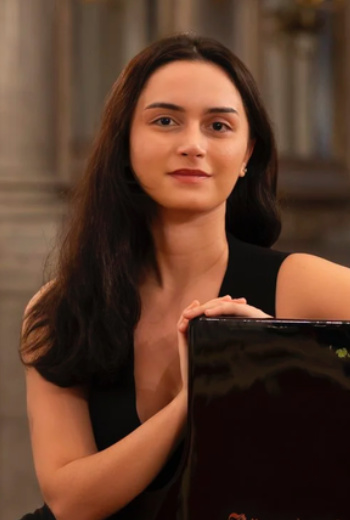
Istanbul-born pianist Deniz Cengiz trained at the Mimar Sinan Fine Arts State Conservatoire before receiving a full scholarship to London’s Purcell School of Music at fourteen. She currently studies at Leipzig’s Hochschule für Musik und Theater under Markus Tomas and Boris Kusnezow and will continue her postgraduate studies at the Royal Academy of Music. Her performances include Wigmore Hall, Duke’s Hall and the Austrian Consulate in Istanbul. She co-founded Duo Ekeš and the Pererinion Ysbrydol Festival Academy with Ezo Sarıcı.
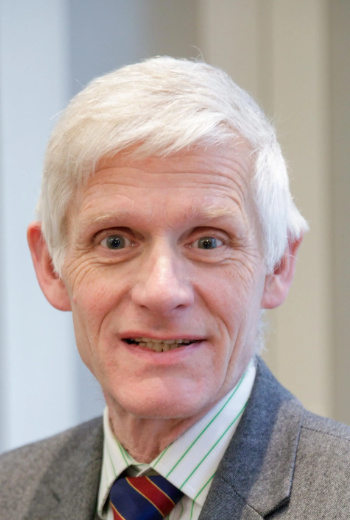
Peter Tompkins
HOST AND CO-OWNER
Peter Tompkins is co-owner and host of St Pancras Clock Tower. A mathematics and statistics graduate of Trinity College, Cambridge, he pursued a career as an actuary, becoming a partner and Chief Actuary at PricewaterhouseCoopers. He is also a qualified City of London guide and chairs the City Music Foundation, which supports musicians in the early stages of their careers. During the concert, he welcomed the audience and shared the fascinating history of the tower’s former bell chamber and clock mechanism.
Cast & Creatives
- Showing: 21st July 2026
- Venue: St Pancras Clock Tower, St Pancras Chambers Apartments, Euston Road, London NW1 2AR
- https://www.stpancrasclocktower.london/
- Running Time: Approximately 1 hour 15 minutes, including an interval
- Organiser: Gordon Beal
- Host and Co-owner: Peter Tompkins
- Composers: Robert Schumann, Edward Elgar and Miklós Rózsa
- Photography: Robert Cope
- Musicians:
Deniz Cengiz – Piano
A Beautifully Balanced Evening Of Music, Warmth And Wit
Summary
Duo Ekeš pair Ezo Sarıcı’s expressive violin with Deniz Cengiz’s assured piano playing in an intimate recital filled with emotional depth, playful humour and the architectural wonder of St Pancras Clock Tower. Welcoming to newcomers yet rewarding for seasoned classical-music enthusiasts, it is a memorable and beautifully balanced evening.


Add comment