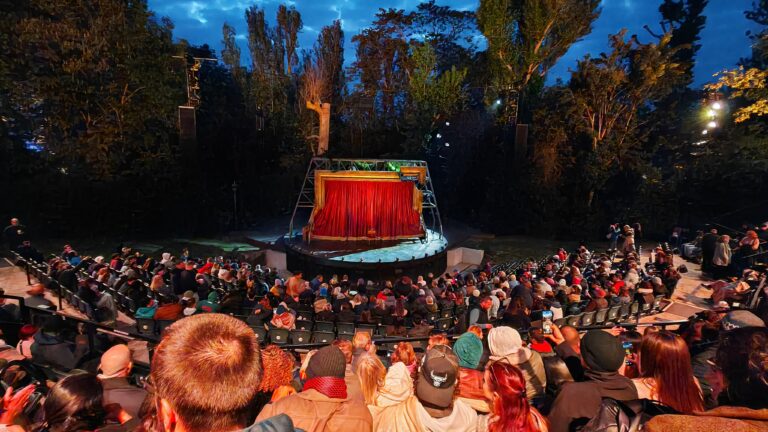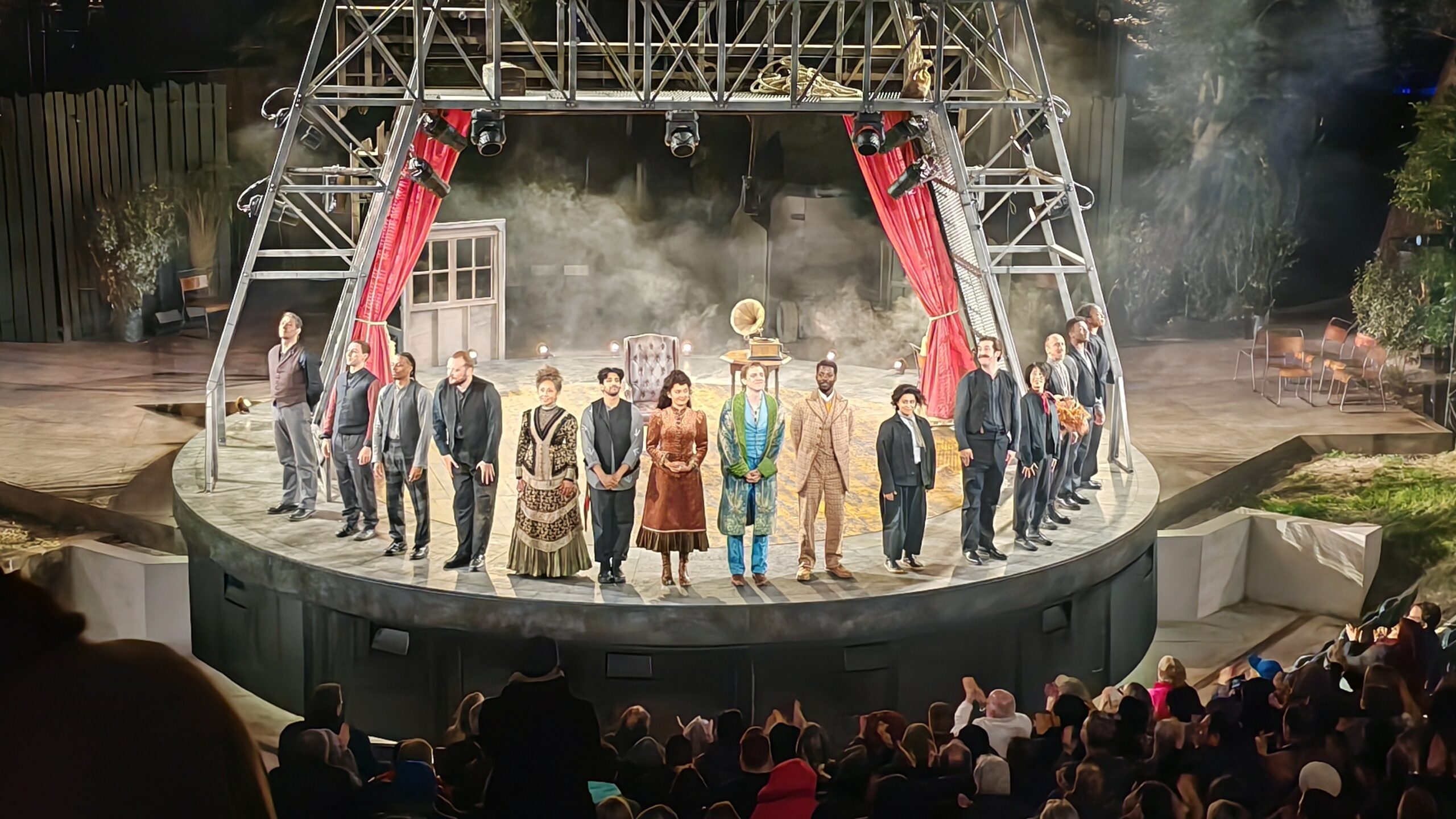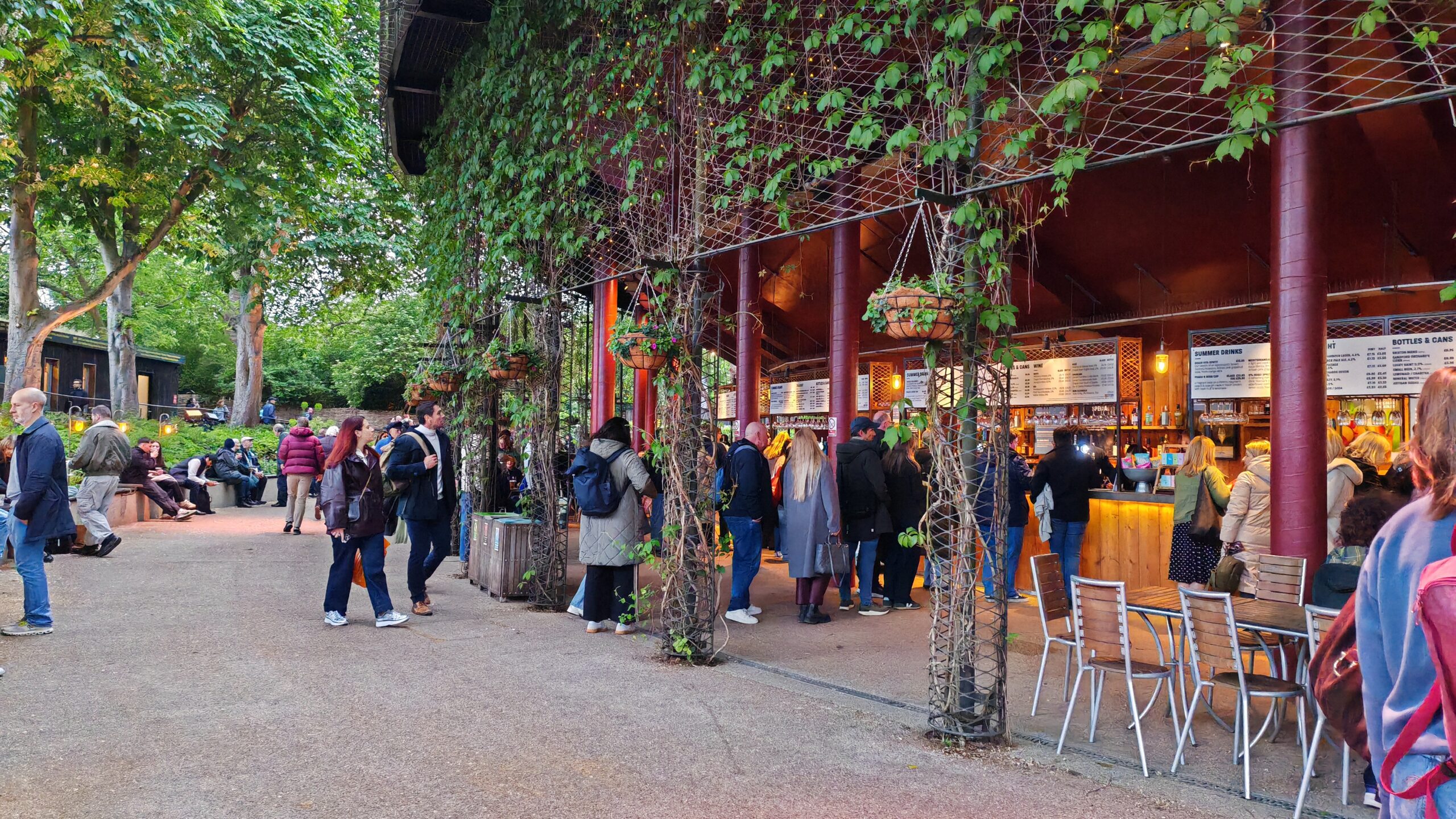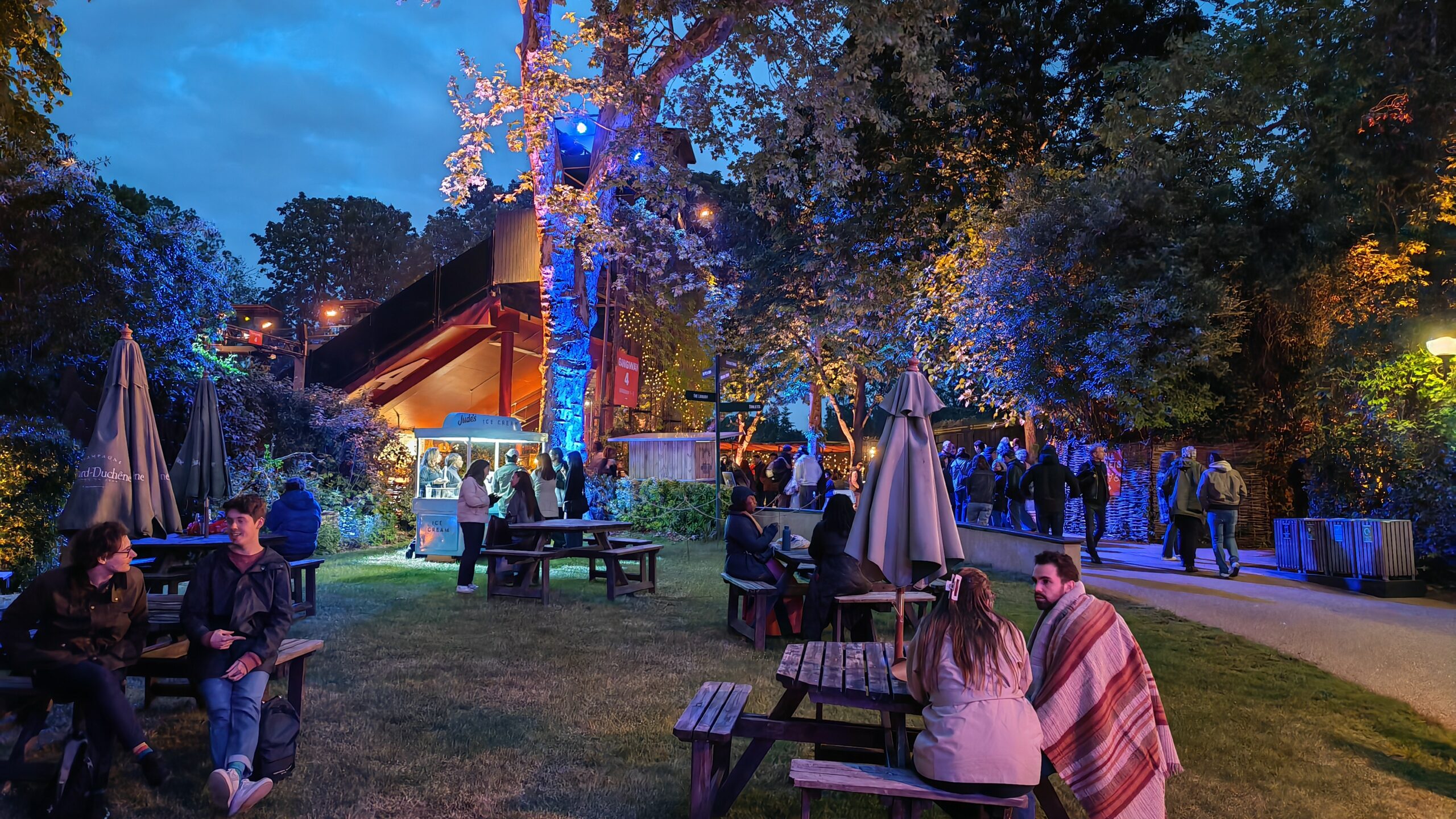
There are few London venues where atmosphere arrives before the actors do. At Regent’s Park Open Air Theatre, the trees, the falling light and the uncertainty of the weather all become part of the evening. For Sherlock Holmes, that setting works especially well. On Thursday 7th May 2026, the forecast rain held off, the audience stayed dry, and Joel Horwood’s new mystery unfolded with the park itself seeming to lean in around the case.
Written by Joel Horwood and directed by Sean Holmes, this new Sherlock adventure begins far from Baker Street. The opening scenes take us back many years to India under British rule, where buried treasure, a curse and a blood vow between four men set the machinery of the plot in motion. That vow is almost immediately broken, with murder and betrayal sending consequences forward into Holmes and Watson’s London. It gives the story a darker undertow before the play shifts into the more familiar world of 221B Baker Street.
From there, the production moves into London in 1890, with Sherlock Holmes newly known after the success of his first major case and hungry for fresh stimulation. Holmes’s boredom does not last long. Mary’s arrival, and the appearance of a jewel carrying a violent history, pull him and Watson into a conspiracy that reaches from imperial India to the streets and parks of London. The result is a busy, eccentric and often very funny mystery, full of disguises, reversals and odd figures emerging from the theatrical fog.
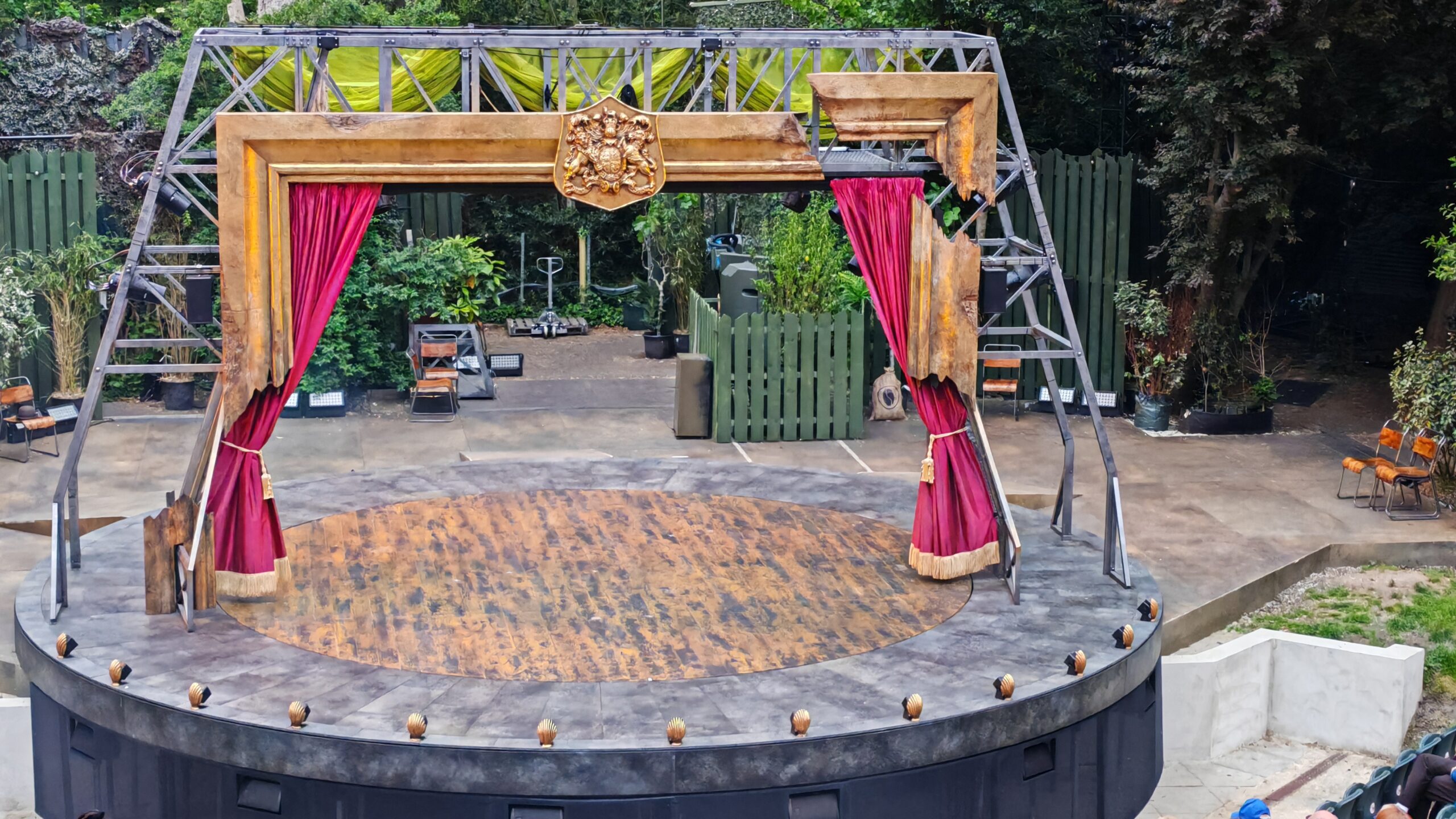
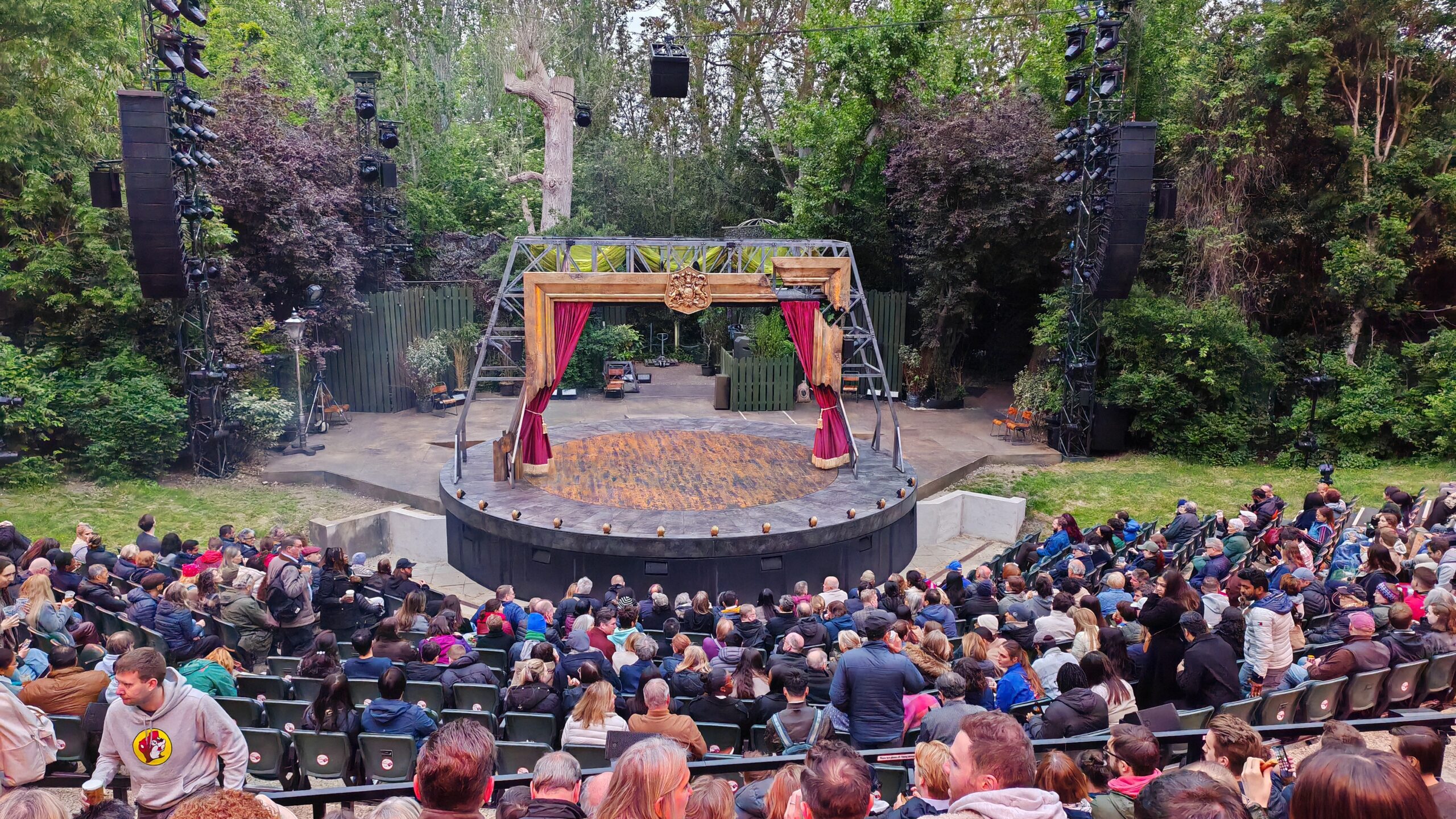
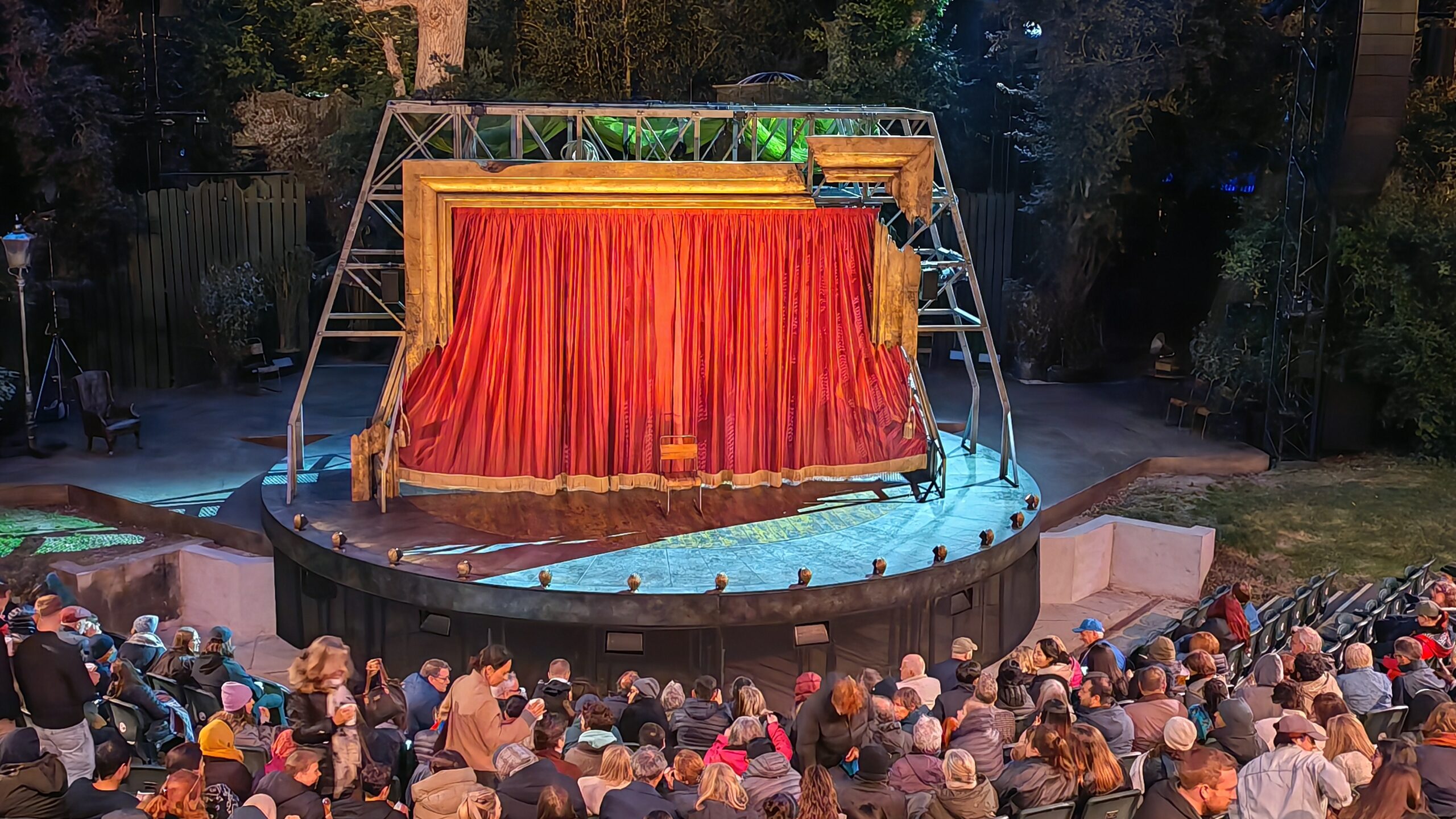
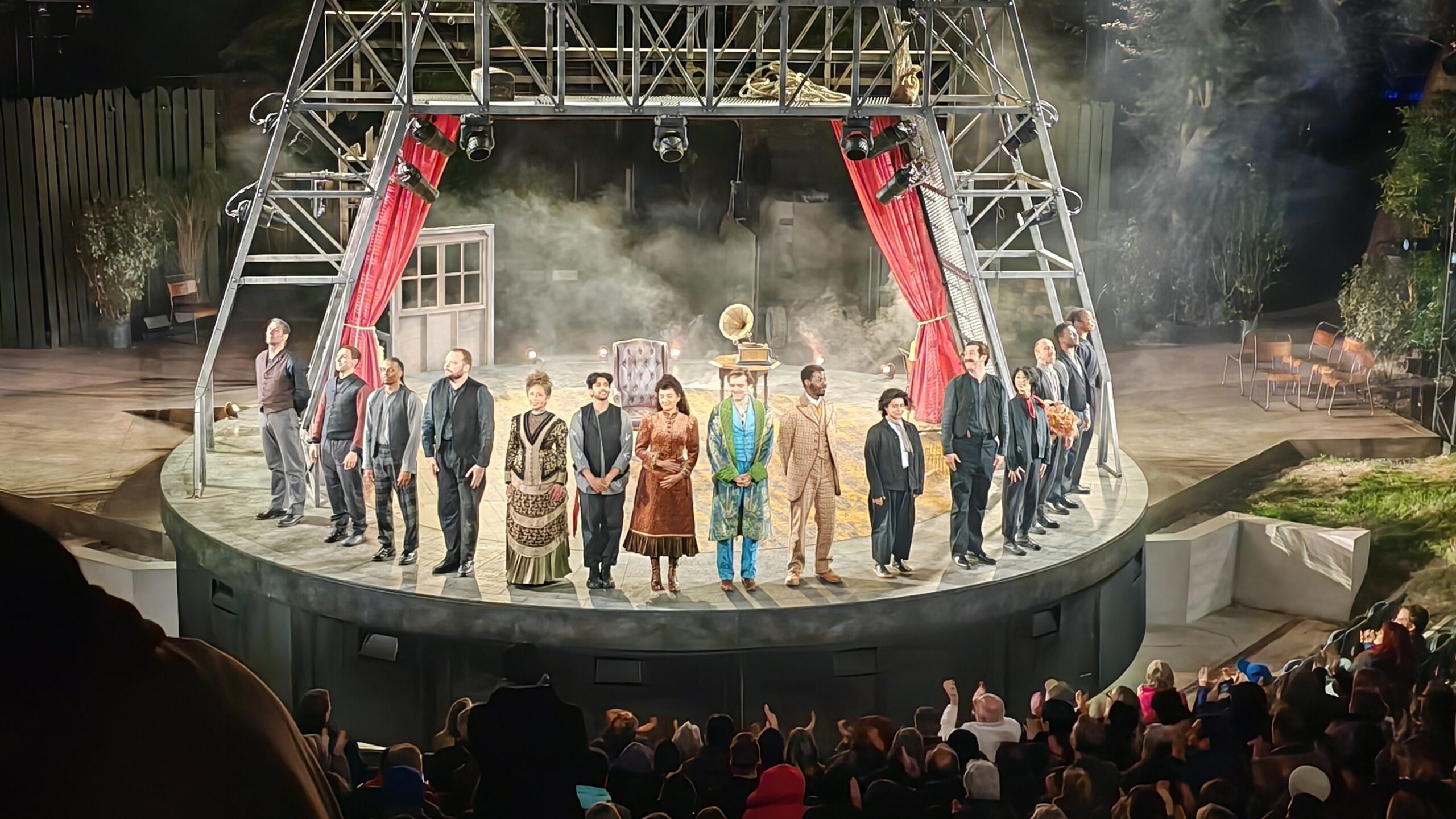
At first, the stage appears almost deceptively simple. From the auditorium, the playing space is dominated by a large, battered picture-frame structure, part Victorian proscenium, part exposed theatrical machine. Its red curtains give it the look of an old music-hall or magic-show frame, while the metal gantry and visible ladders around it remind us that this is theatre being openly constructed in front of us. There is a pleasing tension between ornament and scaffolding: polished mystery on one side, nuts, bolts and stage labour on the other.
As the evening unfolds, that stage becomes a shifting machine of locations and clues. Furniture is carried or wheeled into place, props appear and vanish, and the circular section of the stage revolves to strong effect. The frame itself becomes part of the action, a structure through which actors enter, disappear, observe and rearrange the world. Objects can be lowered, carried through or placed within it, while a complete window frame is brought on at one point, one of several moments where the production lets us enjoy the mechanics of theatre in plain sight.
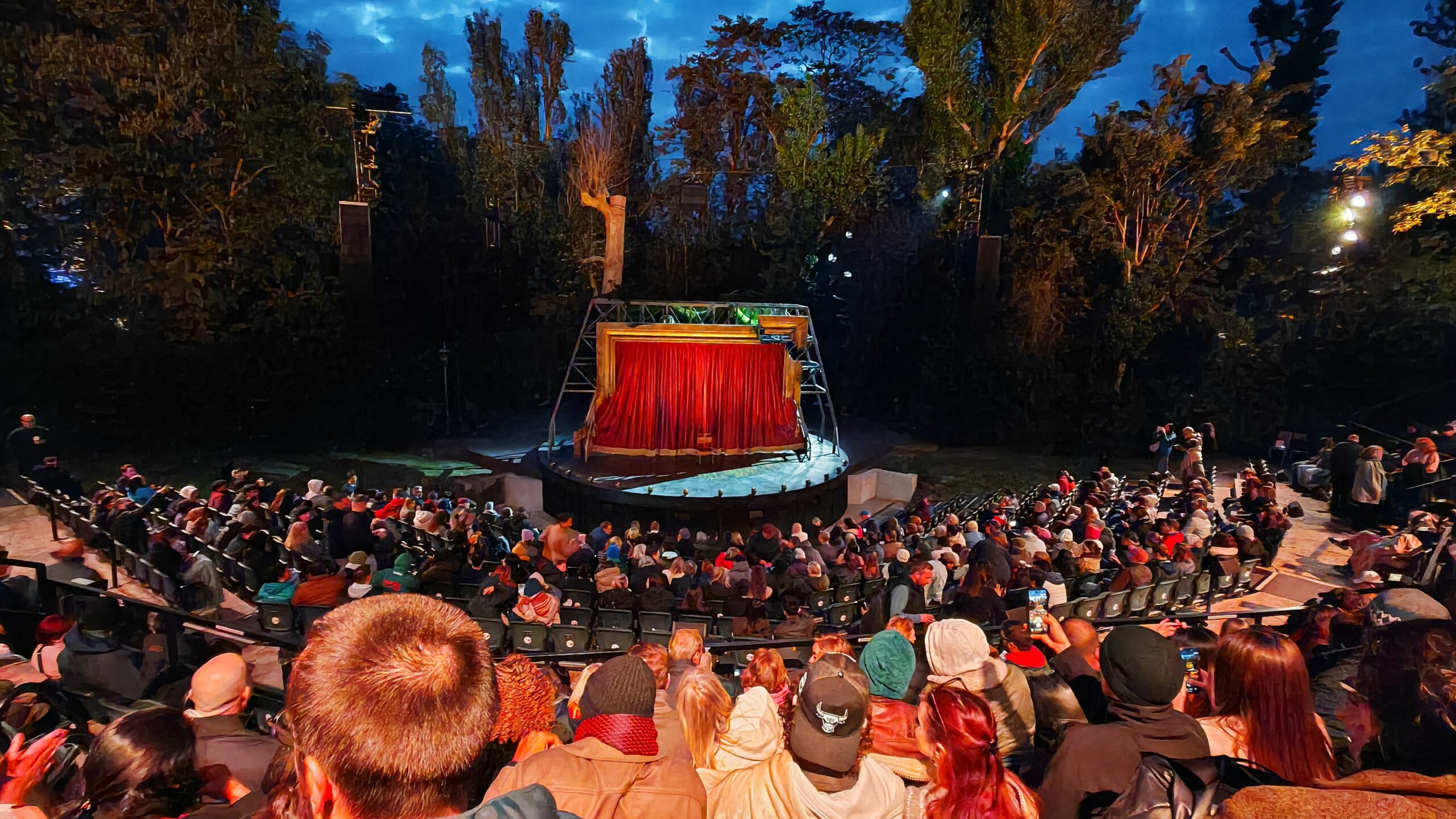
That visible stagecraft is one of the evening’s real pleasures. Baker Street, riverbanks, darker corners of Victorian London and more surreal locations are created through movement, sound, lighting and practical objects. The red-curtained frame gives the production an almost vaudevillian sense of showmanship, which suits a mystery full of disguise, performance and misdirection. What begins as a seemingly simple playing space becomes far more resourceful as the case gathers speed.
The local references are especially pleasing. Regent’s Park becomes much more than a scenic backdrop. The play nods to the park, London Zoo and the surrounding geography, allowing the venue itself to seep into the mystery. An announcement that dangerous animals have escaped from the zoo becomes an underlying thread through the evening, with figures appearing in the background wearing animal heads. It is a clever visual motif: strange, comic and faintly threatening. Victorian London begins to feel unstable, half city and half menagerie, with Holmes and Watson chasing clues through a world where civilisation keeps threatening to grow claws.
The production also makes good use of the wider auditorium. At times, characters suddenly appear behind the audience, above the upper tier of seating, with brief scenes enacted there to great effect. These moments widen the world of the play, making the audience feel surrounded by Holmes and Watson’s London rather than simply watching it from a safe distance. As the light dropped and smoke thickened around the set, the open-air setting gave the mystery a natural suspense that an indoor theatre would struggle to reproduce.
Elena Peña’s sound design is often brilliant, helping to give the evening its restless atmosphere. The soundscape carries us from Baker Street into darker streets, river spaces and the strange animal-haunted edges of Regent’s Park. At its best, it gives the open-air setting extra depth, wrapping the visible trees and exposed stage machinery in a sense of movement and unease. There were only occasional clarity issues in this early performance, with one accented, lower-spoken character requiring particular concentration to follow. That sits alongside the wider challenge of the production’s pace, where dialogue, clues and changes of location sometimes arrive in quick succession.
Joshua James gives Sherlock Holmes a sharp, restless energy. His Holmes is clever, impatient and theatrical, a man whose intelligence seems to move faster than the world around him. James captures the detective’s arrogance, curiosity and appetite for performance, while finding flashes of humour beneath the deductions. This is a Holmes who enjoys the theatre of being Holmes, and James leans into that quality without reducing him to a familiar silhouette.
Joshua James gives Sherlock Holmes a sharp, restless energy. His Holmes is clever, impatient and theatrical, a man whose intelligence seems to move faster than the world around him. James captures the detective’s arrogance, curiosity and appetite for performance, while also finding flashes of humour beneath the deductions. This is a Holmes who enjoys the theatre of being Holmes, and James leans into that quality without reducing him to a familiar silhouette.
The production also uses Holmes’s opium habit as part of its comedy, giving his brilliance a more unstable, wired quality. It becomes another sign of a mind hungry for stimulation. In one very funny sequence, Watson is forced to inject Holmes with a far more potent preparation, against Holmes’s will, in order to jolt him into the concentration needed to solve the case. The effect is immediate: Holmes snaps into a heightened state of focus, tearing through clues at astonishing speed as the fragments of the mystery begin to lock together.
In these moments, the audience is almost bombarded with clues from Holmes’s perspective. We are given a rush of deductions, connections and revelations arriving at the speed of his own thought. That gives the sequence real comic force and suits James’s wired, restless Holmes, but it also makes the mystery difficult to follow at times. The production asks us to keep pace with a mind already racing several streets ahead.
Opposite him, Jyuddah Jaymes gives Watson warmth, steadiness and welcome clarity. His Watson is a strong and necessary counterweight, especially once the plot begins twisting through its more elaborate turns. Jaymes grounds the central partnership with an appealing human directness, giving the audience someone to follow when Holmes is already several steps ahead of everyone else. The relationship between Holmes and Watson remains the production’s clearest route through the mystery, and the two actors build a useful balance of irritation, loyalty and shared momentum.
Nadi Kemp-Sayfi brings urgency and presence as Mary, whose arrival draws Holmes and Watson deeper into the case. She gives the character a clear emotional stake within the mystery, helping to ensure the story has more at play than clues and cleverness alone. Marcia Lecky adds strong comic texture as Mrs Hudson and Lucia, while Patrick Warner makes enjoyable use of the production’s eccentric register as Mycroft and Thaddeus. In a large ensemble where many performers take on multiple roles, the company work hard to keep the evening’s machinery turning.
The vocal world of the production is slightly uneven. I enjoyed the use of Indian characters and accents within the imperial backstory, which gave those opening scenes their own texture and reminded us that the case’s origins sit far beyond Baker Street. The English speech, however, often sits closer to a contemporary middle-class register than to the sharper upper-class sounds one might expect from parts of Holmes’s late Victorian world. A little more vocal period detail, particularly around the English upper-class characters, would have helped the 1890 setting feel more fully inhabited.
The production is also very funny. Horwood and Holmes fill the evening with odd encounters, heightened characters and bursts of absurdity, creating a Victorian London crowded with performers, schemers and eccentrics. Much of this lands well, especially when the comedy grows naturally from the strangeness of the world being created. There are moments, however, where the broader character work edges towards hamming it up. Some performances occasionally push the eccentricity a little too far, and the comic exaggeration can momentarily blur the mystery rather than sharpen it. Even so, that boldness belongs to the larger style of the evening: busy, heightened and openly theatrical.
The main challenge is the pace. Scenes shift quickly, characters arrive in rapid succession, and the plot keeps opening new doors before the audience has always had time to close the last one. At times, I found myself working hard to hold all the names, motives, locations and reversals together. There is plenty to enjoy, though also a great deal to process. When the production breathes, especially in its visual storytelling and central performances, it is at its strongest. When exposition arrives at speed, the mystery can become more crowded than clear.
Still, the evening has real theatrical life. The revolving stage, wheeled furniture, carried frames, animal-headed figures, upper-tier appearances and bustling ensemble all contribute to a sense of invention. The show is at its best when it lets the audience feel the case being assembled physically in front of them. Clues become movement. Locations become objects. The park becomes part of the plot.
As a season opener for Regent’s Park Open Air Theatre, Sherlock Holmes offers an atmospheric, funny and visually inventive mystery beneath the trees. It is occasionally overpacked and sometimes asks a great deal from its audience, but it has energy, wit and a strong sense of place. With Joshua James and Jyuddah Jaymes leading a busy ensemble, this new adventure brings the world’s most famous detective into the open air with theatrical confidence and a pleasing local bite.
Cast & Creatives
- Showing: 2nd May – 6th June 2026
- Venue: Regent’s Park Open Air Theatre, Inner Circle, Regent’s Park, London NW1 4NU – https://openairtheatre.com/
- Writer: Joel Horwood
- Director: Sean Holmes
- Associate Director: Nathanael Campbell
- Set & Co-Costume Designer: Grace Smart
- Co-Costume Designer & Supervisor: Lisa Aitken
- Composer: Jherek Bischoff
- Sound Designer: Elena Peña
- Associate Sound Designer: Niamh Gaffney
- Lighting Designer: Ryan Day
- Movement Director: Charlotte Broom
- Fight Director: Enric Ortuño
- Voice & Dialect Coaches: Hazel Holder and Gurkiran Kaur
- Wigs, Hair & Make Up Designer & Supervisor: Carole Hancock
- Intimacy Support: Ingrid Mackinnon
- Casting Director: Stuart Burt CDG, CSA
- Casting Associate: Peter Noden
- Photography: Robert Cope
- Cast:
Andre Antonio as Pockets / Referee
Will Brown as Small / Lestrade
Paolo Guidi as Graziano / Bill
Benjamin Harrold as Morstan
Joshua James as Sherlock Holmes
Jyuddah Jaymes as Watson
Nadi Kemp-Sayfi as Mary
Marcia Lecky as Mrs Hudson / Lucia
Mervin Noronha as Tonga / Azad
Yuyu Rau as Lin / Nancy
Theo Reece as Domingo
Rakhee Sharma as Aleksandra / Padshah Begum Jahan
Tamara Tare as Slip Jenny / Snake Singer
Patrick Warner as Mycroft / Thaddeus
Atmospheric, madcap funny and visually inventive
Summary
A lively open-air Sherlock Holmes mystery with strong staging, clever local touches and madcap humour, though its fast pace sometimes makes the plot hard to follow.


Add comment