It’s a pleasure to be back at Theatre Royal Windsor for a second visit, returning this time for John Godber’s Teechers – Leavers ’26, touring with The John Godber Company. It’s the kind of return that feels easy to enjoy. The building has that rare mix of warmth and polish, and the auditorium carries a sense of occasion without feeling grand for the sake of it.
Before the show even starts, the venue does some of the storytelling for you. Tucked on Thames Street in the shadow of Windsor Castle, this Edwardian, Grade II listed gem opens into an intimate auditorium that feels both close and regal. The auditorium’s period detail makes an immediate impression, with the Royal Arms crowning the proscenium and ornate plasterwork running along the balconies. Classical columns flank the stage, and it all adds up to a space that feels alive with history. And the location helps: step outside and you’re immediately among Windsor’s pubs and restaurants, making it easy to turn curtain-up into a full evening out, with your pick of places for a bite beforehand or a post-show drink. If you’re coming out by train from London, it’s worth travelling early, as potential delays on the Elizabeth line can quickly eat into your buffer time.
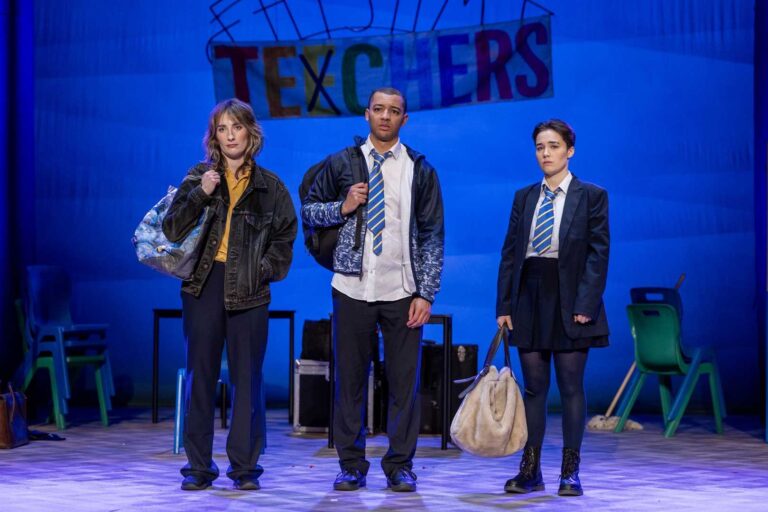
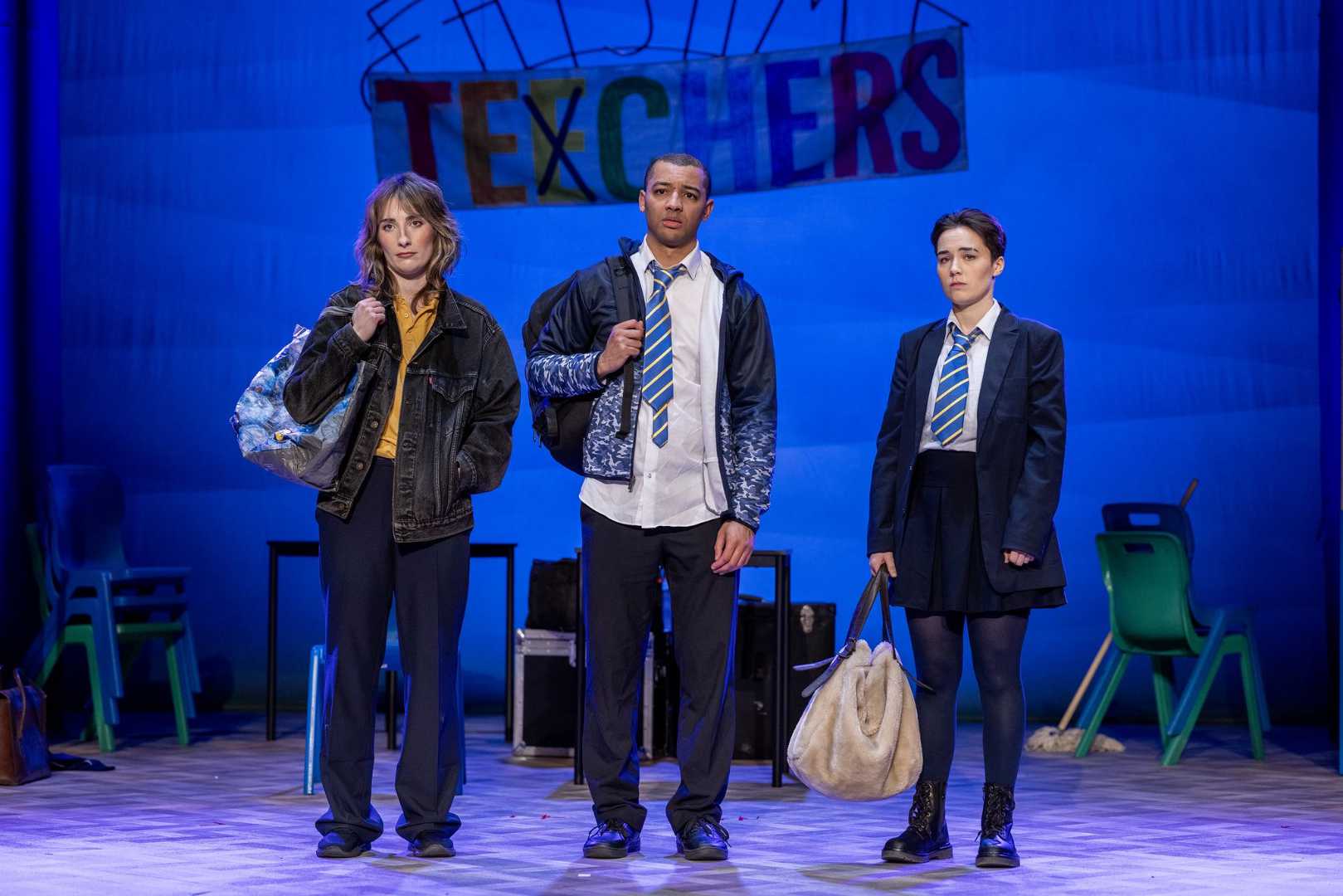
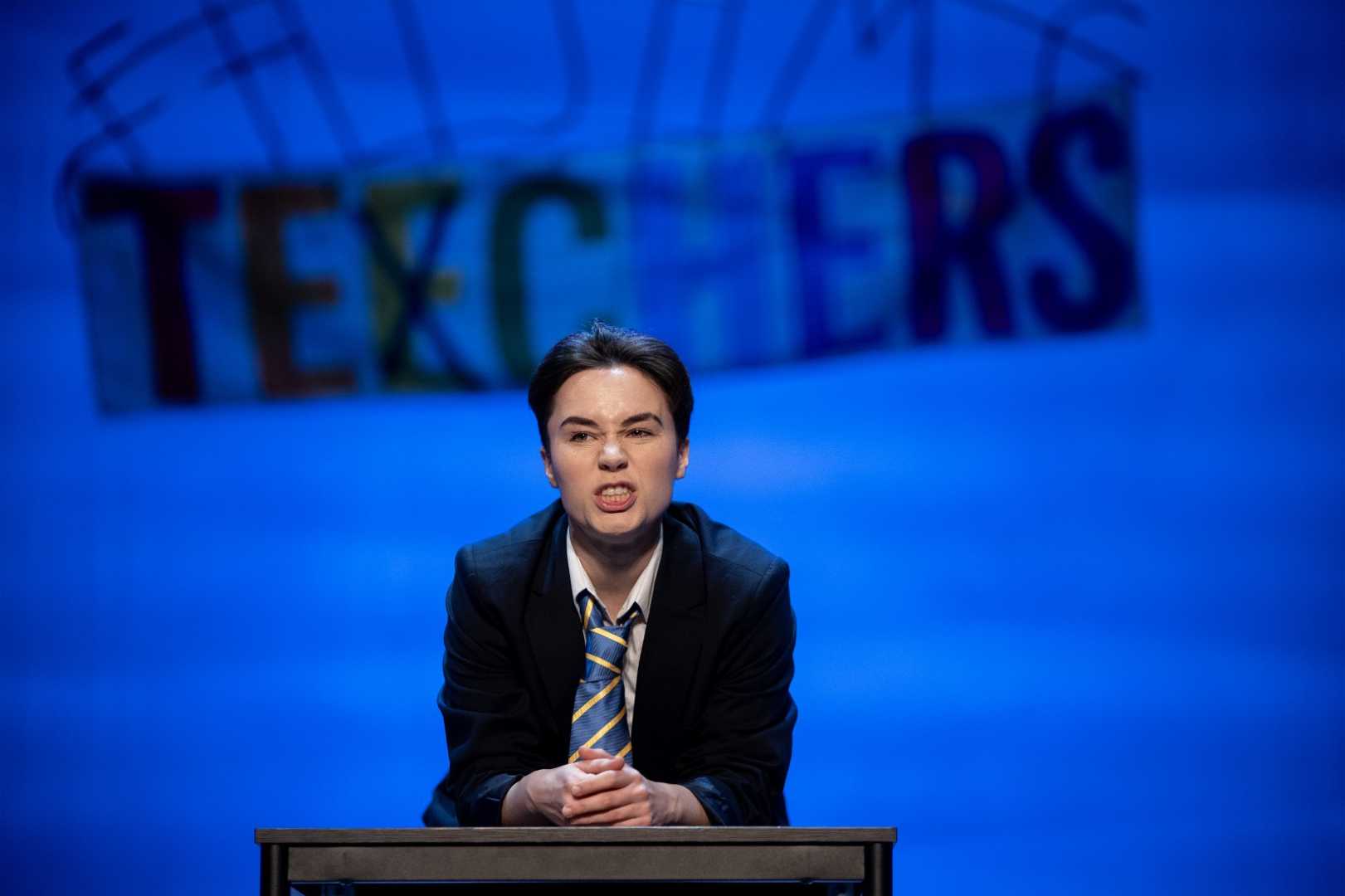
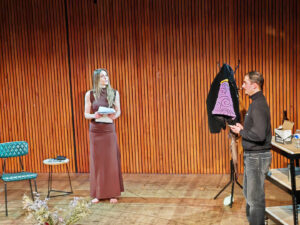
Teechers – Leavers ’26 arrives with a familiar Godber set-up and a sharper, present-day edge. Three school leavers, Salty, Gail and Hobby, step onto a school hall stage to present their final BTEC Performing Arts exam piece. What begins as cheeky performance bravado quickly opens into something broader: a whole academy conjured through rapid character switches, direct address, and the peculiar truth-telling that happens when teenagers decide to “show you how it really is”.
The setting is Whitewall Academy, underfunded, stretched, and ruled by timetables that read like encrypted code. Into that comes Miss Nixon, a newly qualified drama teacher with enough optimism to feel dangerous. Teechers has always understood the drama room as a rare pocket of oxygen inside the school machine, and this 2026 reset leans into the pressures around it. Behaviour management eats the day, inspections haunt the corridors, and leadership language has a habit of turning human beings into numbers.
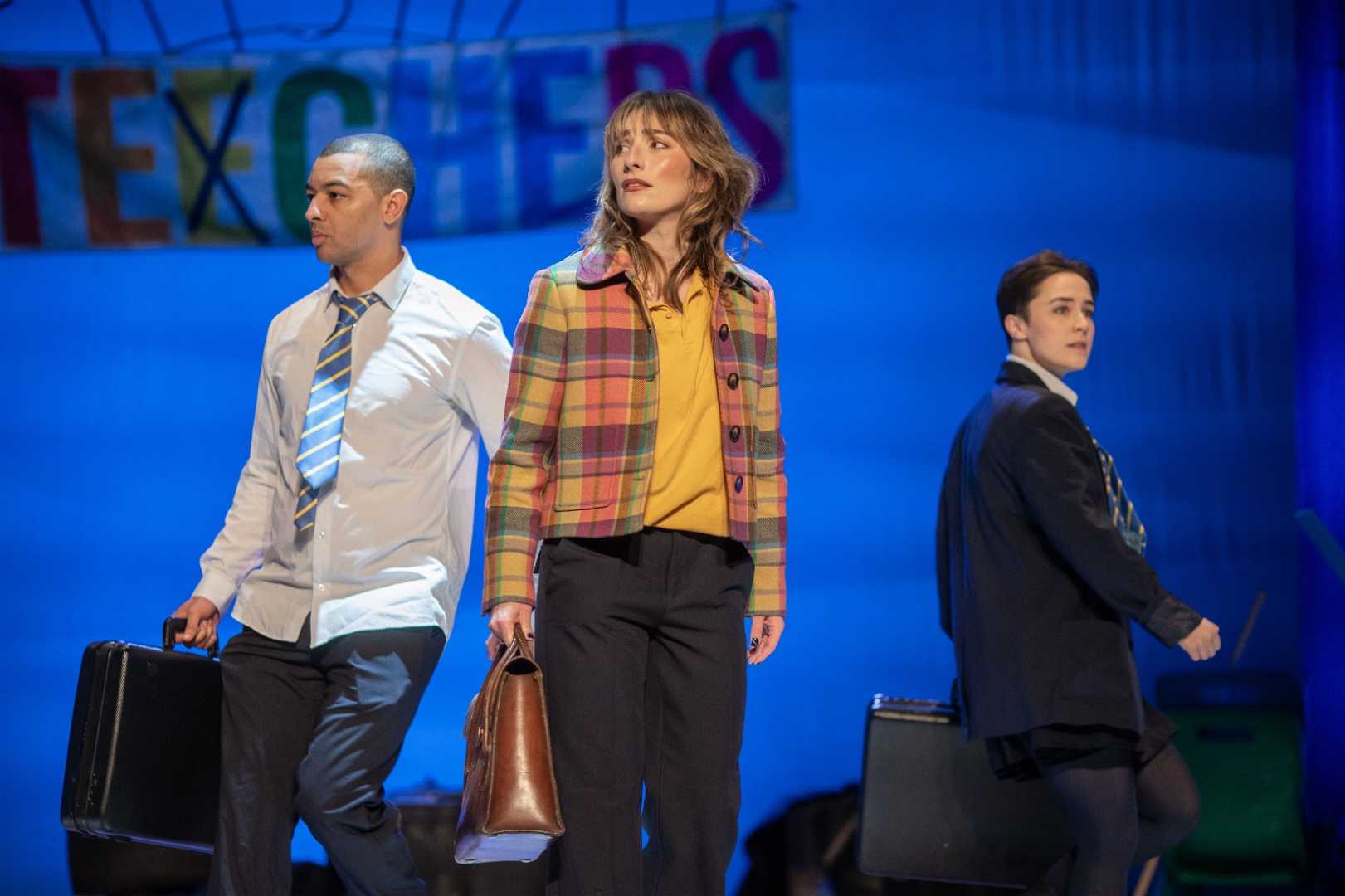
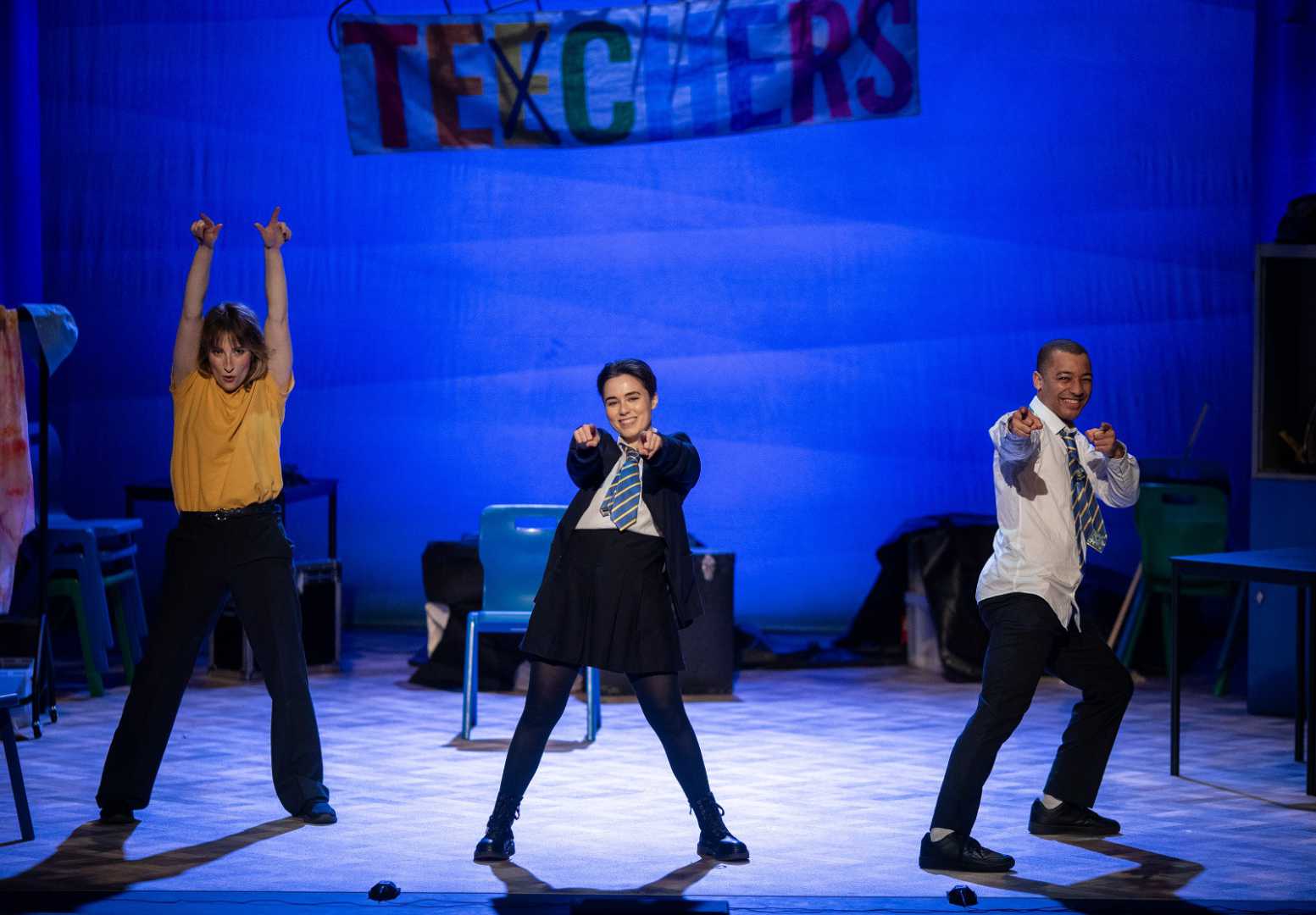
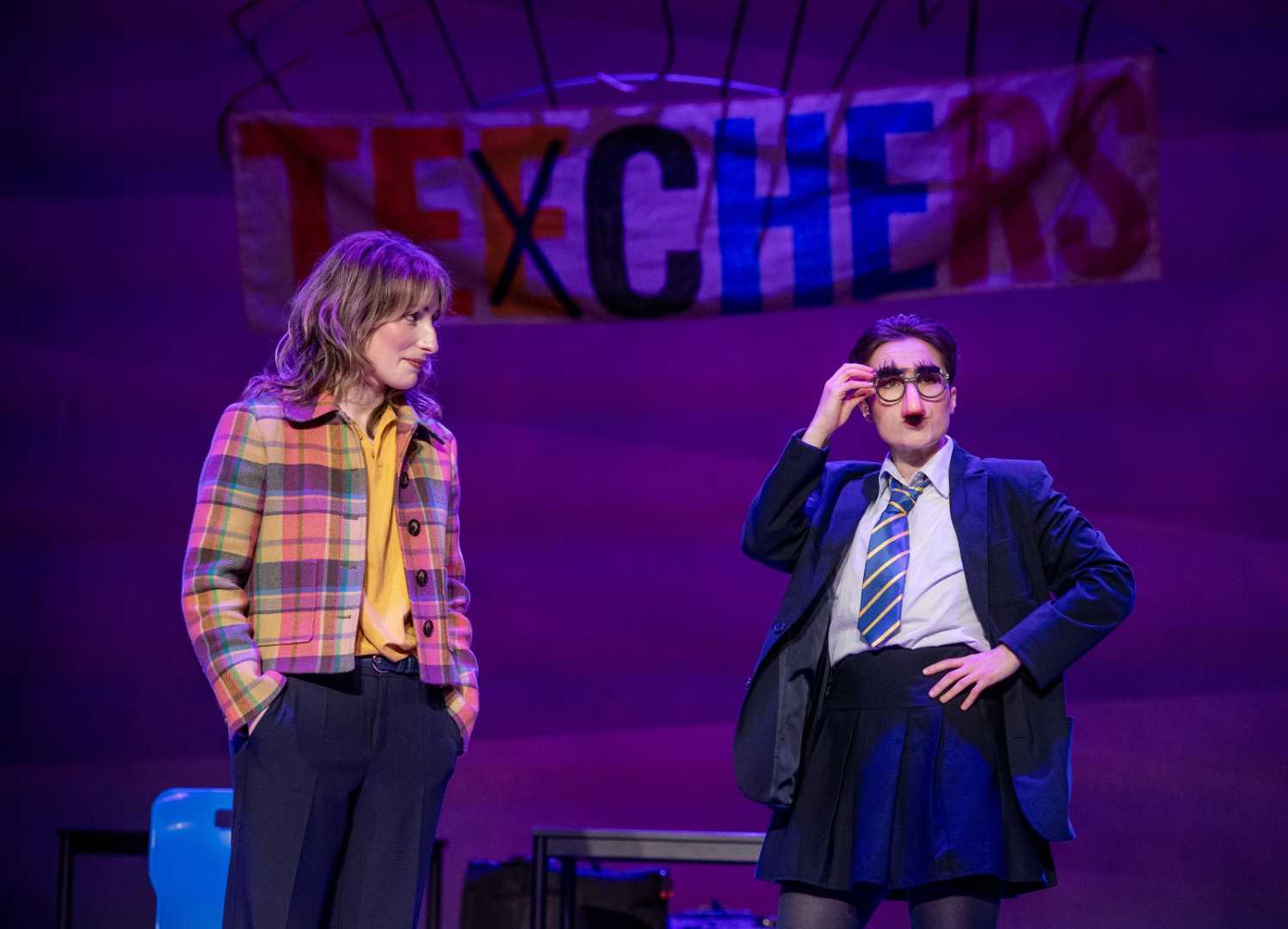
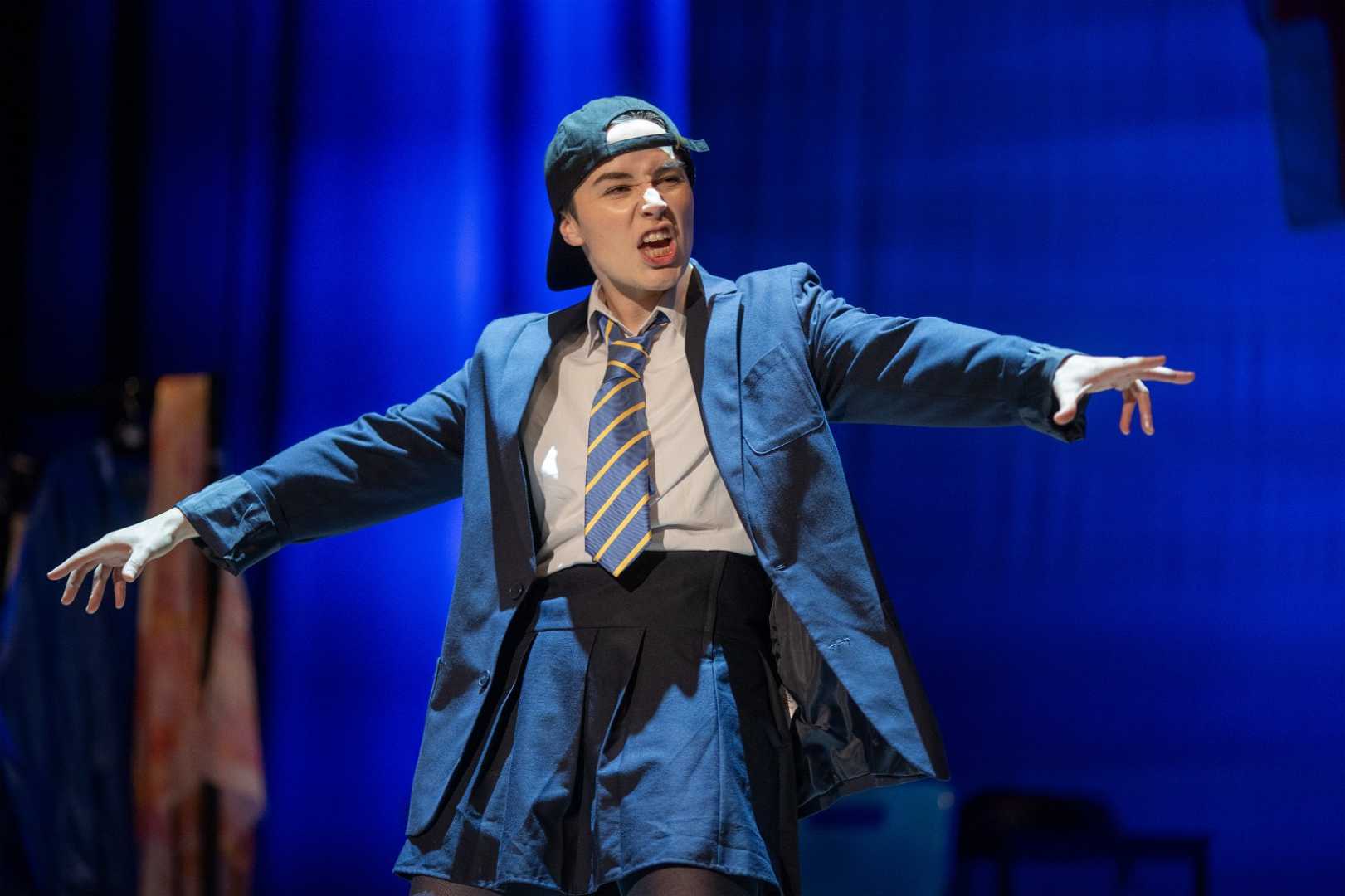
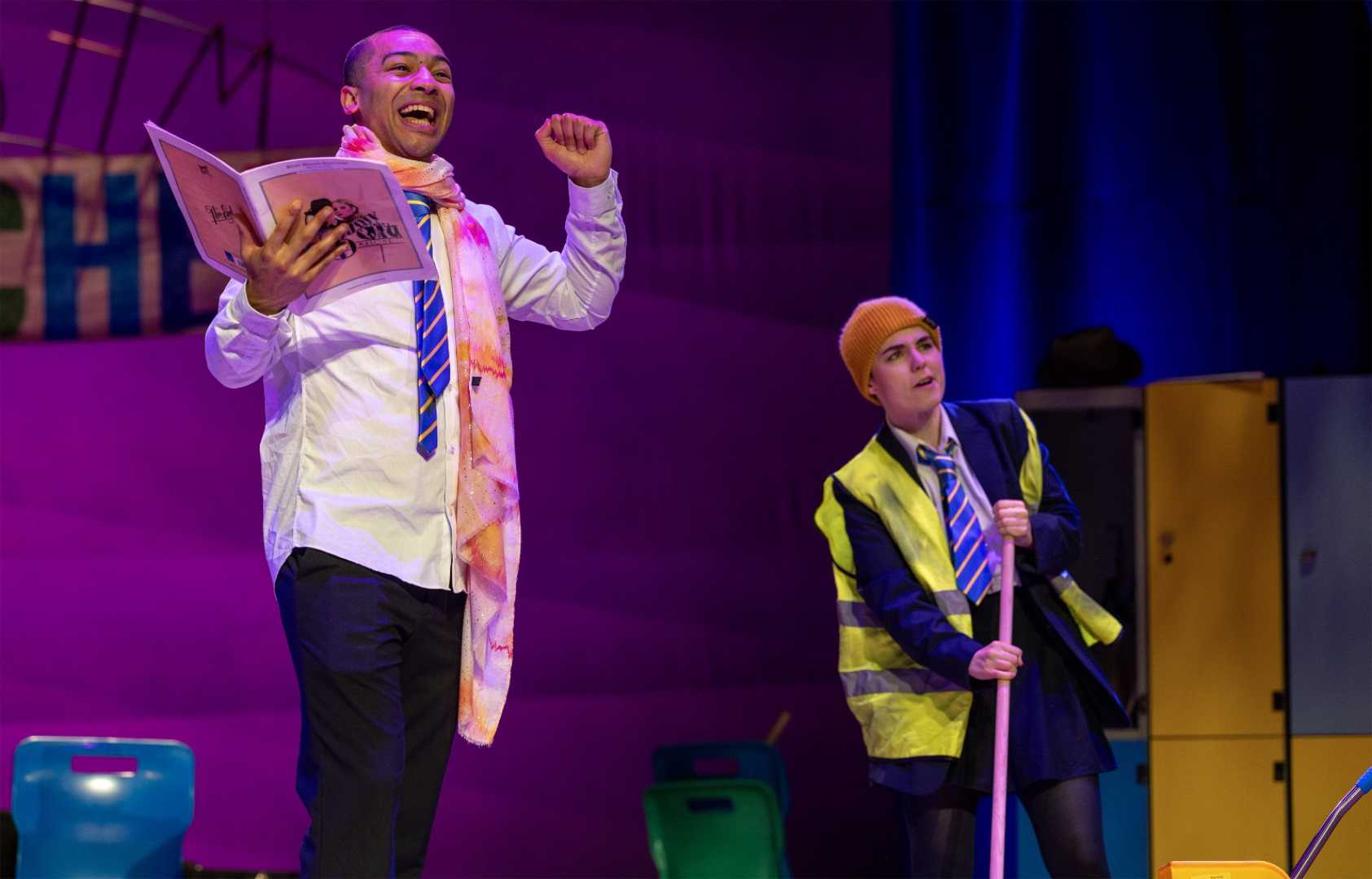
Godber’s comedy works at speed, with the audience invited to do part of the work. With only a few props and a shift in voice or posture, you find yourself building the corridors, classrooms and staffroom in your head. You watch the actors build authority and collapse it again in seconds. A change of stance, a voice, a prop grabbed off a chair, and a new person exists. That multi-roling becomes the show’s craft signature and its argument: schools are full of roles people are forced to play, and the performance makes that visible.
At the centre of the play is the question of what education is actually for. Is it a factory line for results, or a place that teaches young people how to think, how to create, how to speak? The show’s humour keeps finding its mark, but the point stays sharp. Creativity gets praised in assemblies and quietly squeezed in practice. Drama is talked about as “valuable” while being treated like something the timetable can survive without.
The leadership double-act carries plenty of the satire. Mrs Parry, the executive head, is loud, eccentric and forever spinning plates, and Sophie Suddaby (Hobby) gives her the kind of giddy self-mythologising that turns management into a one-woman show. Dr Basford, the deputy, brings the hard edge of discipline, targets, silence and compliance, and he registers instantly because the production has a brilliant shorthand for him. A mask, a false nose and glasses, and suddenly he’s in the room, petty power made flesh. Jo Patmore (Gail) snaps into that authority with such clean detail that the laugh arrives before the line finishes. It’s a pairing that hands Levi Payne (Salty), Patmore and Suddaby the kind of quick-change terrain that rewards real craft. Between them, they multi-role the school’s power structure at speed, keeping each shift clean enough for the audience to stay with the story. Their clash becomes a running argument about what schools are allowed to become, and who gets to thrive inside them. Add in Oggy Moxon, the bully whose dominance is tolerated through fear and fatigue, and the trio have to keep the power dynamics razor-clear while the pace stays high. With so many characters flying past, the production depends on the trio staying readable in the shared roles and grounded in the three leavers at the heart of the story.
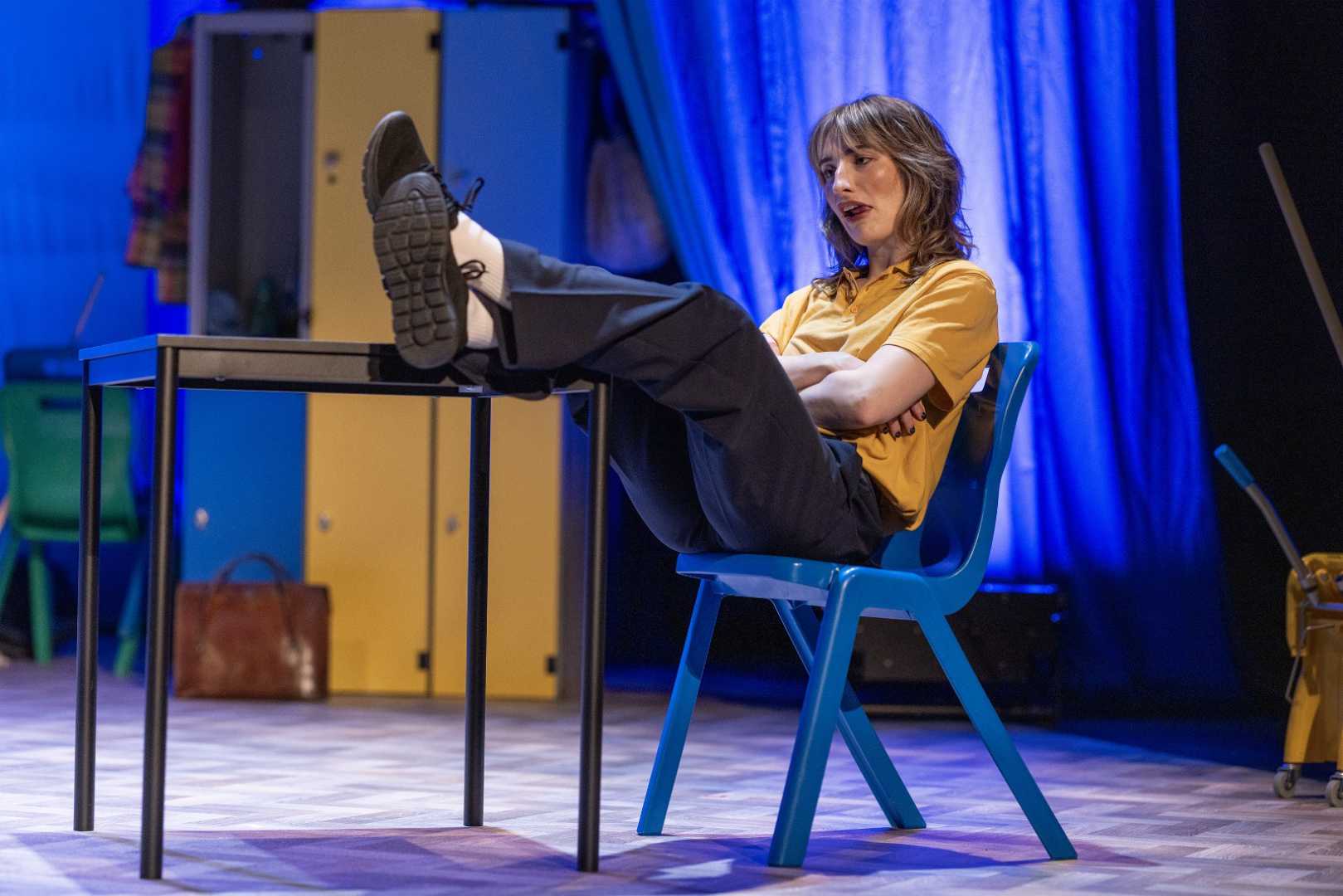
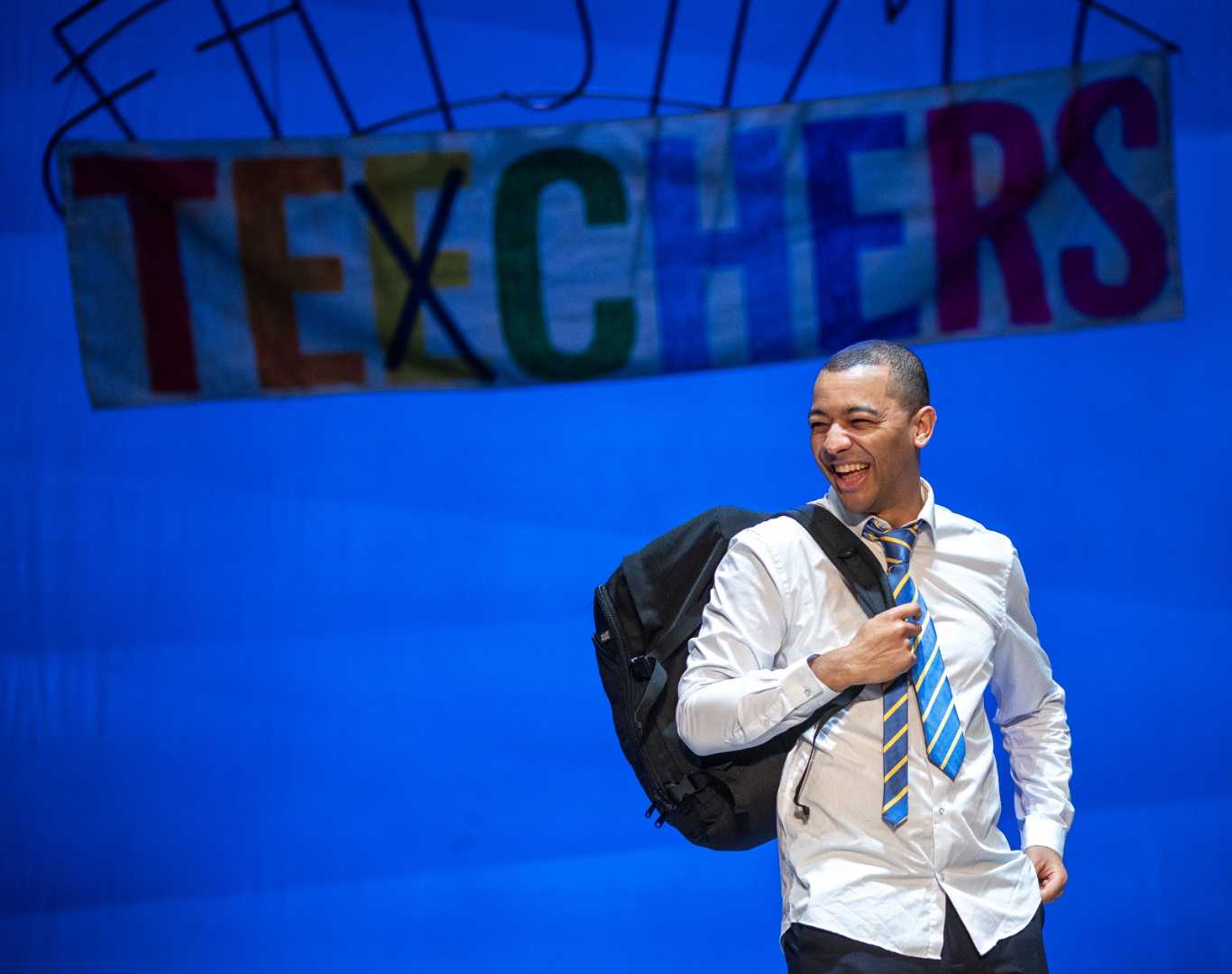
Levi Payne’s Salty functions as the show’s spine: sceptic’s eye, simmering frustration, the voice that keeps the satire from floating away, and he plays it with a steadiness that lets the sharper jokes bite without turning the character into a cartoon. Jo Patmore’s Gail supplies lift, speed and mischief, with crisp timing that keeps the storytelling clean even when the show is in full sprint. Sophie Suddaby’s Hobby brings the volatile edge, the defensive humour, the flashes of vulnerability that stop the comedy becoming weightless. There’s a lovely clarity to the way the trio handle the constant multi-roling, so even when characters fly past, the audience stays oriented, and when the leavers return to themselves, the emotional thread snaps back into focus.
Yet the play never settles for gloom. One of its strengths is that it lets the students be more than “problems”. In the drama room, when they’re given space to tell stories rather than sit still, they show imagination, emotional intelligence, and a hunger to be seen. Drama club becomes a kind of refuge, the after-school corner where people stay because home offers less room. That tenderness sits right alongside the chaos, and the combination is where the piece earns its punch.
Teechers has been around long enough to earn its stripes, and it’s returned in different forms over the years to keep pace with the world it’s describing. Leavers ’26 feels like the latest chapter of that continuing conversation, rooted in the same characters and structure while pointing at today’s pressures.
This updated framing also nudges bigger questions closer to the surface: aspiration, inequality, and the quiet sorting-hat logic of who gets opportunity and who gets worn down. As Salty, Gail and Hobby edge towards the exit from state education, Miss Nixon’s own future stops hovering at the margins and becomes the thing they can’t laugh off. When it becomes clear that she’s leaving for the private school nearby, the play takes a sudden, sad turn. The three leavers’ hurt and anger arrive in a rush, and it leaves a final note of hurt under the comedy.
This touring production from The John Godber Company is directed by Jane Thornton, with design by Graham Kirk. Teechers comes with its own built-in stage logic: it’s framed as a school hall performance, it thrives on speed, and it asks the audience to watch the actors create a whole institution with only a few practical cues. When the design follows that logic, the world feels convincingly “school-made”: functional, slightly worn, assembled from what’s to hand, and constantly repurposed. Across the many stagings the play has had, the strongest ones tend to trust that rough-and-ready truthfulness, because it keeps the focus where Godber wants it, on performance, clarity, and the life inside the room.
In this production, the most impressive work happens in the “small” choices inside the multi-roling: the exact rhythm of a teacher’s authority, the posture of a pupil who expects the corridor to move around him, the half-second where confidence collapses before it’s patched up and sent back out. The comedy keeps its edge because the cast makes those moments specific rather than generic. When Miss Nixon tries to organise the room with a simple instruction to grab chairs and sit in a half-circle, the resistance becomes a set-piece, and the physical reluctance is timed so precisely it feels like the room is refusing on instinct. Later, the staff-room seat ritual becomes its own miniature hierarchy, a place where even sitting down is permission-based and status-coded, and the humour works because it’s played like truth rather than a gag. And just before the interval, what should be a simple lift home becomes a back-seat confrontation that turns the air sharper, showing how quickly school life can tip from banter into something uglier. The trio keep the switching clean, so the laughs arrive fast and the sting underneath still gets through.
Cast & Creatives
- Showing: 3rd – 7th March 2026
- Venue: Theatre Royal Windsor, 32 Thames Street, Windsor SL4 1PS - https://theatreroyalwindsor.co.uk/
- Writer: John Godber
- Director: Jane Thornton
- Set Design and Production Management: Graham Kirk
- Producer: Elizabeth Godber
- Company Stage Manager: Sarah Follon
- Choreography: Martha Godber
- Composition: Dylan Allcock
- Production photography: Ian Hodgson
- Cast:
Levi Payne as Salty
Jo Patmore as Gail
Sophie Suddaby as Hobby
Hannah Christina (Understudy)
A Lively School Hall Satire With Real Pressure Underneath
Summary
John Godber’s Teechers – Leavers ’26 turns a school hall frame into a quick-change portrait of power, pressure and survival, driven by crisp multi-roling from its trio. Funny, fast and pointed, it keeps the audience oriented even as characters fly past.


Add comment