At Collective Acting Studio’s New Writing Festival, Esme Waters’ Living with an Alien begins with the evidence almost brazenly displayed. Lara enters the shabby-comfortable living room carrying a bloodstained knife and wearing muddy, ill-fitting boots. Hearing someone approach, she conceals the weapon in a vase before slipping away. From the outset, the audience knows more than the other characters, although precisely what Lara is, what she has done and whether anyone will uncover the truth remain deliciously uncertain.
Michael returns home to a marriage that has already become its own form of alien encounter. He is an unsuccessful freelance journalist, financially adrift and conducting an affair with the energetic Alisha. His wife, Lara, is beautiful but unnervingly cold, while his petulant Uncle Frederick has installed himself in their home, converted a room for his use and made his exaggerated ailments everyone else’s responsibility. Waters establishes an ordinary domestic world of infidelity, resentment and unwanted relatives before allowing something altogether stranger to emerge from it.
Frederick has summoned a small gathering to investigate reports of animalistic cries and a misshapen figure seen around the village. Adrian, another freelance journalist, is pursuing the rumours; Graham is the severe and self-important proprietor of a local psychiatric establishment; and Simon is a mild-mannered doctor with a scientific curiosity that proves increasingly useful. Their discussion changes direction when Simon reports that Colin Martins, a farm worker who had urgently tried to contact Michael, has been found murdered.
The details are satisfyingly grotesque. Colin has been stabbed and strangled by fingers apparently twice the length of a human hand. His missing letter to Michael, Lara’s unexplained knowledge that the body was discovered in a barn, the muddy footprints and the knife concealed in the vase gradually form a persuasive case against her. Yet the same evidence can also be turned against Michael. His affair, his pretence that he had been abroad and his presence near the village make him vulnerable to suspicion, while Lara quietly arranges matters so that his boots, handkerchief and increasingly frantic accusations all support Graham’s belief that he is both murderous and delusional.
This gives the play a stronger dramatic engine than a straightforward question of who committed the crime. The audience has seen Lara hide the knife, but Michael still has to understand what he is living with and persuade others that his extraordinary explanation is true. His own dishonesty weakens him at every stage. A man who has deceived his wife and friends now needs everyone to accept a story that sounds impossible. That tension between being correct and being credible fuels much of the comedy and suspense.
The second act tightens the trap effectively. Heavy snow isolates the house, the telephone is destroyed and the car sabotaged. Lara proves adept at exploiting Graham’s vanity and Alisha’s doubts, presenting herself as the distressed wife of an unstable husband. Simon’s analysis of strands of Lara’s hair supplies scientific confirmation, but knowledge offers little protection once he returns to confront her. Darkness, animalistic cries, a concealed body and an ill-timed attempt to prevent the police discovering it push the thriller towards increasingly frantic farce.
Frederick provides the play with its most reliable comic counterweight. Michael, playing the role, earned the largest laughs of the reading with Frederick’s hypochondria, wounded self-importance and continuing conviction that every crisis is primarily an inconvenience to him. His complaints about starvation, damaged bedding and the dangers to his health remain funny even as the situation becomes lethal. Waters also gives him an unexpectedly satisfying progression. Beneath the bluster is a man desperate to believe in his own courage, and the play eventually gives him an opportunity to discover it.
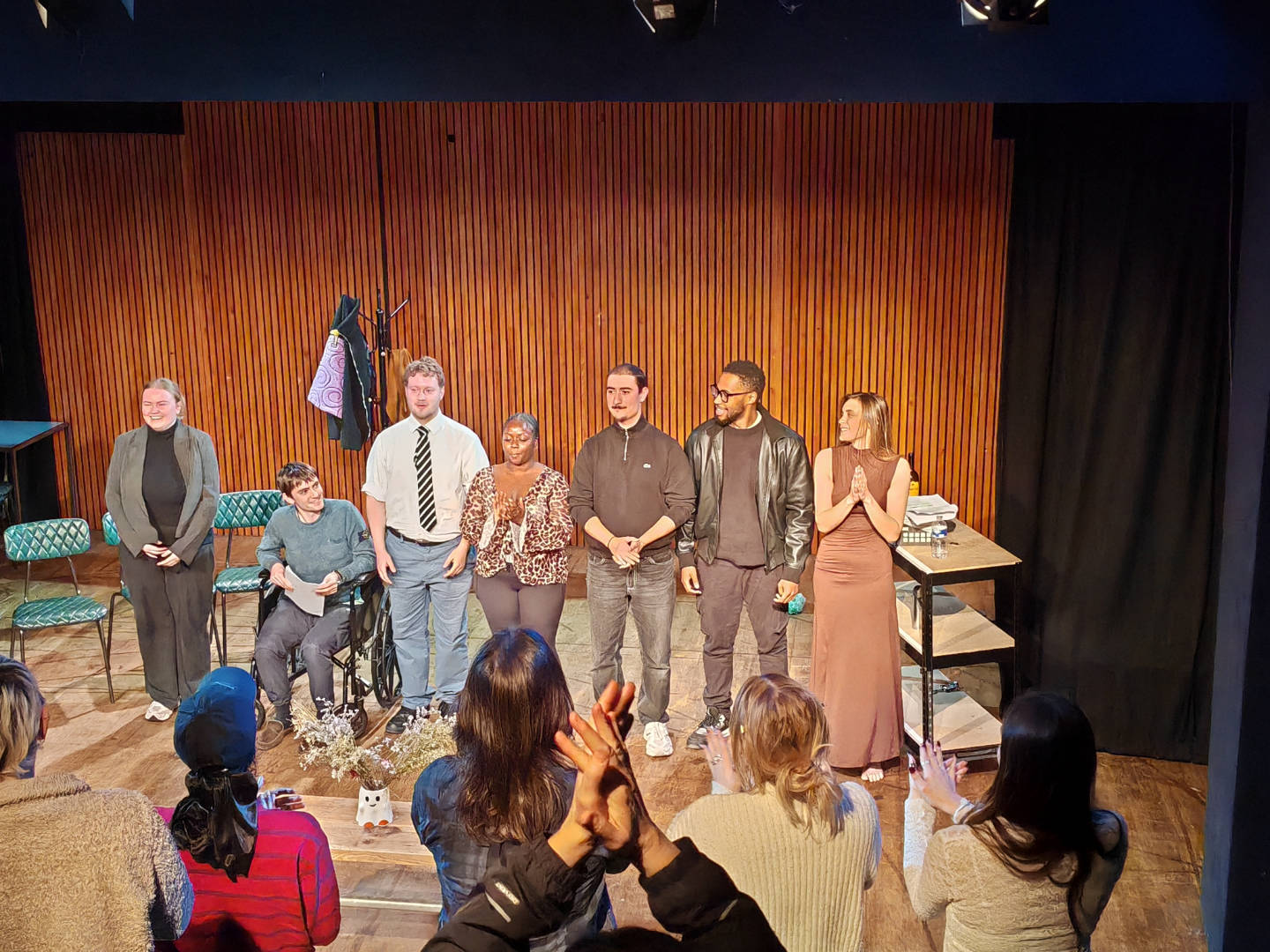
Jack P’s Graham and Halid’s Adrian brought useful contrasting energies to the gathering. Graham’s professional pomposity and Adrian’s sardonic scepticism generated some lively verbal fencing, while Nikiah’s Simon gave the increasingly bizarre deductions a necessary point of sober enquiry. Botan and Aaliya’s exchanges as Michael and Alisha unfolded at a more deliberate rhythm. Their dialogue occasionally stated feelings and circumstances that might have carried greater force if left partly beneath the surface, but the affair gives the fantastical story a recognisable emotional foundation. Michael does not simply fear an alien invader; he is confronting the collapse of a marriage built on fascination rather than intimacy.
Maria’s Lara occupies an intriguing position between domestic antagonist and science-fiction threat. Her grievances against Michael are recognisably human. He has neglected her, deceived her and planned a future with somebody else. Her methods, however, are decidedly less conventional. That combination prevents her from becoming merely a creature hiding behind a human appearance. Lara’s coldness works both literally and metaphorically, turning the language of marital estrangement into the machinery of the thriller.
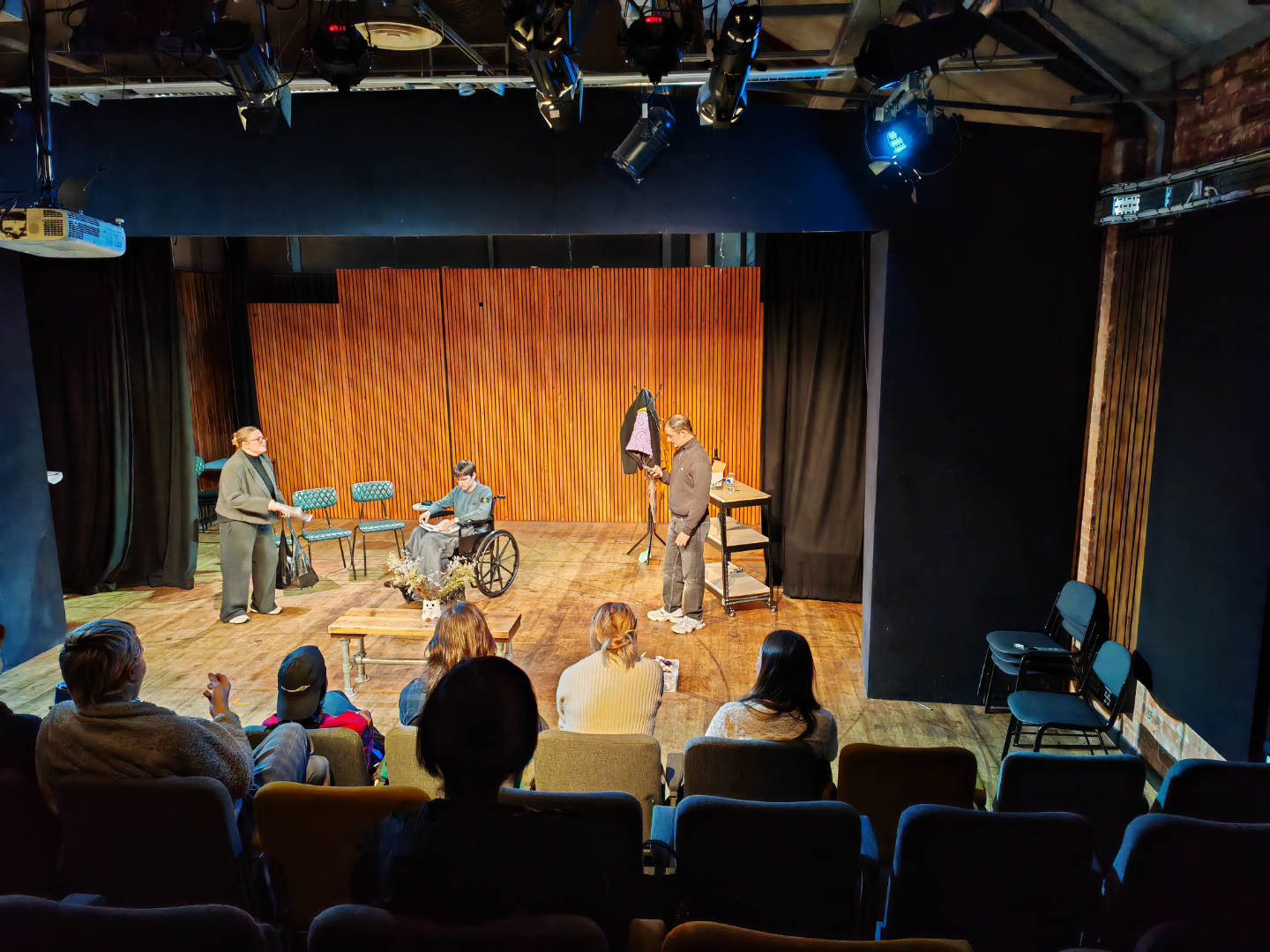
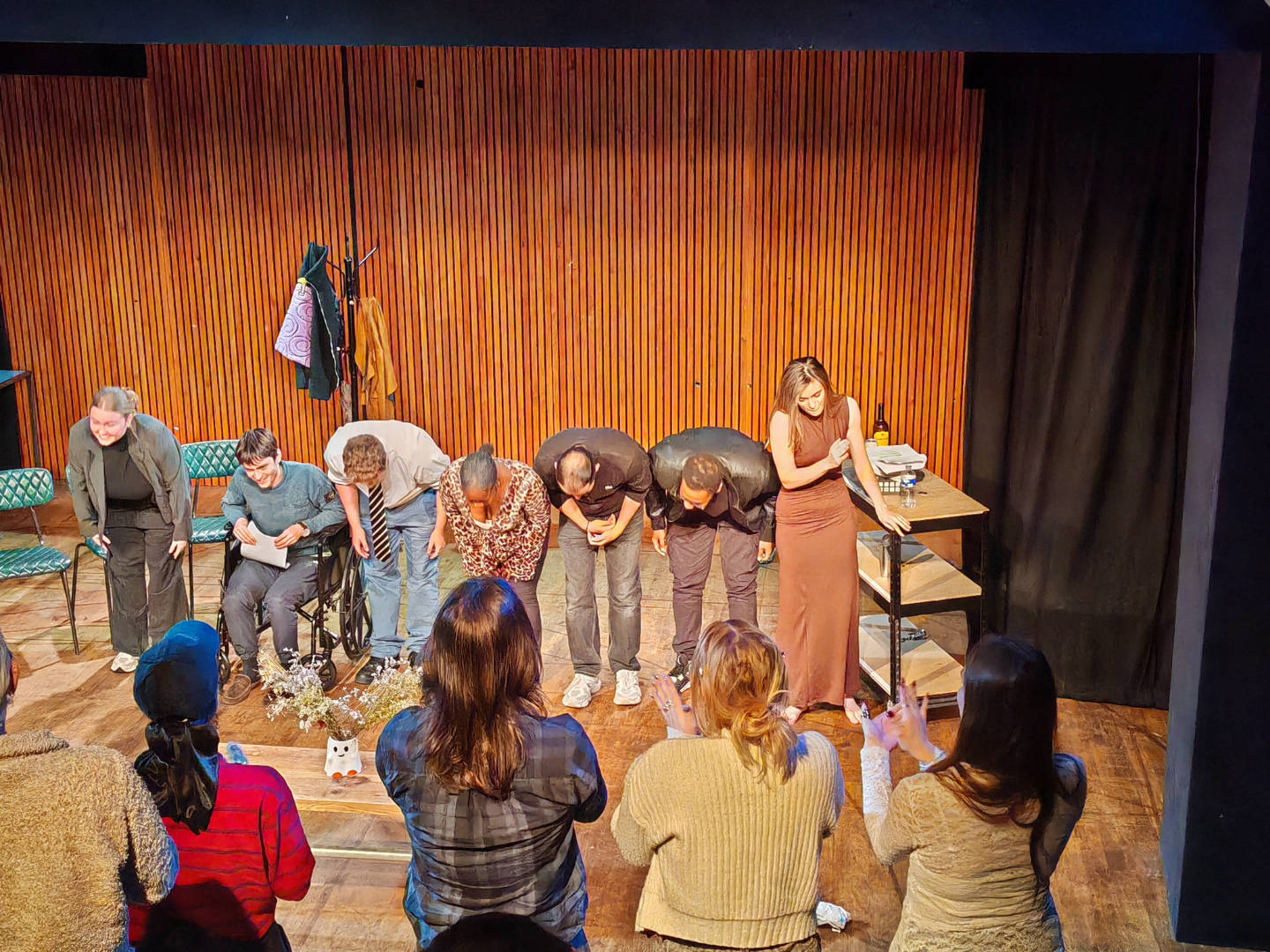
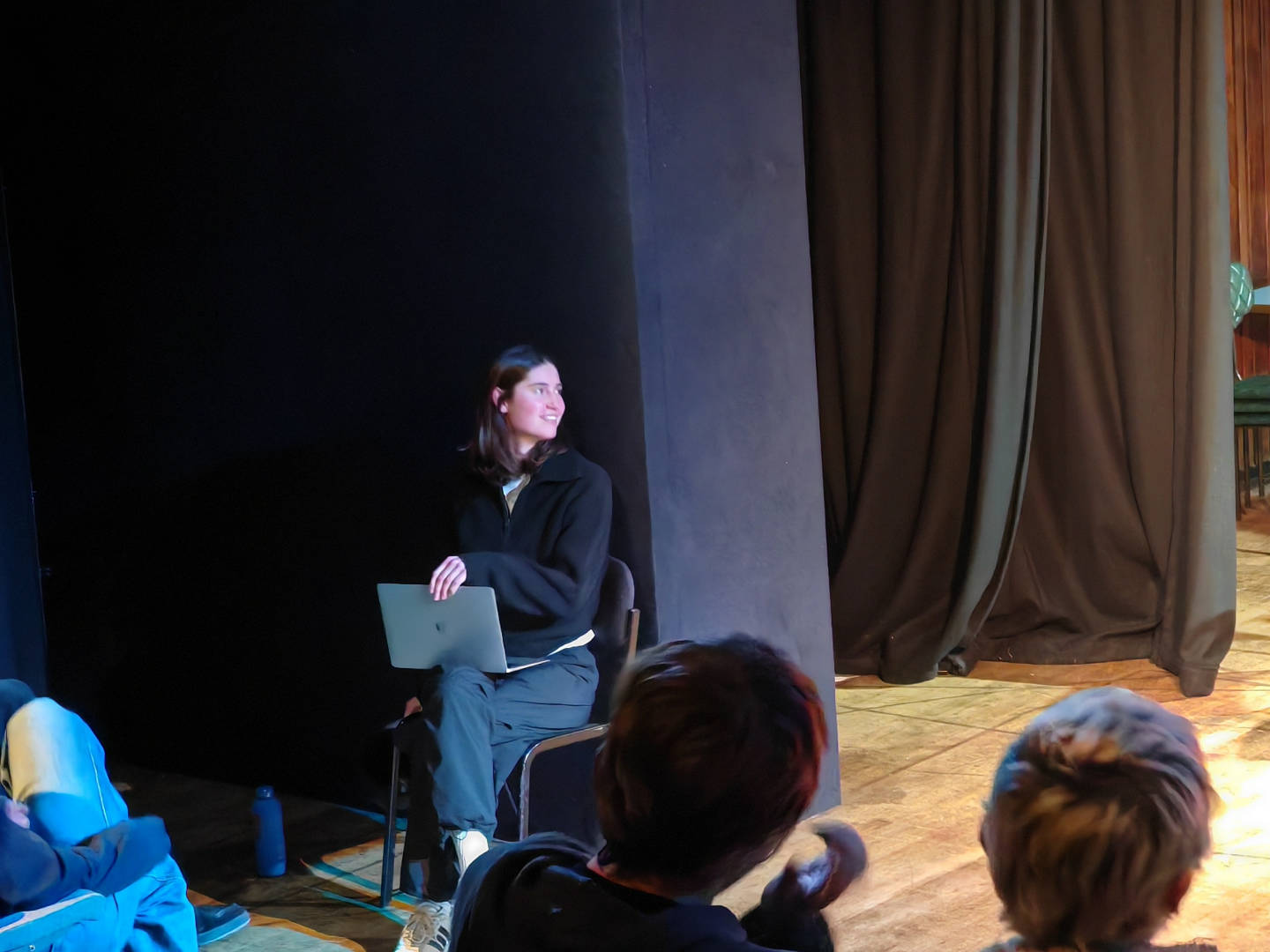
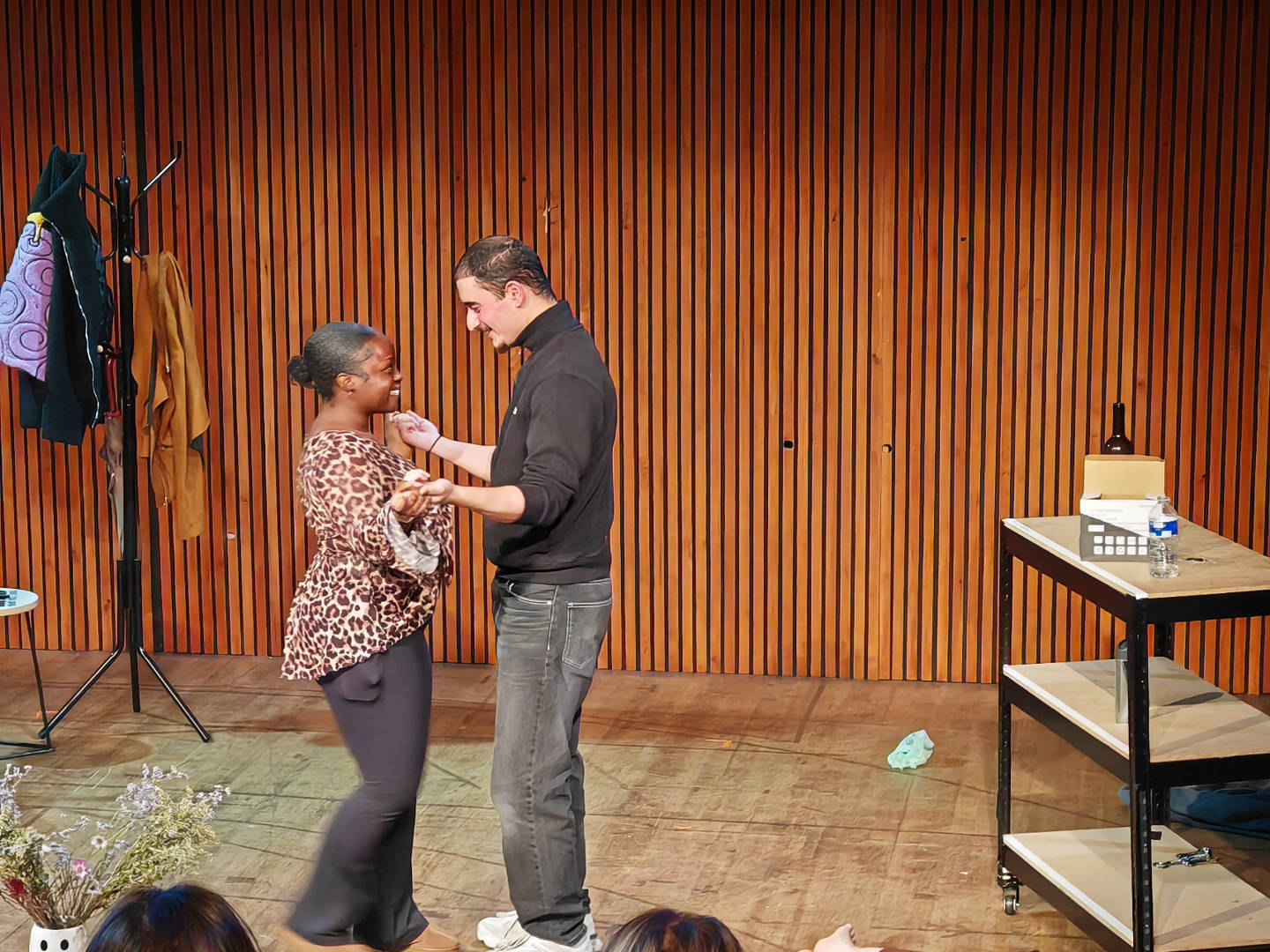
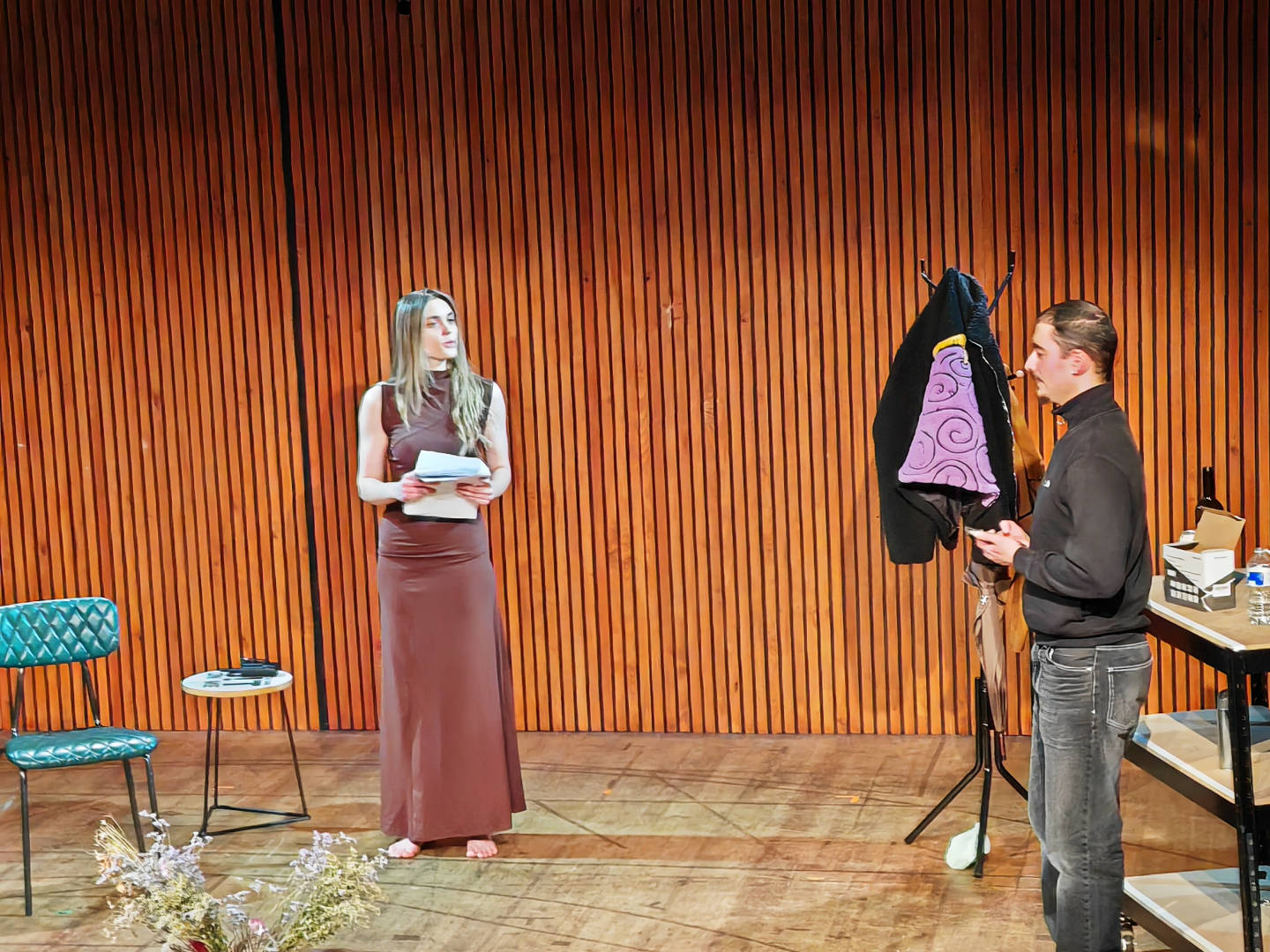
Sophie directed the staged reading while also providing the narration and brief role of the police officer. Some performers referred to the text in printed or digital form, but the company also acted out the scenes rather than simply delivering the dialogue from fixed positions. The presentation therefore occupied a space between a conventional script-in-hand reading and full staging. The attacks in darkness, the broken window and the hazardous electric fire still required some imaginative participation from the audience, while the repeated manipulation of doors, lights, props and hidden evidence demonstrated the piece’s potential for physical comedy and mounting claustrophobia.
Waters handles the collision of genres with considerable assurance. Drawing-room comedy, murder mystery, domestic drama and pulp science fiction coexist without the play losing its shape. The tonal shifts feel controlled, with recognisable domestic grievances continuing to ground the story as events become increasingly extraordinary. Humour and suspense reinforce one another throughout, allowing the tension to build while preserving the play’s darkly comic energy.
Living with an Alien is an imaginative, satisfyingly dark work that balances absurdity with wit. The mix of the ordinary, including a messy affair and a grouchy uncle, with the truly bizarre kept the audience laughing, guessing and leaning forward, right up to the approaching police sirens in the final moments. Even in staged-reading form, it showed a writer with a confident grasp of tone, theatrical escalation and the comic possibilities of finding something profoundly unfamiliar inside an unhappy home.
Cast & Creatives
- Collective Acting Studio, Hornsey Road Baths, London, https://collectiveactingstudio.co.uk/
- Showing - 24 October 2025
- Writer - Esme Waters
- Director: Sophie
- Script & Performance Rights: https://www.nextstagepress.com/living-with-an-alien/
- Cast:
Maria as Lara
Michael as Frederick
Jack P as Graham
Aaliya as Alisha
Nikiah as Simon
Halid as Adrian
Sophie as Narrator & Police Officer
A darkly comic thriller where marital secrets take an otherworldly turn
Summary
Esme Waters’ “Living with an Alien” is a sharp, funny, and unsettling new play that blends drawing-room wit with science-fiction tension. Beneath its laughter and domestic quarrels lies a growing unease that erupts into genuine shock by the final moments. Smartly written and full of character, it shows Waters as a playwright capable of turning the familiar rhythms of a marriage drama into something strange, dark, and irresistibly entertaining.


Add comment