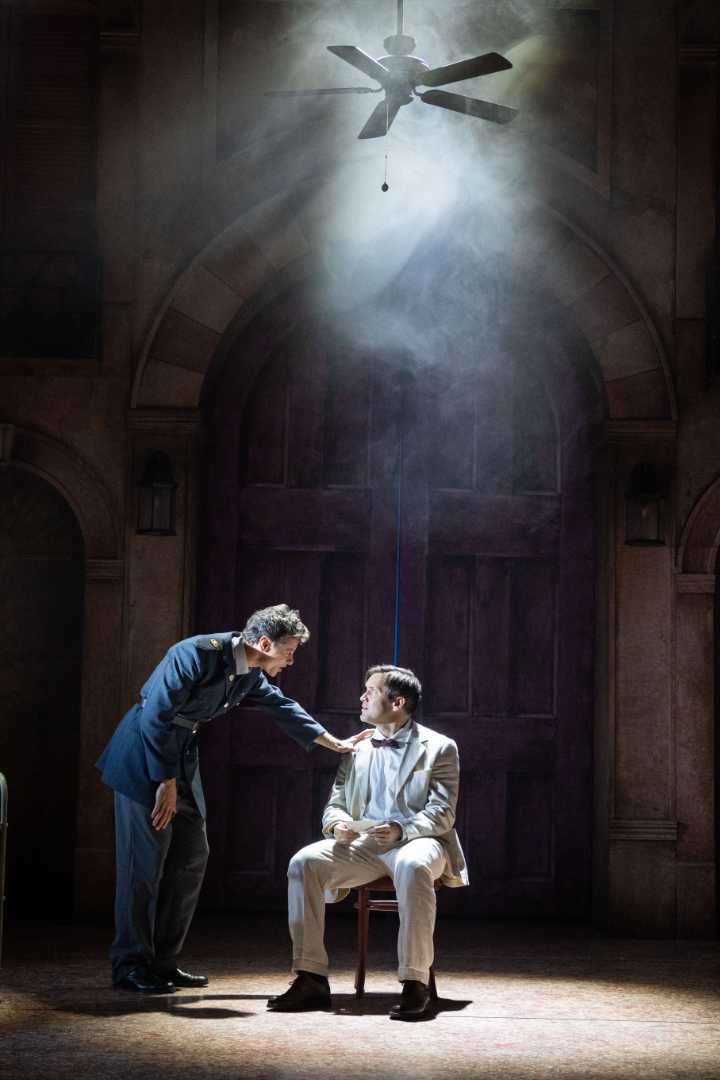
The joke at the centre of Our Man in Havana is not simply that James Wormold lies to the British Secret Service. It is that the British Secret Service seems so relieved to have something to believe. In Clive Francis’s stage adaptation of Graham Greene’s 1958 novel, a vacuum cleaner salesman turns invention into intelligence, and the machinery of government begins polishing nonsense until it gleams.
Directed by Philip Wilson, Theatre Royal Windsor’s production sends Greene’s comic spy story spinning across the stage with pace, colour and a generous sense of theatrical play. It is a caper, certainly, but not an empty one. Beneath the hats, accents, hotel rooms, secret codes and absurdly significant vacuum-cleaner parts, the story still carries a sharp sting about power, credulity and the official appetite for convenient falsehoods.
There is also something pleasing about seeing this sort of work begin life at Theatre Royal Windsor. The theatre has an intimacy that suits nimble, actor-led storytelling, while its sense of history gives classic material a natural home. After The Marquise, Windsor again feels like a venue using its scale wisely: close enough for detail, elegant enough for period style, and ambitious enough to send the production out beyond its own stage.
The plot follows Wormold, a British vacuum cleaner salesman living in pre-revolutionary Havana. Business is poor, his daughter Milly is expensive, and his life has the anxious texture of a man forever checking his bank balance. When Hawthorne recruits him for MI6, Wormold has no obvious gift for espionage, so he supplies the next best thing: imagination. He invents agents, submits fictional reports, and allows London to mistake bar-room invention for hard intelligence.
Francis’s adaptation is built as a four-actor engine, with narration and dialogue passing between the performers as the story hurtles from shop floor to hotel room, from bar to office, from Havana to London and back again. The result has obvious echoes of The 39 Steps, but its flavour is distinctly Greene: drier, darker, and more interested in the way comedy can suddenly find a corpse in the room.
Jack Ashton gives Wormold an appealing mixture of mild bewilderment, comic anxiety and growing opportunism. His Wormold is not a grand deceiver. He is a man gently pushed by circumstance until he discovers that lying pays better than selling vacuum cleaners. Ashton keeps him likeable even as the fiction deepens, partly because the deception grows from recognisable pressures: money, fatherhood, loneliness and the wish to feel briefly capable in a world that has treated him as ordinary.
That ordinariness is important. Wormold works because he is not naturally heroic, villainous or even especially cunning. Ashton lets the audience see the small calculations forming behind the polite exterior, and the comedy comes from watching a decent, flustered man realise that he is rather better at fraud than he expected. He also finds the warmer line in Wormold’s relationship with Milly, giving the farce a domestic pulse beneath its spy-game machinery.
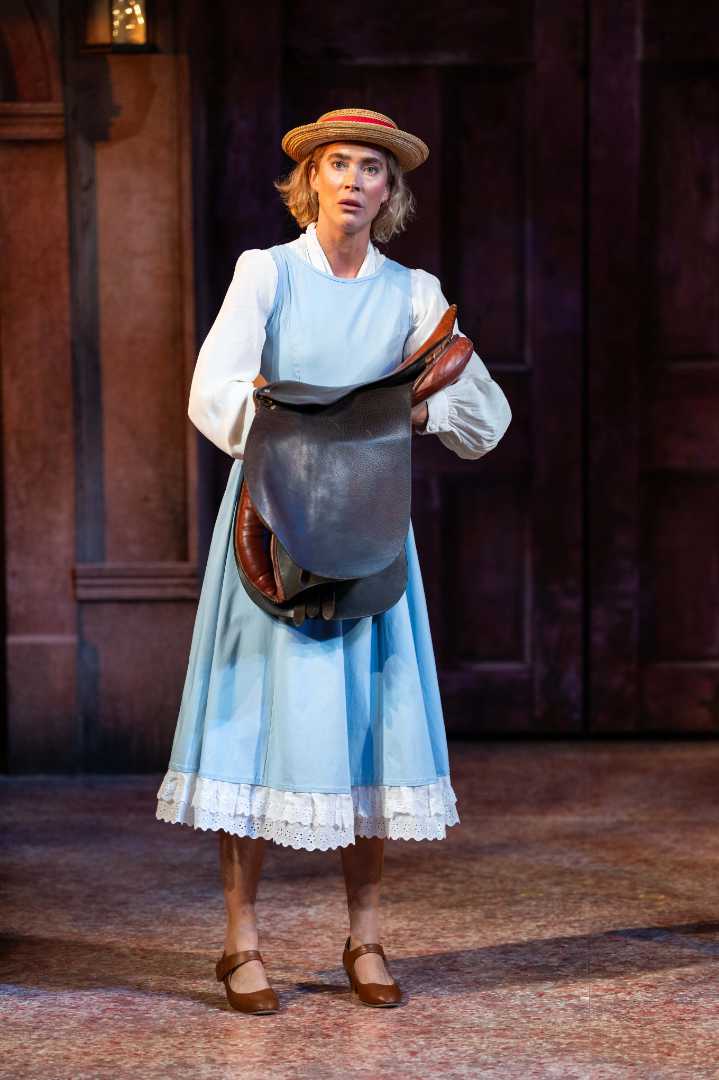
Jodie Steele brings brightness, bite and a great deal of physical comedy to Milly. She first appears as an unapologetically spoilt and demanding daughter, pressing her father for things well beyond his immediate means: a horse, driving, social-club access and the expensive privileges of a life he cannot quite afford. Steele leans into Milly’s obnoxiousness without losing her comic sparkle. She understands how a daughter’s charm can become a form of siege warfare, and how Wormold’s surrender to her demands helps push him towards his disastrous new career.
Steele also makes a clear shift into Beatrice, Wormold’s new secretary and possible romantic counterpart. That doubling has its own comic charge, because Beatrice arrives from the official world just as Wormold’s invented one is becoming dangerously real. Steele handles the contrast neatly: Milly brings youthful pressure and sparkle, while Beatrice brings competence, curiosity and the possibility of something more adult and tender. Her wider comic range also pays off in some of the evening’s broadest physical moments, including a wonderfully funny poisoned-dog sequence and a scene-stealing turn as a stripper, played with exaggerated movement that drew delighted laughter from the audience.
Bob Barrett has a particularly enjoyable track through the evening’s gallery of eccentrics, officials and dangers. As Hawthorne, he captures the absurd confidence of the professional intelligence man, all clipped British authority and procedural seriousness. His scenes with Wormold are among the production’s richest comic exchanges, full of secrecy, suspicion and increasingly ridiculous logic.
Barrett’s switch from the RP machinery of the British Secret Service to the German émigré warmth of Dr Hasselbacher is handled with great skill. Hasselbacher is one of the play’s crucial tonal anchors: funny, eccentric and fond of whisky, but also vulnerable to the darker consequences of Wormold’s game. Barrett allows the evening to turn, quietly and effectively, from froth towards consequence. Later, as Carter, he brings a different kind of unease, reminding us that Greene’s joke is never entirely safe. There is always another side to it, and that side has victims.
Leon Ockenden supplies much of the production’s quick-change snap and visual comedy. His roles move through Havana’s local colour, officialdom and threat, from Lopez and the Bank Teller to the Chief and Segura. Ockenden has a strong instinct for broad comic silhouette, giving each appearance a distinct shape before the text has even had time to settle.
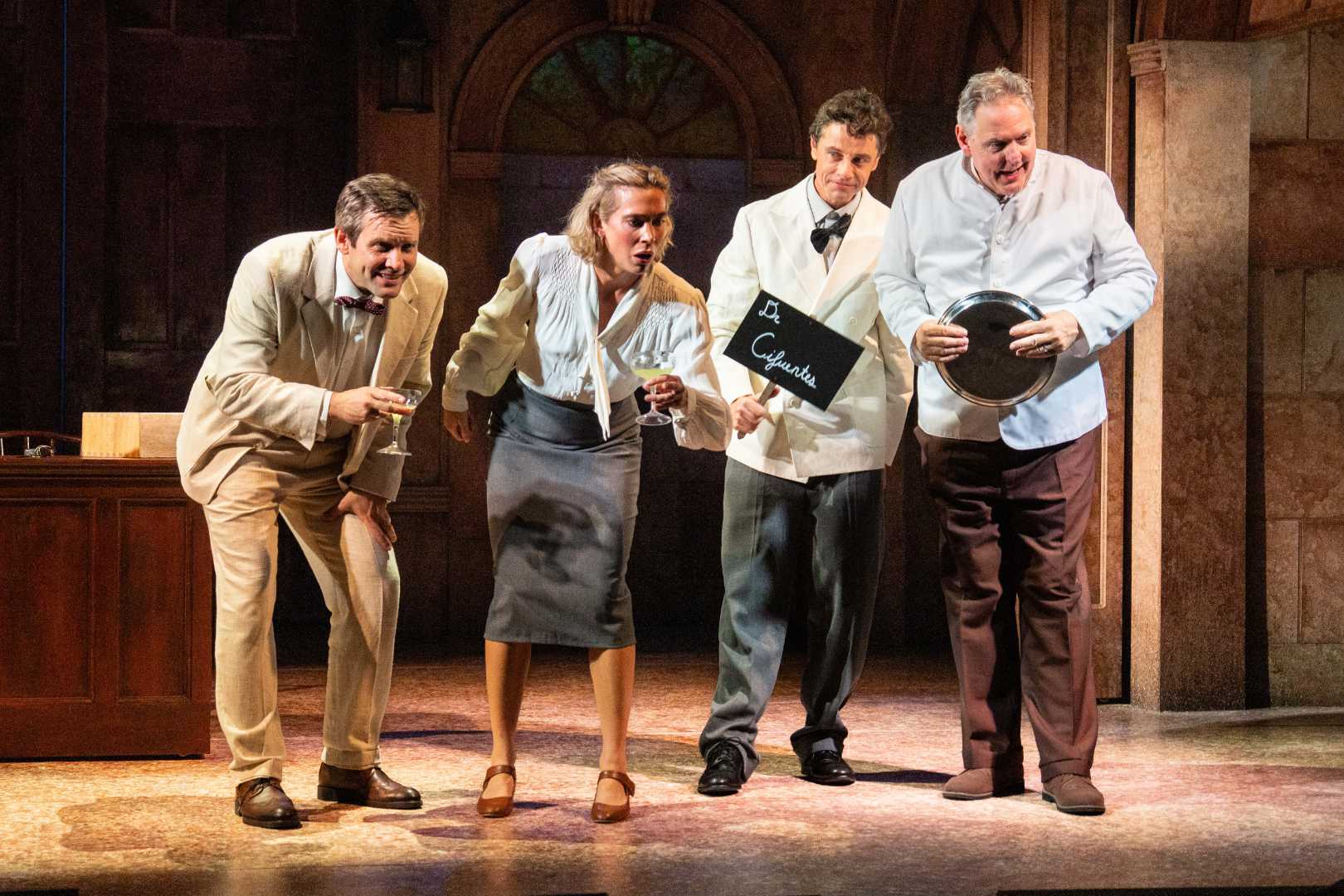
His Segura is particularly useful because it carries genuine menace: a corrupt, cigar-smoking local police chief and chief torturer who belongs to the darker side of Greene’s Havana. Yet Ockenden can pivot from that danger into very broad comic playing elsewhere, camping up the Bank Teller and the toilet visitor with deliberate exaggeration. The gents scene, in particular, becomes one of the evening’s biggest laughs: Wormold being asked to accompany Hawthorne to the lavatory is funny enough, but the business with the cubicle, the secrecy, and the later arrival of a stranger turns the whole exchange into a beautifully overplayed piece of physical farce.
The pleasure of the ensemble lies in the way the performers keep the machinery visible without making it feel laboured. Narration passes through the action, characters appear and vanish, and identities are put on with the speed of a hat, a jacket, a voice or a shift in stance. For the most part, this is clear and entertaining. There are moments when the constant narrative interruptions begin to feel over-explanatory, as if the audience is being guided rather more than it needs. Yet the cast are clever enough to turn many of those interruptions into comic beats, drawing laughter where another production might have allowed the exposition to drag.
That matters, because the play is a little long and could, in places, begin to feel laboured. What keeps it alive is the company’s energy and comic alertness. They keep feeding the audience little sparks: a glance, a pause, a change of posture, a badly concealed intention, a sudden costume shift, or a line tossed out with just enough dryness to keep Greene’s intelligence in the room.
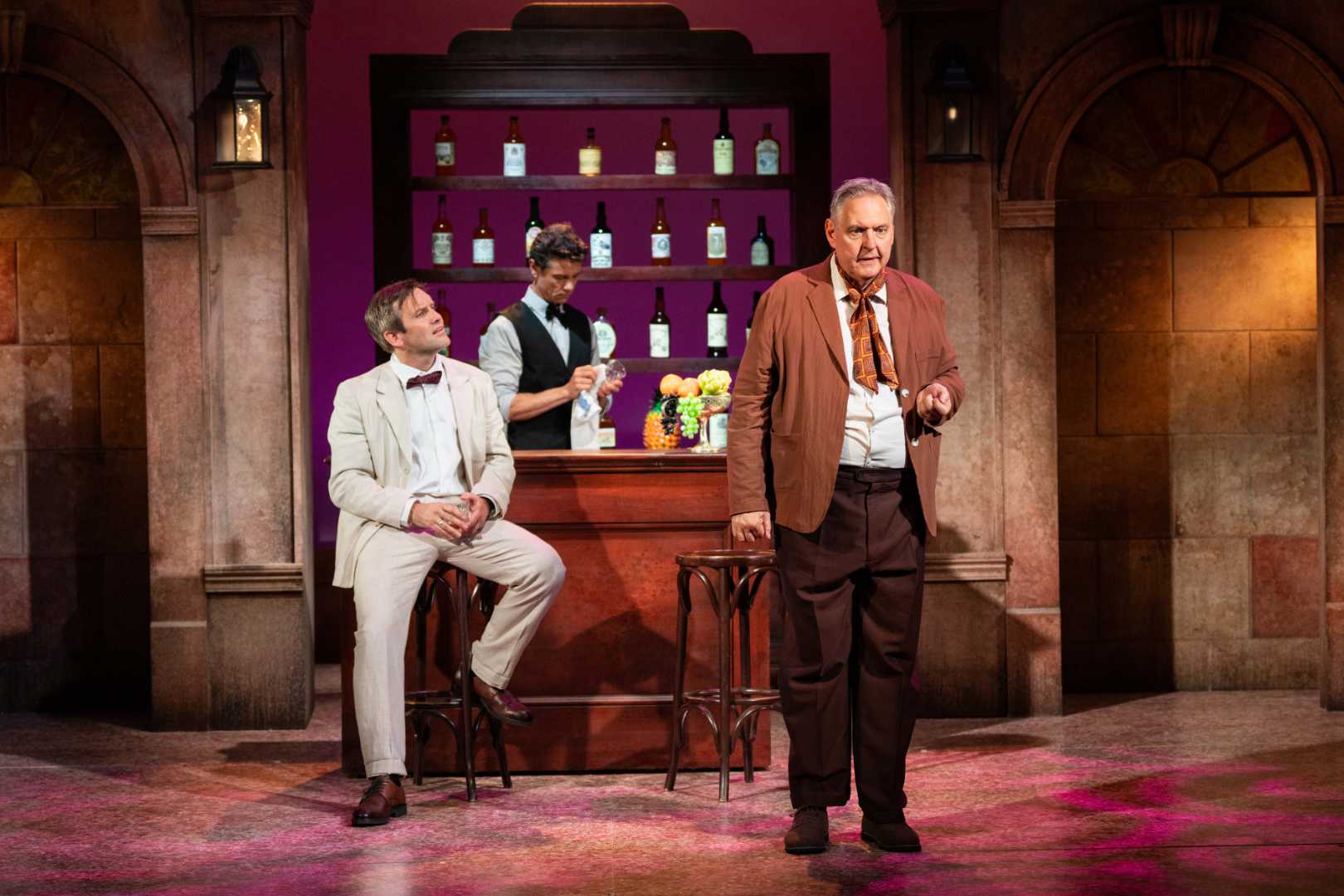
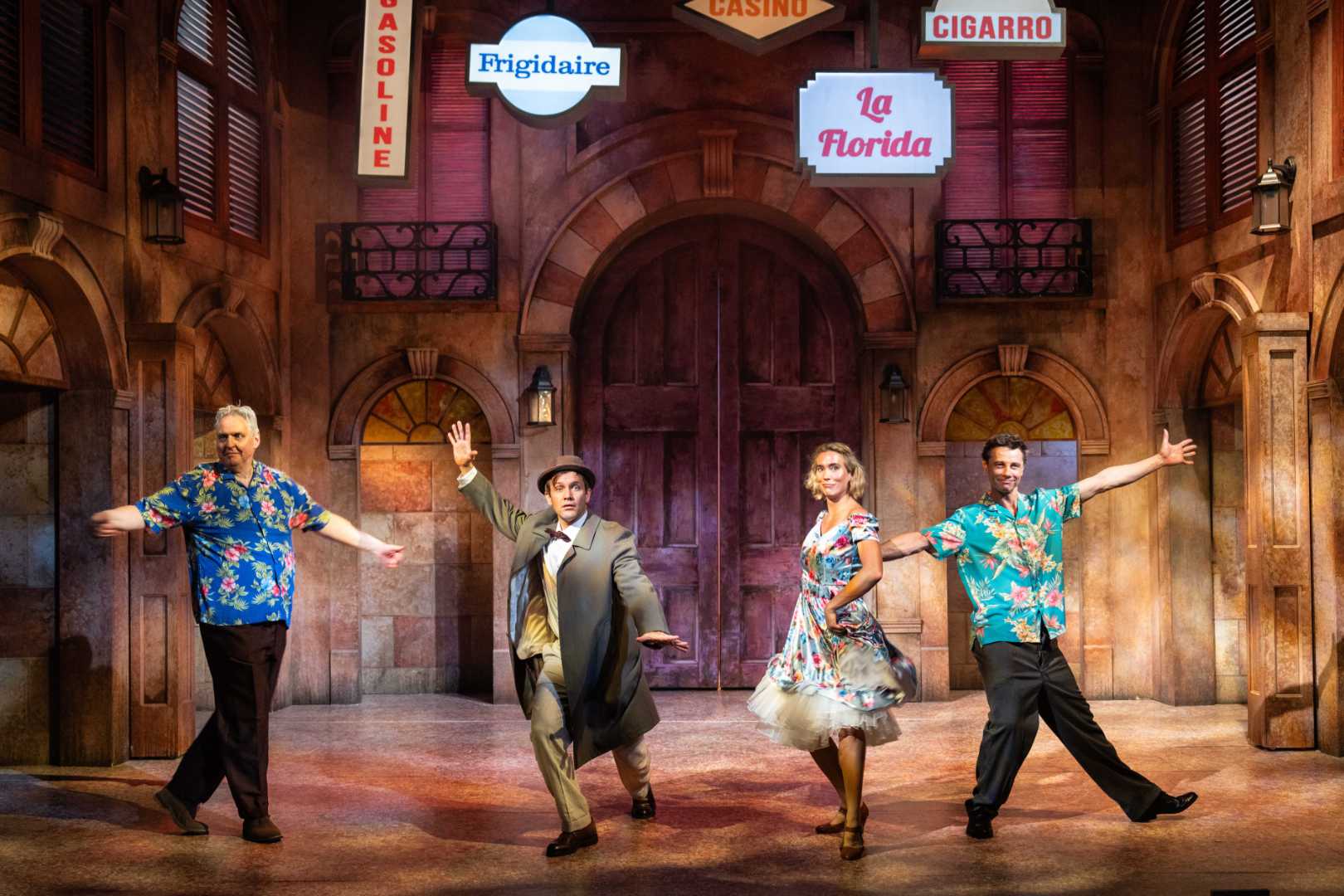
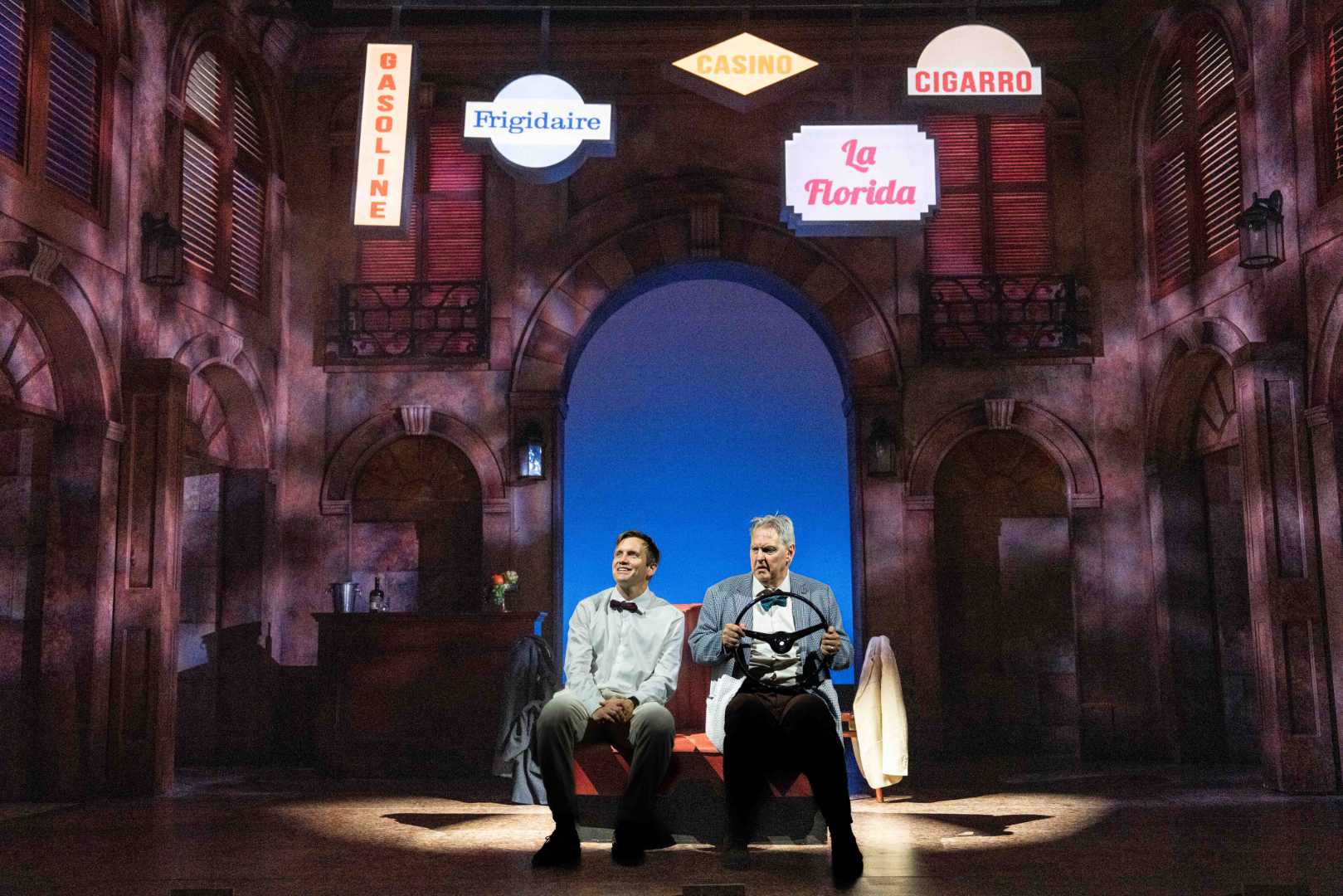
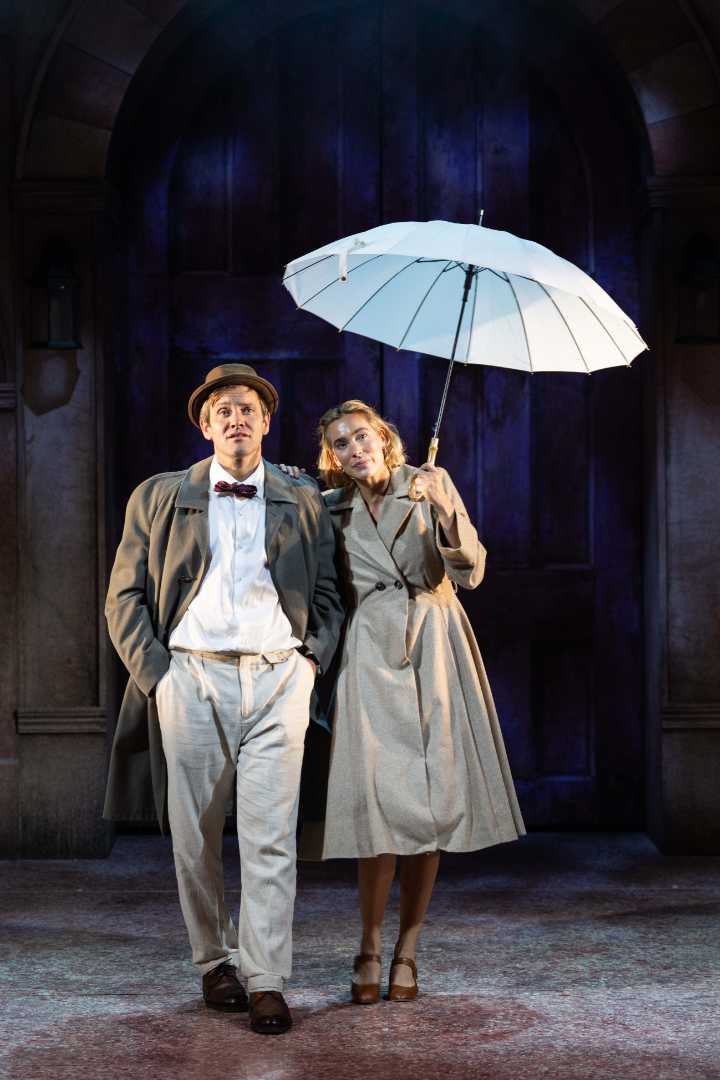
Julie Godfrey’s set and costume design gives the production a handsome 1950s Havana frame, with arched façades, shutters, glowing signs and a central doorway that can become bar, street, office, shop or hotel with brisk theatrical economy. The world is warm, colourful and neatly legible, but never merely decorative. Floral shirts, pale tropical suits, uniforms, bar jackets and sharply contrasting character costumes help the quick changes land clearly, while small details such as a hat, a tray, a telephone, an umbrella or a shift in posture are enough to announce a new figure before the text has quite caught up.
The “Atomic Pile” vacuum cleaner is especially well used as both prop and punchline, an innocent domestic machine gradually promoted by imagination into a matter of international significance. Nick Richings’s lighting helps the production move between tropical brightness, spy-story shadow and bureaucratic chill, while Andy Graham’s sound design adds rhythm and atmosphere to a world of music, coded messages, telephones and overheard danger.
The production is at its best when it trusts Greene’s dryness. The funniest moments are not those that shout their absurdity, but those that play it with complete seriousness: the secret meeting in the gents, the solemn handling of ridiculous reports, the drawings of vacuum cleaner parts treated as if they might alter the balance of global power. The more straight-faced the system becomes, the funnier and more alarming it is.
There is still a sharper edge under the comedy. Wormold’s lies begin as a private survival trick, but they are soon processed by institutions that prefer useful fantasy to inconvenient emptiness. That makes the story feel unexpectedly current. In an age crowded with manufactured narratives, false certainty and official performance, Greene’s old joke still has teeth.
Our Man in Havana is a stylish, witty and warmly performed production that understands both the bounce and the bite of its material. It may run a little long, and the narration occasionally explains more than it needs to, but the cast keep the evening buoyant, funny and theatrically alive. Somewhere between the showroom and the secret service, the machine hums beautifully.
-
- Bob Barrett, Jack Ashton, Jodie Steele and Leon Ockenden in Our Man in Havana at Theatre Royal Windsor. Photo: Jack Merriman.
-
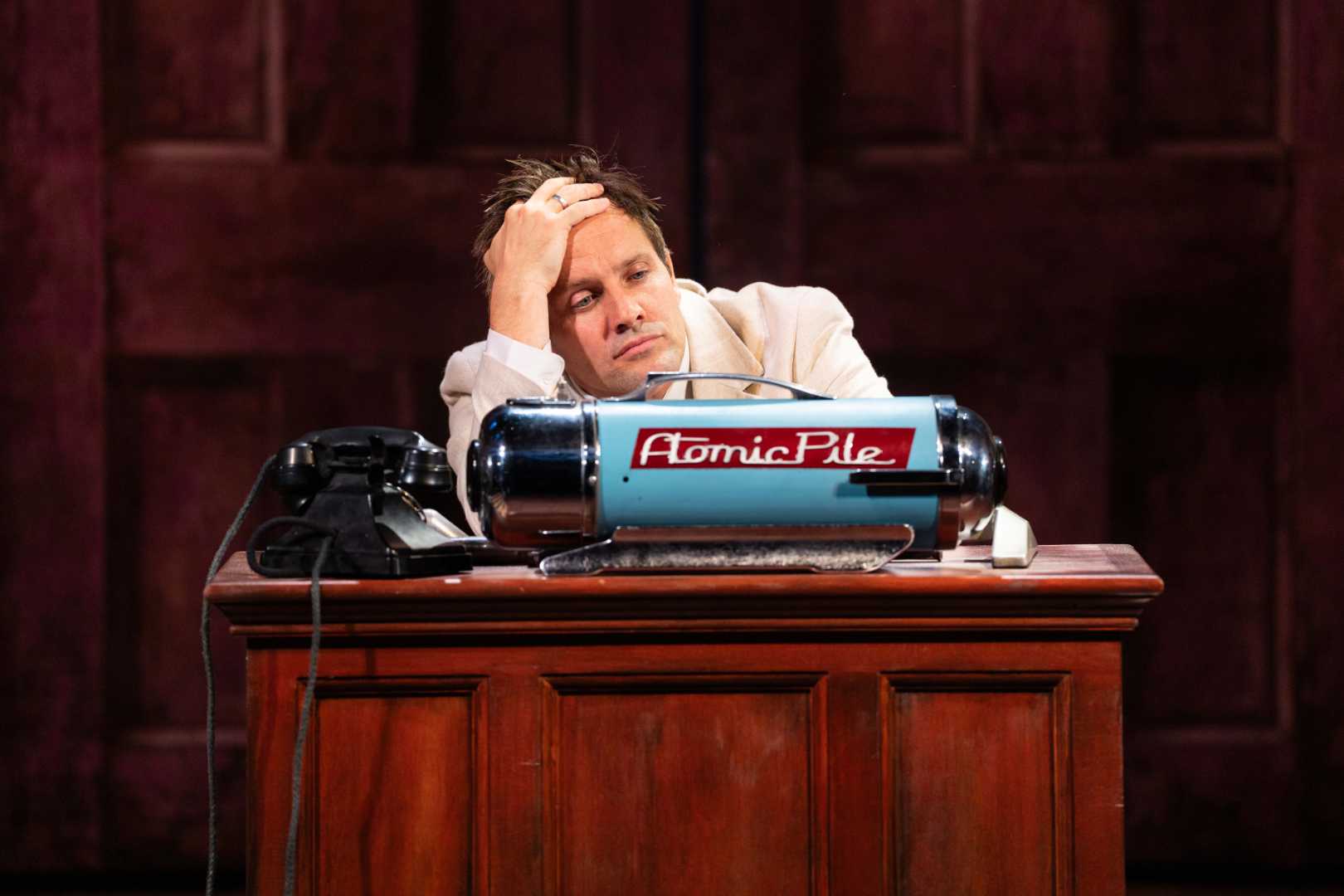
- Leon Ockenden, Jack Ashton, Bob Barrett and Jodie Steele in Our Man in Havana at Theatre Royal Windsor. Photo: Jack Merriman.
-
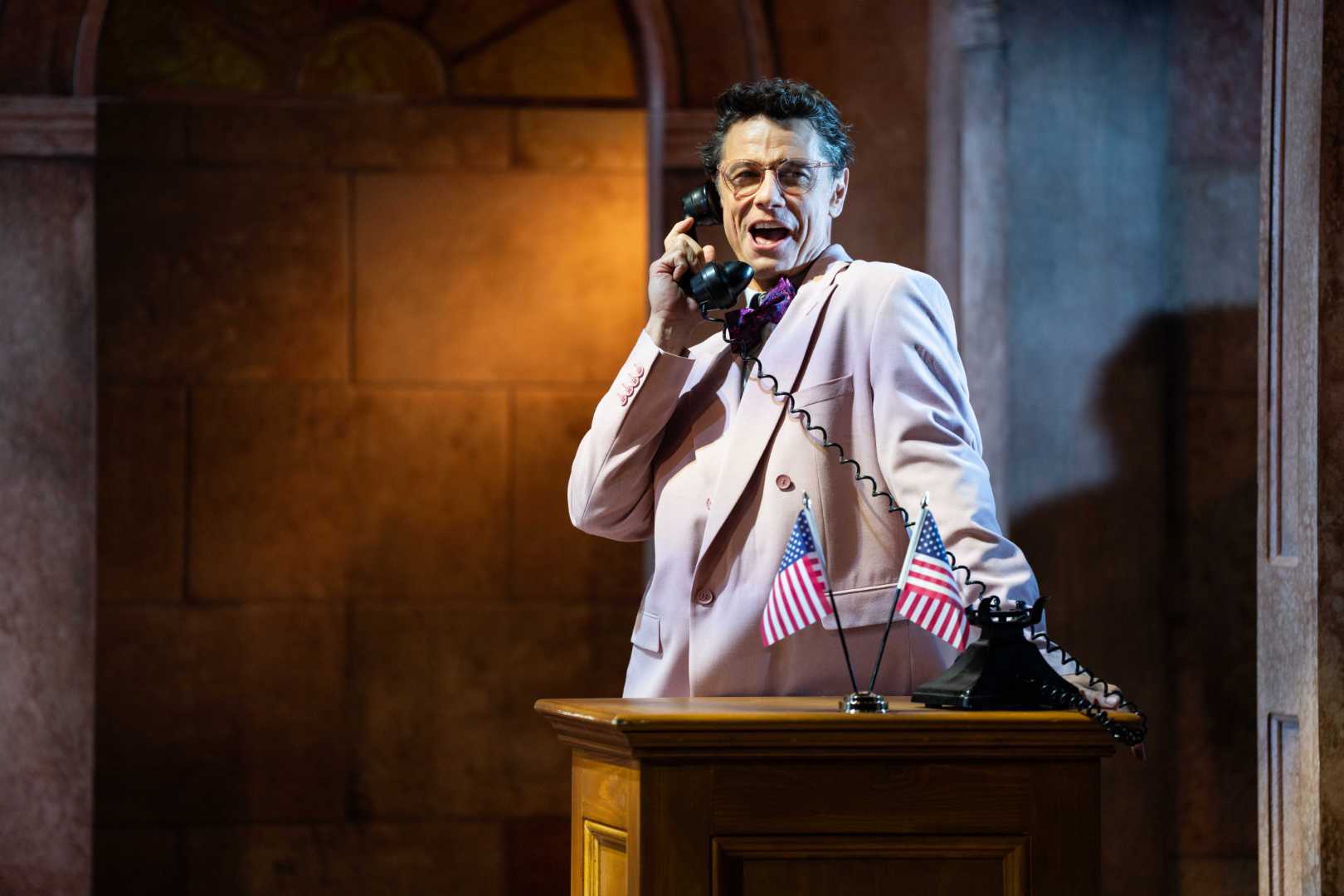
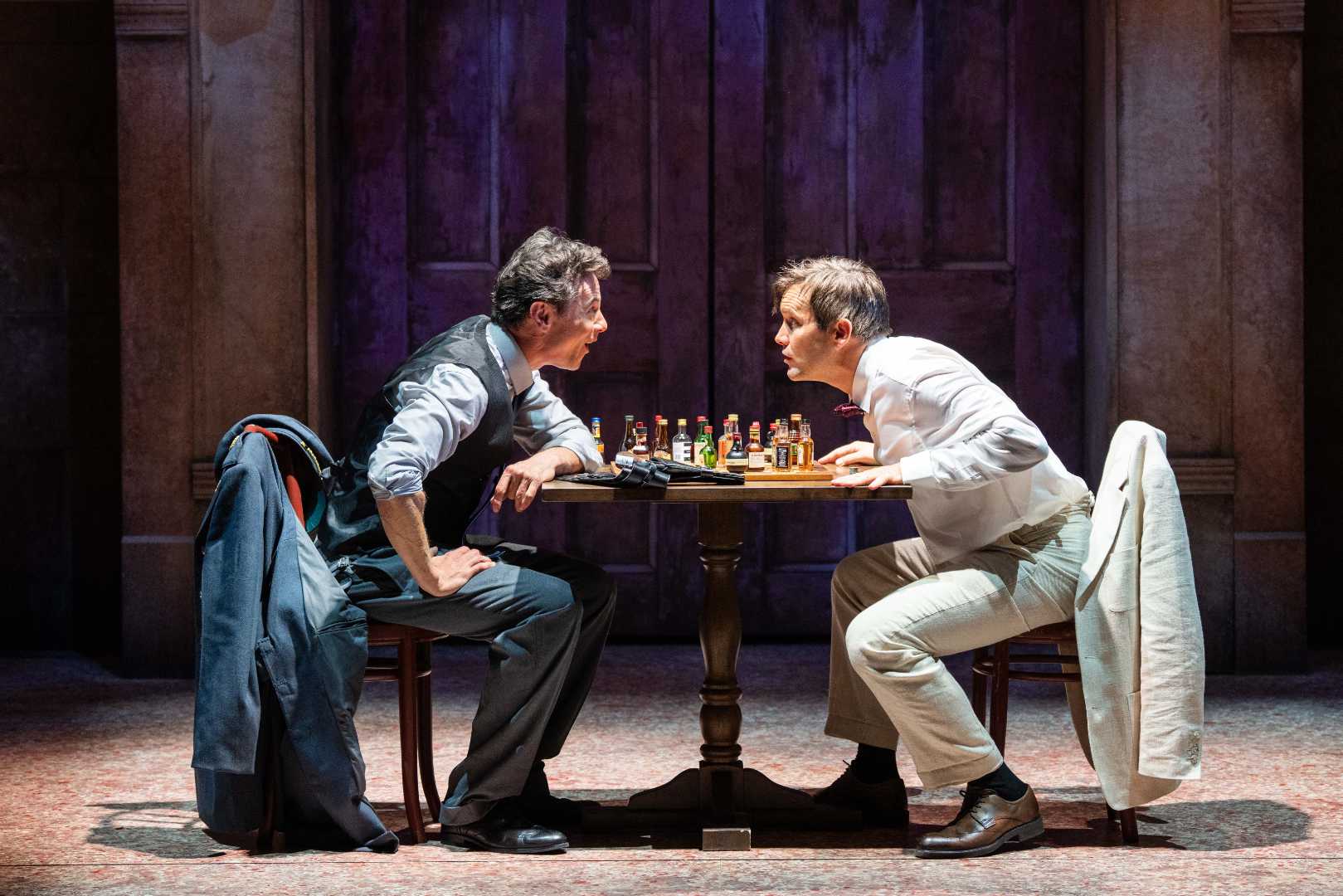
- Jack Ashton, Leon Ockenden and Bob Barrett in Our Man in Havana at Theatre Royal Windsor. Photo: Jack Merriman.
-
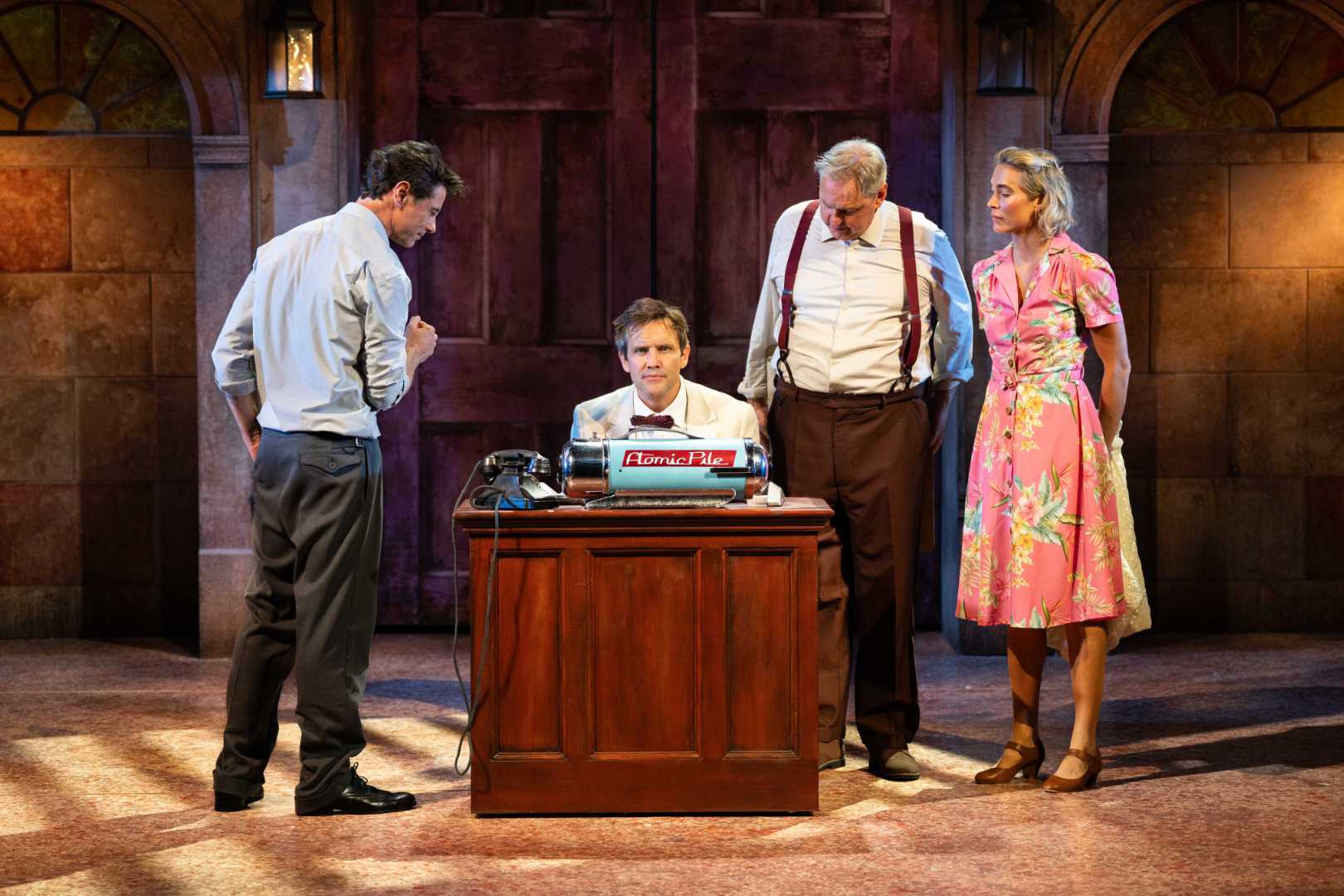
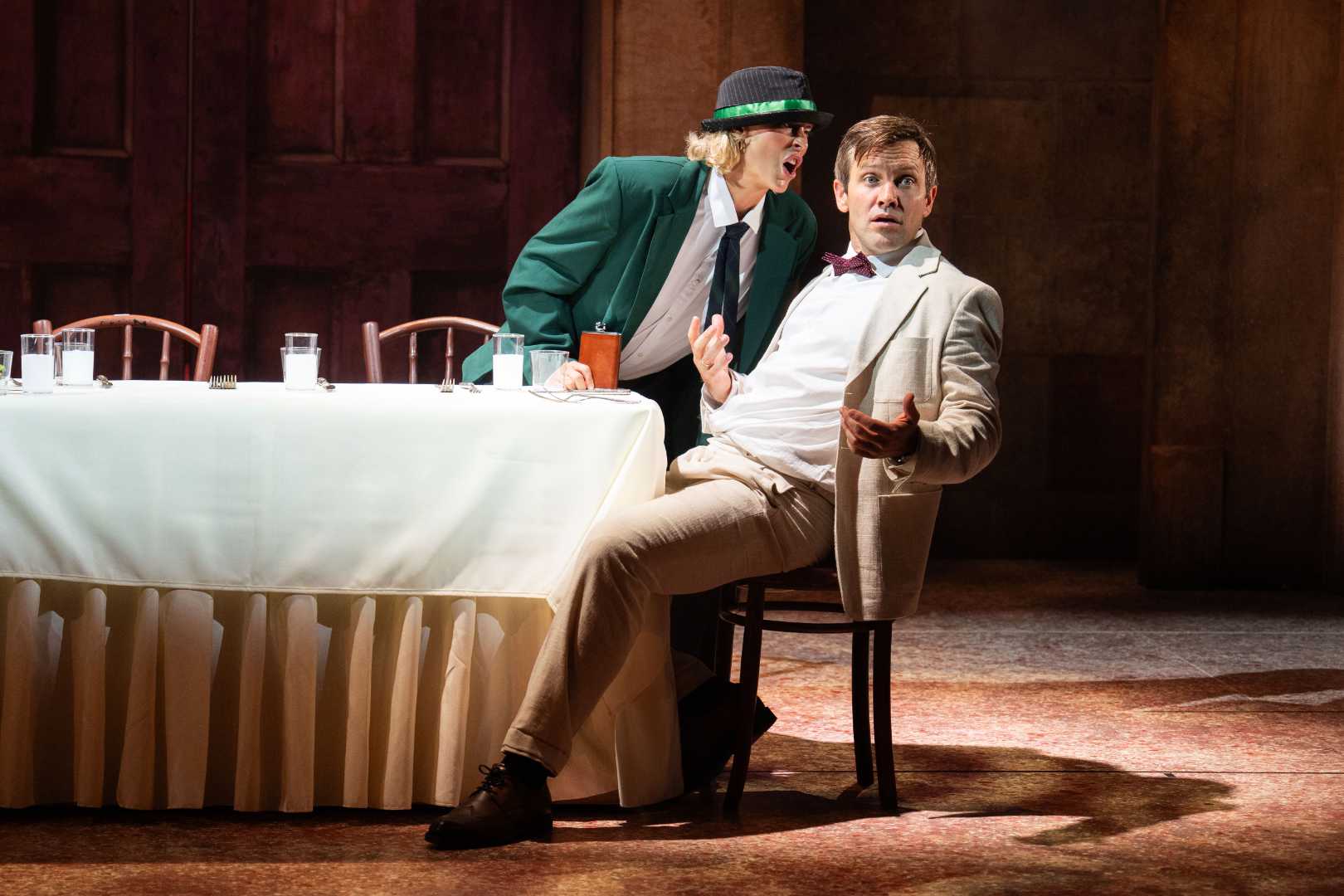
- Jack Ashton, Jodie Steele, Leon Ockenden and Bob Barrett in Our Man in Havana at Theatre Royal Windsor. Photo: Jack Merriman.
Cast & Creatives
- Showing: 1st – 11th July 2026
- Venue: Theatre Royal Windsor, 32 Thames Street, Windsor SL4 1PS
- Buy Tickets: https://theatreroyalwindsor.co.uk/havana-26/
- Adapted by: Clive Francis, from the novel by Graham Greene
- Director: Philip Wilson
- Set and Costume Design: Julie Godfrey
- Lighting Design: Nick Richings
- Sound Design: Andy Graham
- Photography: Jack Merriman
- Cast:
Bob Barrett as Voice 2
Leon Ockenden as Voice 3
Jodie Steele as Voice 4
James Leeman as Understudy
Elinor Solly as Understudy
Witty, Stylish, And Sharply Performed
Summary
Witty, stylish, and warmly performed, Our Man in Havana turns Graham Greene’s comic spy caper into a lively four-actor romp with bite. It may run a little long, but the cast keep the evening buoyant and theatrically alive.


Add comment