Noël Coward wrote The Marquise in 1926 as a star vehicle for Marie Tempest, and by his own later admission he was never quite able to judge the play on its merits. Her performance made it impossible. It is easy to see why that problem has persisted. The Marquise is not a play that announces itself with the confidence of Private Lives or the machine-like comic precision of Hay Fever. It moves in a more oblique register for most of its length, warm and witty, before arriving at outright farce in the final act, when it suddenly and gloriously does. Holding an audience through that earlier, more conversational material without the safety net of a familiar title demands real skill from a company, and Philip Wilson’s production for Bill Kenwright largely achieves it, finding the play’s rhythm and trusting both its intelligence and its charm.
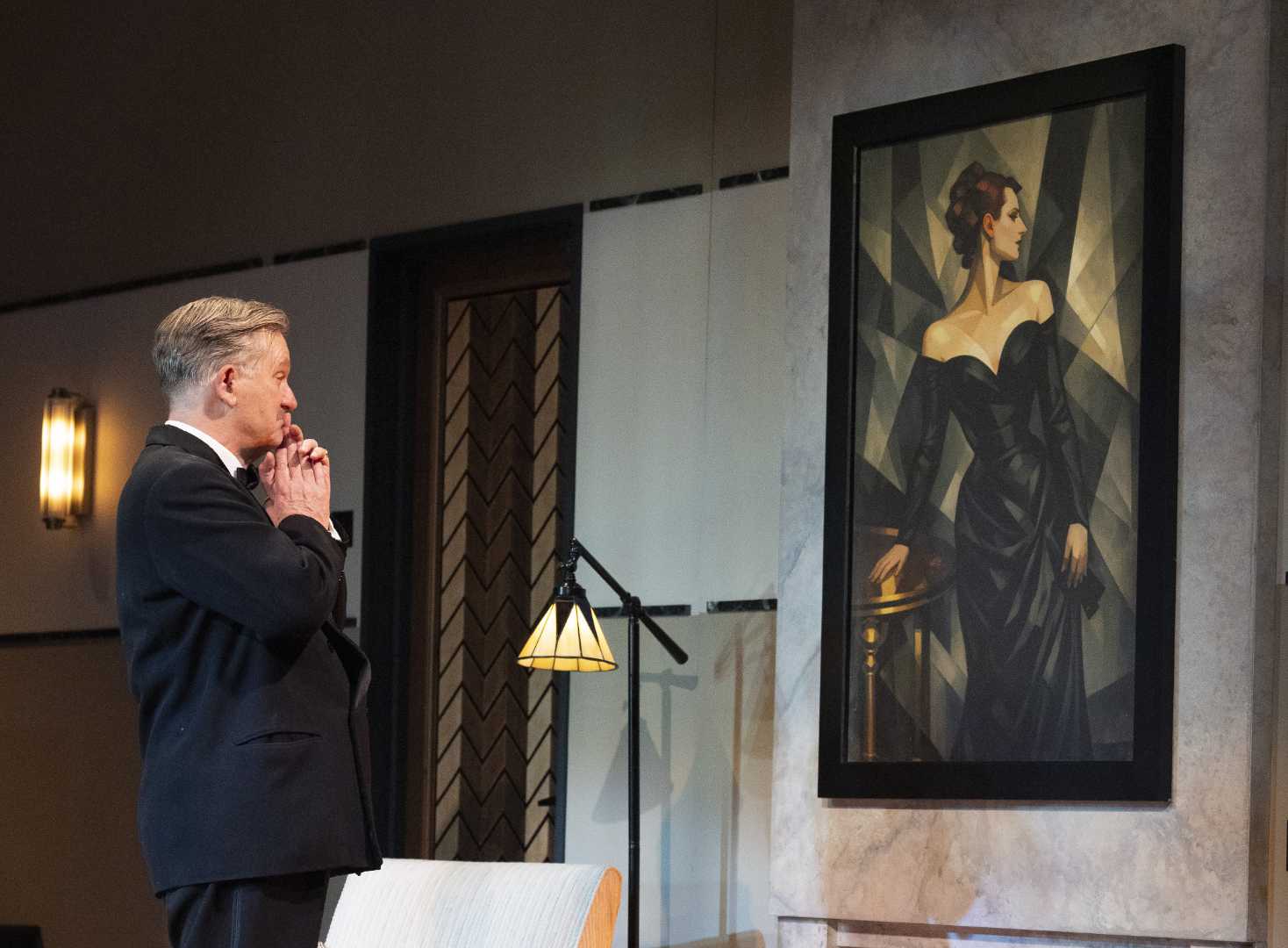
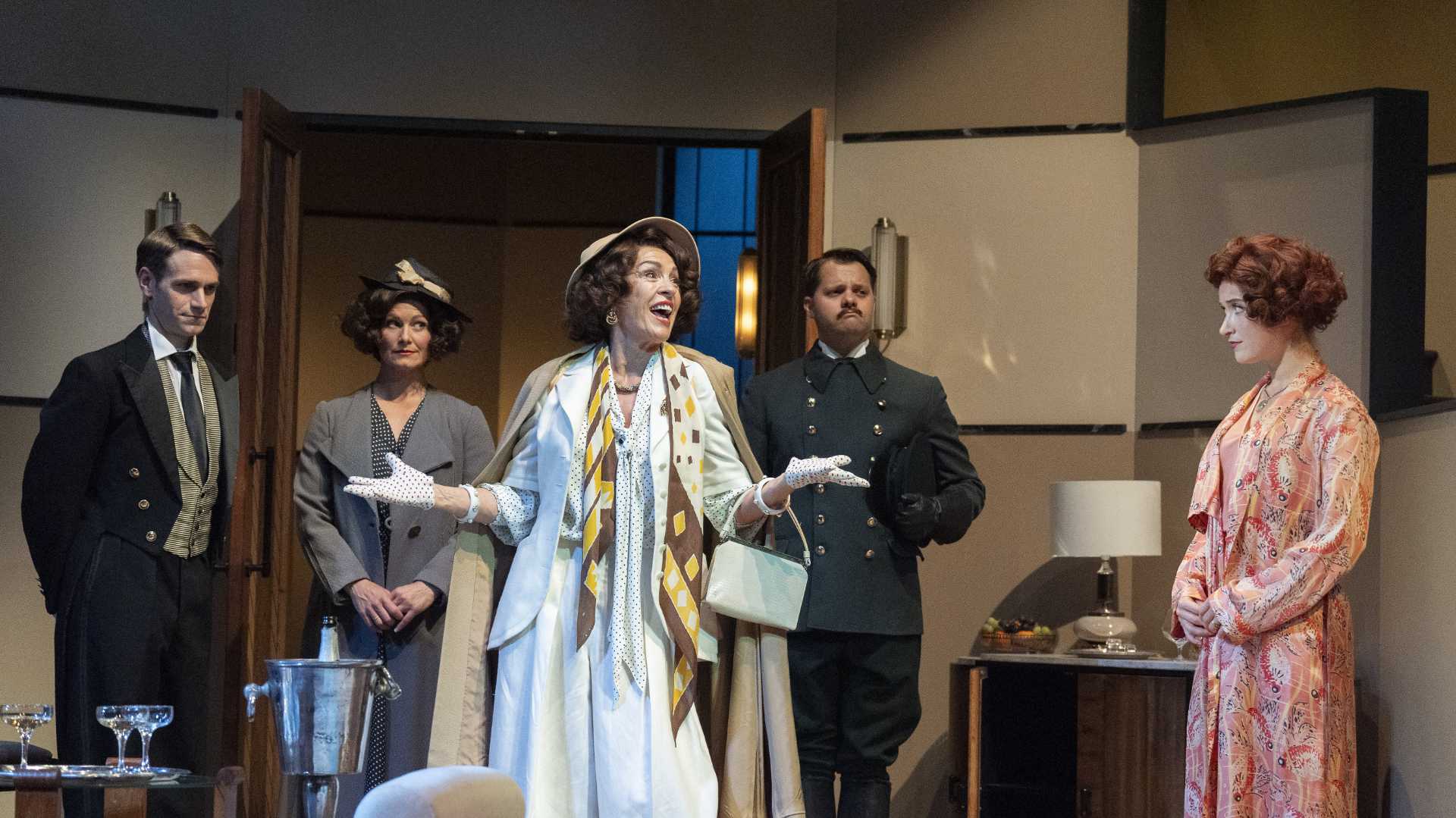
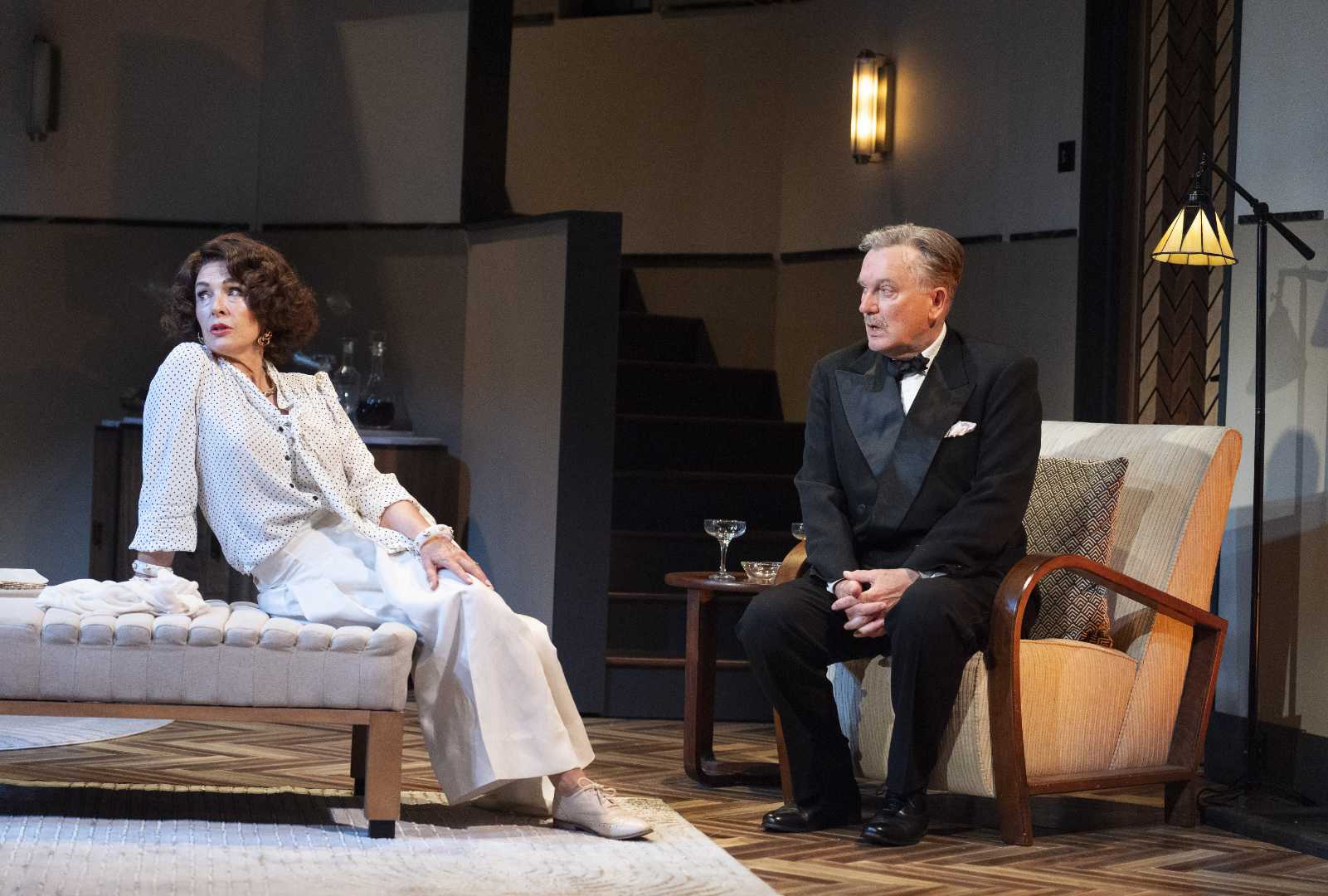
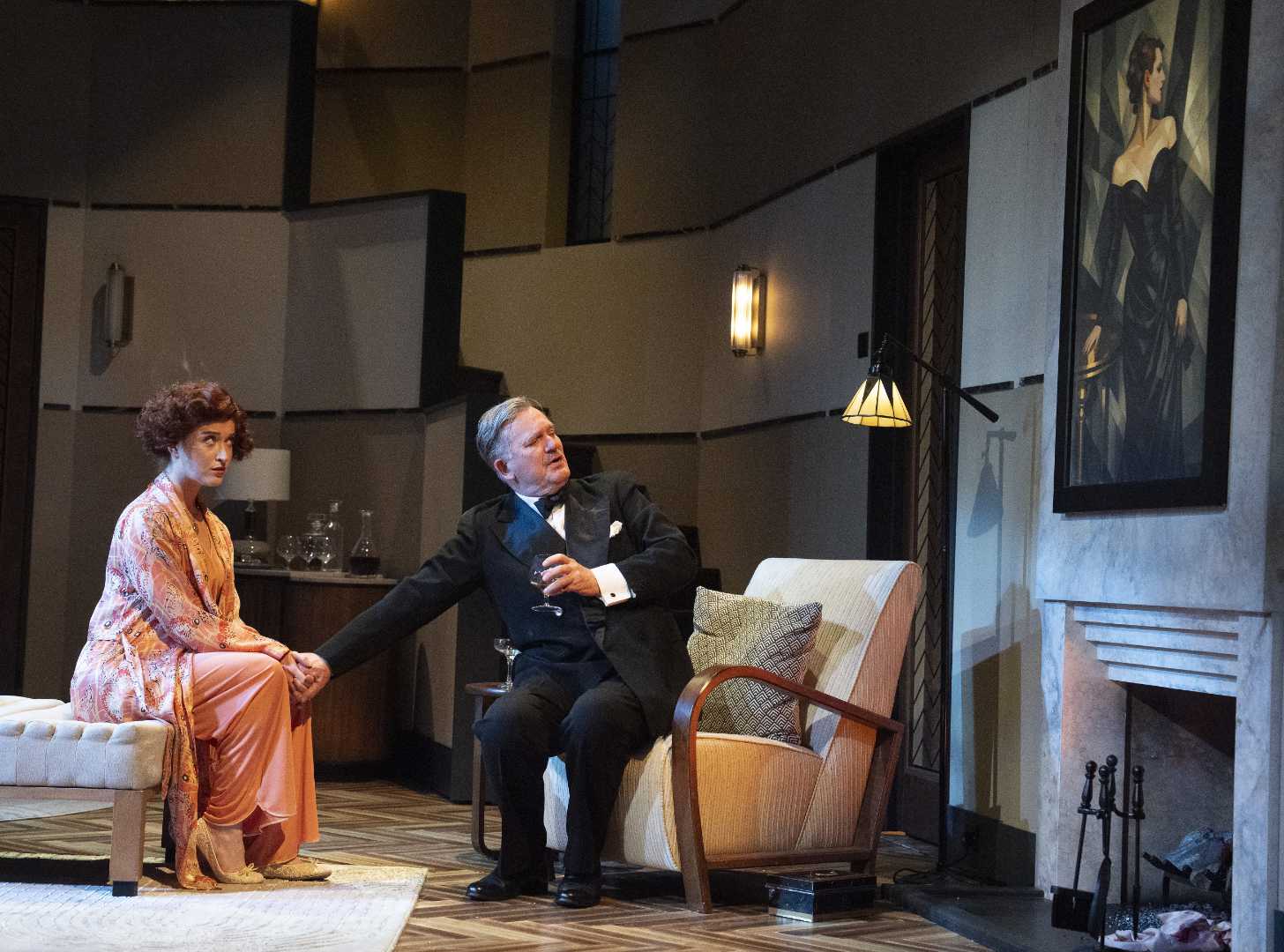
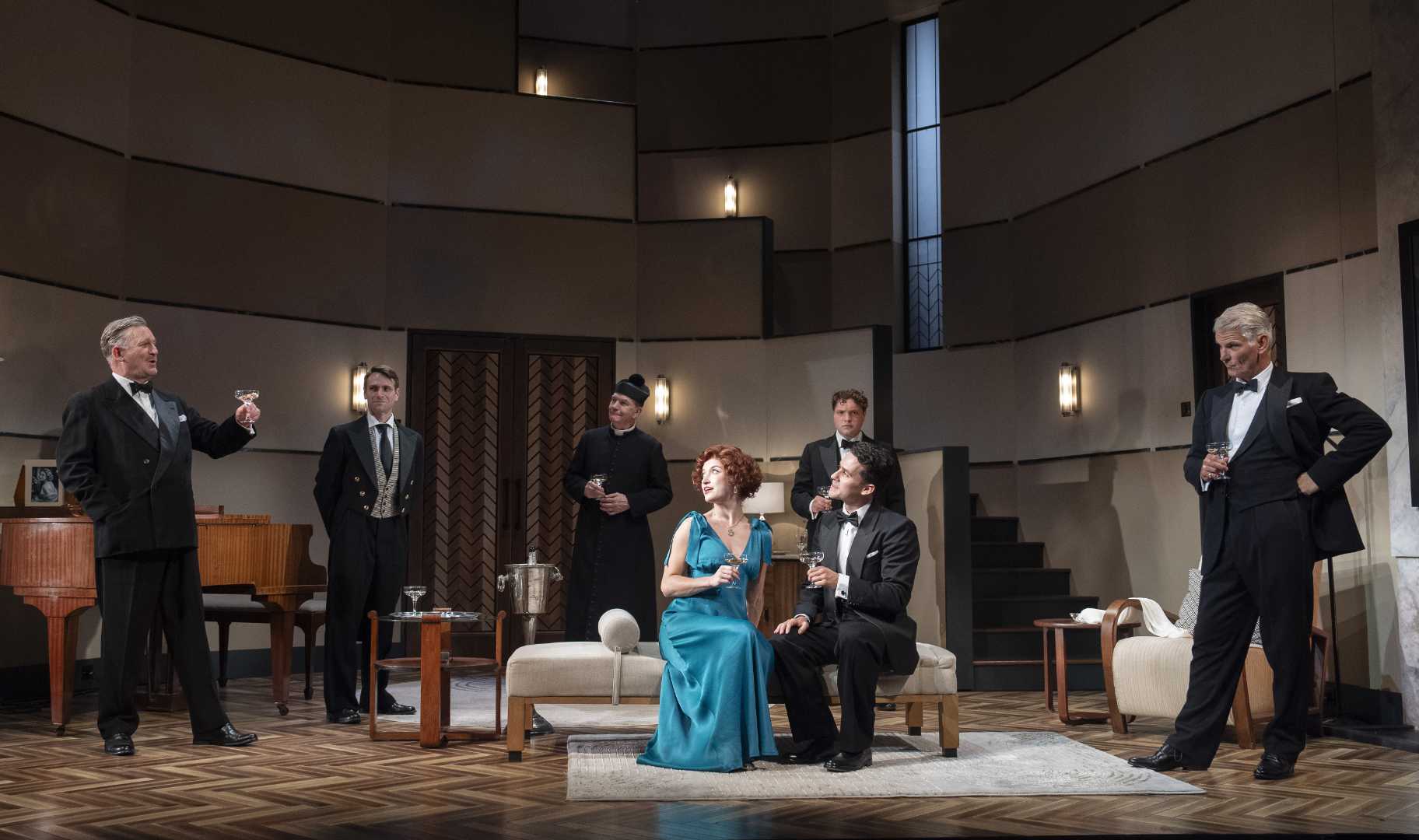
The decision to relocate the action from 18th-century France to the 1930s is not merely decorative. Coward himself called the piece “a brittle modern comedy placed in an eighteenth-century setting,” and Wilson’s production shifts that modernity forward to its own era, the decade of Coward’s greatest work, giving the brittleness its natural home. Colin Falconer’s set is a visual world rather than a period frame: a single curved room with a rounded rear wall and a staircase spiralling up to the bedrooms above, the panelled walls inlaid with chevron detailing, art deco brass sconces casting a warm amber light across a herringbone parquet floor. The room has depth and multiple entrances, which prevents the long single-location structure from ever feeling confined. Falconer’s costumes are equally well judged, moving through silk loungewear, elegant day dresses and black-tie formality, each one quietly telling us who these people are trying to be. The portrait of the dead Comtesse above the fireplace is a particularly happy touch: painted in a cubist-inflected 1930s style, angular and cold, it immediately makes Raoul’s devotion to his wife’s memory look like a performance of grief rather than the genuine article.
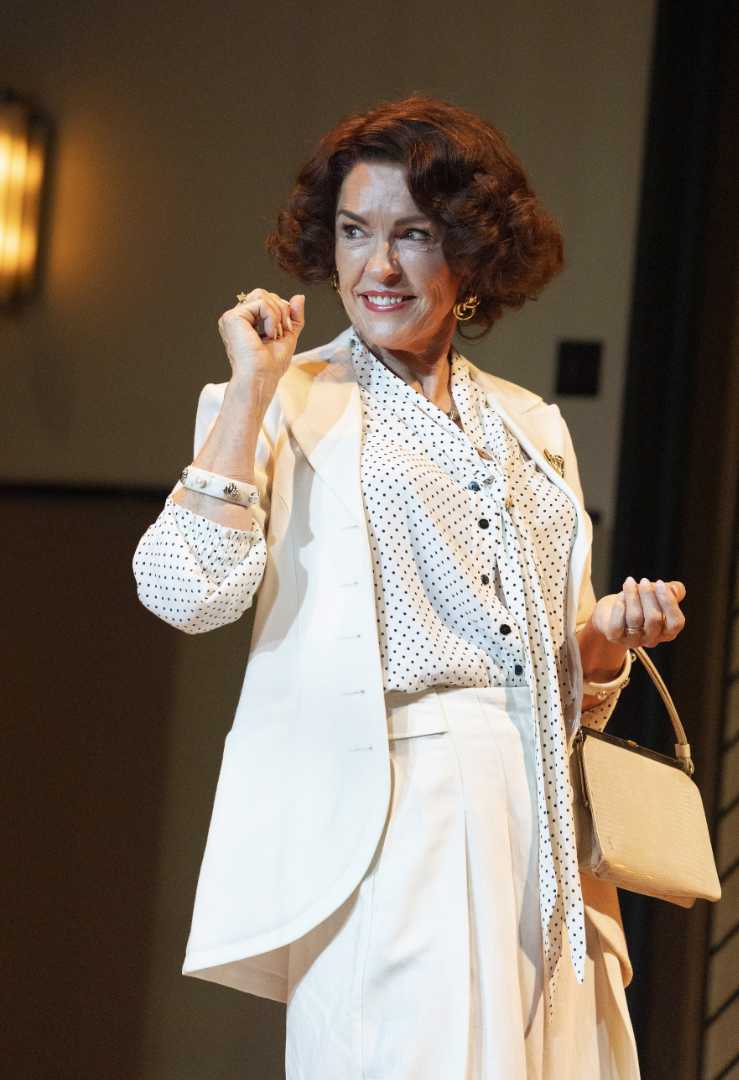
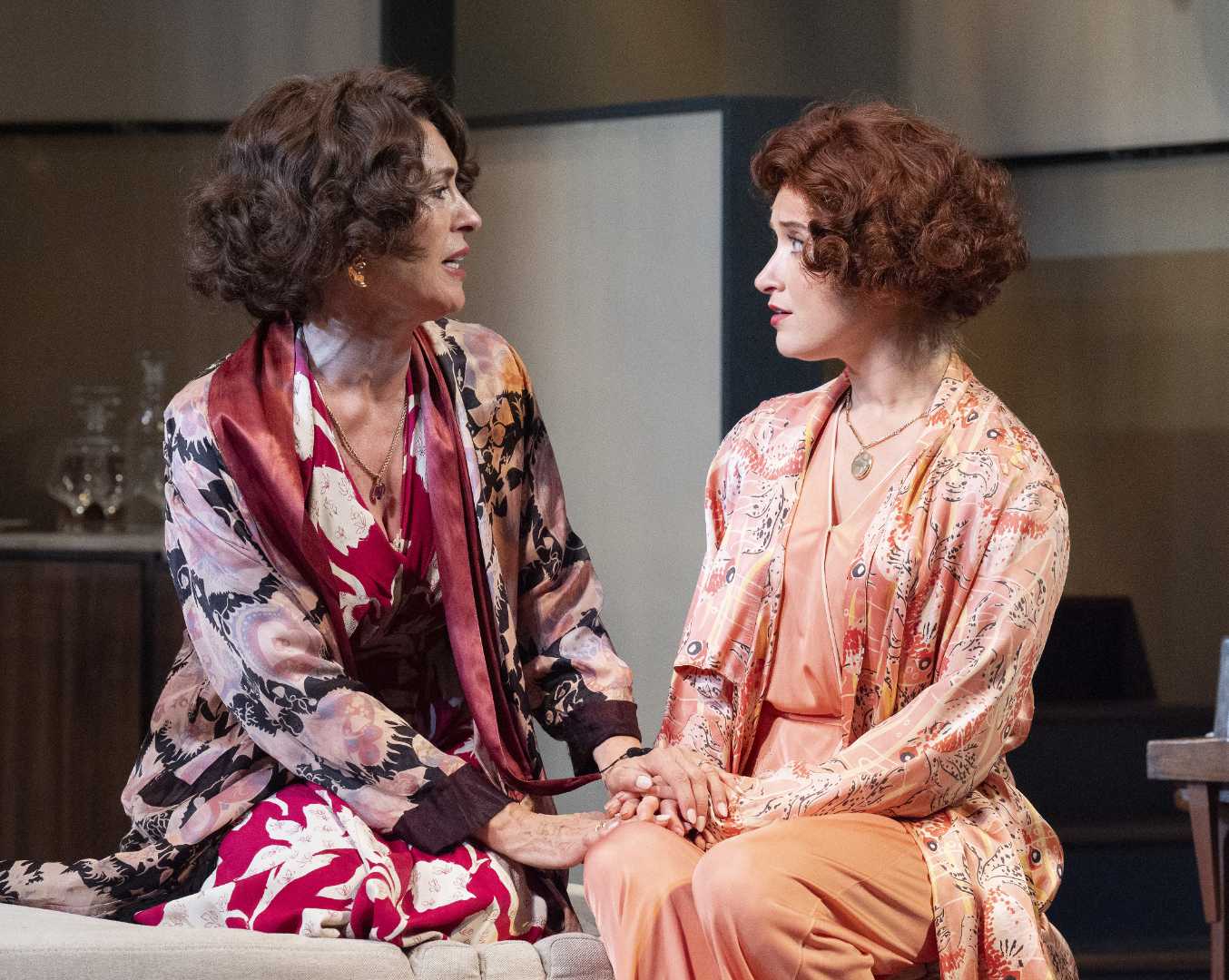
At the centre of the evening, Juliet Aubrey brings to the Marquise Eloise de Kestournel a superb and sustained self-possession. When Eloise arrives, stepping through the door unannounced after years of absence, her first line is a domestic instruction: do close the window, dear, it is cold. She plays the arrival with no grand theatrical flourish, but with something more unsettling: a complete and unruffled composure that suggests she has never doubted for a moment that she would be welcome. Aubrey moves directly to warm her hands at the fire, remarks on the new piano, and observes of the portrait of Raoul’s dead wife that she looks wretched, all before he has recovered his composure. The grandeur is entirely present, worn so lightly that it arrives in the room before the audience has quite noticed it. Throughout the evening Aubrey sustains a comic intelligence that is never merely decorative. The wit has weight behind it, and the confession scene in Act III, in which Eloise explains with composure and dignity why she left each man in turn, reveals an emotional dimension beneath the sparkle that makes the character believable as well as endlessly entertaining.
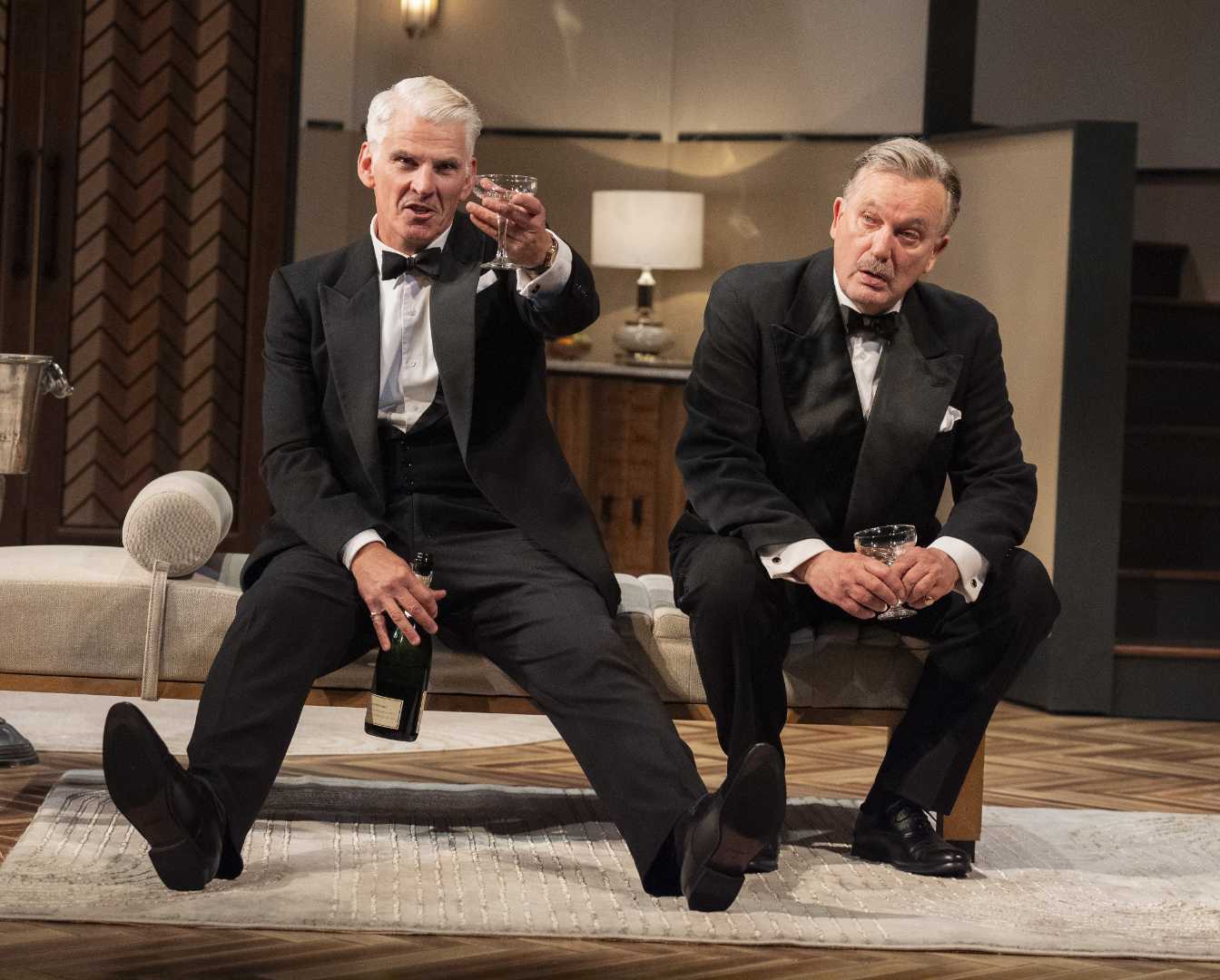
Simon Shepherd’s Raoul is the ideal foil and considerably more than a foil. Shepherd finds in Raoul a man whose deepest note is wounded rather than severe, playing that wound underneath a careful construction of pomposity. The comedy comes from the gap between the posture and the feeling underneath, and the touching moments land because Shepherd never plays the severity as something absolute. His admission, half dragged from him by Esteban, that he loved once and once only, is beautifully judged, and by the final act, when drink has loosened his armour and he addresses his dead wife’s portrait as a determined and unmitigated bore, the release feels real.
Tristan Gemmill brings to Esteban a generosity of spirit that makes him considerably more than the jovial contrast to Raoul’s stuffiness. His Act I toast to the young couple, that they should enjoy themselves as much as possible and not ask more than that, comes across as felt rather than performed. Gemmill plays the nostalgia in his private exchanges with Raoul as warmth rather than sentiment, and there is a strong sense throughout that he has conceived Esteban as the man Raoul might have been rather than simply his comic opposite. That gives their friendship real weight, and makes the duel, when it comes, feel like a spasm of absurdity between two people who love one another.
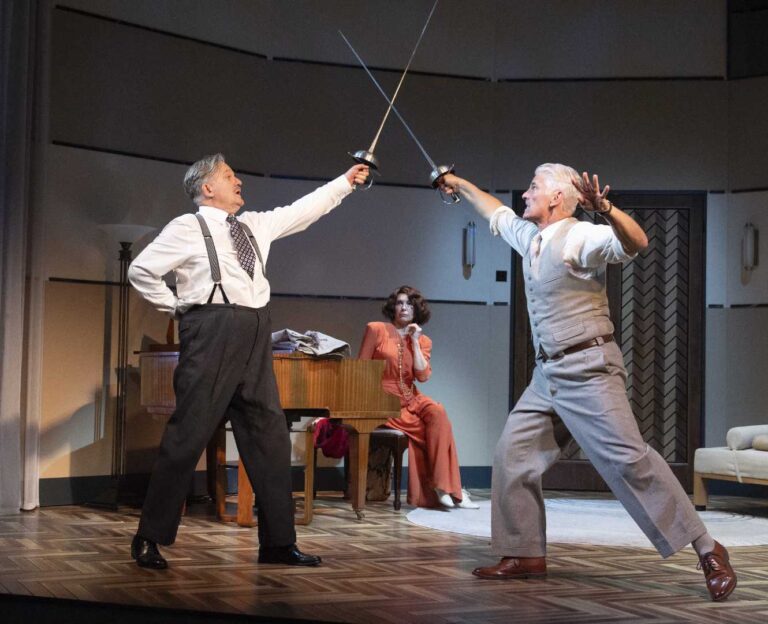
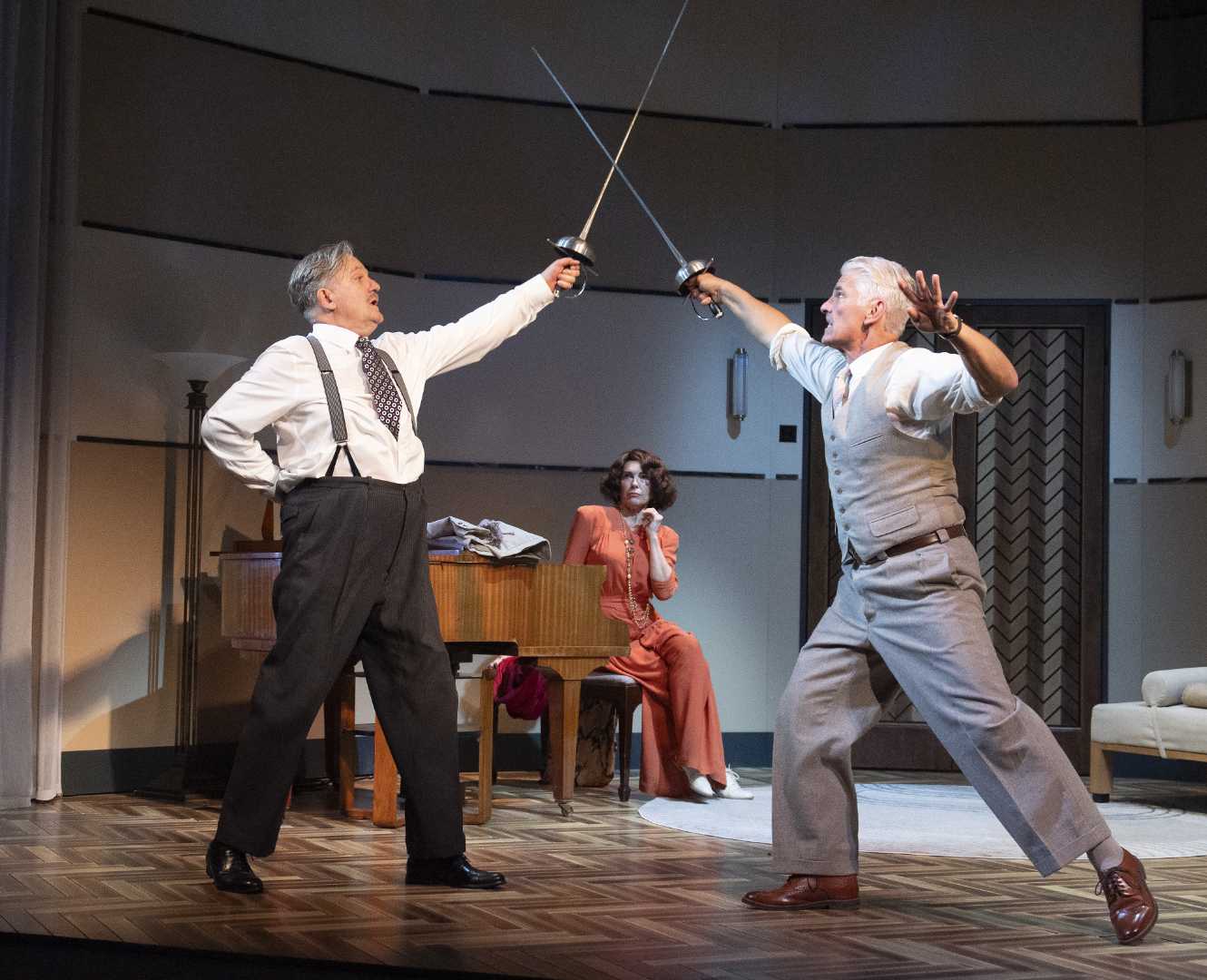
The duel is the comic peak of the evening, a beautifully sustained piece of physical comedy. The warm-up alone, two middle-aged men in shirtsleeves and braces limbering up with the solemn seriousness of people who have not held a rapier in decades, drew helpless laughter before a blade had been properly crossed. Once the fencing began, Shepherd and Gemmill played the parrying and swordsmanship for every comic possibility, the rapiers becoming instruments of farce rather than threat, while Aubrey’s Eloise settled herself at the piano, requested fruit, commented on the dust disturbed by all the furniture-moving, and informed both men with serene authority that duelling was for hot-tempered youth, not disgruntled middle age. The scene accumulates laughs in layers, each one building on the last, and the audience was entirely in its hands.
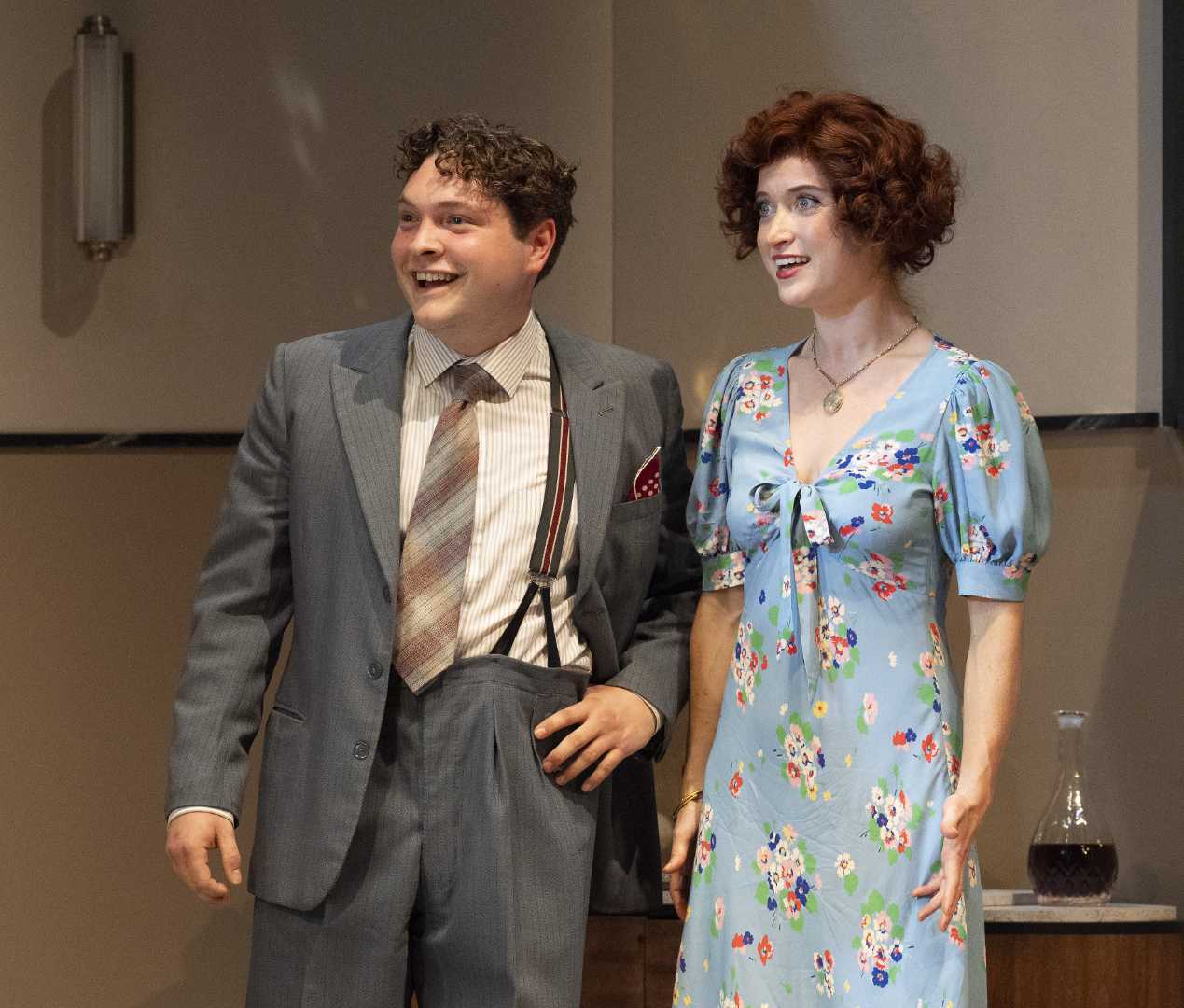
Among the younger performers, Eva O’Hara’s Adrienne deserves particular notice. Coward himself was clear-eyed about the play’s weaknesses, and the young lovers can easily feel thin on the page. But O’Hara gives the role a directness and emotional clarity that lifts it well above its usual limitations. Her scene with Aubrey in Act II, in which Adrienne confides her situation to the stranger who is in fact her mother, has real intimacy, and O’Hara handles the discovery with a natural warmth that makes the scene both touching and unforced. Albie Marber brings energy and feeling to Jacques Rijar, and his late Act I outburst, that Raoul is afraid of youth and life and happiness, is played with a recklessness that briefly and excitingly shifts the play’s temperature in a different direction altogether.
One of the production’s quieter but most interesting decisions concerns Miguel, Esteban’s son and Adrienne’s betrothed. In Coward’s original, Miguel is in love with a female dancer in Paris. Here, his secret is that the person he loves is a man. Barnaby Tobias handles the adaptation with complete assurance, playing the revelation with a lightness that is itself quietly brave. The production neither signals the change in advance nor invites the audience to applaud it afterwards. It lands in the same breath as Adrienne’s own confession, so that the two young people’s shared predicament registers as symmetrical and equally urgent, and the comedy of their alliance is sharpened by it. The stakes for Miguel in 1930s France would have been considerably higher than for Adrienne, which gives Tobias’s lightness in the scene an added quality that the production never needs to spell out. The choice sits naturally within Coward’s world of coded desire, social performance and private feeling forced into public arrangement.
The acoustics of Theatre Royal Windsor served the production well throughout. Every line was heard cleanly across the auditorium, and Nick Richings’ warm and considered lighting shifted the room’s mood convincingly as the evening moved through its three acts.
The confession scene is played with real clarity by Aubrey, giving Eloise’s poise a more vulnerable charge without disturbing the comedy around her. The production also finds a warmer theatrical finish than Coward’s text alone might suggest, using music to send the audience out with a pleasing sense of flourish. Even so, the final reconciliation arrives a little more quickly than the emotional preparation quite justifies, leaving the third act charming rather than fully satisfying.
Under Philip Wilson’s direction, The Marquise makes an eloquent case for a play that rarely gets the chance to make any case at all. It is stylish, funny, and at its best exhilarating, a Coward comedy that reminds you how much can live in a well-turned line delivered by a performer who knows exactly where it lands.
Cast & Creatives
- Showing: 27 May – 6 June 2026, Theatre Royal Windsor; then Oxford Playhouse, Theatre Royal Bath, Yvonne Arnaud Guildford, and Cambridge Arts Theatre
- Venue: Theatre Royal Windsor, 32 Thames Street, Windsor SL4 1PS - https://theatreroyalwindsor.co.uk/
- Writer: Noël Coward
- Director: Philip Wilson
- Set and Costume Design: Colin Falconer
- Lighting Design: Nick Richings
- Sound Design: Andy Graham
- Associate Sound Design: Pierre Flasse
- Production: Bill Kenwright Limited
- Production Photography: Alastair Muir
- Cast:
Simon Shepherd as Raoul de Vriaac
Tristan Gemmill as Esteban el Duco Santaguano
Albie Marber as Jacques Rijar
Eva O’Hara as Adrienne
Martin Carroll as Father Clement
Barnaby Tobias as Miguel
Lee Peck as Hubert
Holly Smith as Alice / Understudy Marquise
Sparkling, sophisticated, and full of surprises
Summary
Sparkling, sophisticated, and full of surprises, The Marquise is a rewarding revival of one of Coward’s less familiar comedies.


Add comment