The Vaults Theatre is a short walk from Waterloo station, tucked just off Lower Marsh, and remains one of London’s more singular fringe spaces. Low brick arches, the periodic rumble of trains somewhere overhead, and the feeling of being slightly removed from the city above all suit bold, unconventional work. Ancient Grease, which returns The Vaults to in-house producing after a three-year gap, fits the space well. This production uses the Launcelot Street entrance rather than the better-known Leake Street tunnel, a small practical detail worth knowing before arrival.
The premise is a pun made flesh. Greek mythology and the 1978 film Grease are placed in the same room, with Rydell High reimagined as Olympus Academy, a school for gods and demigods. Danny Zuko becomes Zeus, Sandy becomes Hera, the Pink Ladies become the Omegas, and the T-Birds become the Alphas. Three Fates, Atropos, Clotho, and Lachesis, narrate and orchestrate throughout, writing the lovers’ destiny in their book of fate. It is a conceit that could easily buckle under its own weight, but writer Lady Aria Grey, a performer already familiar to Vaults audiences from Mulan Rouge, keeps the internal logic just coherent enough to hold.
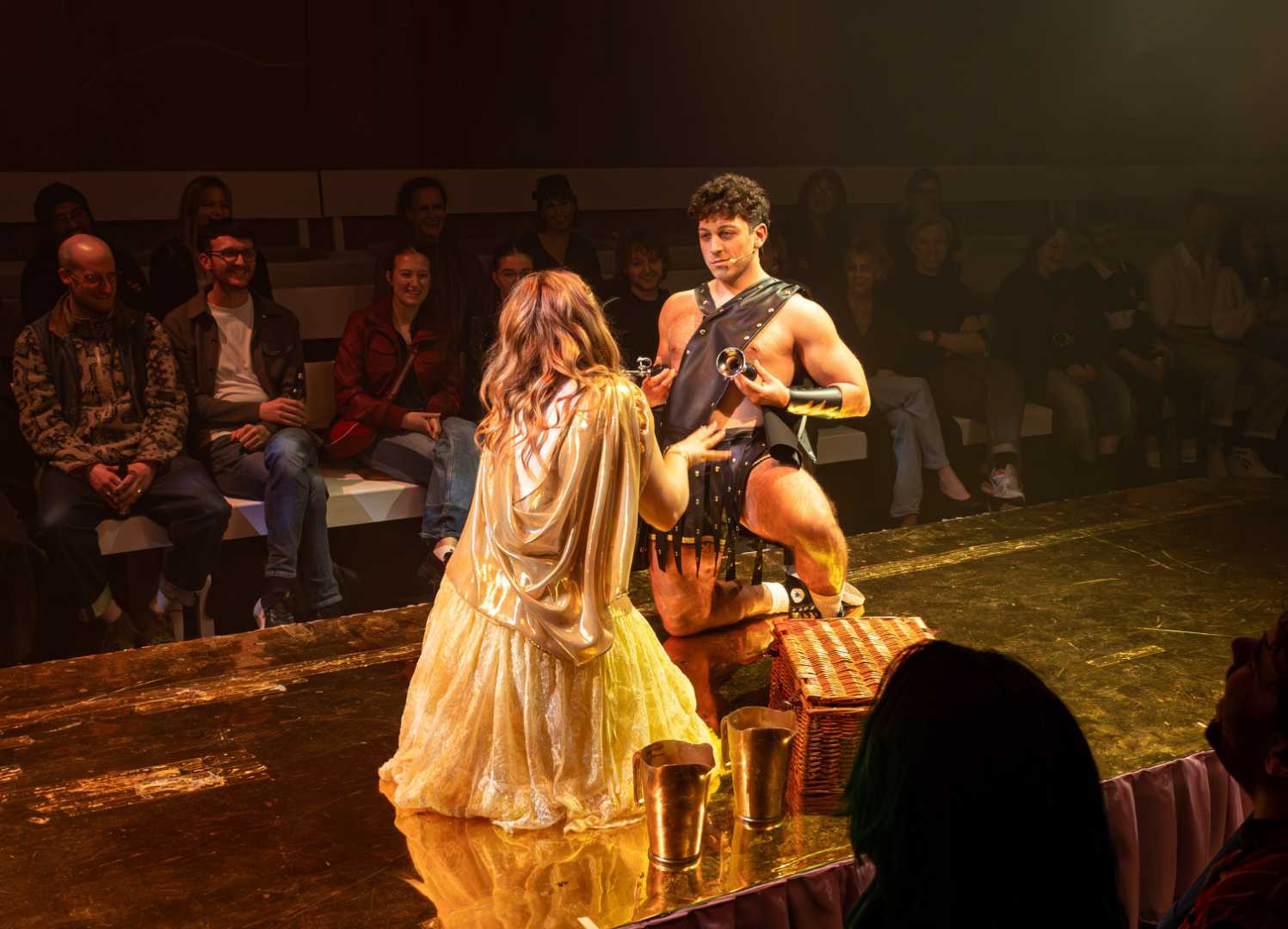
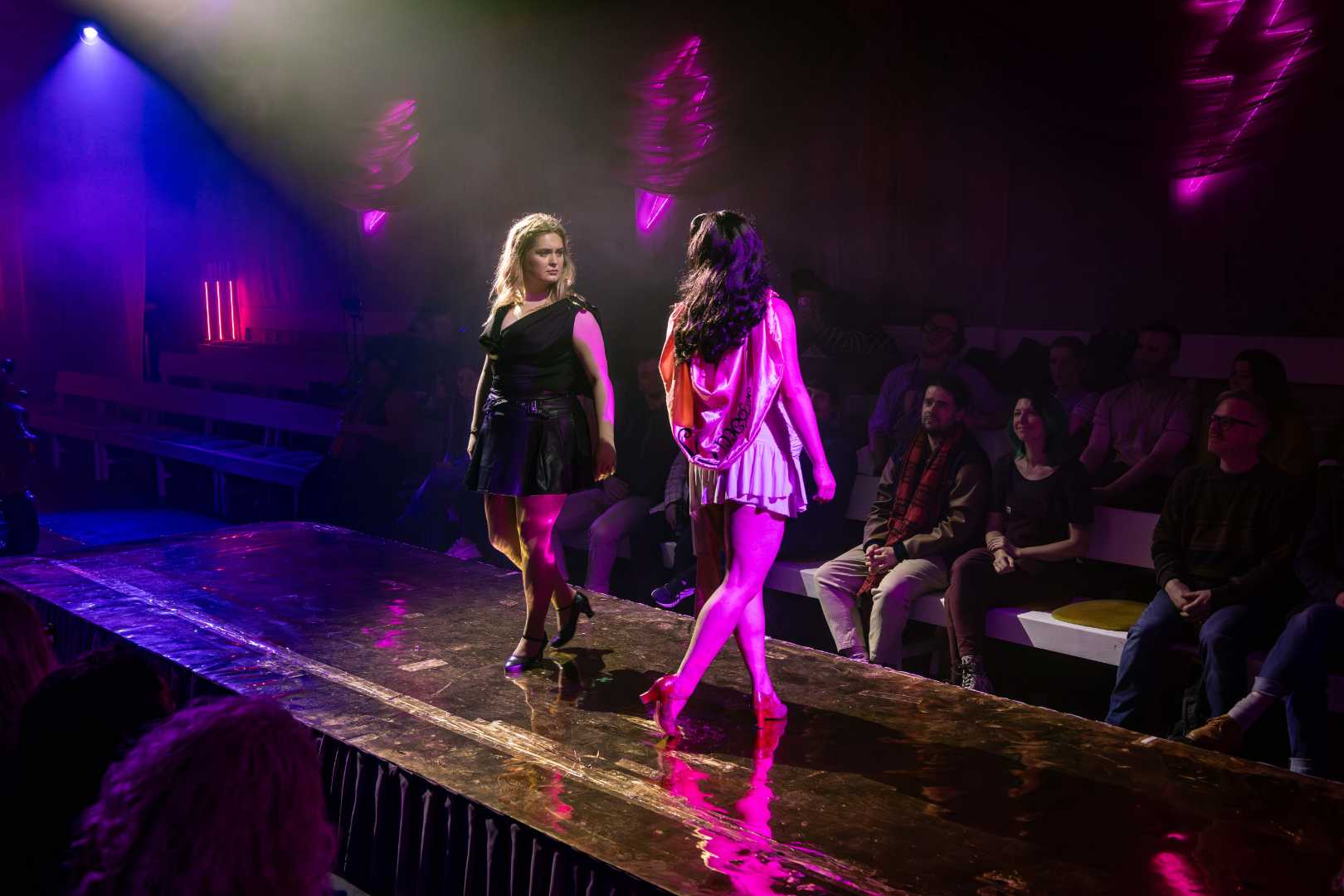
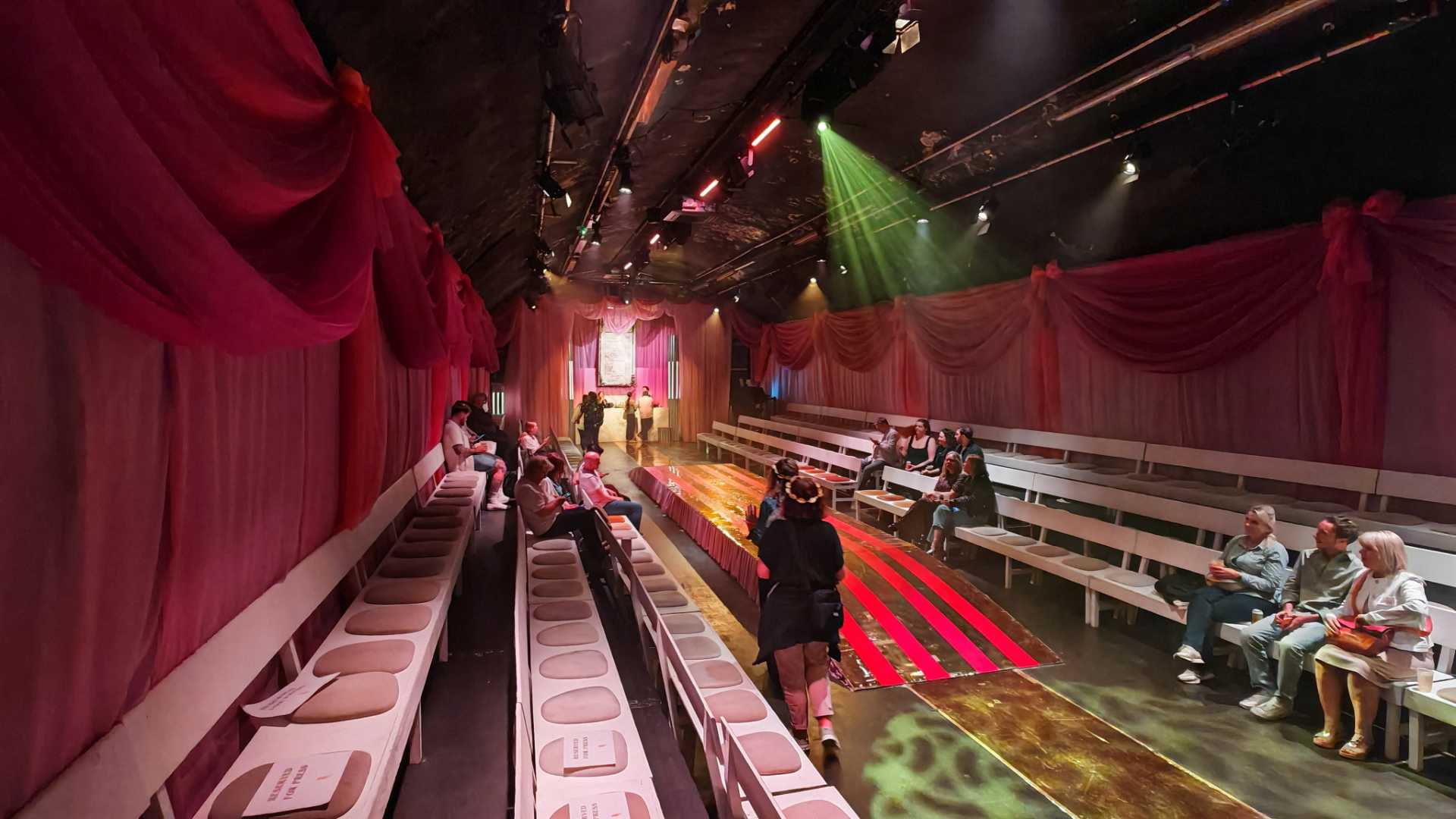
Director Dan Wye stages the action on a traverse: a long central runway with audience seating on either side. It is an intimate arrangement, bringing the performers close and giving the room the charged feeling of a cabaret arena.
The story follows the Grease outline closely enough to be legible: a summer romance, an unexpected reunion at school, and a push and pull between desire and identity. The mythological adjustments keep the material feeling fresh rather than imitative. Zeus is a philandering, mullet-sporting alpha. Hera is the goddess of marriage and fidelity, which gives her conflict with Zeus an added irony the original film never quite had. The Fates meddle, the gods posture, and Olympus Academy becomes a playground for lust, status, rivalry and reinvention.
The show carries its adults-only status plainly. Sexual humour runs through the evening rather than appearing as an occasional garnish: puns, pelvic bravado, mythological innuendo and gleefully filthy wordplay form part of its basic texture. The comedy is broad, ribald and frequently hilarious. The audience around me was laughing freely from early in the first half, and the more titillating moments landed with the shameless energy the production clearly intends.
The songs are original, built on melodic shapes familiar enough to register immediately while remaining distinct in their own right. Musical supervision and track arrangements are by Corin Buckeridge, and the score is designed to evoke rather than replicate. The effect is of songs half-remembered from another production: a neat solution to the challenge of parodying such a familiar musical world without simply copying it.
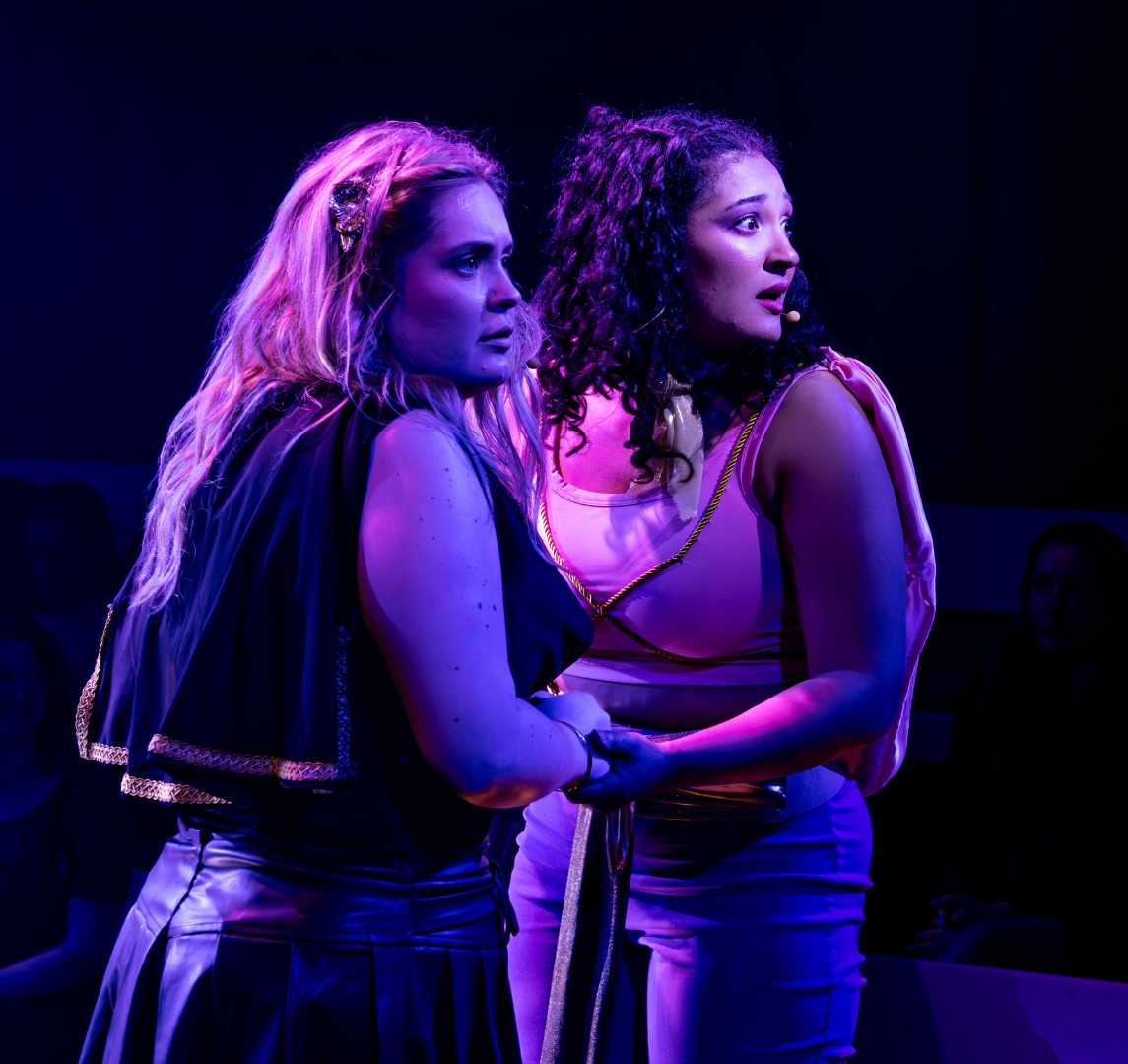
Philippa Leadbetter gives the standout performance of the evening as Hera, the show’s emotional and comic centre. The role is essentially Sandy transposed into mythology: cautious, principled, and pressed by expectations from every side, but Leadbetter gives her more than a neat parody function. Her broad Australian accent clearly nods to Olivia Newton-John’s Sandy, while pushing Hera into a brasher, more openly comic register that suits the show’s parody style. The arc she traces is clear and earned: a goddess who begins the evening trying to meet everyone else’s idea of what she should be, and ends it on her own terms. Leadbetter carries it with authority and warmth throughout, and her performance gives the show’s closing scenes something real to land on.
Her comic force is just as important. This is a large, physically expressive performance, full of vocal punch, heightened reactions and well-judged silliness. Leadbetter is consistently funny, but the emotional line remains visible beneath the comic surface, which is why Hera’s journey lands with more weight than the surrounding chaos might suggest.
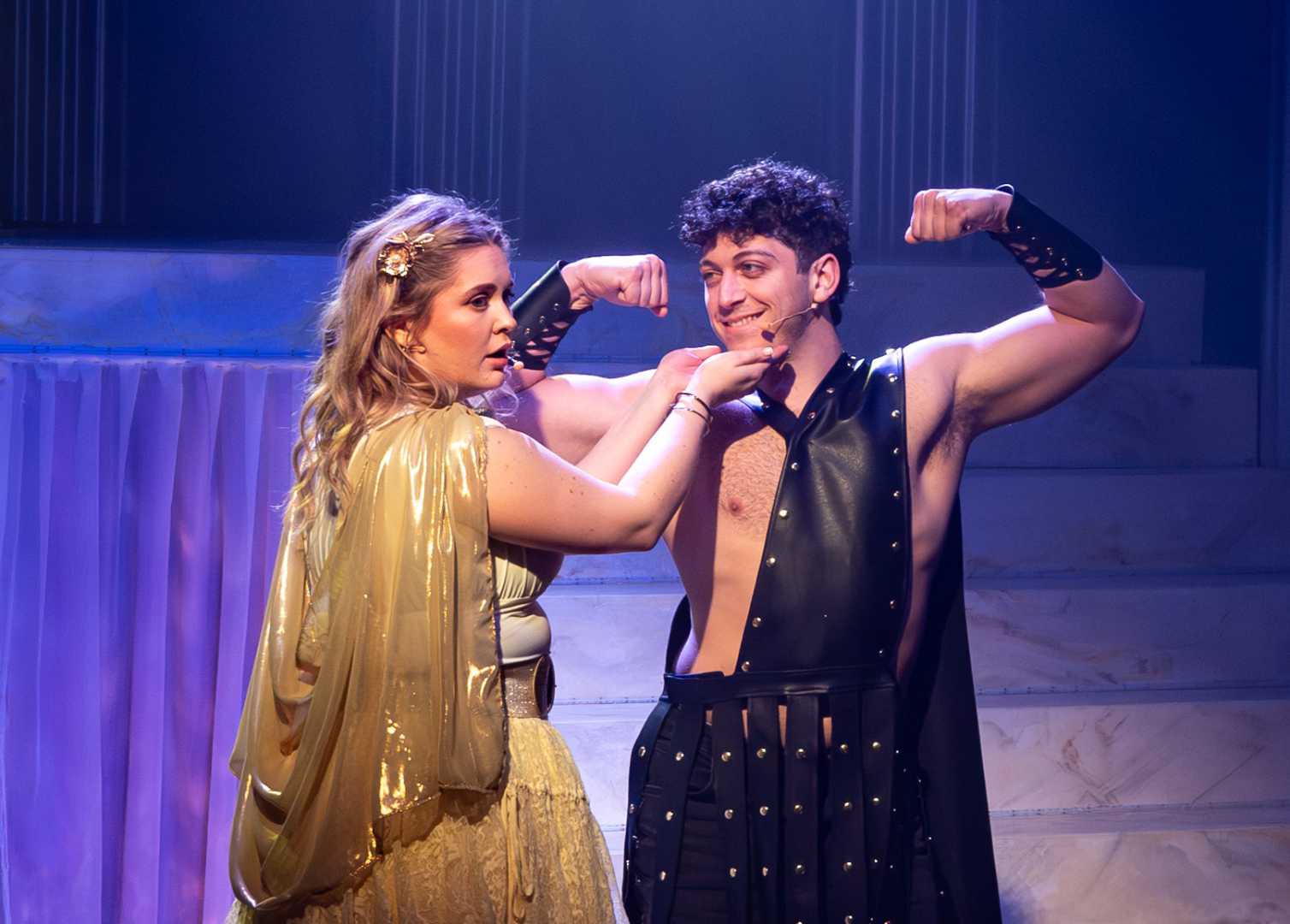
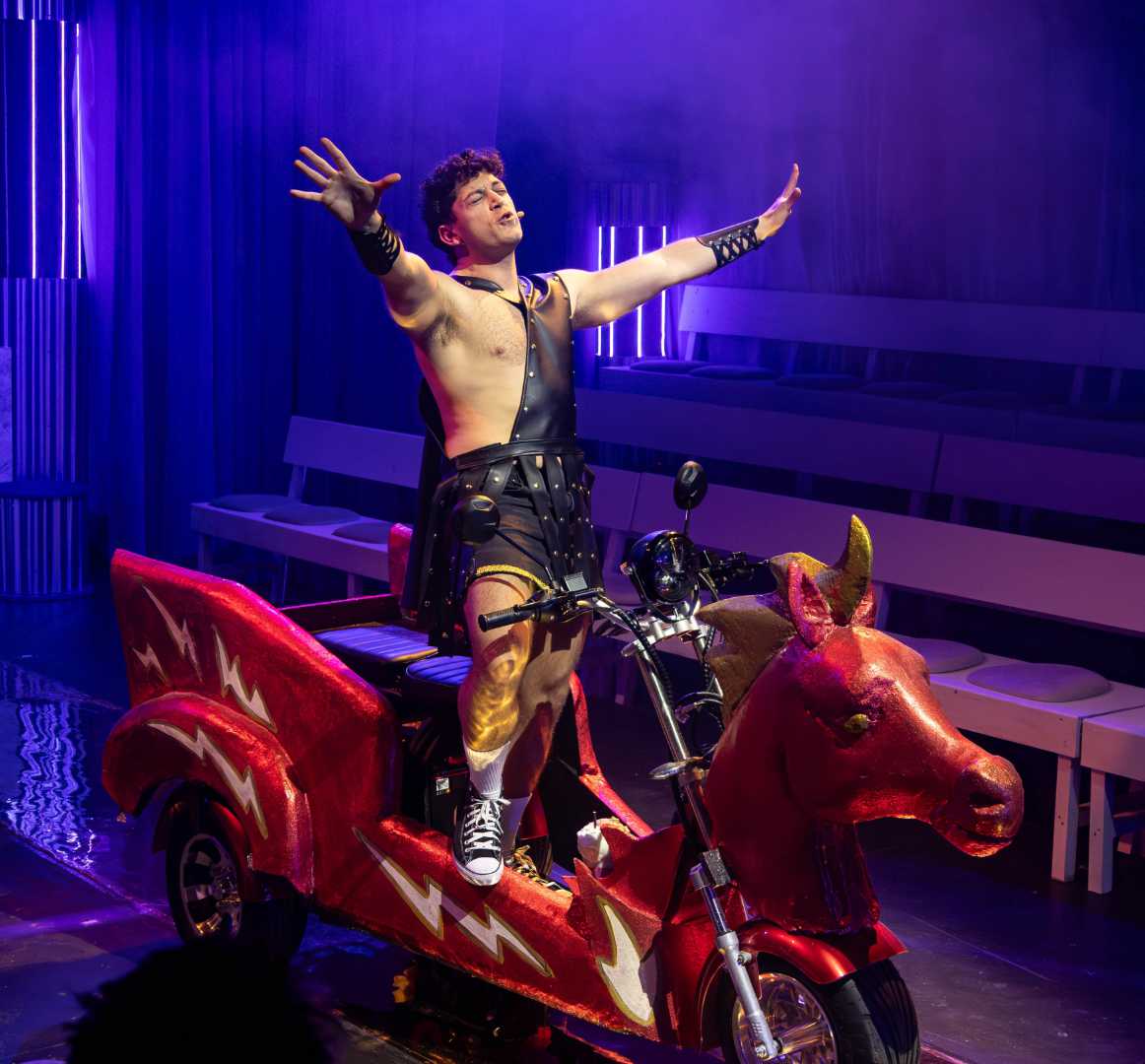
Peter Camilleri’s Zeus carries himself with the bravado of someone who has never been told no, and Camilleri plays it with comic timing that sharpens noticeably as the evening progresses. A second-act solo in which Zeus attempts to recall the name of the goddess he has just become engaged to is one of the production’s more accomplished set-pieces. Lucy Penrose plays Aphrodite, the Omegas’ Rizzo equivalent: sharp, self-possessed, and alive to every possibility in a scene. She has a strong singing voice and a stage presence that makes audience interaction feel natural. Her version of the parody equivalent of There Are Worse Things I Could Do is one of the evening’s musical highlights.
Christopher Patten-Walker doubles as Ares and Lachesis, one of the three Fates, and handles both with confidence. Ollie Thomas Smith’s Hephaestus, gangly and slightly bewildered, provides reliable physical comedy throughout. Safia Bartley completes the Omegas as Athena, with Grace Kelly Miller and Lara Sas alongside Patten-Walker as the full trio of Fates.
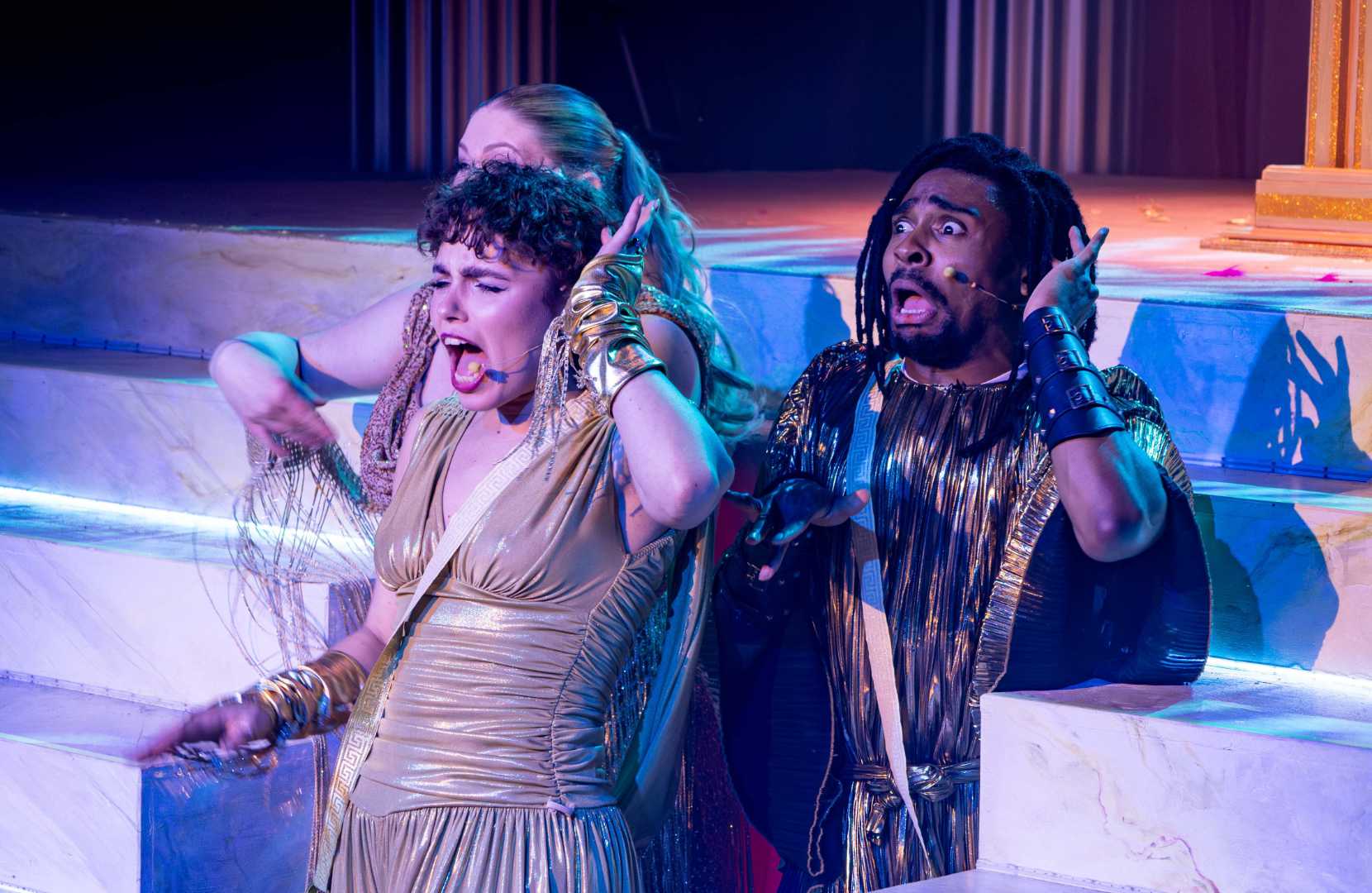
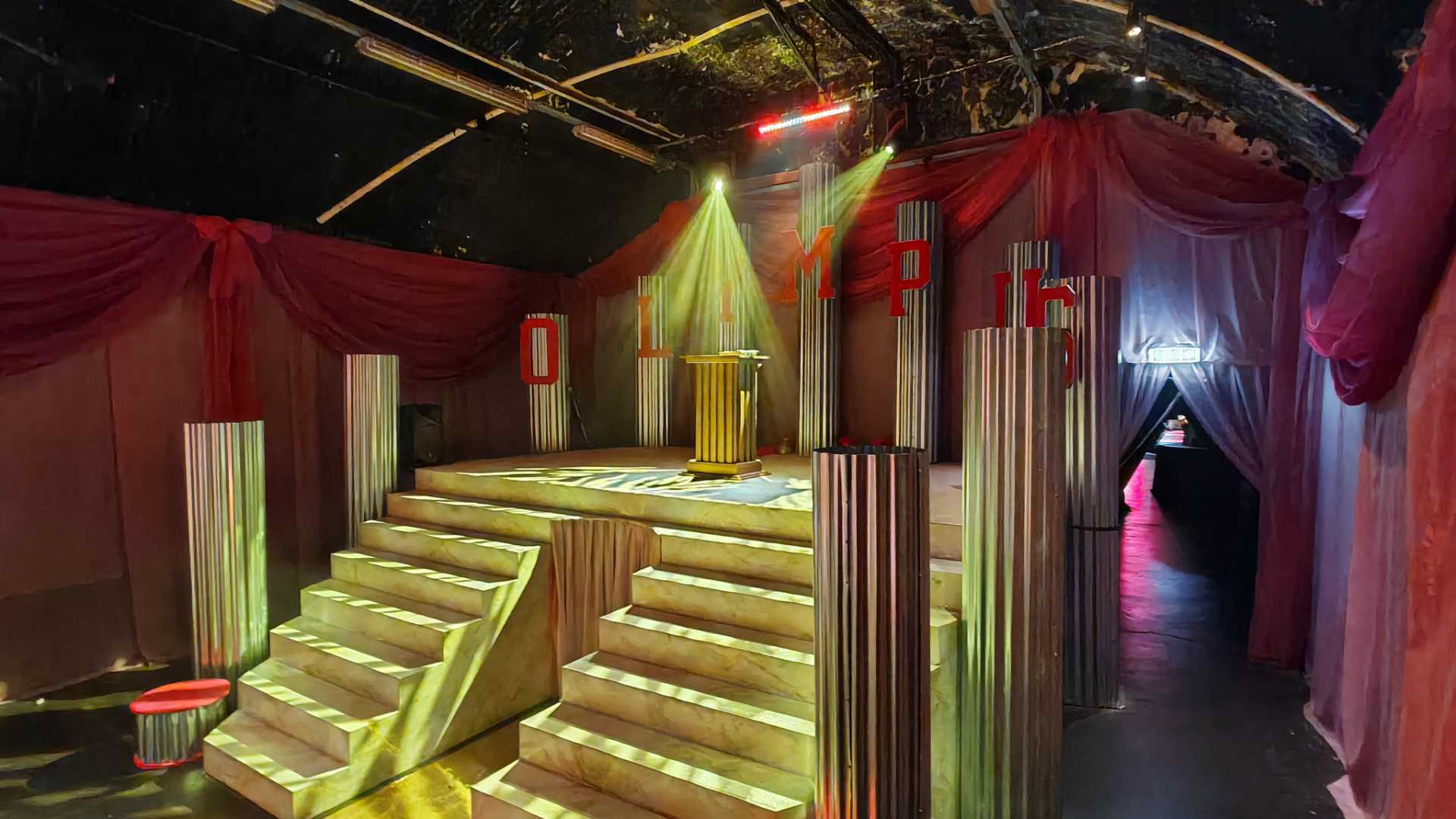
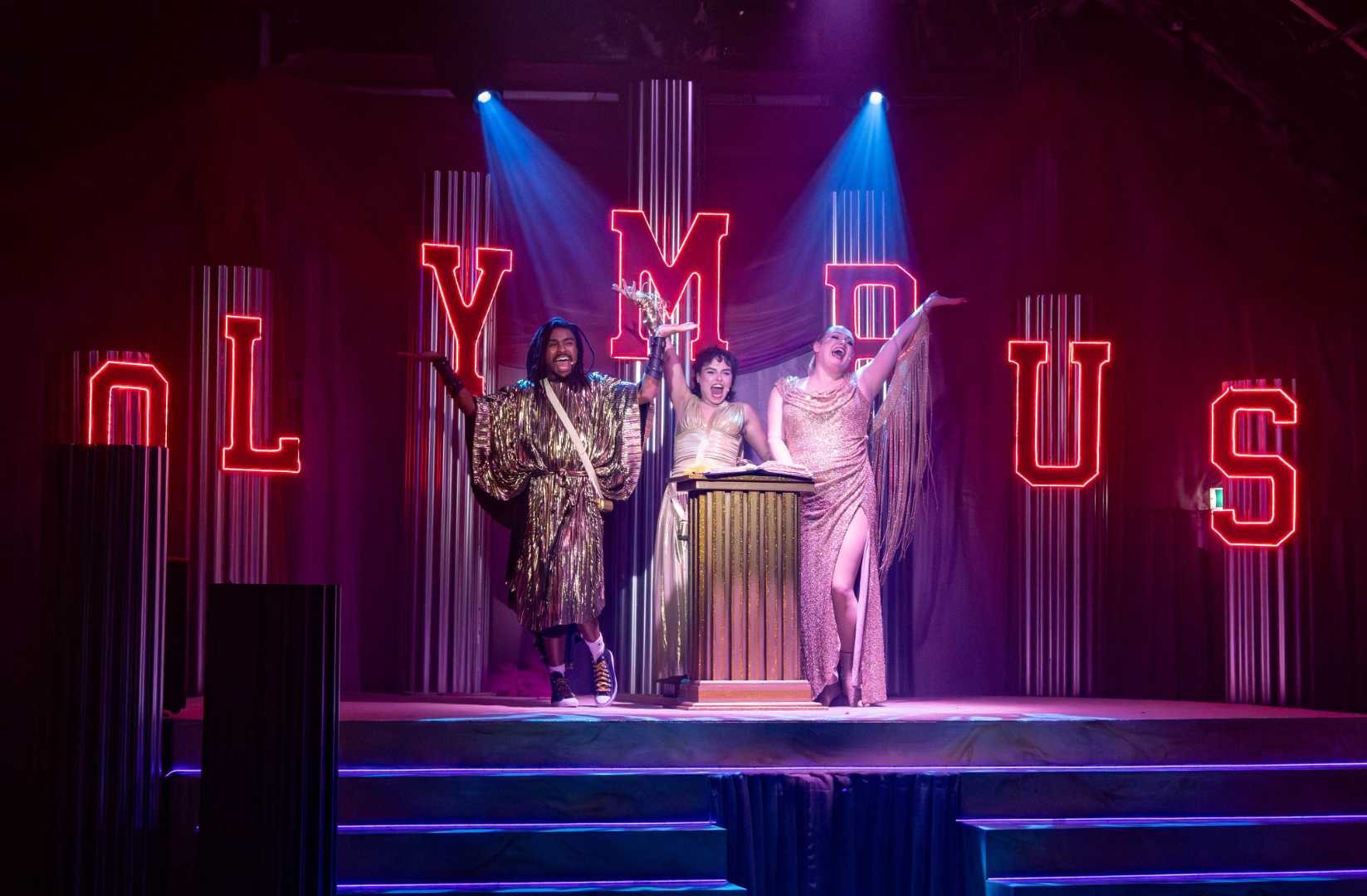
Isabella Van Braeckel’s set places marble columns alongside mirrorballs, so that temple and nightclub share the same space without strain. Clancy Flynn’s lighting favours purples and golds throughout, a palette that suits the production’s register. Caitlin Mawhinney’s costumes blend togas with a 1950s high-school aesthetic, an idea that works better in some cases than others, but always keeps the show’s mythology-meets-rock-and-roll world visible. Lucinda Lawrence’s choreography makes full use of the traverse, keeping the energy moving along the whole playing area with fluency. Gabriel Swarbrick handles sound design, though the balance between vocals and backing tracks loses clarity at moments, and the lyrics do not always carry as clearly as they should.
Lady Aria Grey’s script has a point to make alongside its jokes, and it makes it without labouring it. Grease ends with its heroine changing herself to be acceptable to someone else. Ancient Grease proposes a different conclusion: Hera does not need to become someone else to be worth loving, and the Fates can be disobeyed. It is a modest revision of a familiar story, and it lands because Leadbetter gives it the weight it needs.
The two-hour runtime occasionally makes itself felt, and some of the comedy favours the obvious over the surprising. The production is most effective when the cast finds the specific rather than the broad: Camilleri’s slow-dawning confusion in that solo, Leadbetter’s precise comic stillness, Penrose’s ease in the room. The audience felt it too. The show closed to a well-deserved standing ovation, the kind that felt less like obligation and more like the room being genuinely glad it had spent two hours in Olympus Academy.
The Vaults Theatre has an atmosphere that is genuinely difficult to replicate elsewhere in London, and Ancient Grease uses it well. It is adults-only, proudly queer, and, at its best, a raucous reminder that parody works best when it arrives with both affection and teeth.
Cast & Creatives
- Showing: 4th March – 22nd May 2026
- Venue: The Vaults Theatre, Launcelot Street, London SE1 7AD – https://www.thevaults.london/ancient-grease
- Writer: Lady Aria Grey
- Director: Dan Wye
- Set Design: Isabella Van Braeckel
- Producer: Susannah Bond
- Musical Supervision & Track Arrangements: Corin Buckeridge
- Sound Design: Gabriel Swarbrick
- Costume Design: Caitlin Mawhinney
- Choreography: Lucinda Lawrence
- Production photography: Flavia Fraser-Cannon (plus two extra photos by Robert Cope)
- Cast:
Peter Camilleri as Zeus
Philippa Leadbetter as Hera
Lucy Penrose as Aphrodite
Safia Bartley as Athena
Christopher Patten-Walker as Ares / Lachesis
Ollie Thomas Smith as Hephaestus
Grace Kelly Miller as Atropos
Lara Sas as Clotho
Greek mythology meets Grease in a gleefully adult cabaret romp
Summary
Ancient Grease turns Greek mythology and Grease into a raucous, adults-only musical parody. Broad, filthy and frequently hilarious, it is held together by strong performances, especially Philippa Leadbetter’s standout Hera, and uses The Vaults Theatre’s intimate atmosphere to full comic effect.


Add comment