logo theatre lifelogo theatre life
logo theatre life
  • Home
  • Reviews
    • Plays
    • Comedy Plays
    • Musicals
    • Opera
    • Dance
    • Ballet
    • Circus
    • Stand Up Comedy
    • Concerts
    • Cinema
    • Television
  • News
    • Food & Drink
    • Business
    • Sports
    • Local History
    • Science
    • Travel
    • Politics
    • Fashion
    • Health
    • Tech
    • Lifestyle
  • Latest
  • About
    • About Theatre Life
    • Meet the Team
    • Inclusivity & Representation in Theatre
  • Shop
  • Contact
Wishlist 0
Compare 0
Sign in
My Account


Lost password?

0
0 My compare

View Compare

0
0 My Wishlist

View Wishlist Add all to cart

0
0 Shopping Cart

No products in the cart.

Return To Shop
Shopping cart (0)
Subtotal: £0.00

Checkout

Spend £25.00 more to get free UK delivery. FREE Royal Mail delivery at £25 and under 3kg or FREE DPD delivery at £50. Congratulations! You've got free shipping.
  • Home
  • Reviews
    • Plays
    • Comedy Plays
    • Musicals
    • Opera
    • Dance
    • Ballet
    • Circus
    • Stand Up Comedy
    • Concerts
    • Cinema
    • Television
  • News
    • Food & Drink
    • Business
    • Sports
    • Local History
    • Science
    • Travel
    • Politics
    • Fashion
    • Health
    • Tech
    • Lifestyle
  • Latest
  • About
    • About Theatre Life
    • Meet the Team
    • Inclusivity & Representation in Theatre
  • Shop
  • Contact
Facebook Twitter Instagram Pinterest Linkedin Youtube
  • Plays
  • Comedy Plays
  • Ballet
  • Opera
  • Musicals
  • Dance
  • Concerts
  • Stand Up
  • Circus
  • Cinema
logo theatre lifelogo theatre life
0
0 My compare

View Compare

0
0 My Wishlist

View Wishlist Add all to cart

0
0 Shopping Cart

No products in the cart.

Return To Shop
Shopping cart (0)
Subtotal: £0.00

Checkout

Spend £25.00 more to get free UK delivery. FREE Royal Mail delivery at £25 and under 3kg or FREE DPD delivery at £50. Congratulations! You've got free shipping.
logo theatre life
  • Home
  • Reviews
    • Plays
    • Comedy Plays
    • Musicals
    • Opera
    • Dance
    • Ballet
    • Circus
    • Stand Up Comedy
    • Concerts
    • Cinema
    • Television
  • News
    • Food & Drink
    • Business
    • Sports
    • Local History
    • Science
    • Travel
    • Politics
    • Fashion
    • Health
    • Tech
    • Lifestyle
  • Latest
  • About
    • About Theatre Life
    • Meet the Team
    • Inclusivity & Representation in Theatre
  • Shop
  • Contact
Wishlist 0
Compare 0
Sign in
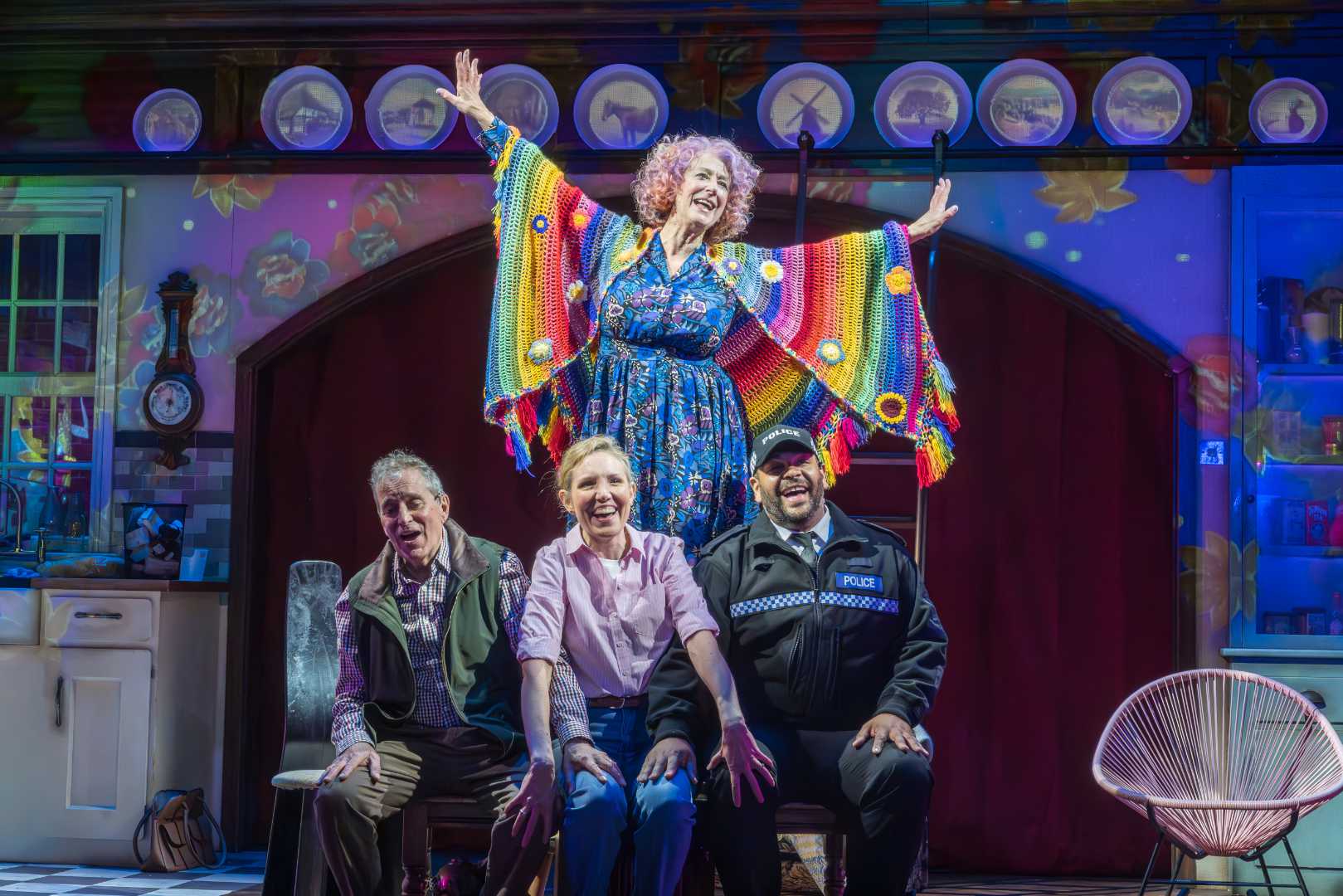
Dame Maureen Lipman as Allegra stands above John Middleton as Ronen, Elizabeth Bower as Anna and Bailey Patrick as Officer Rogers during a colourful musical number.
Comedy Plays

Allegra at Theatre Royal Windsor

15th June 2026 /Posted byRobert Cope / 22 / 0

There is a particular kind of theatrical alchemy involved in teaching an audience to delight in a woman’s voice, then making its absence feel like bereavement. Peter Quilter’s new comedy Allegra achieves exactly that, led by a commanding performance from Dame Maureen Lipman that fills Theatre Royal Windsor with laughter before allowing a darker silence to settle across it.

Allegra lives alone in a cluttered, chintzy cottage, where her late father’s ashes have been distributed, with magnificent disregard for convention, among kitchen tins labelled cocoa, gravy powder and self-raising flour. She sleeps until the afternoon, forgets to shop, takes her medication according to inclination and approaches everyday life as though it might turn into a musical at any moment.

Frequently, it does.

A passing word, familiar object or half-recovered memory can propel Allegra into song. Petrol stations, bakeries, libraries and restaurants become impromptu performance spaces, whether the people around her are ready for entertainment or simply trying to finish their shopping. Allegra sees herself as spreading happiness. Some of the increasingly exasperated residents of her village experience her as a public nuisance.

Quilter first presents this through the easy rhythm of a conversational sitcom. Allegra’s practical brother Ronen arrives with food, instructions and another attempt to impose order upon her life, only to find himself diverted by cupboards containing rather more family than groceries. Their exchanges are quick, argumentative and sharply funny, carrying the practised rhythm of siblings who have spent decades pressing each other’s buttons. Ronen worries about food, tablets, unlocked doors and appointments. Allegra worries that life may pass without enough music, croissants or conversation. He stands patiently at the bus stop and complains when it is late; she runs after it with her coat flapping behind her. Their temperaments point in opposite directions, while the affection between them remains present beneath every disagreement.

The songs initially work as comic punctuation. An ordinary sentence opens a trapdoor into Tea for Two, I’ll Be Seeing You or Tiptoe Through the Tulips, with Allegra slipping between speech and music as though singing were simply another register of conversation. Quilter gradually deepens that device. The songs become a means of organising memory, expressing affection and escaping the duller edges of ordinary life. Allegra sometimes knows she is singing aloud. At other moments, she experiences what feels like a private performance with a full orchestra inside her head and cannot tell whether anyone else has heard it.

That uncertainty gives the musical interruptions a second life. They remain charming and frequently hilarious, while also revealing the cognitive changes taking place beneath Allegra’s buoyancy. Music becomes simultaneously her pleasure, her identity and one of the clearest signs that her grasp upon the outside world is becoming less secure.

Lipman displays the ease and confidence of a seasoned stage performer. She uses the full width and height of the set, climbs onto furniture, leads dance sequences and holds the audience through the smallest movement of her head. Allegra’s eccentricity feels fully inhabited. Her scraps of musical history, sudden digressions and eagerness to entertain grow from a sincere desire to make other people happy.

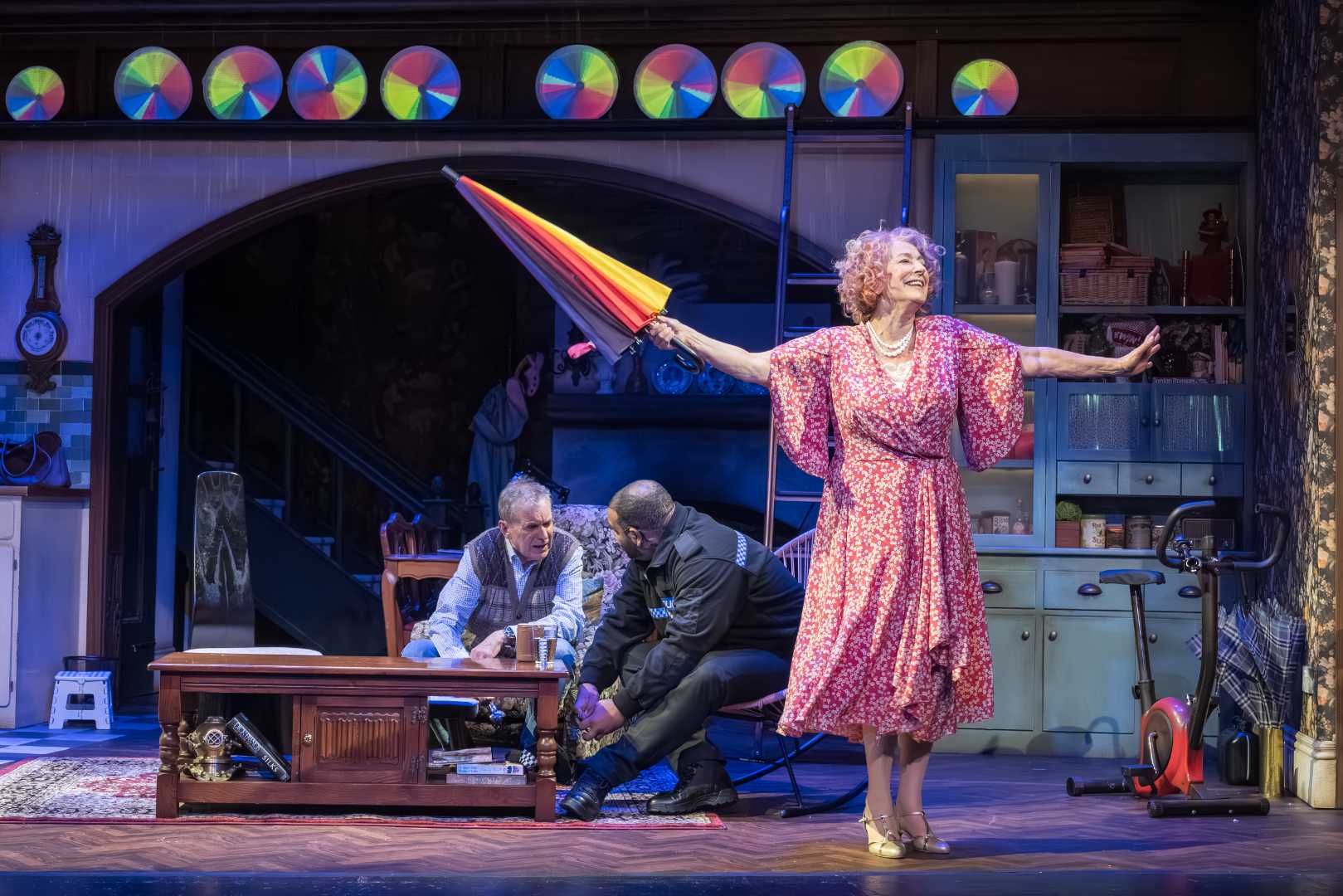
This is showmanship rooted in character. Lipman has the confidence to fill the entire stage while preserving Allegra’s vulnerability underneath the colour and noise. She can conduct the room with an umbrella in one scene, then allow a brief exchange with Ronen to reveal the loneliness and dependence beneath her self-sufficiency. She also shapes the songs through Allegra’s own lighter, less forceful voice, allowing the numbers to become spontaneous extensions of the woman speaking rather than polished vocal displays.

Her vulnerability emerges most clearly through her to-and-fro exchanges with Ronen. Allegra resists his interference, teases him and turns his practical concerns into jokes, yet she also waits for his visits and feels his departures. Lipman allows the audience to sense how much Allegra needs him, even while insisting that she needs nobody.

John Middleton proves the ideal partner for Lipman, giving Ronen a weary, exact comic rhythm as the brother forever caught between protecting his sister and policing her eccentricities. His suggestions are well intended, though they frequently arrive sounding like instructions, provoking Allegra into argument, diversion or song. Middleton becomes so completely enveloped in the character that his timing never feels constructed around punchlines. Every pause, sigh and exasperated response belongs to a man who has lived this relationship for decades, anticipating Allegra’s next disruption while knowing that she will still surprise him.

Ronen could easily serve as a conventional straight man whose purpose is to feed Allegra’s comedy. Middleton gives him a full inner life. His irritation, anxiety and affection sit together convincingly, preserving the care between the siblings even during their sharpest exchanges. That complexity becomes increasingly important as Ronen’s attempts to protect Allegra begin to resemble control. He wants her safe, properly fed and reliably medicated. He also wants the calls, complaints and public scenes to stop. Middleton allows both impulses to coexist, giving the later conflict a human foundation.

Concerned that Allegra is struggling alone, Ronen employs Anna as a companion and carer. Elizabeth Bower brings immediate warmth and gentleness to the role, accepting Allegra’s foibles readily, responding with positivity and happily participating when conversation becomes music. Her willingness to sing alongside Allegra is particularly important. Participation becomes a form of care, with Anna meeting Allegra within her own world rather than continually pulling her towards everybody else’s version of acceptable behaviour. Bower gives Anna an open, practical humour and quiet firmness. She listens, cleans, cooks and joins the songs, while resisting Ronen and the authorities when concern begins to shade into coercion. Her belief that nobody should have to ask for kindness, and that it should arrive as an unexpected gift, provides the clearest expression of the play’s values. Through shared jokes, domestic routines and music, Anna develops from an employee into a genuine companion who understands that Allegra’s spontaneity can be exhausting and precious at the same time.

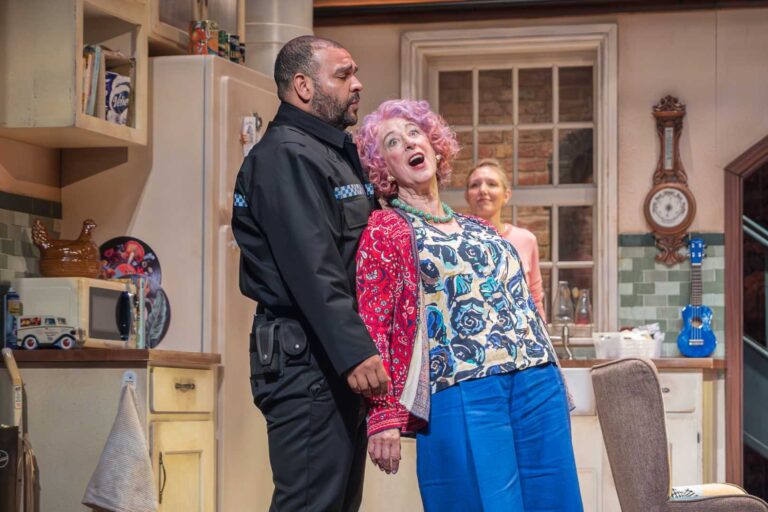
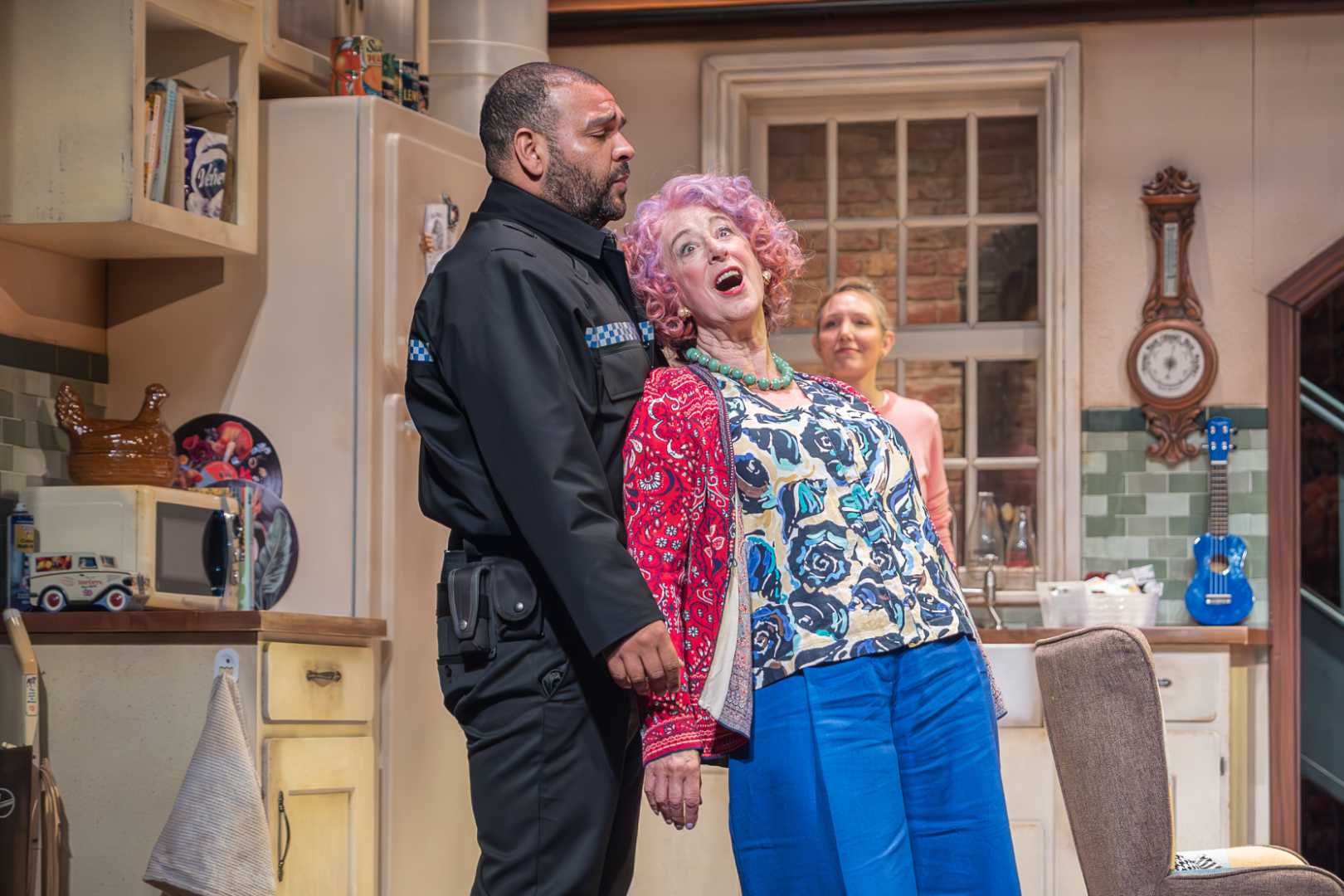
Bailey Patrick supplies a large measure of the evening’s physical and verbal comedy as Officer Rogers. He first appears as an angry, bossy policeman who has followed Allegra home after one of her public performances and seems entirely comfortable imposing his personal view of how she ought to behave. Each subsequent visit leaves him a little more rattled and increasingly drawn into the household. He accepts food, returns for seconds and reacts to Allegra’s more startling remarks with sharply timed movements of the head. His irritation and attraction form a running joke that Patrick handles without reducing Rogers to a cartoon.

Patrick, memorable as Vinny in the British crime comedy film Marching Powder, again displays a keen instinct for comic timing. His brief dances bring some of the evening’s strongest laughter, especially as the supposedly authoritative policeman discovers that his own body is beginning to participate in the disorder he has come to contain. The comedy also charts Rogers’s gradual disarming. He arrives determined to enforce a line between acceptable and unacceptable behaviour. Allegra keeps stepping over it, singing around it and inviting him to eat beside it. By the later scenes, Patrick reveals a man increasingly uncertain about the rules he has been enforcing and the value of the silence those rules may produce.

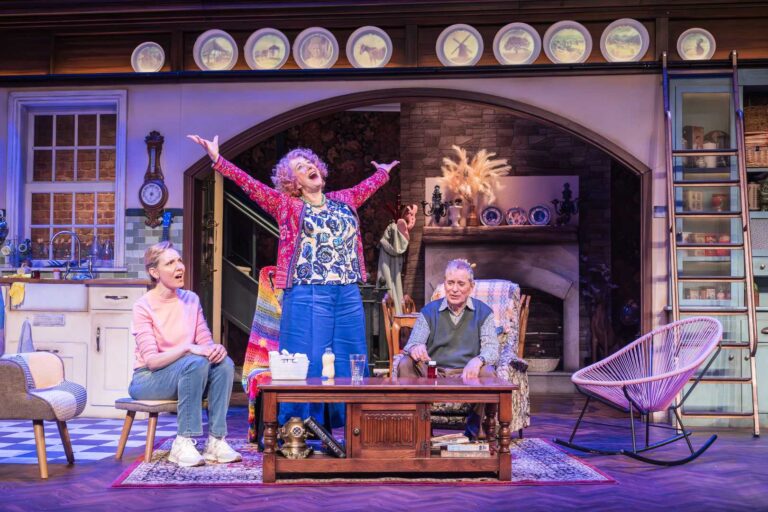
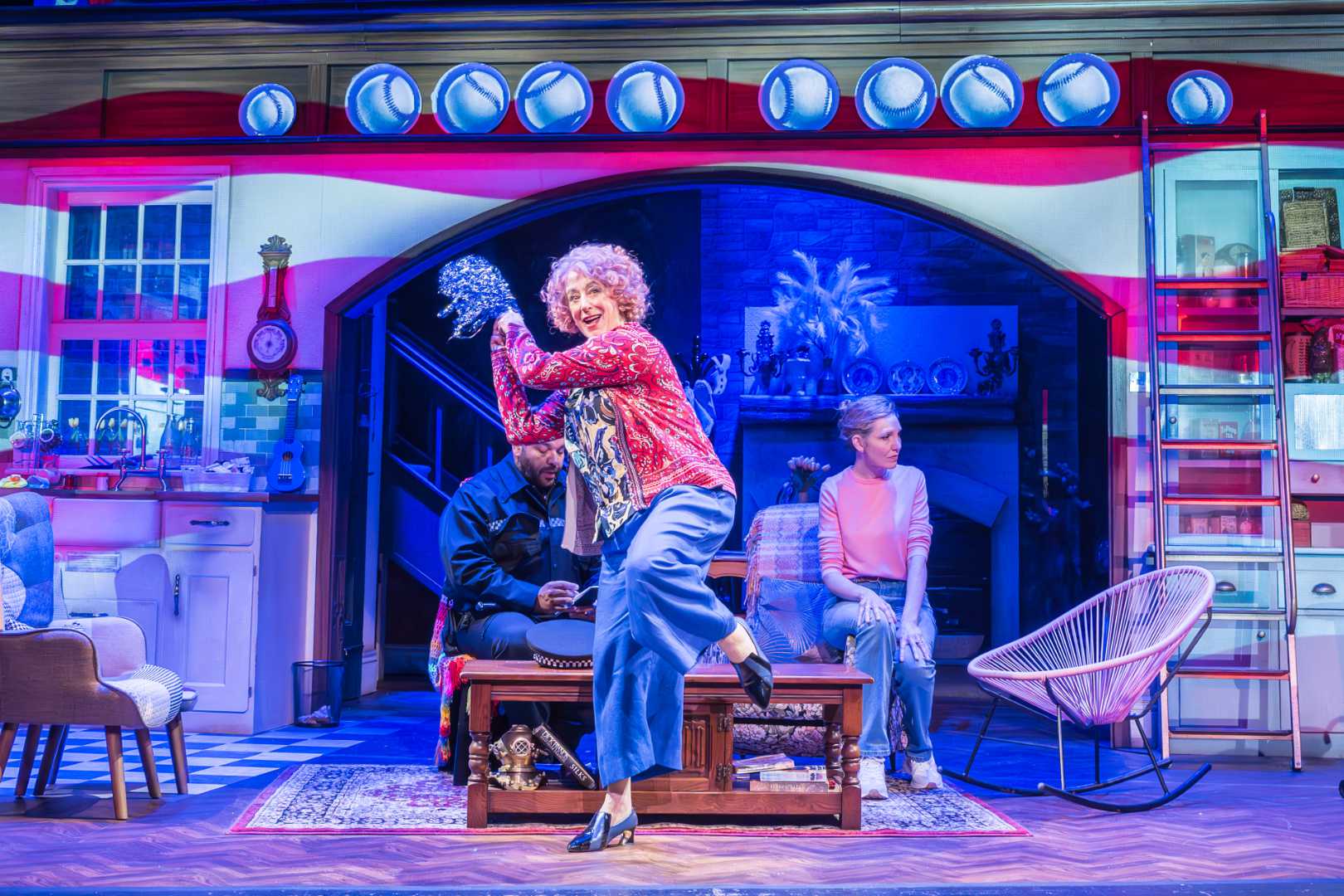
Stephen Mear directs and choreographs with a clear understanding that the musical fantasies must grow directly from the domestic world. Justin Williams’s set and costume design presents a cottage kitchen and sitting room beneath a broad central arch, crowded with shelves, plates, old furniture, an exercise bike and tins whose contents deserve cautious handling. The room feels lived in and accumulated rather than arranged. It is a home, a storage space and a cabinet of memory, with Allegra’s past clinging to its surfaces through everything from her father’s ashes in the cupboards to the songs waiting to be released by everyday objects.

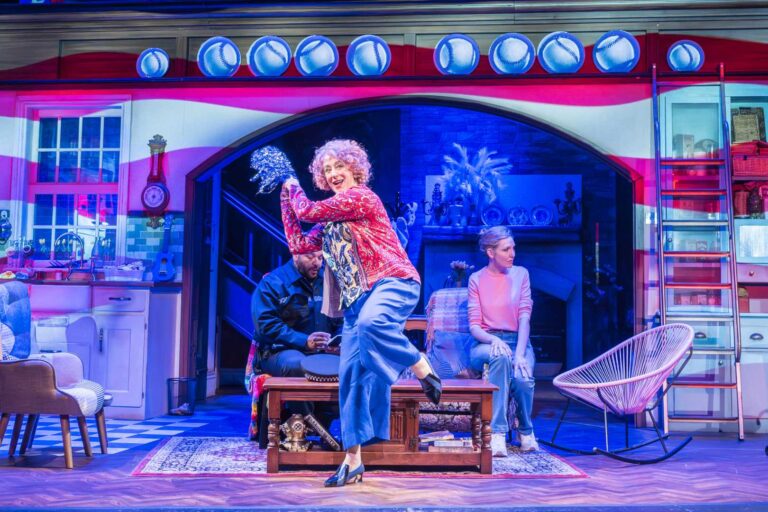
When the music takes hold, the cottage becomes porous. Lighting by Samuel Biondolillo and video design by Ben Bull transform the upper walls and curved arch through colour, projected rain and shifting imagery. Tulips suddenly rise above the set, while other visual flourishes function almost as projected props inside Allegra’s imagination. These effects feel fully integrated into her mental world. Her imagination recolours the room she already inhabits, allowing the kitchen to become a ballroom, a baseball ground or a rain-soaked film set while the furniture and cupboards remain visible beneath the fantasy. Russell Ditchfield’s sound design supports this movement from speech into music, allowing songs to emerge from ordinary conversation and gradually surround it. A lyric begins, the light changes, and the cottage seems to inhale.

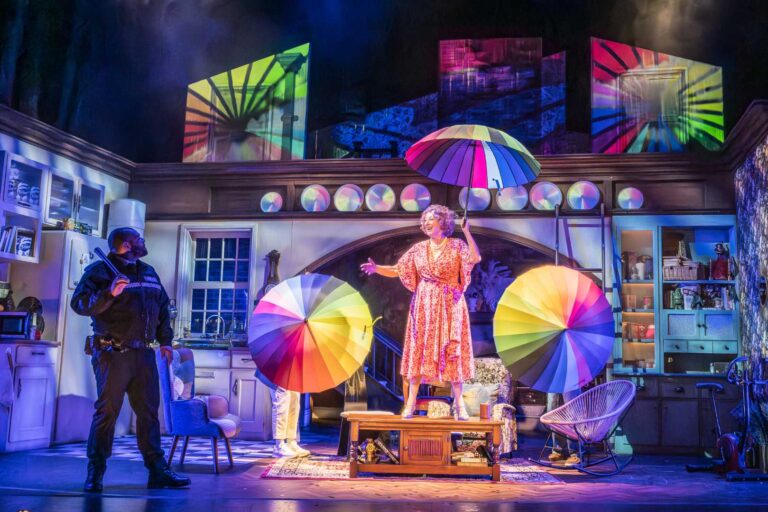
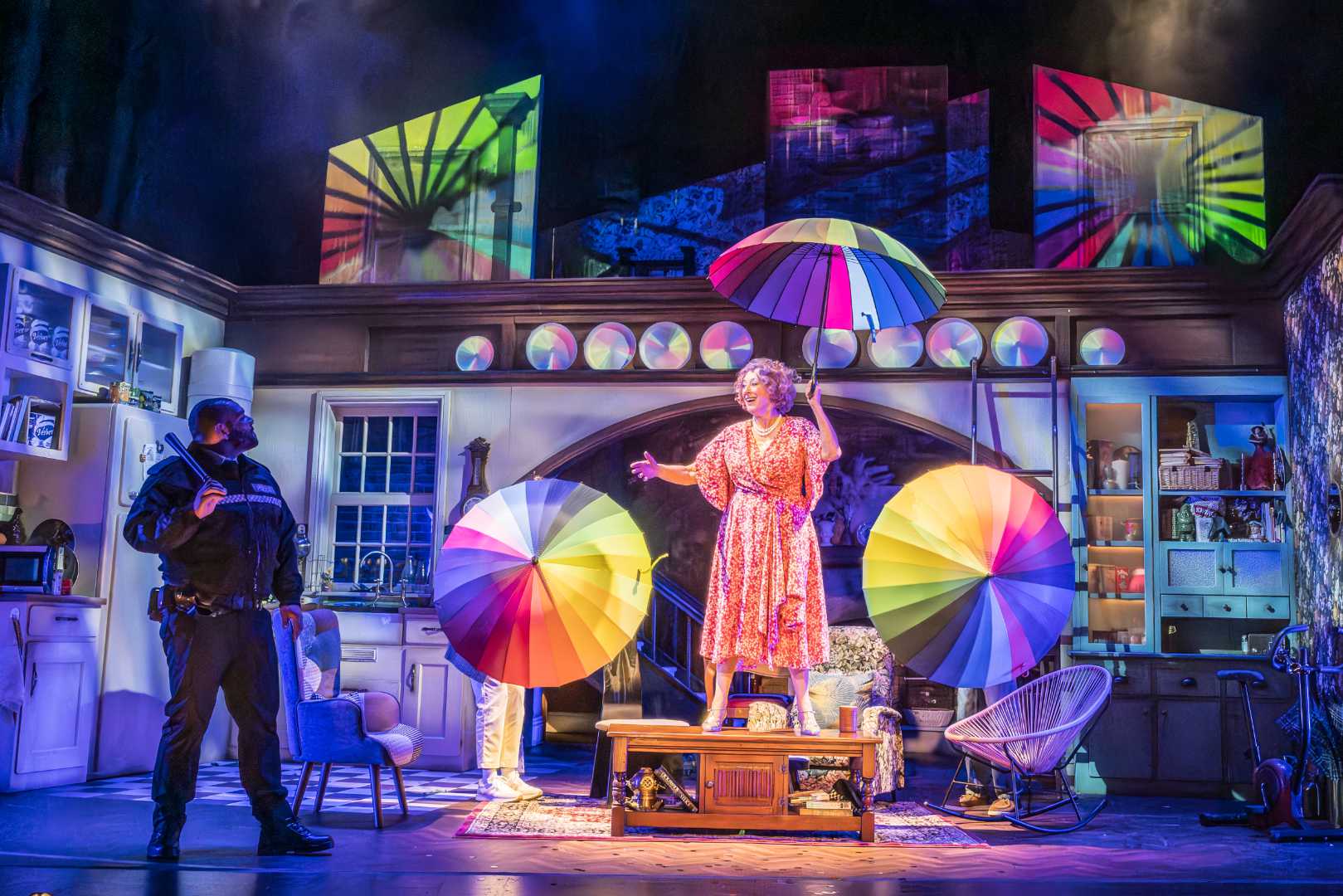
The production lavishes its greatest attention upon Singin’ in the Rain. Projected showers sweep across the upper set as rainbow umbrellas fill the stage, turning Allegra’s crowded home into a buoyant musical landscape. Mear’s choreography uses the full space while preserving the domestic world from which the number has sprung. Lipman appears entirely at ease at its centre, opening her arms, rising above the other characters and conducting the scene’s rhythm. Allegra becomes the source of the production’s weather, bringing colour and movement into a room that might otherwise remain grey.

The rainbow umbrellas provide the evening’s clearest visual emblem, suggesting shelter, playfulness and Allegra’s refusal to accept rain on its own terms. The sequence is theatrical, uplifting and staged with wit, allowing spectacle to reveal character rather than merely decorate it.

Other songs perform quieter dramatic work. Born Free becomes a declaration against containment. Keep the Home Fires Burning carries ideas of home, separation and longing. Happy Days Are Here Again acquires painful irony as Allegra agrees to take the tablets that will suppress her. By the closing Dream a Little Dream of Me, music has travelled far beyond entertainment.

What begins as a charming domestic comedy interrupted by musical diversions gradually becomes an examination of identity, ageing and the price of making a vulnerable person easier to manage. The court proceedings are heavily simplified, allowing the production to avoid becoming a courtroom drama and return swiftly to the cottage, where the consequences of the ruling carry far greater force. The legal machinery operates in broad strokes, though the ethical fear beneath it remains recognisable.

Allegra is ordered to take powerful medication. The woman who previously filled every corner of the room with movement, conversation and song becomes subdued, slumped and quiet.

The court’s decision lands as a blow to Allegra and to the audience. By this point, her music has become inseparable from her character. When the songs stop, their absence becomes the loudest element in the production. Lipman’s stillness is devastating because the first part of the evening has taught us the size and texture of the woman who occupied that chair. Her silence feels like an erasure, with the audience experiencing the loss of her familiar personality almost as a bereavement.

The play raises an unsettling question about the treatment of older and vulnerable people. Is medication being used entirely for Allegra’s welfare, or partly because a quieter Allegra is easier for everybody else to accommodate? Anna and Ronen are alarmed by the quiet they had previously believed they wanted. Once Allegra becomes easier to manage, they begin to understand what management has cost. The question moves beyond whether she should behave acceptably in public and becomes one of how much of a person can be subdued before care removes the qualities it was supposed to protect.

Ronen’s decision to take the medication himself produces one of the evening’s funniest reversals while also exposing the force of what has been imposed upon his sister. As the tablets begin to affect him, Middleton allows Ronen briefly to enter the musical world he has spent the evening trying to regulate. The sequence deepens his understanding of Allegra and turns the sibling dynamic inside out. For once, he experiences the disorientation, altered behaviour and loss of control from within. The comedy remains, though it carries a much sharper edge.

The later discovery that residents of the care home and users of the library miss Allegra’s unscheduled performances provides the story with its warmest reversal. The people who once complained about her disruption now recognise the colour and companionship she brought into their lives. Their response is reported rather than enacted, allowing the focus to remain inside the cottage while reinforcing the play’s central idea that joy can become visible only after it disappears.

The closing sequence restores Allegra’s music and, with it, the first signs of her recognisable self. Dream a Little Dream of Me carries a tenderness that the earlier comedy has earned.

As the songs return, so does Allegra.

The restoration remains emotional rather than clinical. The production allows the audience to see the woman they have come to know re-emerging through voice, movement and connection.

Allegra is charming, frequently hilarious and, in a few carefully placed moments, genuinely dark. Quilter’s dialogue is at its sharpest between the siblings, whose combative exchanges preserve the care beneath their frustration. The songs lift the play beyond its initial sitcom framework and gradually reveal the emotional stakes hidden inside its laughter.

At its centre is Maureen Lipman, combining expansive theatrical confidence with the courage to let Allegra become small, frightened and vulnerable. John Middleton gives the production its grounded emotional counterweight, Elizabeth Bower provides warmth and compassionate resistance, and Bailey Patrick turns an officious policeman into a richly comic figure gradually absorbed into Allegra’s world.

This warm, big-hearted comedy asks a serious question about who gets to decide when another person’s happiness has become too much. By the time Allegra’s songs fall silent, the audience already understands how much has been lost.

Their return feels like the restoration of a life.

Dame Maureen Lipman as Allegra stands above John Middleton as Ronen, Elizabeth Bower as Anna and Bailey Patrick as Officer Rogers during a colourful musical number.
Dame Maureen Lipman as Allegra, with John Middleton as Ronen, Elizabeth Bower as Anna and Bailey Patrick as Officer Rogers in Allegra. Photo: Marc Brenner.
Dame Maureen Lipman as Allegra stands above John Middleton as Ronen, Elizabeth Bower as Anna and Bailey Patrick as Officer Rogers during a colourful musical number.
Dame Maureen Lipman as Allegra, with John Middleton as Ronen, Elizabeth Bower as Anna and Bailey Patrick as Officer Rogers in Allegra. Photo: Marc Brenner.
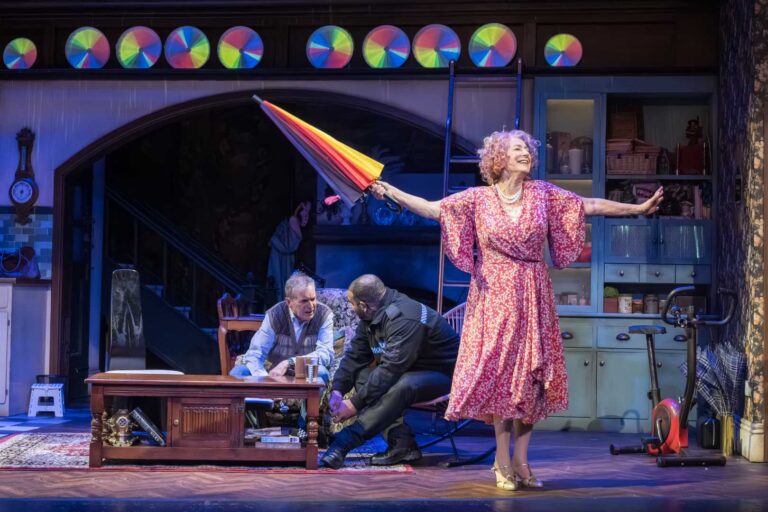
Dame Maureen Lipman as Allegra performs with a closed rainbow umbrella while John Middleton as Ronen and Bailey Patrick as Officer Rogers sit behind her.
Dame Maureen Lipman as Allegra, with John Middleton as Ronen and Bailey Patrick as Officer Rogers in Allegra. Photo: Marc Brenner.
Dame Maureen Lipman as Allegra stands beneath rainbow umbrellas while Bailey Patrick as Officer Rogers watches during a colourful musical sequence.
Dame Maureen Lipman as Allegra and Bailey Patrick as Officer Rogers in Allegra. Photo: Marc Brenner.
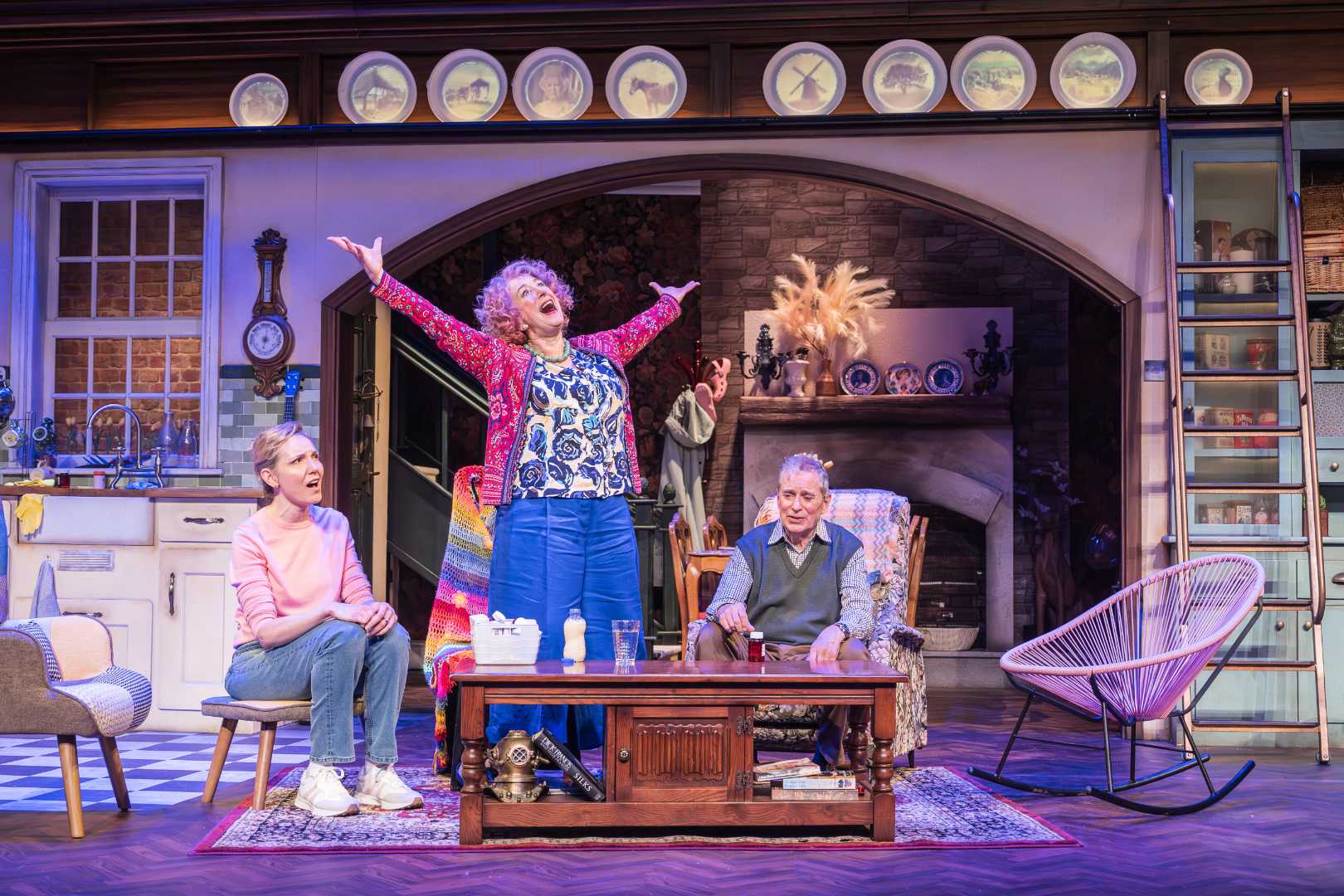
Dame Maureen Lipman as Allegra stands with her arms raised while Elizabeth Bower as Anna and John Middleton as Ronen sit in the cottage.
Elizabeth Bower as Anna, Dame Maureen Lipman as Allegra and John Middleton as Ronen in Allegra. Photo: Marc Brenner.
Bailey Patrick as Officer Rogers supports Dame Maureen Lipman as Allegra while Elizabeth Bower as Anna watches from the kitchen.
Bailey Patrick as Officer Rogers, Dame Maureen Lipman as Allegra and Elizabeth Bower as Anna in Allegra. Photo: Marc Brenner.
Dame Maureen Lipman as Allegra dancing while Bailey Patrick as Officer Rogers and Elizabeth Bower as Anna watch from the cottage sitting room.
Dame Maureen Lipman as Allegra, with Bailey Patrick as Officer Rogers and Elizabeth Bower as Anna in Allegra. Photo: Marc Brenner.
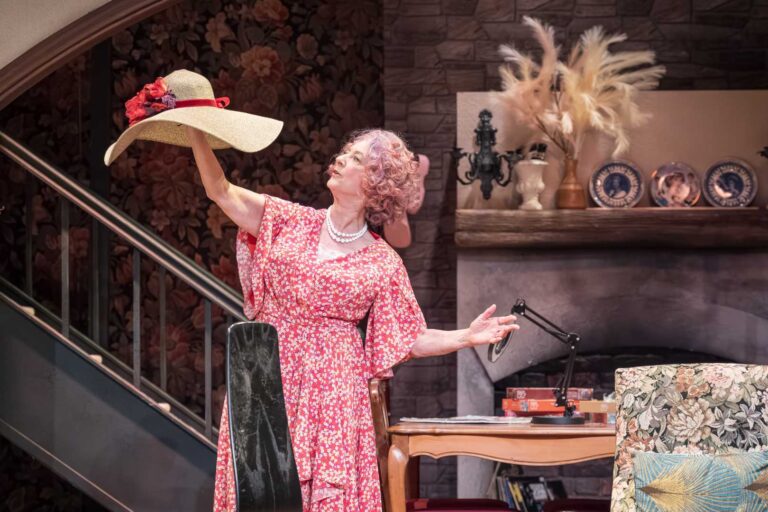
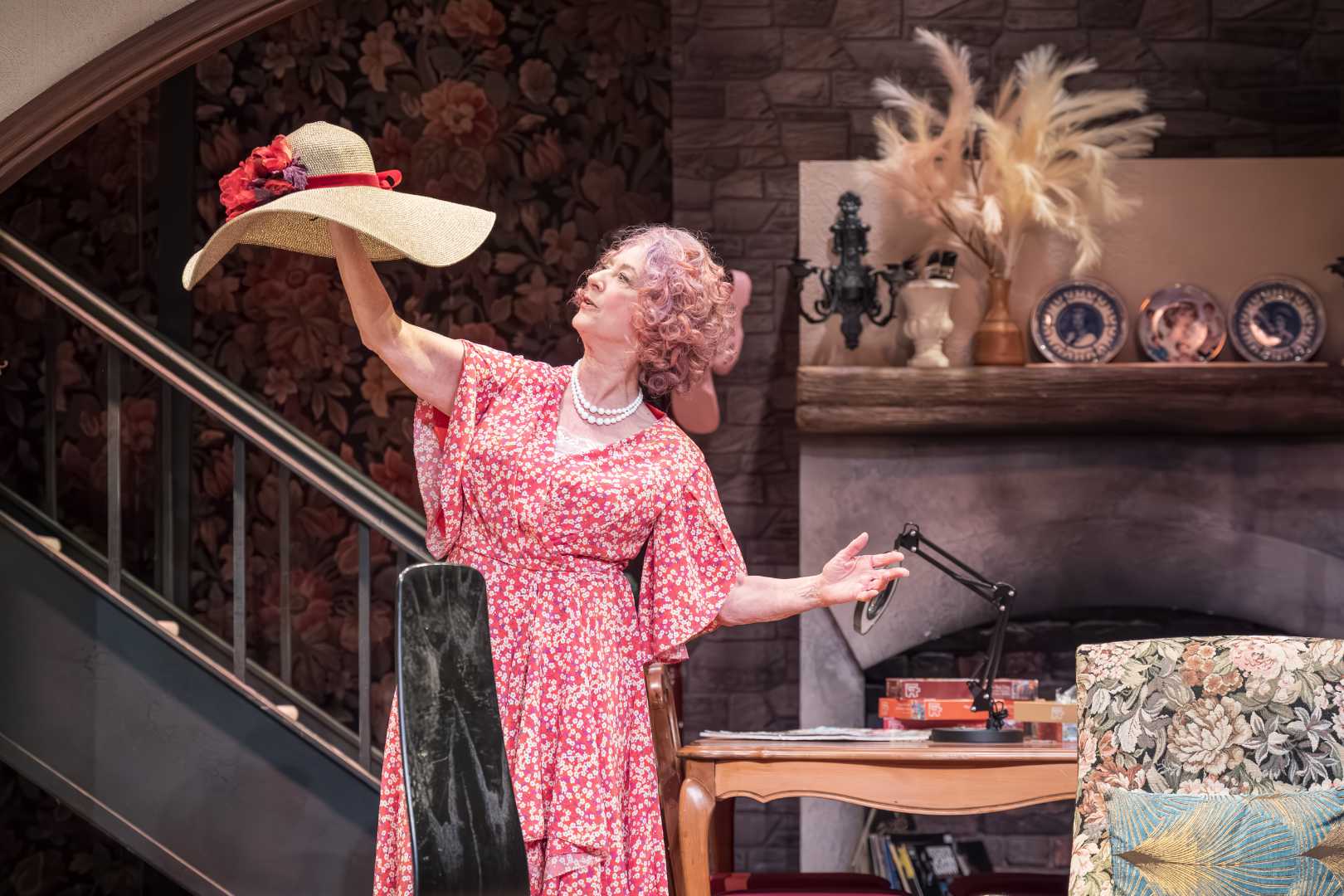
Dame Maureen Lipman as Allegra holding up a wide-brimmed hat in the cottage sitting room.
Dame Maureen Lipman as Allegra in Allegra. Photo: Marc Brenner.
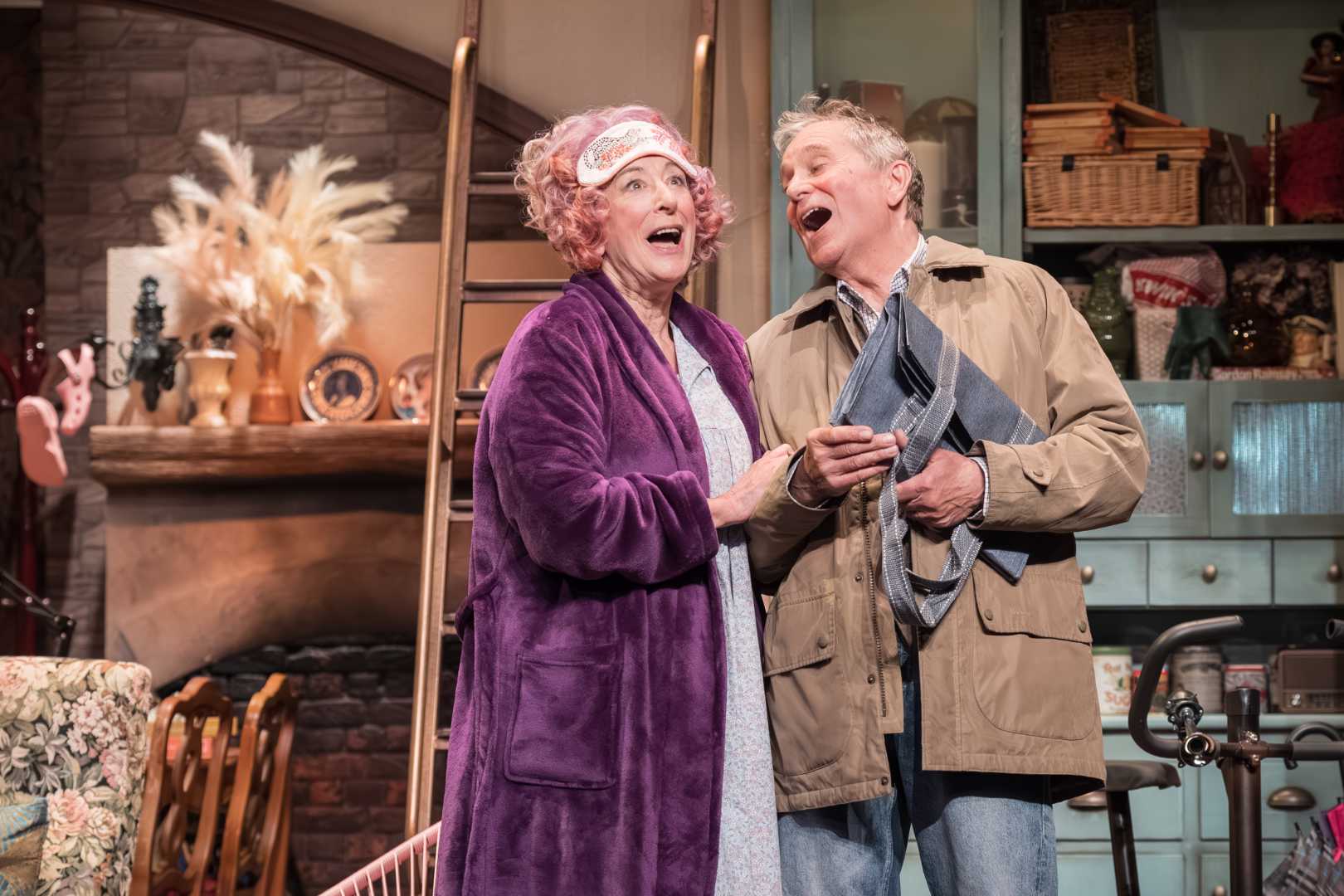
Dame Maureen Lipman as Allegra and John Middleton as Ronen singing together in the cottage kitchen.
Dame Maureen Lipman as Allegra and John Middleton as Ronen in Allegra. Photo: Marc Brenner.
Performers

Dame Maureen Lipman, who plays Allegra in Peter Quilter’s Allegra.

Dame Maureen Lipman

ALLEGRA
Twitter

An acclaimed actor and writer whose career spans almost six decades. Her extensive stage and screen work includes Educating Rita, See How They Run, The Pianist and Coronation Street. Trained at LAMDA, she has become one of Britain’s most distinctive and celebrated comic and dramatic performers.

John Middleton, who plays Ronen in Peter Quilter’s Allegra.

John Middleton

RONEN
Twitter

Best known for playing Ashley Thomas in ITV’s Emmerdale, John Middleton has also appeared in Coronation Street, Hollyoaks and numerous television dramas. His theatre credits include Strangers on a Train, Hull & High Water and the UK tour of My Fair Lady, in which he played Colonel Pickering.

Bailey Patrick, who plays Officer Rogers in Peter Quilter’s Allegra.

Bailey Patrick

OFFICER ROGERS
Twitter Instagram

Trained at Rose Bruford College and RADA, Bailey Patrick’s theatre credits include Peter Pan Goes Wrong, Othello at Shakespeare’s Globe and The Country Girls. His television work includes London Kills, Bridgerton, Andor, Top Boy and Bodyguard, while his film appearances include Marching Powder.

Elizabeth Bower, who plays Anna in Peter Quilter’s Allegra.

Elizabeth Bower

ANNA
Instagram

An experienced character and comedy actor, Elizabeth Bower is best known for playing Anna in the Sky series Trollied. Her television credits include Midsomer Murders, Coronation Street, Mammoth and Three Little Birds. On stage, she has appeared in The Importance of Being Earnest and Hansel and Gretel.

Cast & Creatives

  • Showing: 16th – 20th June 2026
  • Venue: Theatre Royal Windsor, 32 Thames Street, Windsor, Berkshire SL4 1PS
  • https://theatreroyalwindsor.co.uk/allegra-26/
  • Writer: Peter Quilter
  • Director & Choreographer: Stephen Mear
  • Casting Director: Rob Kelly
  • Producer: Thomas Hopkins
  • Producer: Sams Entertainment
  • General Management & Tour Booking: Thomas Hopkins Productions
  • Press: Kevin Wilson Public Relations
  • Production Photography: Marc Brenner
  • Cast:
Dame Maureen Lipman DBE as Allegra
John Middleton as Ronen
Bailey Patrick as Officer Rogers
Elizabeth Bower as Anna
A charming, hilarious and deeply affecting comedy with music
4

Summary

Peter Quilter’s Allegra begins as a buoyant domestic comedy before revealing a darker examination of identity, care and enforced conformity. Dame Maureen Lipman leads an excellent company with commanding showmanship, comic precision and moving vulnerability.

Sending
User Review
0 (0 votes)
Share Post
  • Twitter
  • Facebook
  • VK
  • Pinterest
  • Mail to friend
  • Linkedin
  • Whatsapp
  • Skype
The Marquise by Noël Coward at...
The Marquise. Photo Alastair Muir

About author

Robert Cope

About Author

Robert Cope

Meet Robert. With roots in Uganda and England, and childhood memories from Kenya, he offers a distinctive voice in the theatre world. As a noted critic in London, his reviews on 'Theatre Life' echo his deep connection to the arts and his active role in the Clerkenwell community. Offstage, Robert champions community causes, enjoys the strategy of backgammon, the energy of squash, and the serenity of British countryside hikes. Join him in exploring the theatrical scene through his informed and unique perspective.

Other posts by Robert Cope

Related posts

01 Jun
The Marquise. Photo Alastair Muir
Comedy Plays
Read more

The Marquise by Noël Coward at Theatre Royal Windsor

0
Stylish, witty and full of surprises, The Marquise is a rewarding revival of one of Noël Coward’s... Continue reading
07 May
Sherlock Holmes at Regent’s Park Open Air Theatre - Photography Robert Cope
Comedy Plays
Read more

Sherlock Holmes at Regent’s Park Open Air Theatre

2
Sherlock Holmes at Regent’s Park Open Air Theatre is an atmospheric, madcap funny and visually inventive mystery,... Continue reading
20 Apr
Comedy Plays

Private Lives by Noël Coward at Reading Rep Theatre

0
Reading Rep Theatre’s Private Lives pairs 1930s glamour, sharp comic timing and strong central performances with the... Continue reading
11 Mar
Musicals

Rock & Roll Man at Theatre Royal Windsor

2
Rock & Roll Man at Theatre Royal Windsor turns the story of Alan Freed into a high-energy... Continue reading
03 Mar
Comedy Plays

Teechers – Leavers ’26 at Theatre Royal Windsor

0
At Theatre Royal Windsor, Teechers – Leavers ’26 delivers John Godber’s quick-change school satire at full speed,... Continue reading

Add comment Cancel reply

Your email address will not be published. Required fields are marked


Capital Designs Advert ImageCapital Designs Advert ImageCapital Designs Advert Image

Latest Reviews

Dame Maureen Lipman as Allegra stands above John Middleton as Ronen, Elizabeth Bower as Anna and Bailey Patrick as Officer Rogers during a colourful musical number.

Allegra at Theatre Royal Windsor

15th June 2026
The Marquise. Photo Alastair Muir

The Marquise by Noël Coward at Theatre Royal Windsor

1st June 2026
Sherlock Holmes at Regent’s Park Open Air Theatre - Photography Robert Cope

Sherlock Holmes at Regent’s Park Open Air Theatre

7th May 2026
You Will Find Me Theatre Royal Windsor - Photography Jack Merriman

You Will Find Me at Theatre Royal Windsor

6th May 2026

Latest News

Artist’s impression of Troubadour Greenwich Peninsula Theatre entrance at sunset

Troubadour Greenwich Peninsula gets go-ahead for London’s largest theatre

4th February 2026

Google Takes on ChatGPT with Launch of AI-Powered Chatbot Bard

7th February 2023

Pasqal Secures €100 Million in Funding to Advance its Neutral Atom Quantum Computing Technology

25th January 2023

Jakub Kiwior, a 22-year-old central defender from Poland, has joined Arsenal

23rd January 2023

Recent Comments

  1. Robert Cope on Sherlock Holmes at Regent’s Park Open Air Theatre
  2. Robert Cope on You Will Find Me at Theatre Royal Windsor
  3. Terenia on Sherlock Holmes at Regent’s Park Open Air Theatre
  4. Catherine O'Reilly on You Will Find Me at Theatre Royal Windsor
  5. Robert Cope on You Will Find Me at Theatre Royal Windsor
  • Main Menu

    • Home Page

    • Theatre

    • About Us

    • Shop

  • Need Help?

    • FAQs

    • Find a Venue

    • Become a Reviewer

    • Contact Support

  • Corporate

    • Production Companies

    • Partnership Enquiries

    • Event Enquiries

    • Advertising

  • My Account

    • My Account

    • Order History

    • Edit Account

    • Wishlist

  • Site Policies

    • Shipping & Delivery

    • Returns Policy

    • Cookie Policy

    • Privacy Policy

Stay Connected

Robert's Other Sites
Email Form
Facebook Twitter Instagram Pinterest Linkedin Youtube
Pay Safely and Securely with:
Group 11
Stay up to date with our monthly e-newsletter

© 2023 Theatre Life • all rights reserved

Home
Reviews
News
Shop
Contact
We use cookies to ensure that we give you the best experience on our website. If you continue to use this site we will assume that you are happy with it.
You can revoke your consent any time using the Revoke consent button.