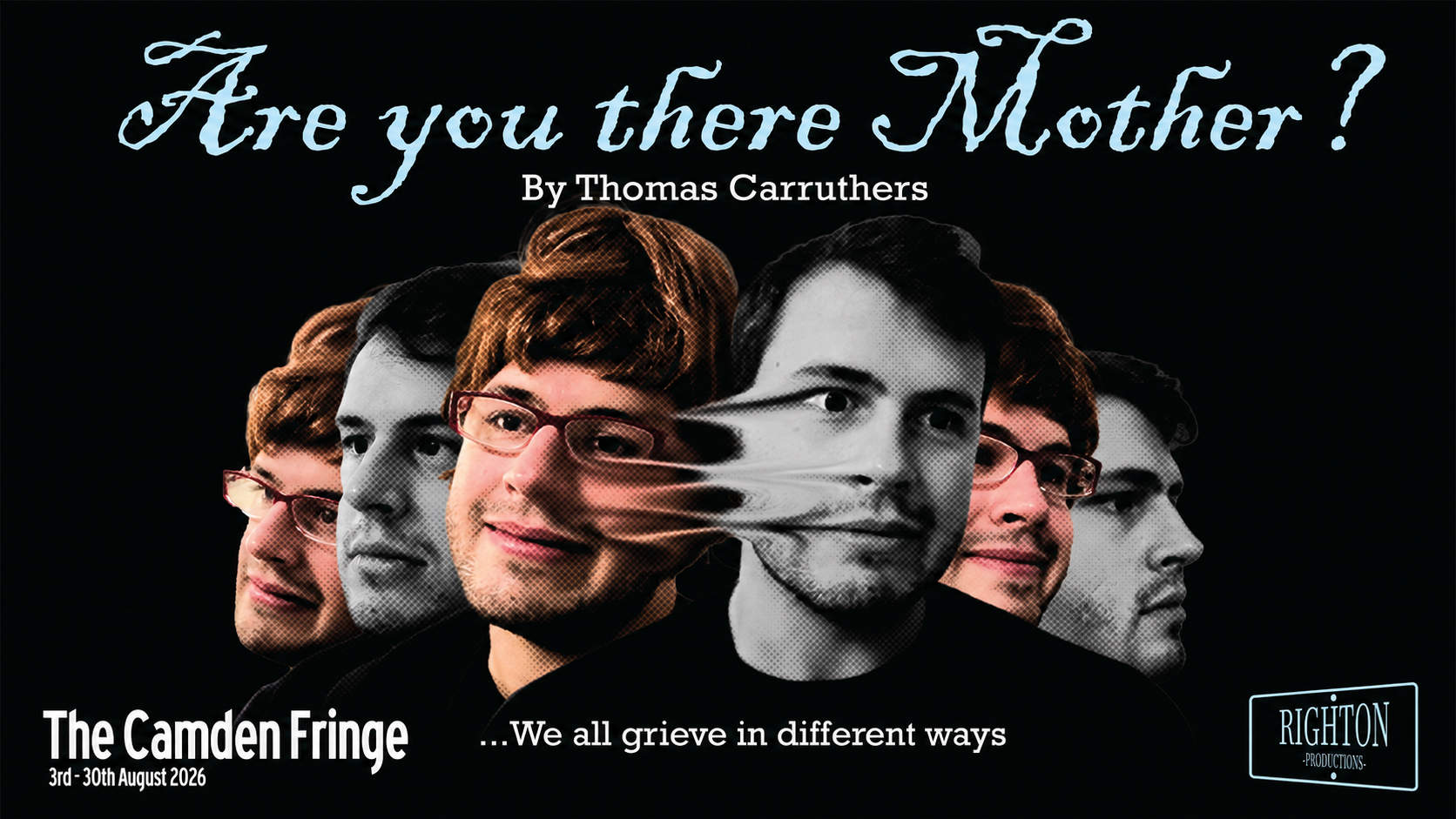
A well-intentioned deception develops into something much harder to control in Are You There Mother?, Thomas Carruthers’ darkly comic one-man play for Righton Productions. Blending caustic humour with a growing sense of unease, it considers grief, dependency and the uncertain boundary between performing a role and allowing that role to become part of an identity.
Carruthers plays Vincent Burns, a Hull-based actor whose career has brought him little money or recognition. His circumstances change when Martha Lapine, a terminally ill woman, offers him an unusual job. Fearing that her emotionally dependent daughter, Prudence, will be unable to cope with her death, Martha asks Vincent to pose as a psychic medium and convince her that she remains safe and happy beyond the grave. Intended as a single act of reassurance, the deception gradually develops into an elaborate and increasingly difficult relationship.
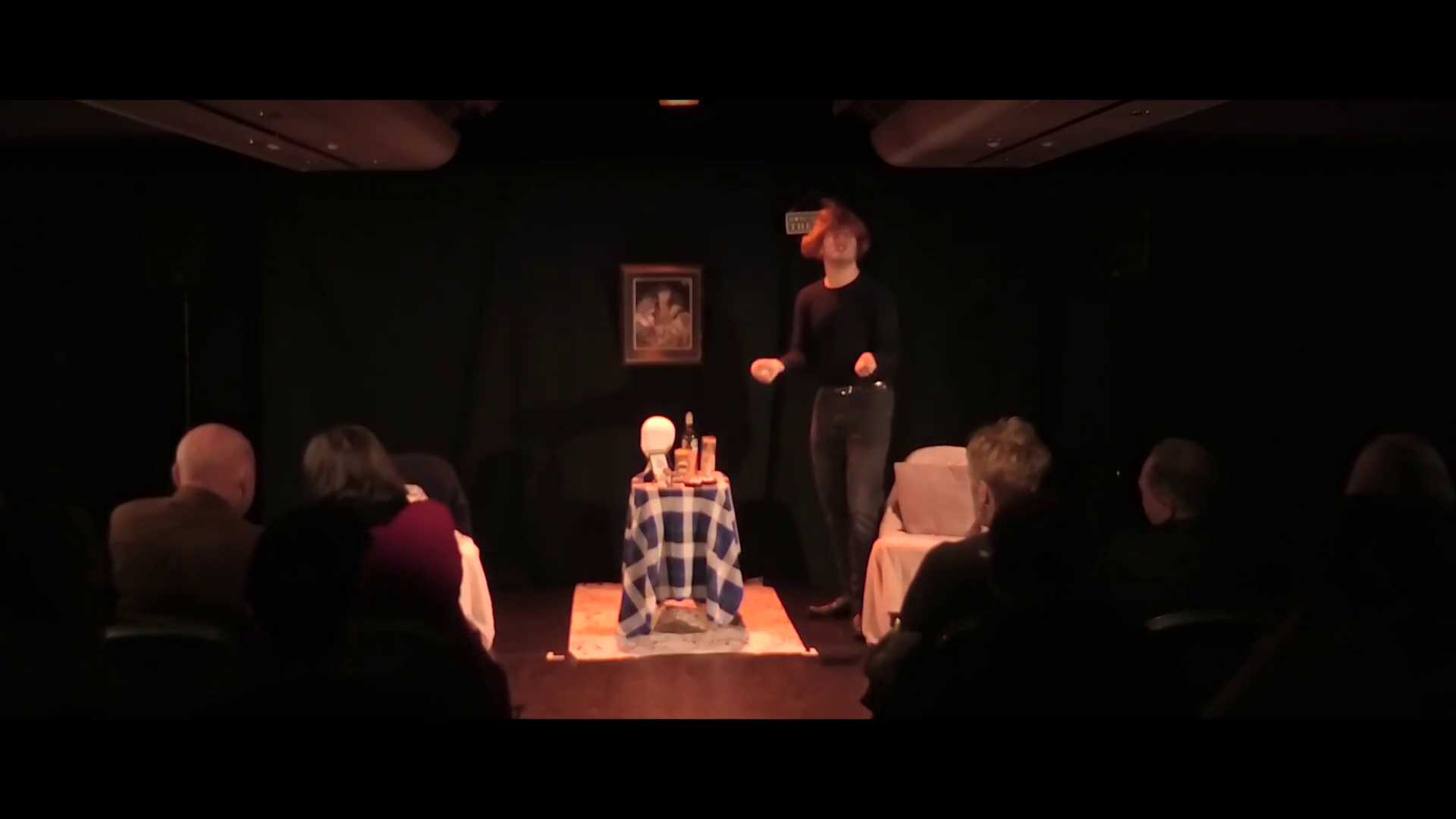
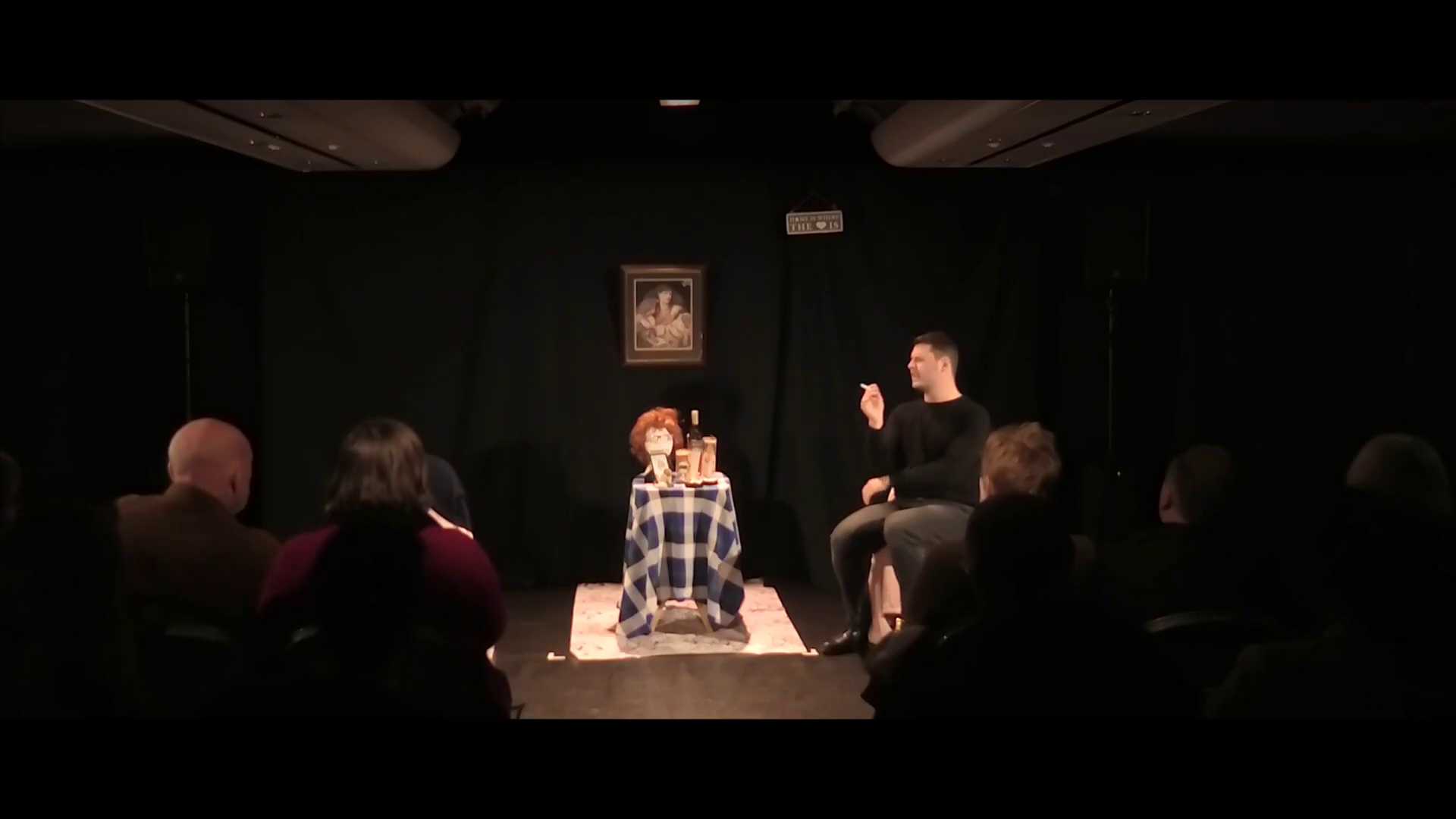
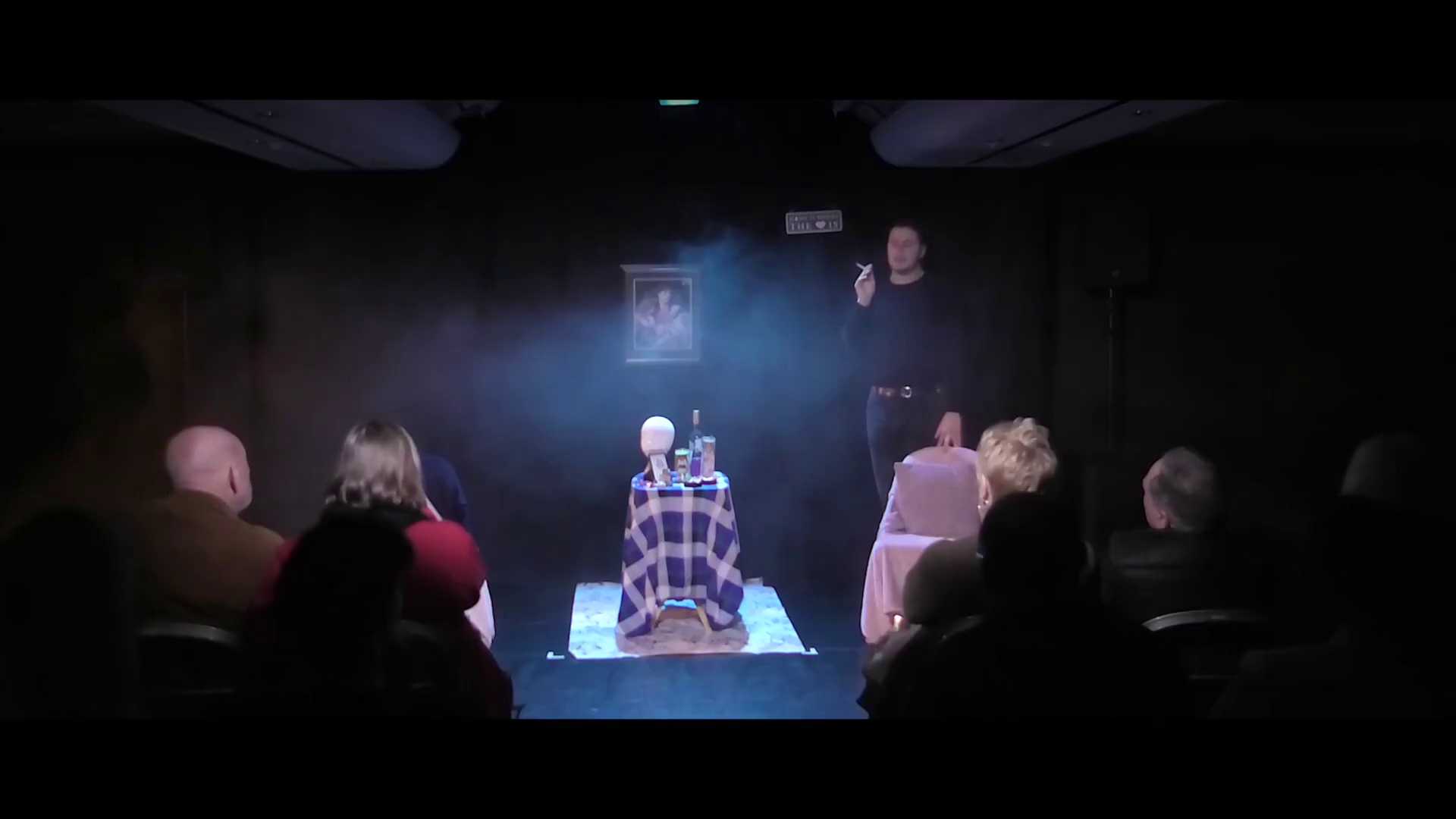
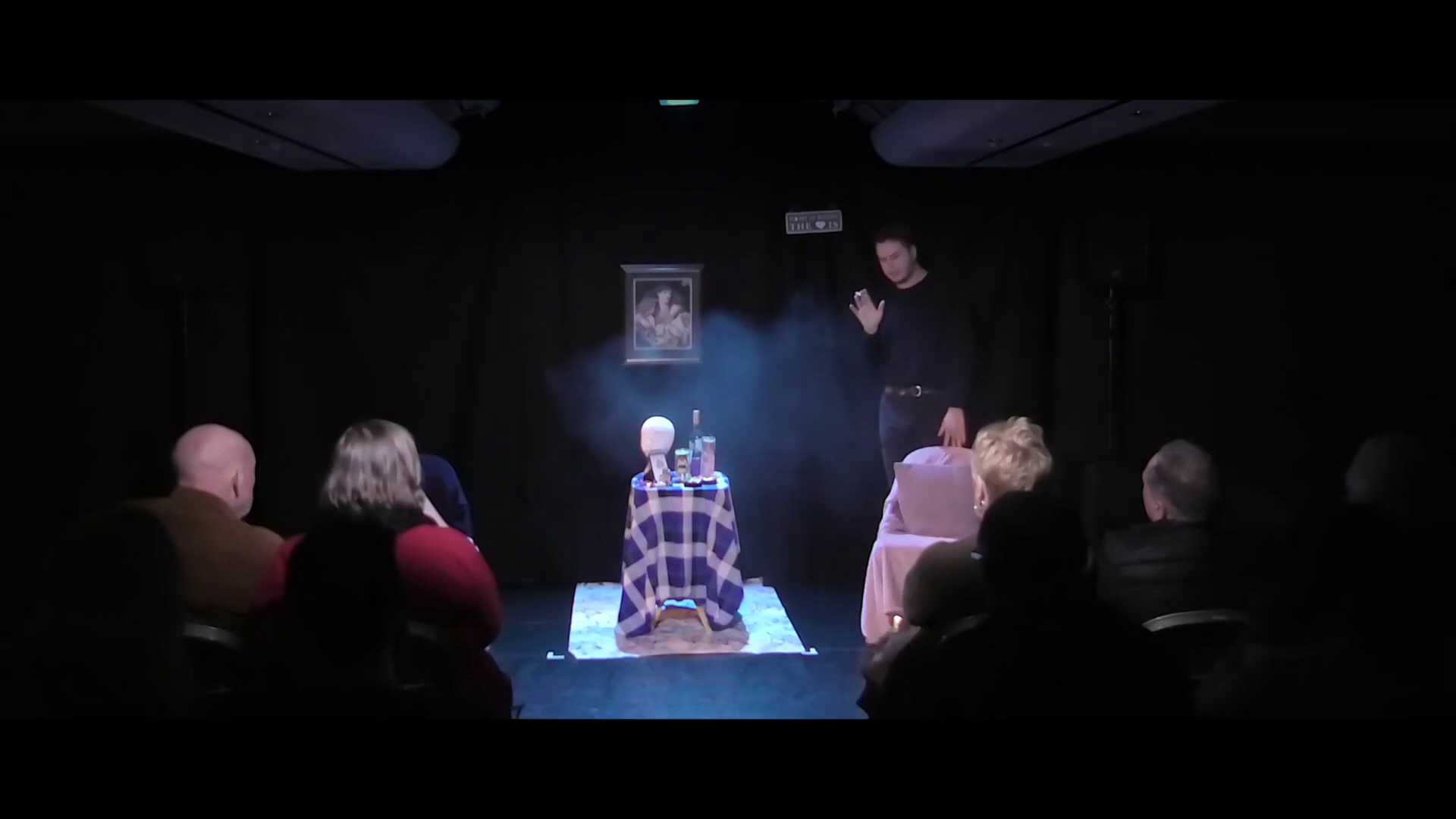
Vincent tells the story directly to the audience, presenting himself as both its unreliable narrator and aggrieved central figure. Carruthers establishes an immediate, conspiratorial relationship with the room. His Vincent is confident, conversational and physically restless, continually revising events in search of a better punchline or a more flattering explanation for his choices. His quick corrections and expressive gestures make the account feel as though it is being assembled in the moment. Vincent is entertaining company, even as his narration reveals his vanity, desperation and remarkable capacity to excuse his own behaviour.
The solo format requires Carruthers to populate Vincent’s recollections with Martha and Prudence as well as several incidental figures. He distinguishes the principal characters clearly through voice, posture and gesture. Martha has an exaggerated rasp, a wheezing laugh and a commanding manner, while Prudence is initially higher-voiced and more tentative, later acquiring greater force as her dependency deepens.
Vincent nevertheless remains deliberately visible beneath both impersonations. This makes the character work more interesting than a succession of detached impressions. At first, he appears to be borrowing other identities as tools within his deception; as the arrangement continues, the boundaries become progressively less secure. Carruthers’ movement follows the same trajectory, changing from loose, expansive energy towards something more measured, contained and faintly haunted.
The comedy is deliberately abrasive. Vincent’s narration is crowded with references to television, film, drag and northern popular culture, ranging from Are You Being Served? and Dale Winton to Cilla Black, Danny La Rue and Torvill and Dean. The audience responded warmly to much of this material, while one deliberately explicit joke provoked a shocked, audible reaction from a spectator. Carruthers delivers the references conversationally rather than as a rapid succession of stand-up punchlines, allowing them to reveal Vincent’s habit of hiding discomfort beneath jokes and borrowed cultural images.
There are moments when their sheer number risks crowding the story, particularly when one comparison arrives before the previous idea has fully settled. The recurring sessions in the middle of the play also come close to repetition. Carruthers’ variations in pace and physicality largely maintain the momentum, but slightly greater selectivity would give the emotional development still more room to breathe.
The original deception is morally unstable from the beginning. Vincent accepts Martha’s proposal because he needs money, while Martha commissions the lie in the hope of protecting her daughter. As the arrangement continues, it supplies Vincent with companionship and a sense of purpose that his legitimate acting career has failed to provide. Kindness, exploitation and self-interest coexist within the same actions, making it difficult to divide the characters neatly into victims and villains.
Prudence is crucial to that balance. The audience encounters her through Vincent’s recollection, and his descriptions of her social awkwardness, habits and emotional vulnerability can be casually cruel. Carruthers retains the humanity beneath the comic edges, allowing genuine grief, pathos and occasional sharpness to emerge. She does not remain merely the passive recipient of Vincent’s fraud, and her changing influence complicates the apparent balance of power.
The transition from comedy towards something darker is gradual and convincing. Early anecdotes about Vincent’s unsuccessful career and his growing financial interest in the scheme give way to increasingly uncomfortable moral compromises. The pace becomes more deliberate, and moments of stillness acquire greater weight. Rather than abruptly announcing a change of genre, the production allows unease to accumulate beneath the laughter.
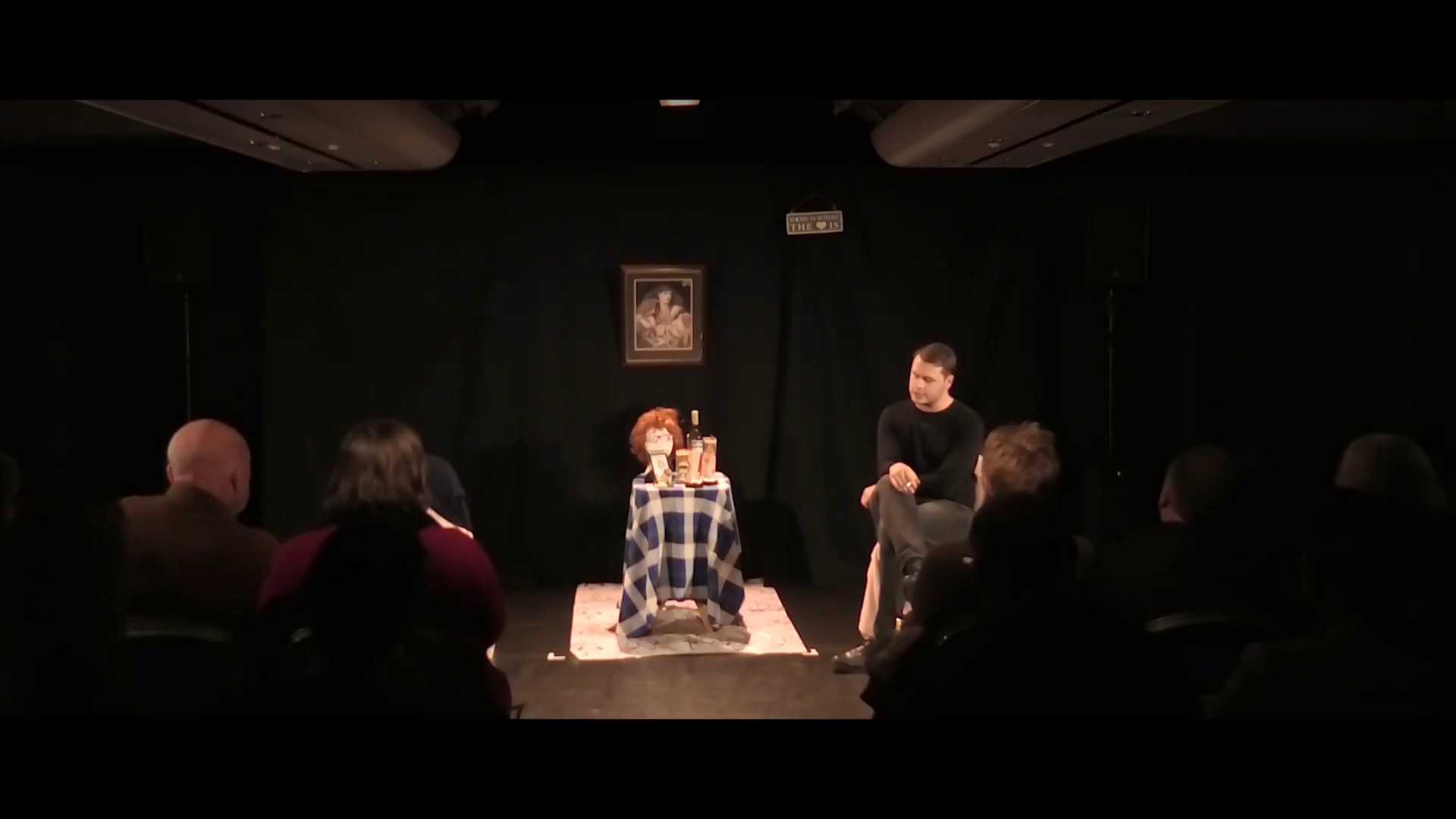
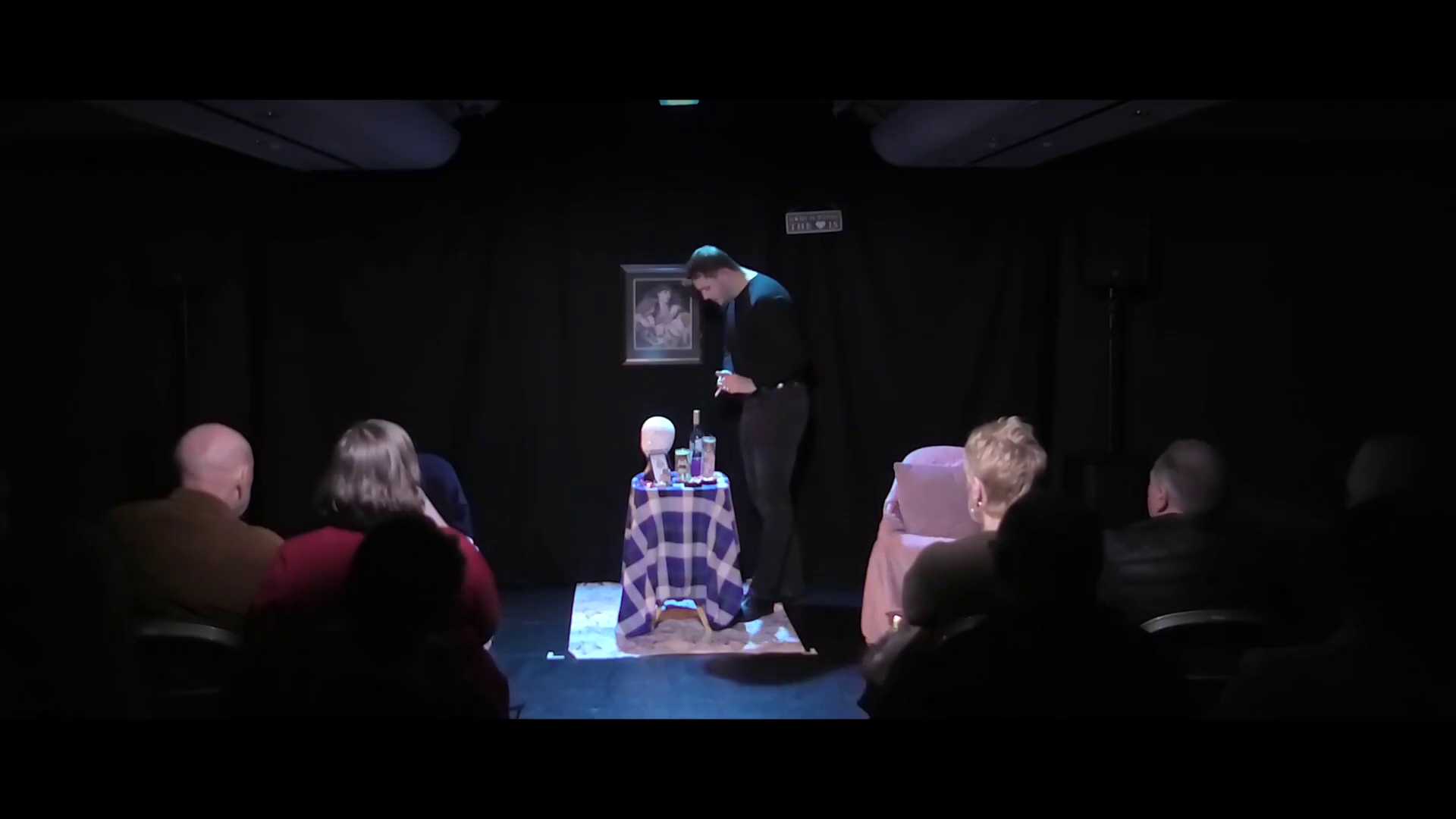
The compact staging gives physical form to that progression. A chair and table covered with ashtrays and cigarettes suggest a cluttered domestic world dominated by memory, while a mannequin head bearing Martha’s red wig and glasses becomes the production’s central image. Carruthers handles, wears, removes and returns to these objects, turning Vincent’s transformation into an evolving physical process. What begins as part of an impersonation gradually assumes a more troubling significance.
Cool blue lighting and gathering haze increasingly enclose the playing space. Waves, brief classical interludes and the recurring use of Ravel’s Boléro structure the changing emotional atmosphere without overwhelming the monologue. The final blackout is timed with particular precision, leaving a last gesture and familiar laugh suspended in the darkness. It is poignant and unsettling because the production has prepared for it rather than relying upon a sudden shock.
By the end, Vincent inspires a mixture of sympathy, distrust and pity. His deception has become a means of filling an emptiness within himself, yet it is no longer clear that he remains in command of the identity he has created. The conclusion preserves a productive ambiguity: is Vincent consciously continuing the performance because he finds comfort in his new identity, has he descended into madness and become unable to find his way out of the role, or has Martha’s spirit genuinely taken possession of him?
The result is a darkly funny and increasingly haunting one-man play with a strong central premise and a carefully managed change of tone. Carruthers’ confident direct address, layered character work and physical progression give the deception a theatrical life beyond its narration. Although some passages would benefit from greater selectivity, Are You There Mother? develops an outrageous act of reassurance into a poignant and disquieting consideration of grief, performance and the human need to be wanted.
Writer & Performer
Thomas Carruthers
VINCENT BURNS / MARTHA / PRUDENCE
Thomas Carruthers is an actor, writer and theatre-maker, and the founder and artistic director of Righton Productions. A First-Class graduate of Rose Bruford College’s American Theatre Arts programme, his first Fringe play, The Pageant Play, was longlisted for the inaugural Victoria Wood Comedy Prize. He writes and performs Are You There Mother?, moving between Vincent Burns, Martha and Prudence in this one-man production.
Cast & Creatives
- Showing: 13th–14th August 2026 at 9.00 pm
- Venue: The Hen & Chickens Theatre Bar, 109 St Paul’s Road, London N1 2NA
- Buy Tickets: https://camdenfringe.com/events/are-you-there-mother/
- Writer: Thomas Carruthers
- Presented By: Righton Productions – https://linktr.ee/rightonproductions
- Running Time: 60 minutes
- Content Warning: References to grief and death
- Cast:
An inventive and haunting study of grief, deception and identity
Summary
Thomas Carruthers gives a confident, physically expressive performance as a struggling actor whose well-intentioned deception takes an increasingly unsettling turn. The shifts between comedy, grief and creeping horror are handled effectively. Although some of the cultural references slightly crowd the middle, this remains an inventive and haunting one-man show, well worth seeing.


Add comment