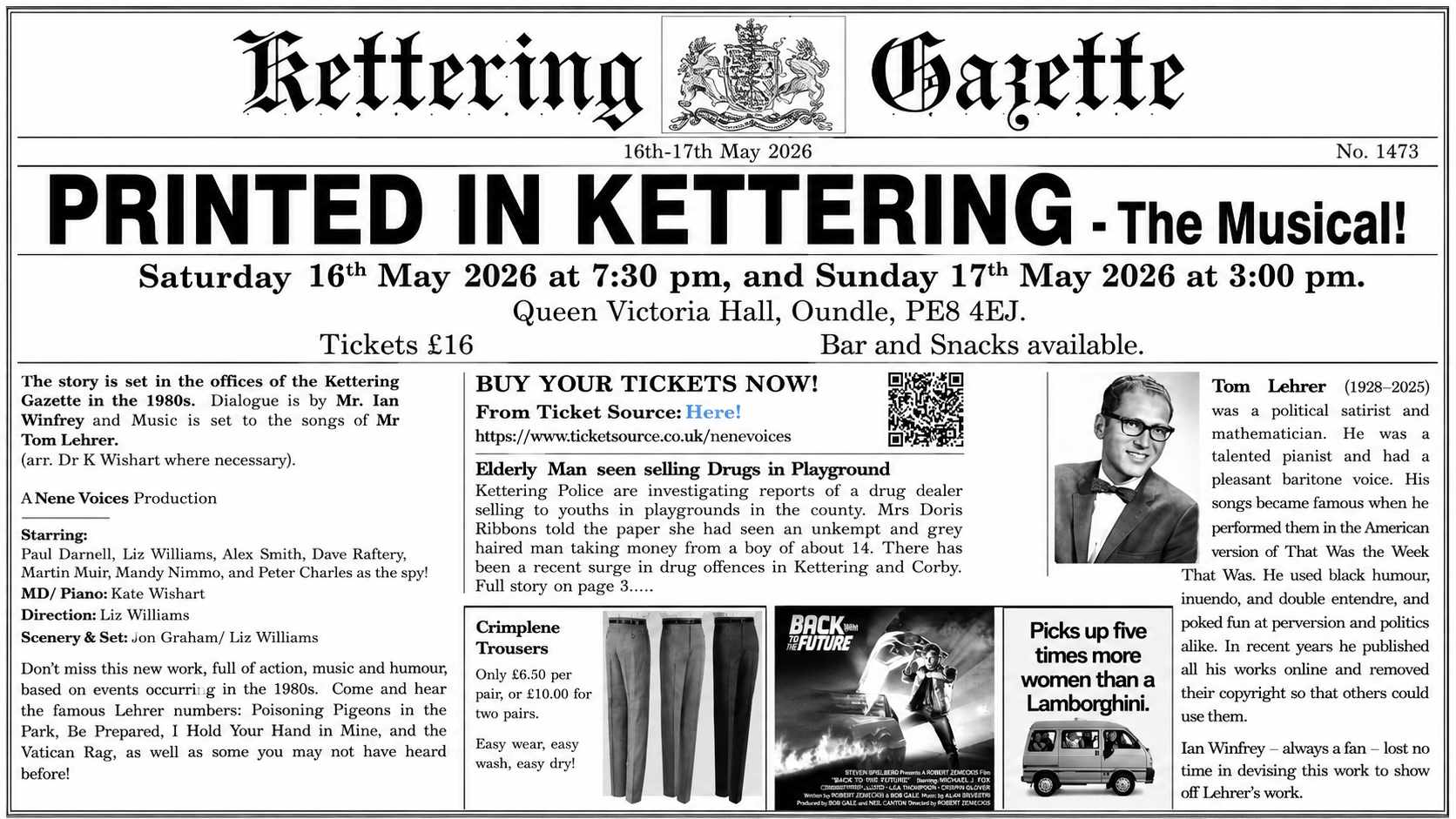
Tom Lehrer built a distinctive career from deceptively cheerful melodies, intricate wordplay and subjects that more cautious songwriters might have crossed the street to avoid. Politics, religion, mathematics, death and social embarrassment all entered his repertoire, usually dressed in polished rhymes and tunes jaunty enough to conceal the barb until it was already lodged. Even those unfamiliar with Lehrer’s name may recognise the peculiar pleasure of his method: a smiling piano accompaniment carrying lyrics of gleeful irreverence, intellectual precision and occasionally breathtaking bad taste.
Writer Ian Winfrey gives those songs an unexpectedly British home in Printed in Kettering – The Musical!, setting them inside the offices of a struggling provincial newspaper in 1985. The fictional Kettering Gazette is preparing to embrace computerised printing, but technological progress carries an uncomfortable price for the skilled workers whose livelihoods depend upon the old hot-metal process.
It is an unusual foundation for a jukebox musical, but a fertile one. Winfrey’s own family had connections to provincial newspapers, including a title in Kettering, and he uses that experience to give the comic premise a recognisable industrial backbone. The introduction of new printing technology during the 1980s caused genuine upheaval, although the characters and events here remain fictional and the dispute is treated as a springboard for comedy rather than a solemn reconstruction.
At the centre of the commotion is Brian Blunt, the Gazette’s editor and owner, who has quietly imported new machinery from America in the hope of preventing his paper from following the town’s declining shoe industry into history. The equipment promises greater speed, lower costs and survival, but also threatens to render traditional typesetters redundant. That conflict gives the musical more substance than its parade of puns, affairs and secret briefcases might initially suggest.
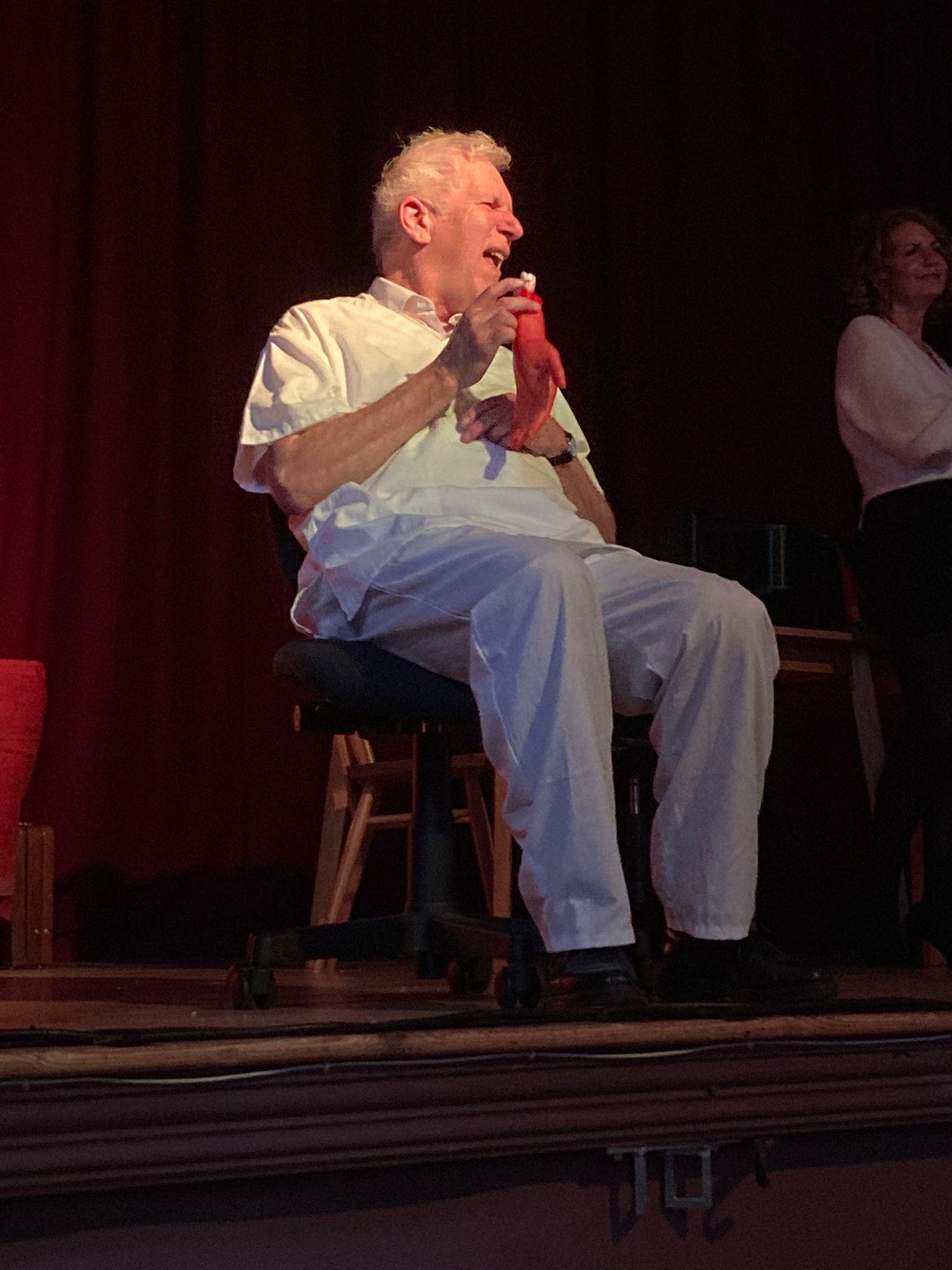
Paul Darnell gives Brian an amiable authority, finding humour in a man trying to manage a technological revolution while several less controllable parts of his life begin sliding off the composing table. His performance keeps Brian broadly comic without reducing him to a buffoon, and there is enough sincerity beneath the bluster to suggest that the future of the newspaper matters to him.
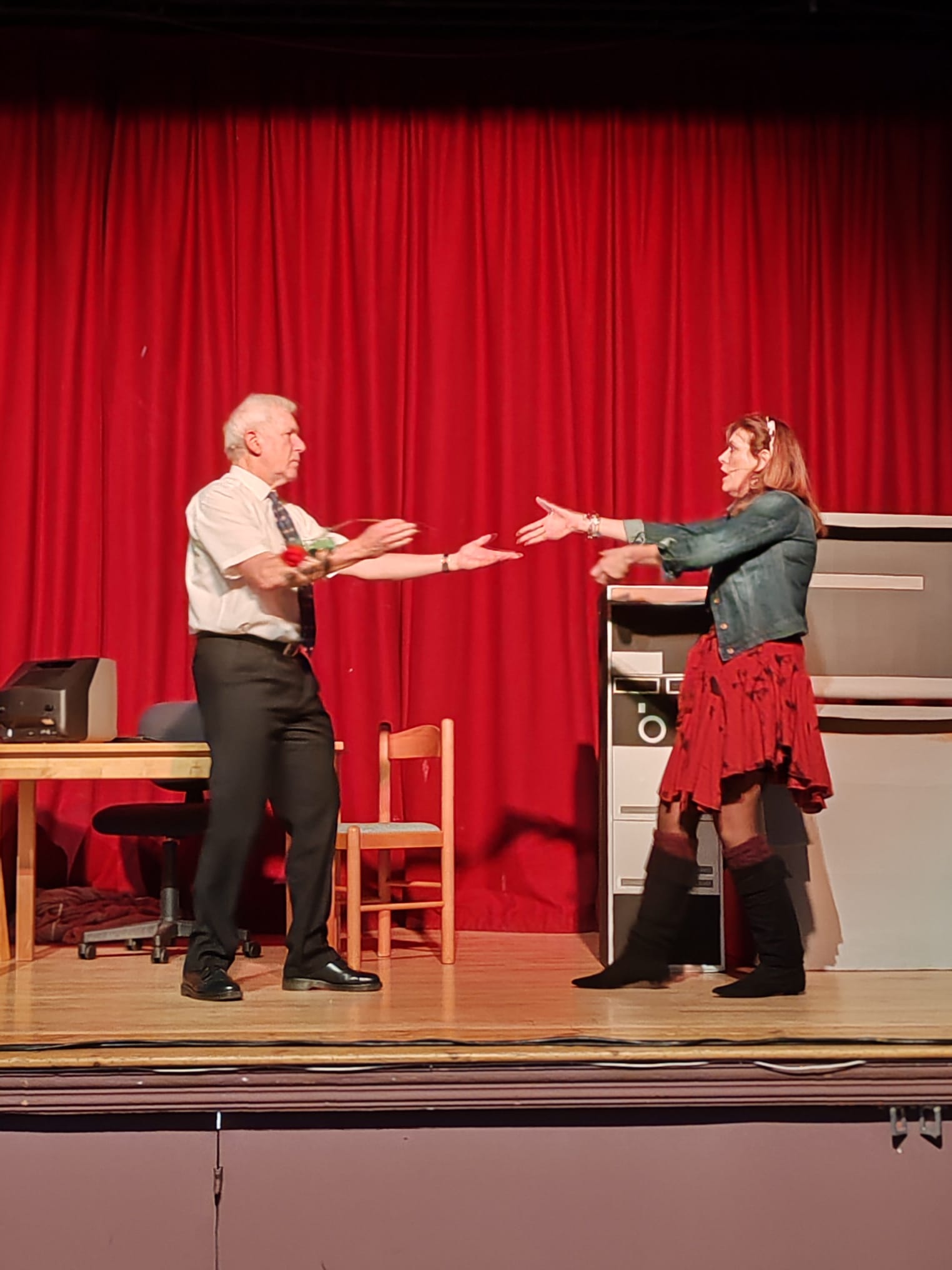
The greater pleasure lies in the ways Winfrey finds new dramatic settings for Lehrer’s songs. A discussion about computer spell-checking opens naturally into Silent E, while Charlie Chips, the technically gifted specialist responsible for coaxing the new machinery into life, is handed The Derivative Song. Dave Raftery brings a likeable awkwardness to Charlie, allowing his technical assurance and romantic uncertainty to pull in opposite directions.
His developing relationship with typist Agnes Ribbons provides one of the evening’s warmer strands. Alex Smith gives Agnes an alert, lively presence and makes clear that she wants more from the Gazette than a lifetime spent typing other people’s words. Their courtship grows through mathematics, misunderstandings and songs whose cerebral absurdity fits Charlie rather well, without becoming so sweet that the surrounding satire loses its edge.
The relationship between Brian and his secretary June Summers operates at a considerably higher temperature. Liz Williams, who also directs the production, embraces June’s confidence and appetite for theatrical excess. The pairing finds its natural musical outlet in The Masochism Tango, where Lehrer’s elegant grotesquerie becomes less an interruption than the gloriously inappropriate expression of an affair already conducted without much concern for workplace boundaries.
That is the show’s central trick: persuading songs written independently of one another to appear as though they have wandered into the correct newspaper office.
Some matches are particularly neat. Sandra Green, the formidable union leader, transforms N Apostrophe T into an emphatic rejection of the new machinery. Mandy Nimmo gives Sandra a firm, clipped authority, with a dry comic edge that makes her arrival immediately disruptive. Elsewhere, The Old Dope Peddler grows from a local crime story, while Poisoning Pigeons in the Park and The Vatican Rag find suitably irreverent corners within the increasingly improbable action.
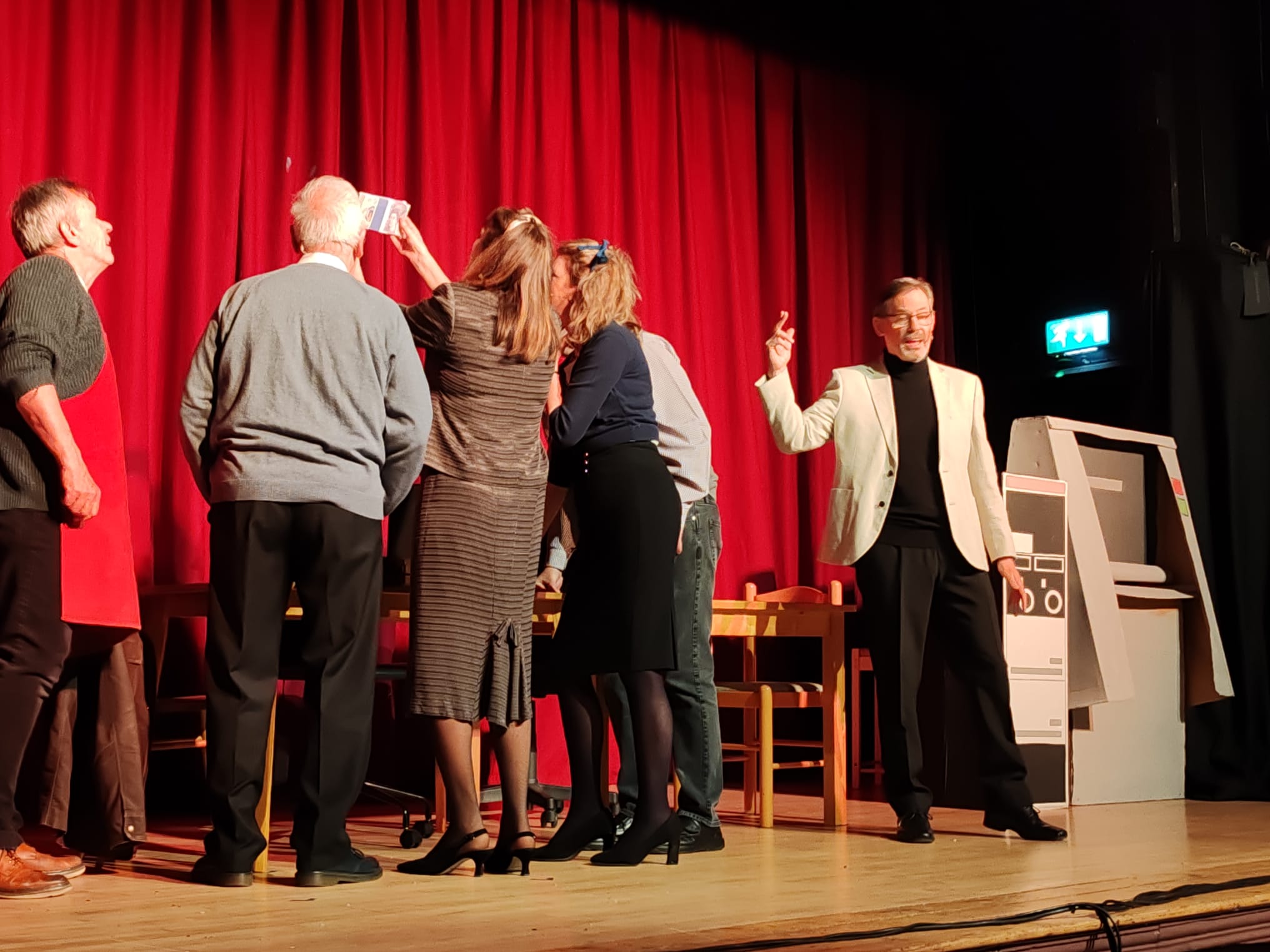
Not every song settles into the plot with equal ease. At times the story visibly straightens its tie and rearranges the furniture in preparation for the next Lehrer number. Yet this visible ingenuity is also part of the entertainment. Winfrey does not pretend that the musical is an exercise in naturalism; the delight lies partly in discovering what elaborate route will carry the characters towards the next piece.
Martin Muir lends Sidney Inkman a gruff warmth as the experienced printer who understands both the value of the old craft and the practical appeal of the new machinery. Sidney gives the piece its quietest note of melancholy. The technology may save the Gazette, but it also risks erasing a lifetime of specialist knowledge.
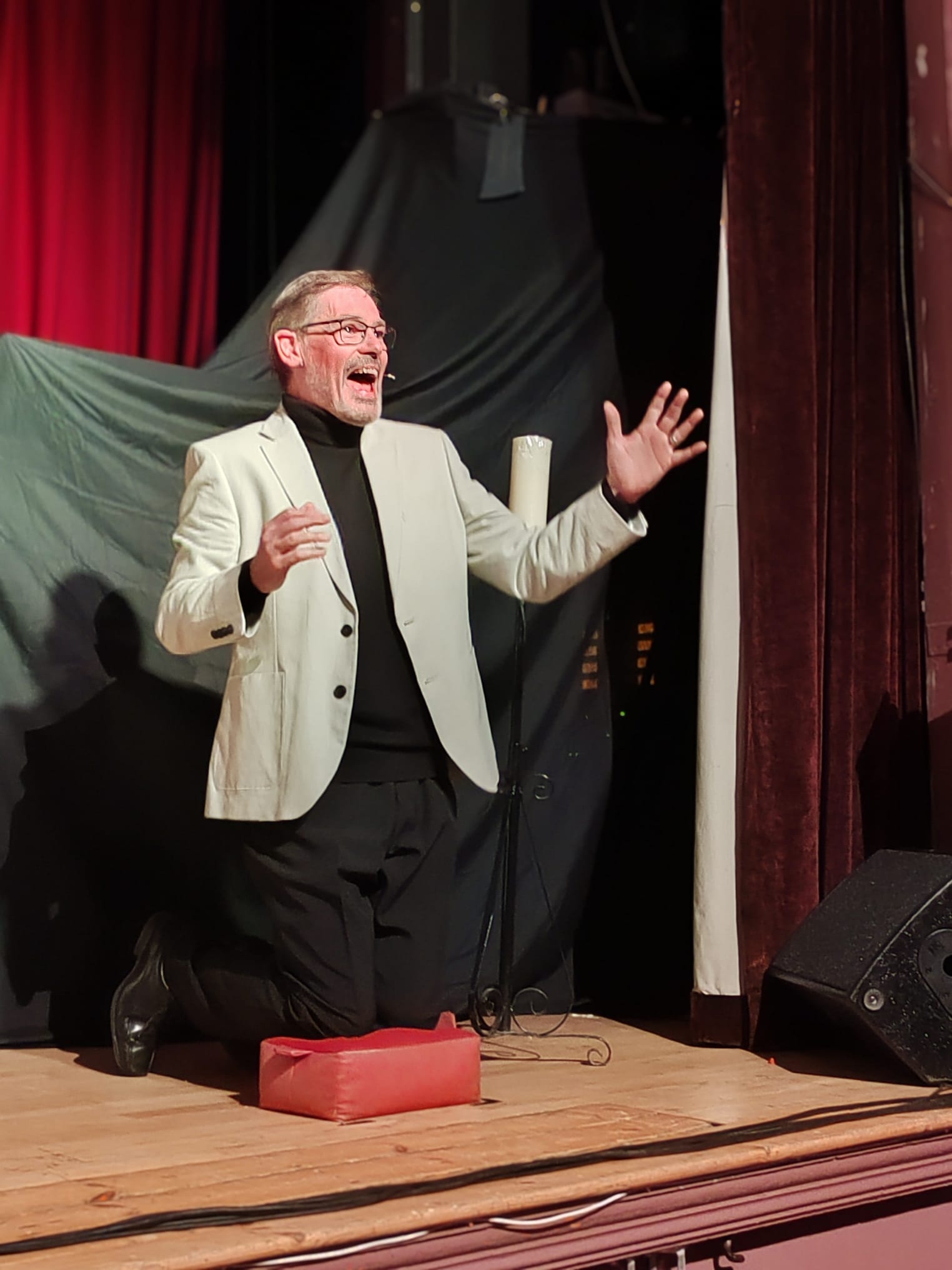
The smooth-talking James Snow introduces a wider layer of intrigue. Peter Charles plays him with an enjoyable air of self-importance, leaning into the character’s conviction that he is operating somewhere between industrial strategist and James Bond. His arrival hints that the local disagreement may be serving interests far beyond Kettering, without allowing the plot to become tangled in lengthy political explanation.
What remains is a thoughtful and emotionally engaging devised play where relatable conflict is softened, sharpened and released through humour. As a debut work from Dempsey, and as an ensemble piece shaped by lived experience, Core Values shows a company interested in theatre as conversation, confession and connection.
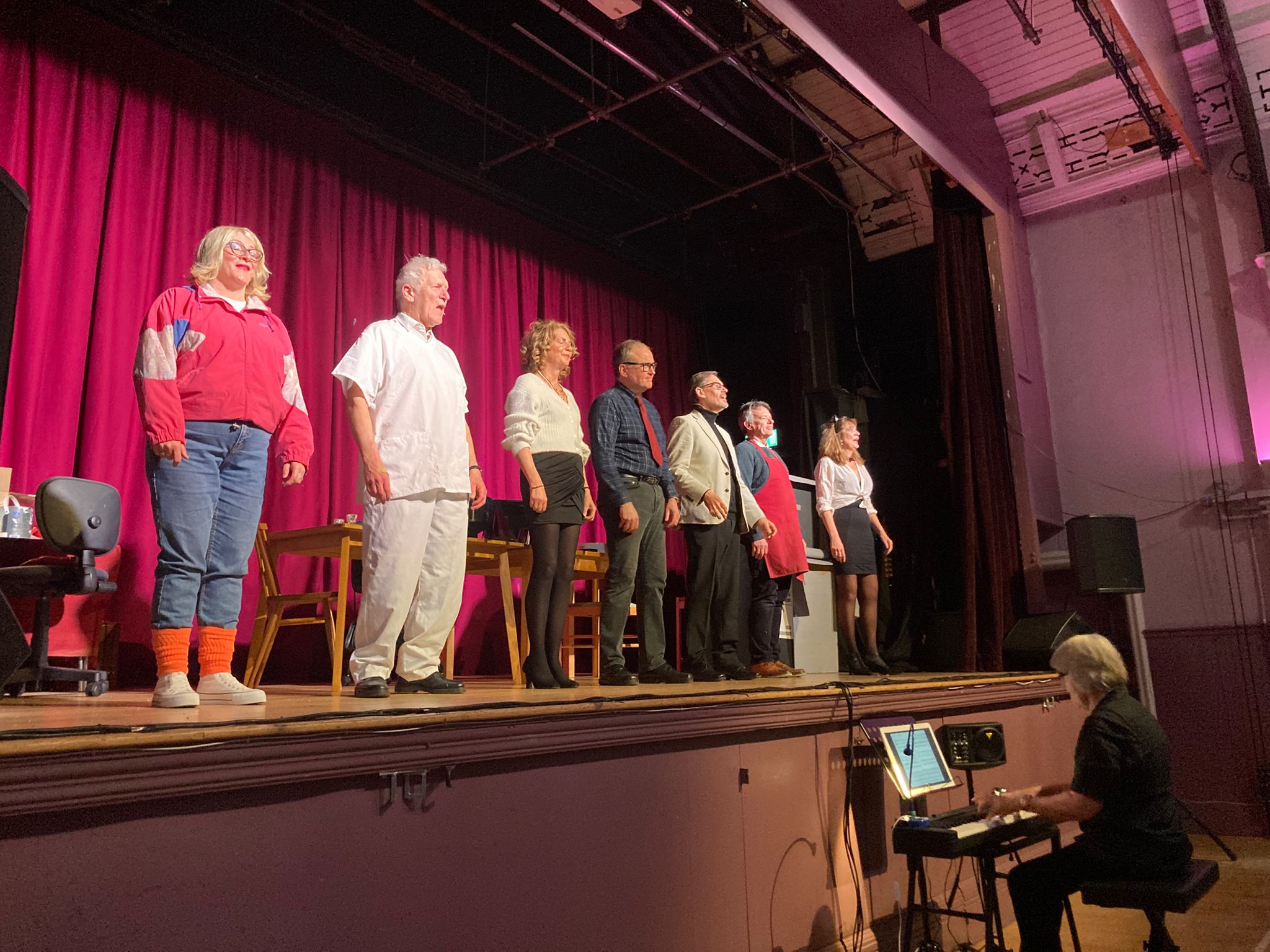
Musical director and pianist Kate Wishart provides the evening with essential momentum. Her arrangements do more than reproduce a series of cabaret songs: numbers are redistributed among the characters, enlarged through ensemble harmonies and connected through an overture, entr’acte, reprises and instrumental passages. The company singing gives the production welcome scale, while Wishart’s accompaniment preserves the verbal clarity Lehrer’s densely packed lyrics require.
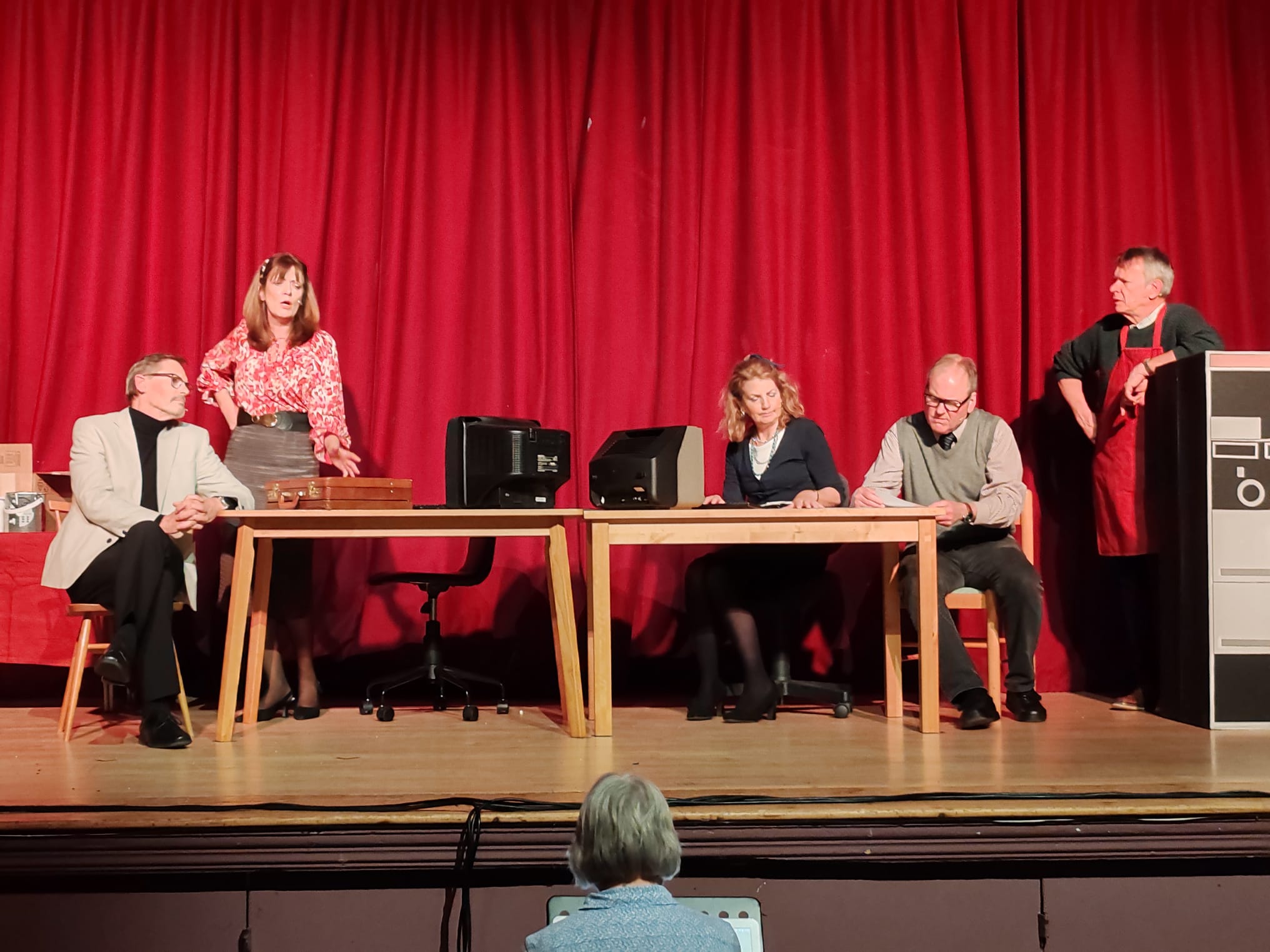
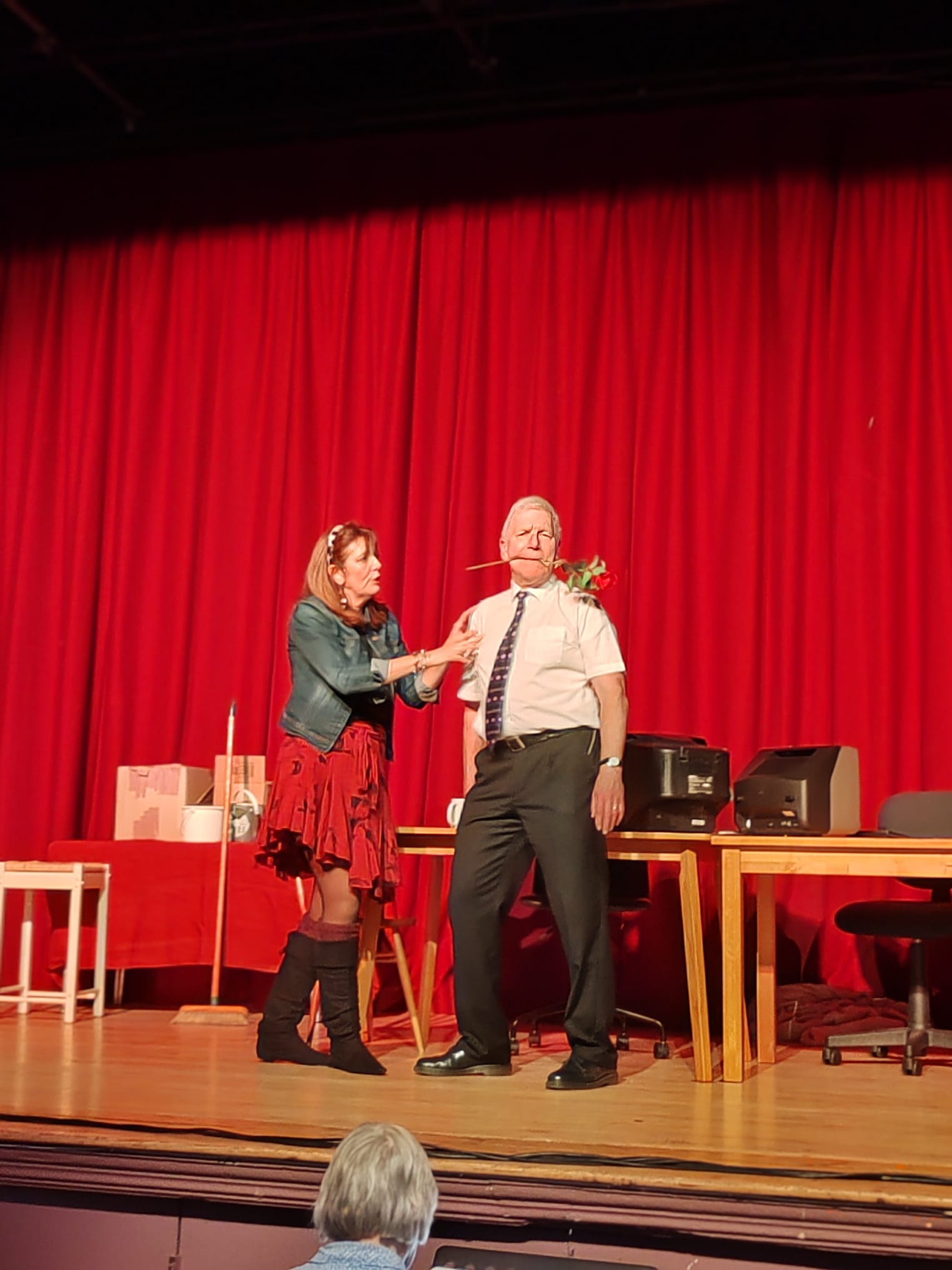
Williams’ direction keeps the style broad but controlled. Names such as Brian Blunt, Charlie Chips and Sidney Inkman announce from the outset that realism will not be troubling the premises, and the production embraces caricature, double entendre and visual comedy. Even so, the performances generally retain enough individual shading to prevent the characters from becoming nothing more than delivery systems for the songs.
The period setting, created by Jon Graham with Williams, establishes a workplace balanced precariously between two eras. Desks, typewriters and unfamiliar computer equipment provide a clear visual contrast between the tactile world of hot-metal printing and the colder promise of automation, while Colin Benoiten-Smith’s sound and lighting support the frequent movement between dialogue and music.
There are moments when a little trimming might sharpen the pace and give the strongest relationships more room to breathe. With such a generous selection of Lehrer material, the musical occasionally risks admiring every item in the songbook when a more selective visit might carry greater dramatic force.
Nevertheless, Printed in Kettering – The Musical! is driven by evident affection for Lehrer’s wit and by a sincere wish to introduce his work to another audience. Those who know the songs can enjoy hearing them given unfamiliar dramatic jobs; newcomers are offered an accessible route into a songwriter whose smiling melodies often concealed a small explosive device.
The result is warm, eccentric and cheerfully irreverent: a workplace musical in which technological upheaval, union conflict and office romance somehow make room for mathematical courtship, poisoned pigeons and one deeply questionable tango.
Cast & Creatives
- Showing: 16th – 17th May 2026
- Venue: Queen Victoria Hall, Oundle, PE8 4EJ
- Buy Tickets: https://www.ticketsource.co.uk/nenevoices
- Music and Lyrics: Tom Lehrer
- Book: Ian Winfrey
- Production: Nene Voices
- Director: Liz Williams
- Musical Director, Piano and Musical Arrangements: Kate Wishart
- Scenery and Set: Jon Graham
- Sound and Lighting: Colin Benoiten-Smith
- Production Photography: Amanda Nimmo
- Cast:
Liz Williams as June Summers
Alex Smith as Agnes Ribbons
Dave Raftery as Charlie Chips
Martin Muir as Sidney Inkman
Mandy Nimmo as Sandra Green
Peter Charles as James Snow
A warm, eccentric and cheerfully irreverent tribute to Tom Lehrer
Summary
Ian Winfrey’s inventive jukebox musical gives Tom Lehrer’s satirical songs an unexpectedly fitting home in a 1980s provincial newspaper office, combining industrial unrest, office romance and gleefully dark humour with an affectionate ensemble performance.


Add comment