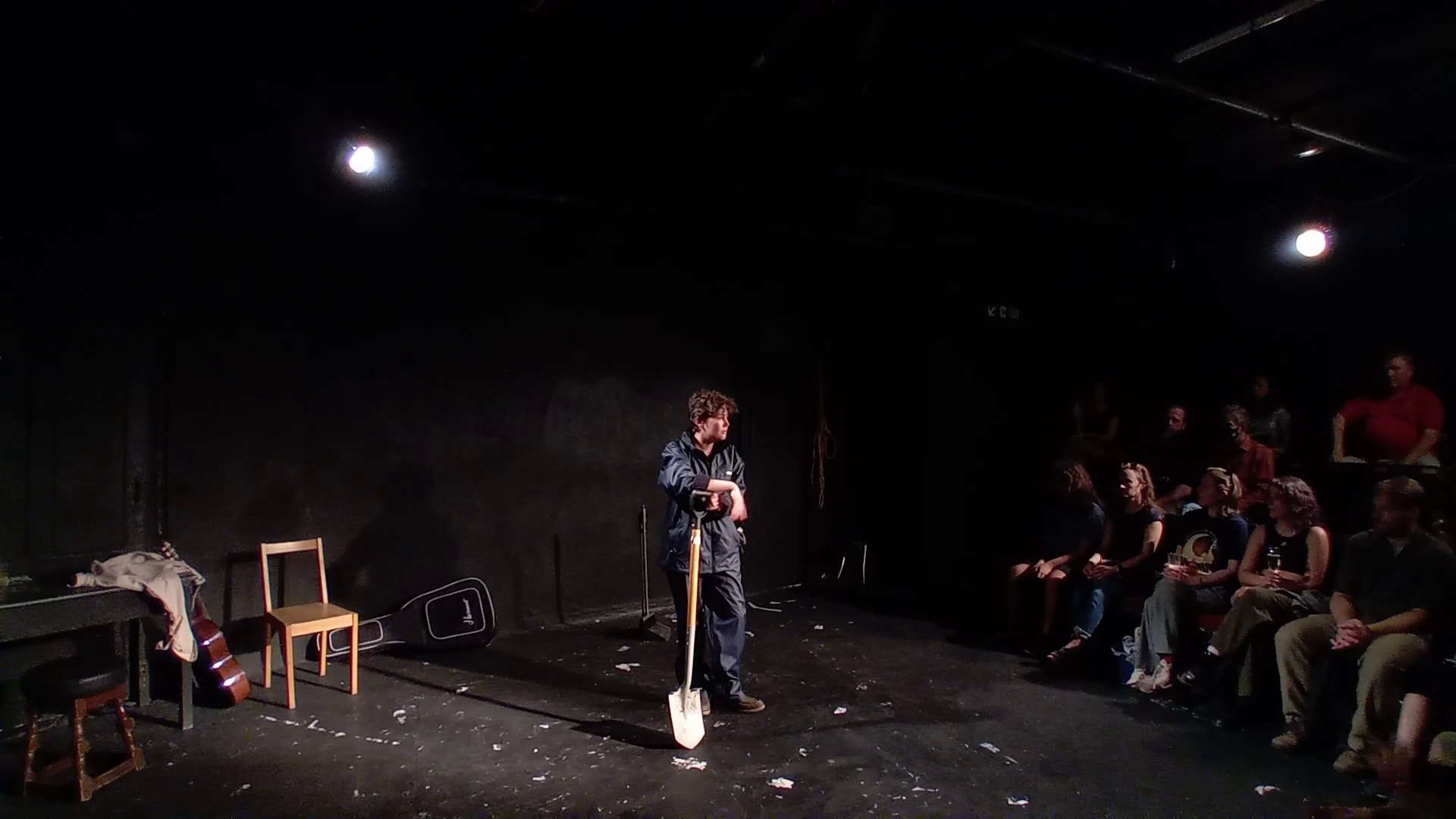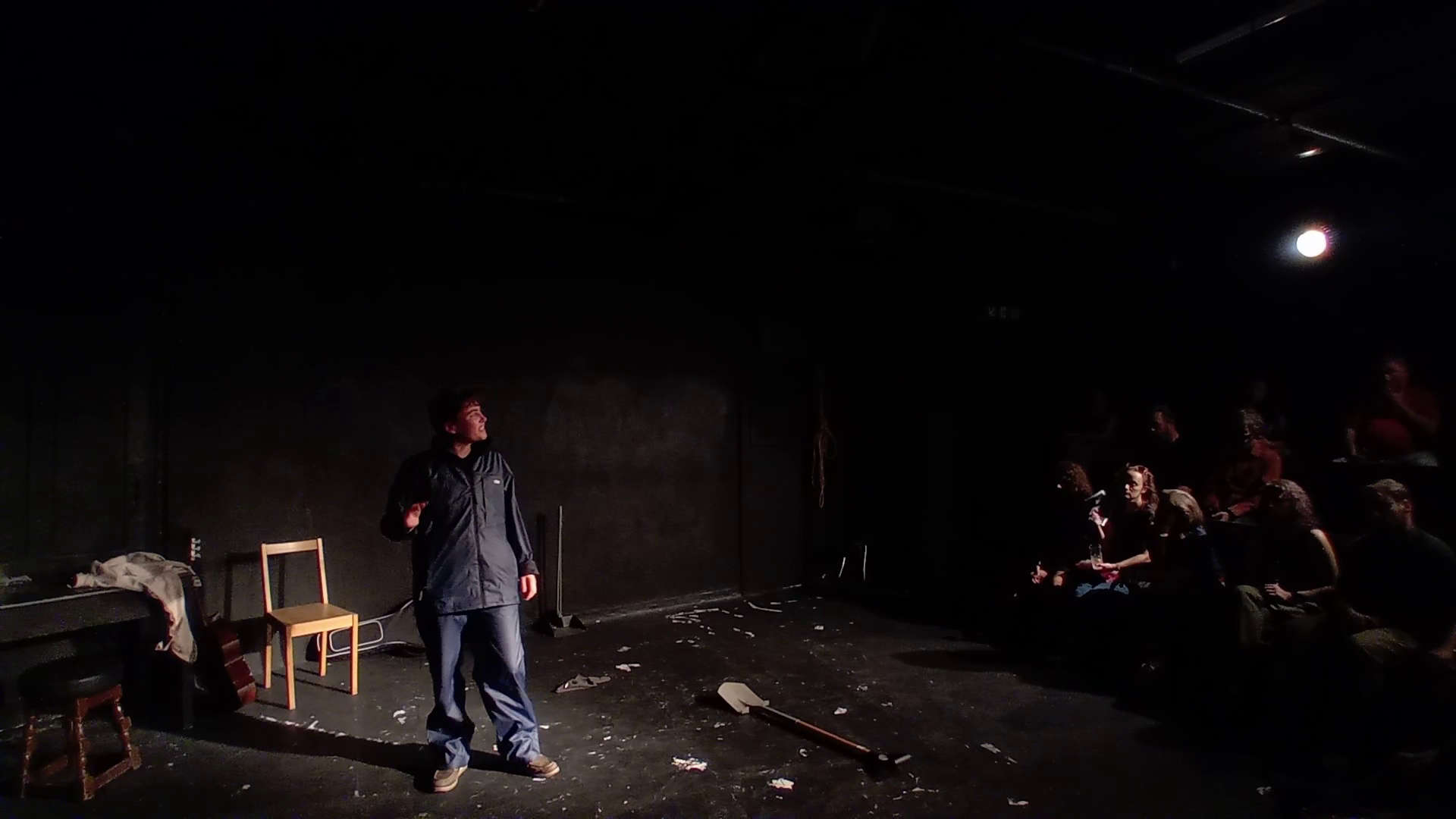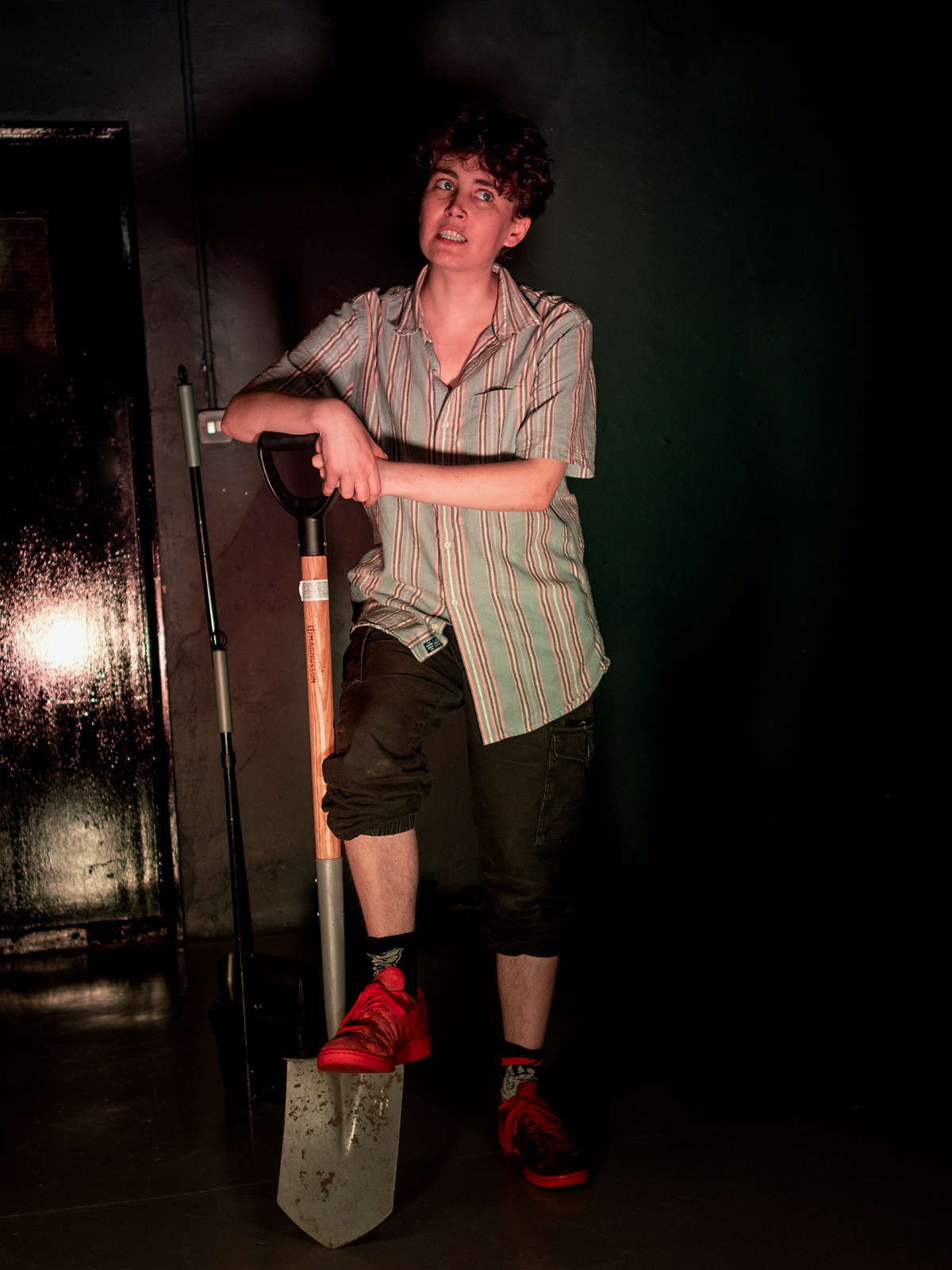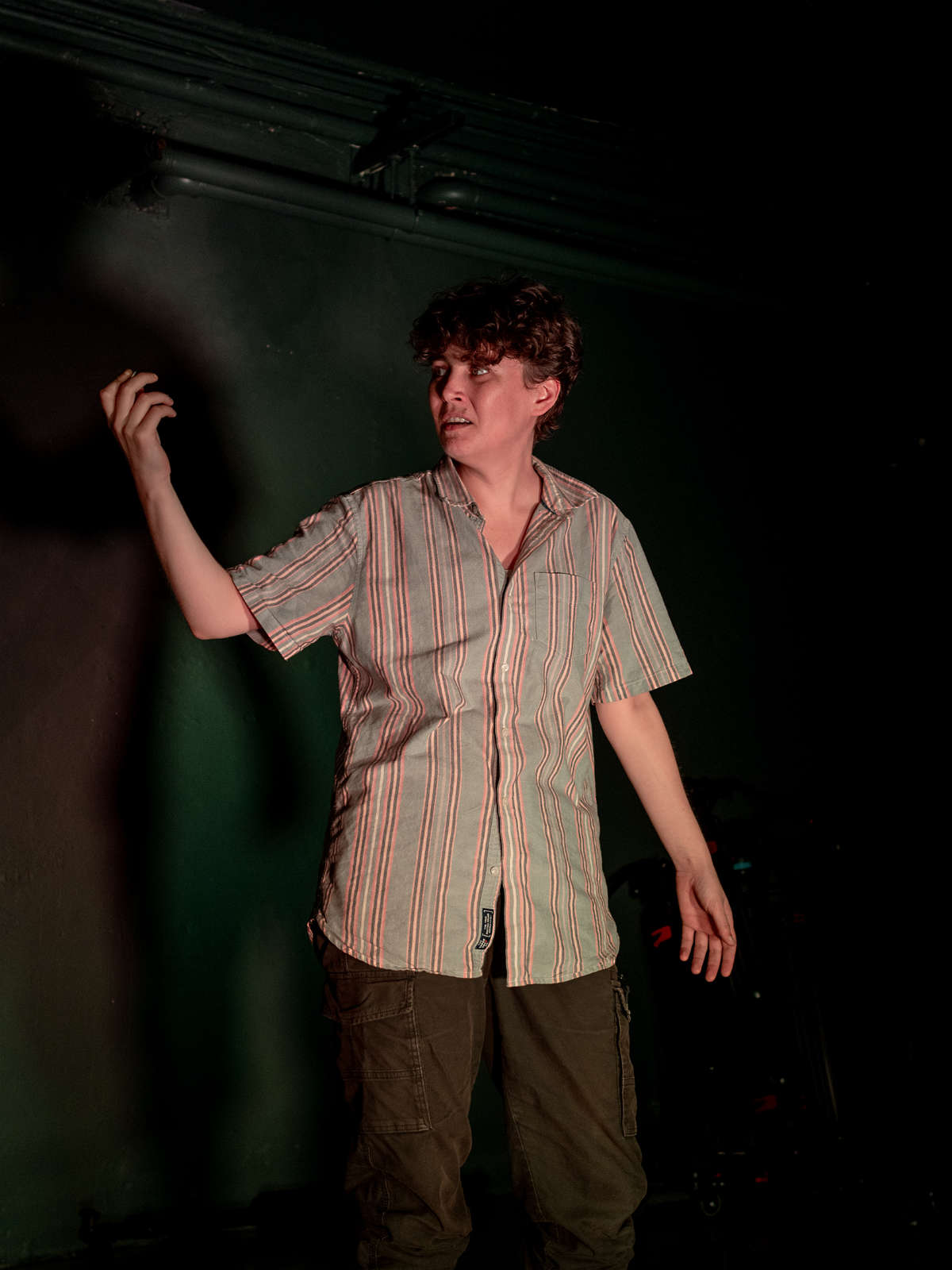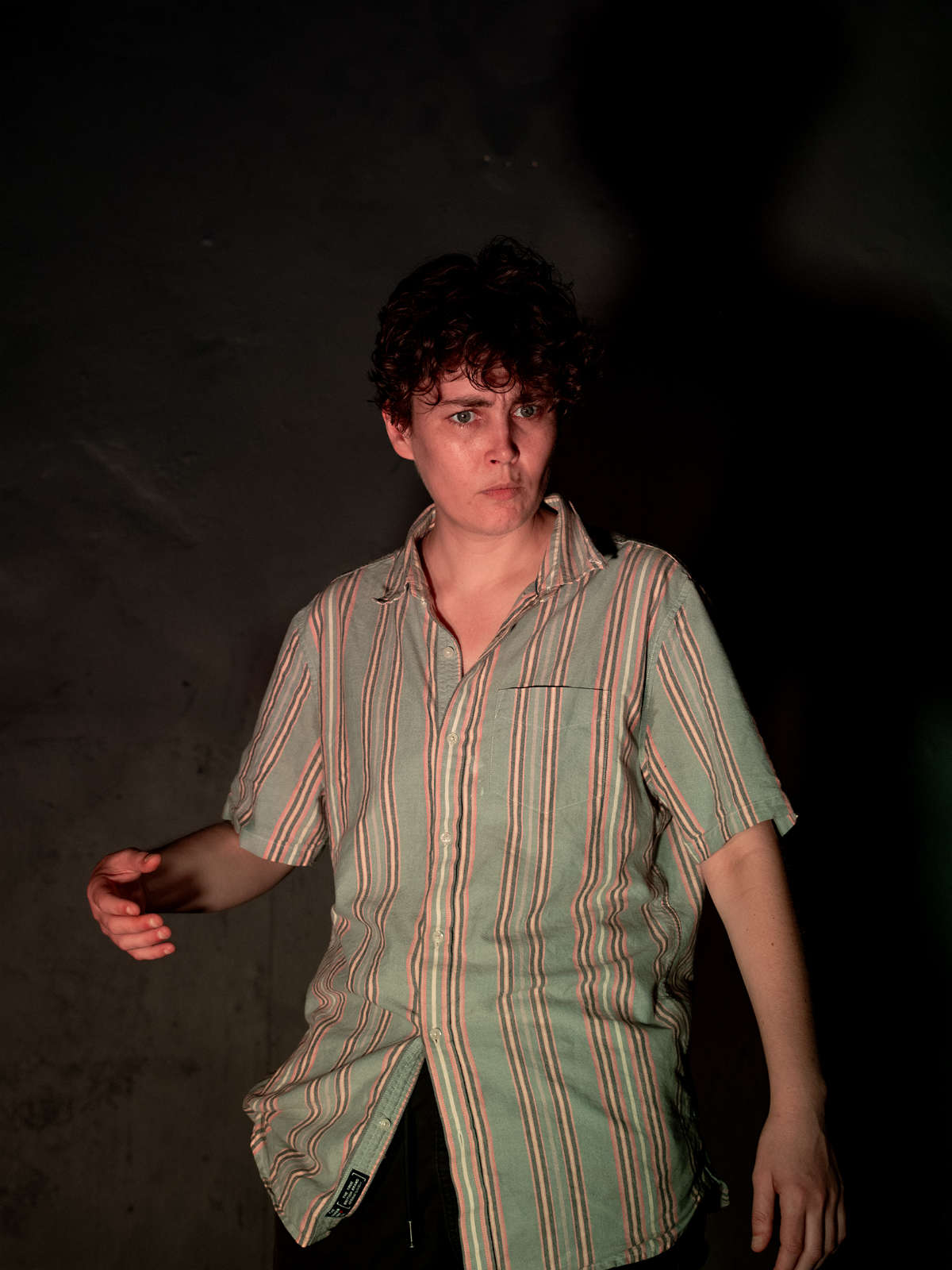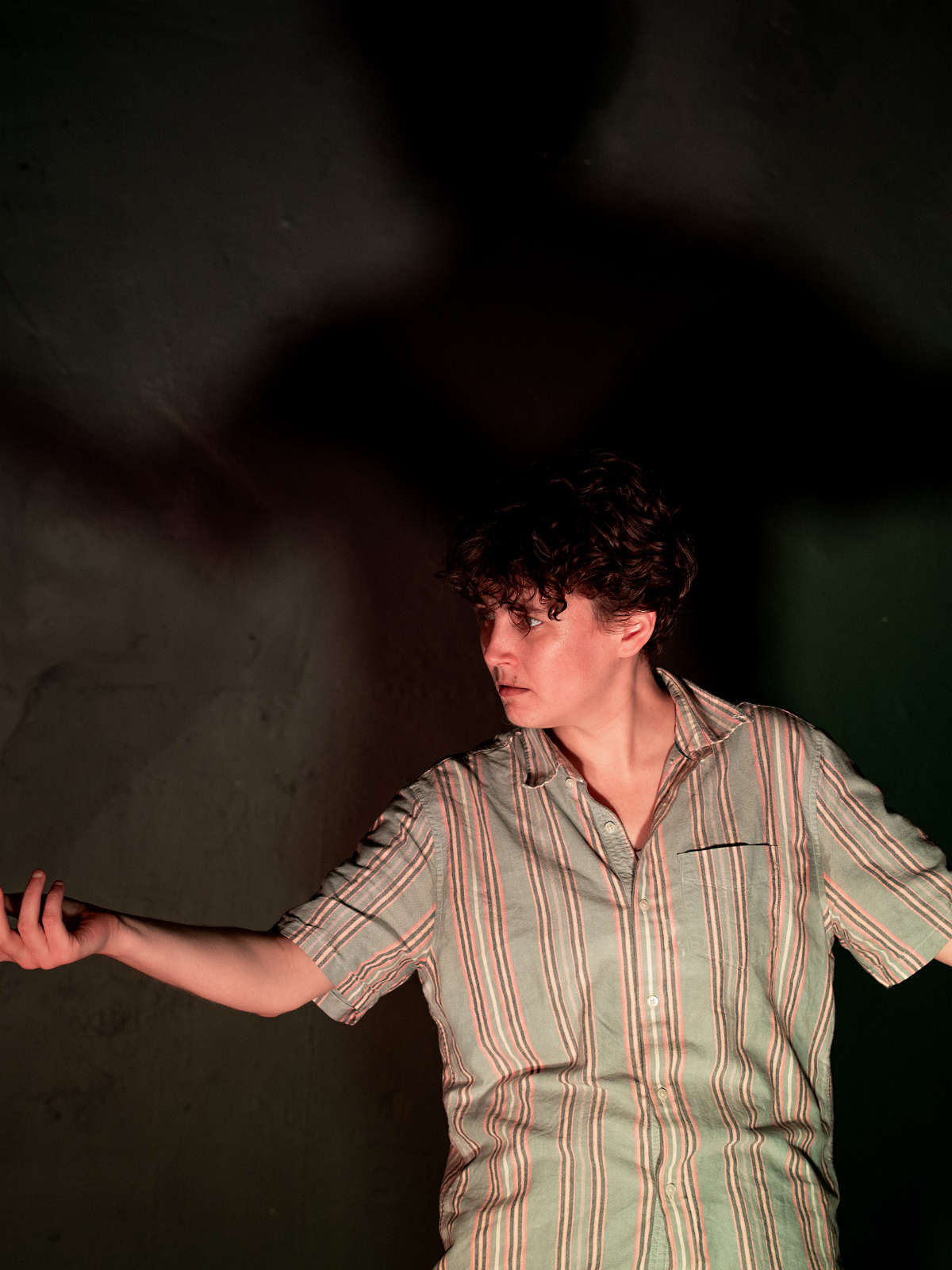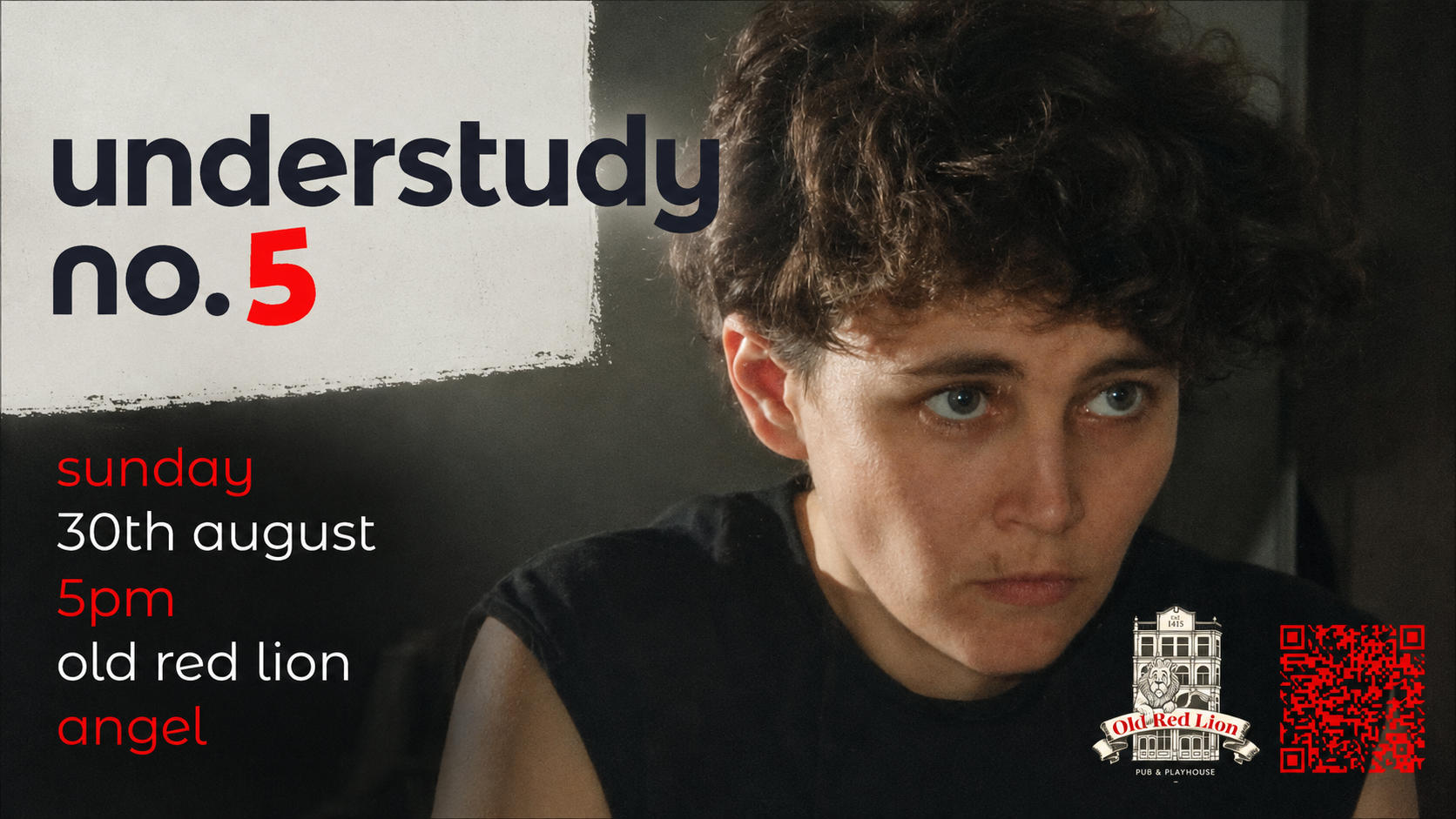
Understudy No. 5 begins with someone who would ordinarily remain almost invisible. In the sparse black-box space of the Old Red Lion, a silent theatre janitor goes about his work among objects left behind by other people. Yet these seemingly ordinary items contain something altogether less mundane. When he handles them, overlooked characters from Shakespeare begin to take possession of him, temporarily reclaiming the stage and the voices they were never fully allowed in their original plays.
Written and performed by Hadrian Conyngham and directed by Warren Rusher, the piece gives renewed life to the First Gravedigger from Hamlet, Benvolio from Romeo and Juliet, Cobweb from A Midsummer Night’s Dream and Feste from Twelfth Night. The Janitor himself does not speak, instead becoming the framing device through which these characters emerge.
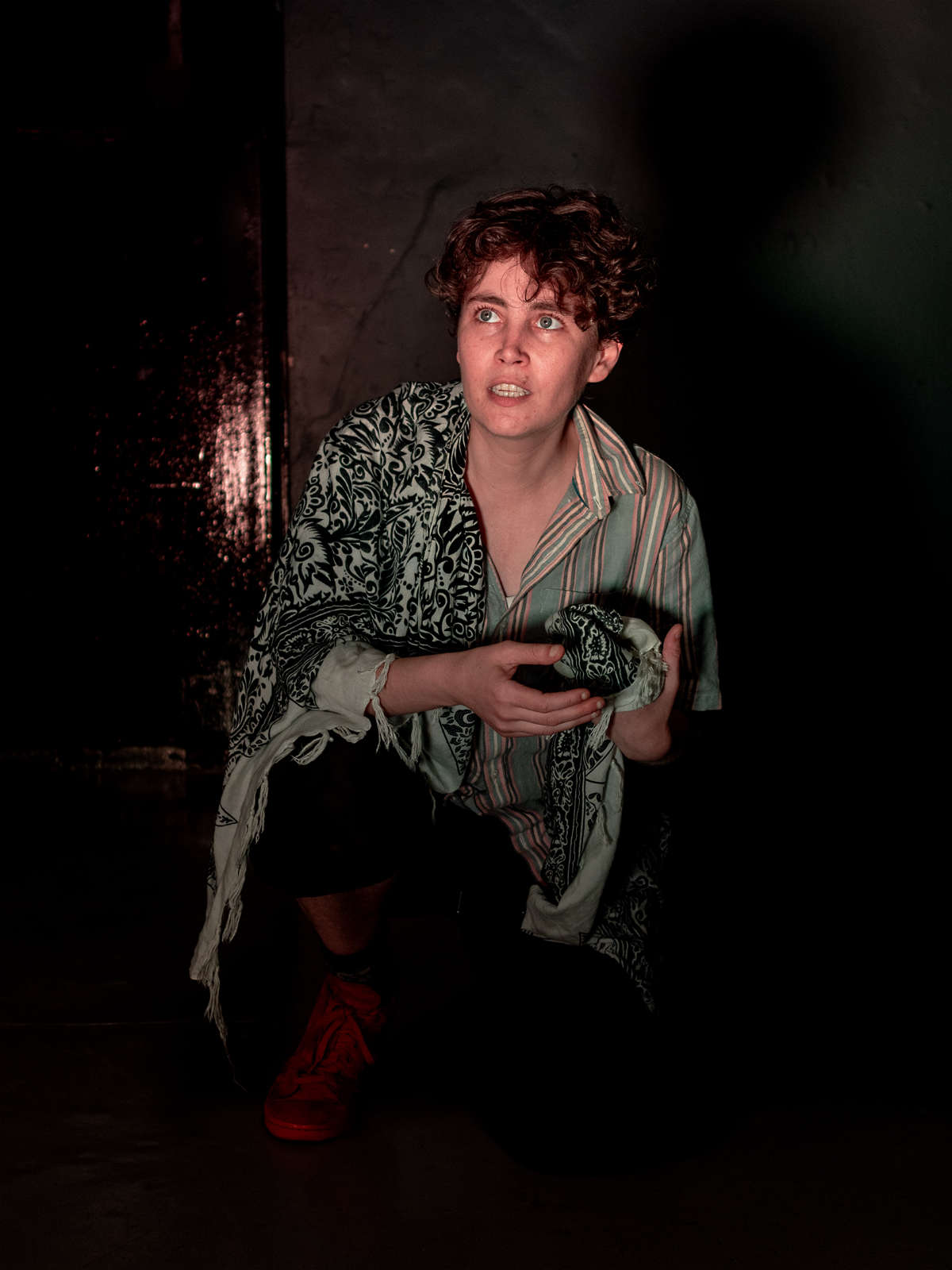
The possession mechanism is simple but effective. Each character is associated with an object, and the Janitor’s contact with it allows another personality to take control. This relationship between character and object becomes fundamental to the piece, with the Janitor remaining in contact with the relevant prop or costume for as long as that character inhabits him. The device gives the production a satisfying physical logic, allowing Conyngham to move between characters without elaborate costume changes or scenery.
The First Gravedigger establishes the tone with exuberant linguistic argument. Who, the play asks, is really the architect of a theatrical evening? The actor, the director or the proprietor counting the takings downstairs? The Gravedigger offers another answer: the janitor, the person left to clean up whatever everybody else leaves behind.
From there comes an increasingly elaborate piece of reasoning about actors who “lie” upon a stage, bodies lying in graves, ownership of plots of land and the person who digs the plot into which the protagonist ultimately falls. The wordplay is clever, but it is doing more than seeking laughs. From the outset, Conyngham is interested in who controls a story and why some figures are automatically granted greater importance than others.
That delight in language runs throughout Understudy No. 5. Conyngham is not simply borrowing Shakespearean characters to invent new adventures for them. He pulls apart some of the machinery through which Shakespeare created them, asking what names, metre, prose, rhyme, class and dramatic convention do to characters when those same devices begin to resemble restraints.
Benvolio provides perhaps the clearest exploration of dramatic agency. Shakespeare’s peacekeeping cousin is painfully conscious that he exists in orbit around somebody considered more interesting than himself. Romeo receives passion, romance, recklessness and tragedy; Benvolio is expected to remain dependable, search for his cousin, calm disputes and absorb the consequences of other people’s impulses. He loves Romeo, but increasingly resents the way his own identity has been subordinated to somebody else’s story.
Conyngham pushes that resentment somewhere considerably darker. Benvolio begins to persuade himself that deliberately failing to intervene can itself constitute action. If he leaves his sword in its sheath while events remove Romeo and Tybalt, he can benefit from catastrophe without technically becoming their murderer.
What initially seems a playful exercise in granting a supporting character greater agency therefore develops into a more uncomfortable philosophical question. If a protagonist is partly defined by making choices that alter events, what does that make the characters whose lives are largely consequences of decisions made elsewhere? Is choosing not to act still an act?
Benvolio even subjects his own name to argument, turning “good will” into justification for whatever purpose he chooses to pursue. Yet after events have run their course, triumph proves less satisfying than expected. He is left questioning whether he really altered fate at all, or merely convinced himself that events beyond his control were somehow his own achievement.
Cobweb approaches the question of freedom through language rather than plot. A fairy given only a handful of words in A Midsummer Night’s Dream suddenly discovers that she can speak. At first this new voice seems exhilarating, but freedom rapidly proves deceptive. Words fall into patterns, one rhyme demands another, and rhythm begins dictating what must follow.
The struggle becomes increasingly physical as metre seems to infect Cobweb’s whole body. The very structures that enable her voice begin to imprison it, rhythm spreading through movement and breath as she tries to escape the form controlling her.
When she finally breaks free, Conyngham finds an especially neat twist. Without rhyme or rhythm deciding the next word, Cobweb has to decide for herself what she actually wants to say. The resulting simplicity is both funny and oddly touching. Freedom, the play suggests, is not merely the absence of constraint; it also brings the responsibility of having to choose.
Much of the production rests on Conyngham’s ability to sustain the momentum of the piece alone, and his vocal control serves him well. Changes in tone, pitch and register clearly help to distinguish the characters, while variations in pace prevent the succession of monologues from becoming too uniform. Cobweb’s lighter, higher register contrasts particularly effectively with the deeper tones used elsewhere, while Feste’s ageing, increasingly fragile delivery brings a very different texture to the performance. Together with changes in physicality, these vocal shifts allow Conyngham to move convincingly between characters without relying on elaborate costume or scenery.
The First Gravedigger examines literary hierarchy from another direction. He is imagined as a character fully conscious of his own social position and unusually aware of the theatrical world around him. His prose becomes a declaration of working-class independence from aristocrats so nervous about social position that even their speech must be carefully measured.
Caesuras become holes a working man might trip into. Five metrical feet turn into the anatomy of an improbable creature. Verse becomes a raft on which the nobility convince themselves that they control currents far stronger than they are. It is literary criticism disguised as character comedy, grounded by the Gravedigger’s conviction that prose belongs to the earth while the court merely occupies the foam above it.
Even Hamlet’s description of Yorick as a fellow of “infinite jest” receives cheerfully literal demolition. If a joke were genuinely infinite, it could never end, and therefore nobody would ever reach the point at which they could laugh. Shakespearean grandeur is repeatedly dragged down from its pedestal and tested against stubborn practical reasoning.
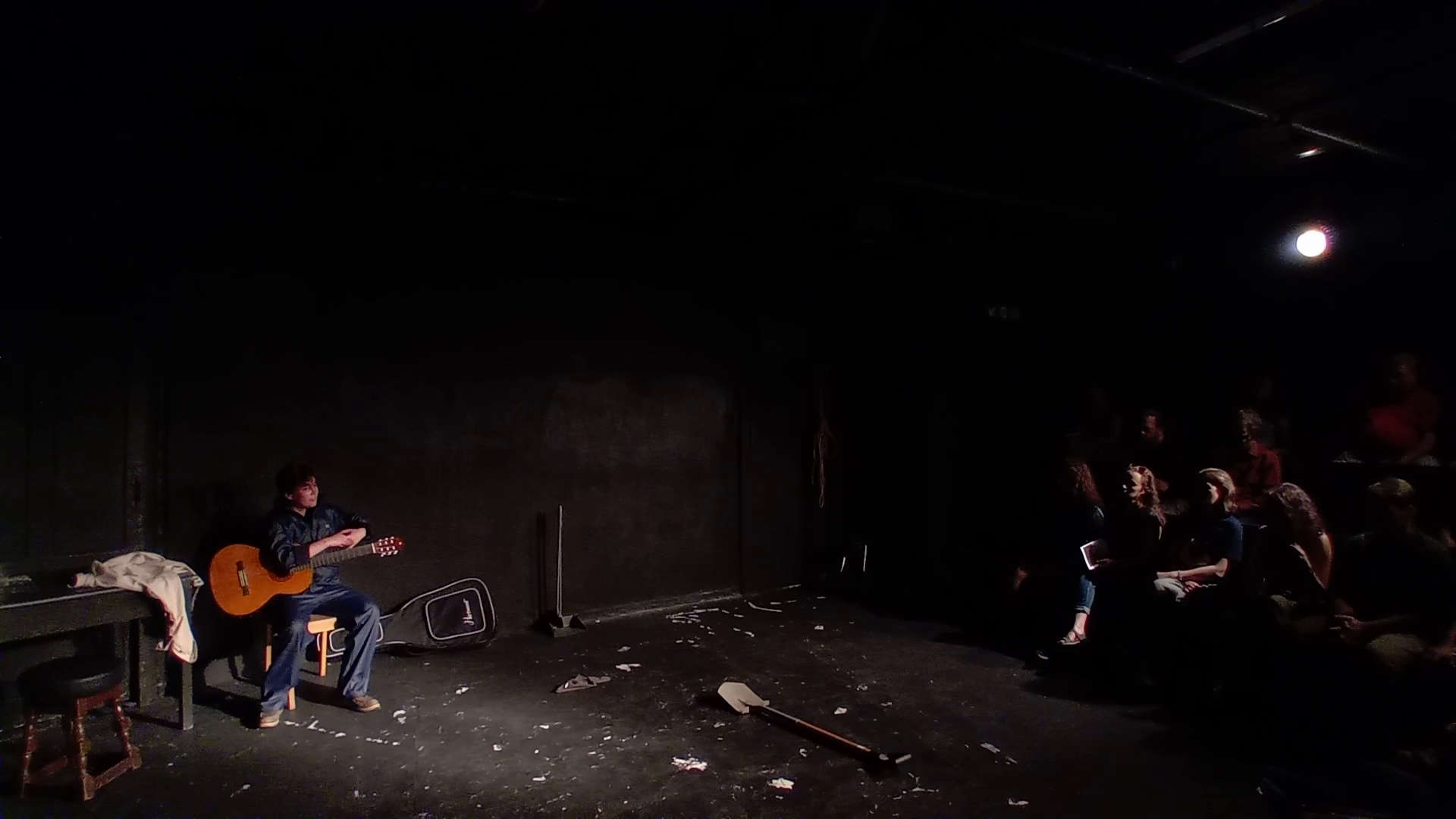
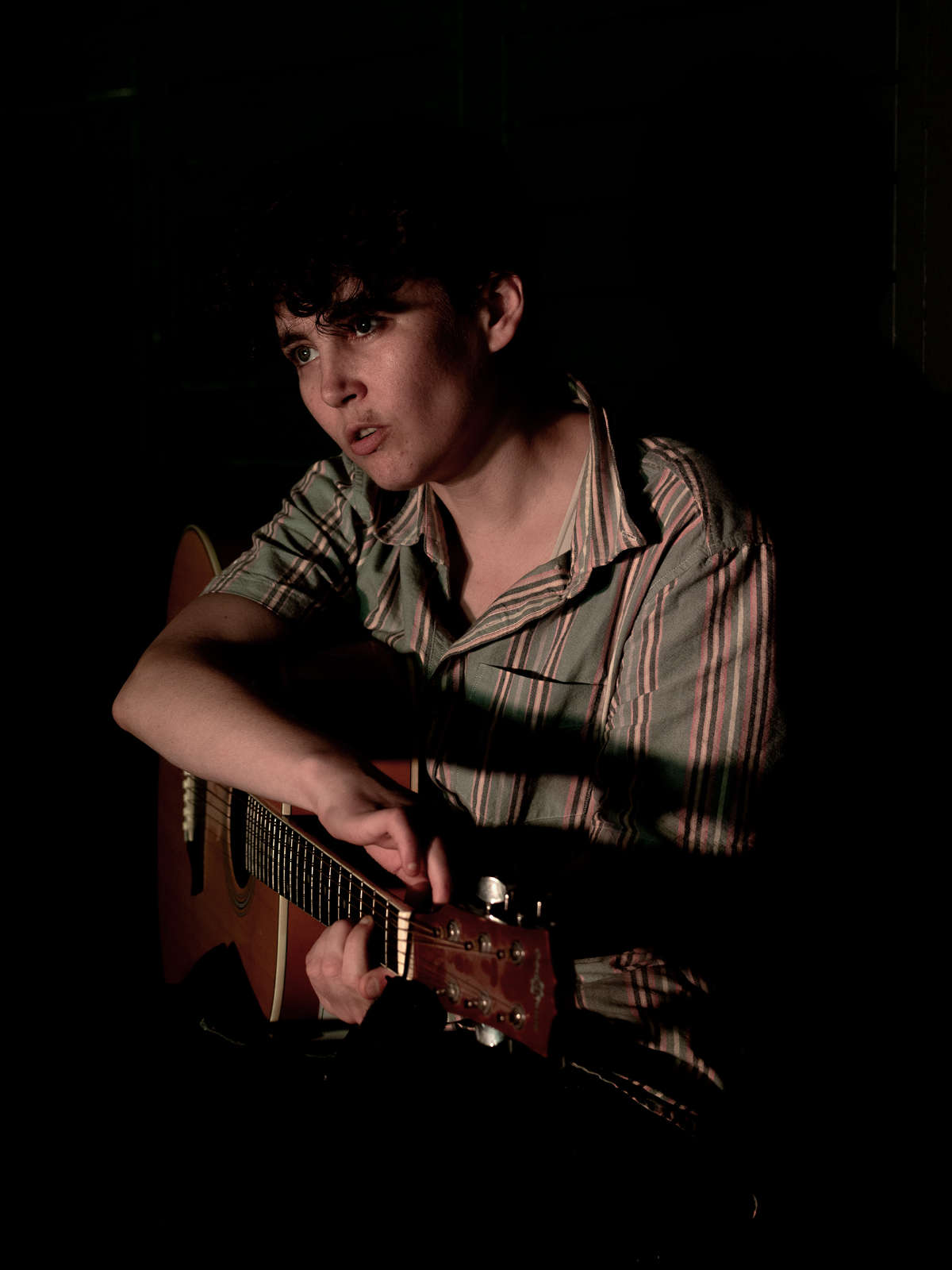
Feste changes the temperature of the piece. The fool who once ended Twelfth Night alone with the audience is imagined many decades later, now physically deteriorating and increasingly uncertain of memory. His relationship with the guitar brings music into the production, but this is no celebration of youthful virtuosity. Songs fragment, thoughts wander and past and present begin bleeding into one another.
Feste’s section becomes particularly affecting in its rejection of the comforting idea that an ageing body merely contains an unchanged younger self. Feste is not a young man trapped inside an old man’s body, but an old man whose mind and body are deteriorating together. The result is more melancholy than the earlier sections, giving the piece a broader emotional range.
A familiarity with Shakespeare undoubtedly adds another layer to the experience. Recognising the original characters, quotations and formal conventions allows many of Conyngham’s jokes and arguments to land more immediately. Yet specialist knowledge is not essential. The larger questions are readily recognisable: how much control any of us have over the roles assigned to us, whether choosing not to act is itself a choice, whether language enables thought or confines it, and what remains when the structures that once defined us begin to disappear.
The sparse staging suits that intellectual playfulness. Rather than reconstructing Elsinore, Verona, Illyria or the Athenian forest, ordinary objects unlock entire characters. The same almost empty room repeatedly changes identity because Conyngham changes with it. This simplicity keeps attention firmly on the performer and the ideas passing through him.
There is also a quieter story developing beneath the Shakespearean monologues. The Janitor begins unable to speak and at first functions largely as a vessel for other voices. Gradually, however, his relationship with those voices changes. He becomes more aware of what is happening to him, more conscious of the audience and increasingly affected by the characters he has carried.
That gives the later stages of the piece a satisfying circularity. Characters who have spent the evening struggling against the roles, language and limitations imposed upon them may, in turn, help their silent host move closer towards an agency of his own. The idea is allowed to resonate without resolving the play’s central questions too neatly.
Understudy No. 5 is an intelligent, playful and unusually thoughtful encounter with Shakespeare, strengthened by a committed solo performance from Conyngham. His command of voice and character keeps a linguistically dense piece moving, while the writing finds genuine dramatic possibility in figures normally left standing at the edges of somebody else’s story.
The work occasionally asks a great deal of its audience, particularly when its literary and philosophical ideas arrive in quick succession, but that abundance is also central to its appeal. Conyngham has created a piece that does more than give Shakespeare’s supporting characters extra lines; it asks what having a voice actually means, and whether freedom is possible when language, story, class, age and fate are already waiting to shape what we say.
Performer
Hadrian Conyngham
WRITER & PERFORMER
Hadrian Conyngham is an Australian actor based in London. His theatre credits include The Demon Twink, Street, Great Expectations, in which he played Pip, and Star-Cross’d, playing Benvolio at the Camden Fringe. His earlier Shakespeare work in Australia includes A Midsummer Night’s Dream, Macbeth and Twelfth Night. He is also an accomplished musician, having studied classical piano from an early age and accompanied choirs and musical theatre auditions.
Cast & Creatives
- This review is based on a filmed recording of the performance on 30th August 2026.
- Showing: Sunday 30th August 2026, 5pm
- Venue: Old Red Lion Theatre, 418 St John Street, London EC1V 4NJ
- Festival: Presented as part of Old Red Lion’s SHAKEFEST during Camden Fringe 2026
- Running Time: Approximately 50 minutes, without an interval
- Writer: Hadrian Conyngham
- Director: Warren Rusher
- Movement Coordinator: Dan Hardwell
- Composer: Hadrian Conyngham
- Sound and Lighting Operator: Lyla Rose
- Production Photography: Harry Chapman
- Cast:
Hadrian Conyngham as The Janitor / First Gravedigger / Benvolio / Cobweb / Feste
An intelligent and inventive reimagining of Shakespeare’s overlooked characters
Summary
Hadrian Conyngham’s ambitious solo piece combines wit, wordplay and strong theatrical ideas to give Shakespeare’s supporting characters a voice of their own. Dense in places, but consistently imaginative and thought-provoking.


Add comment