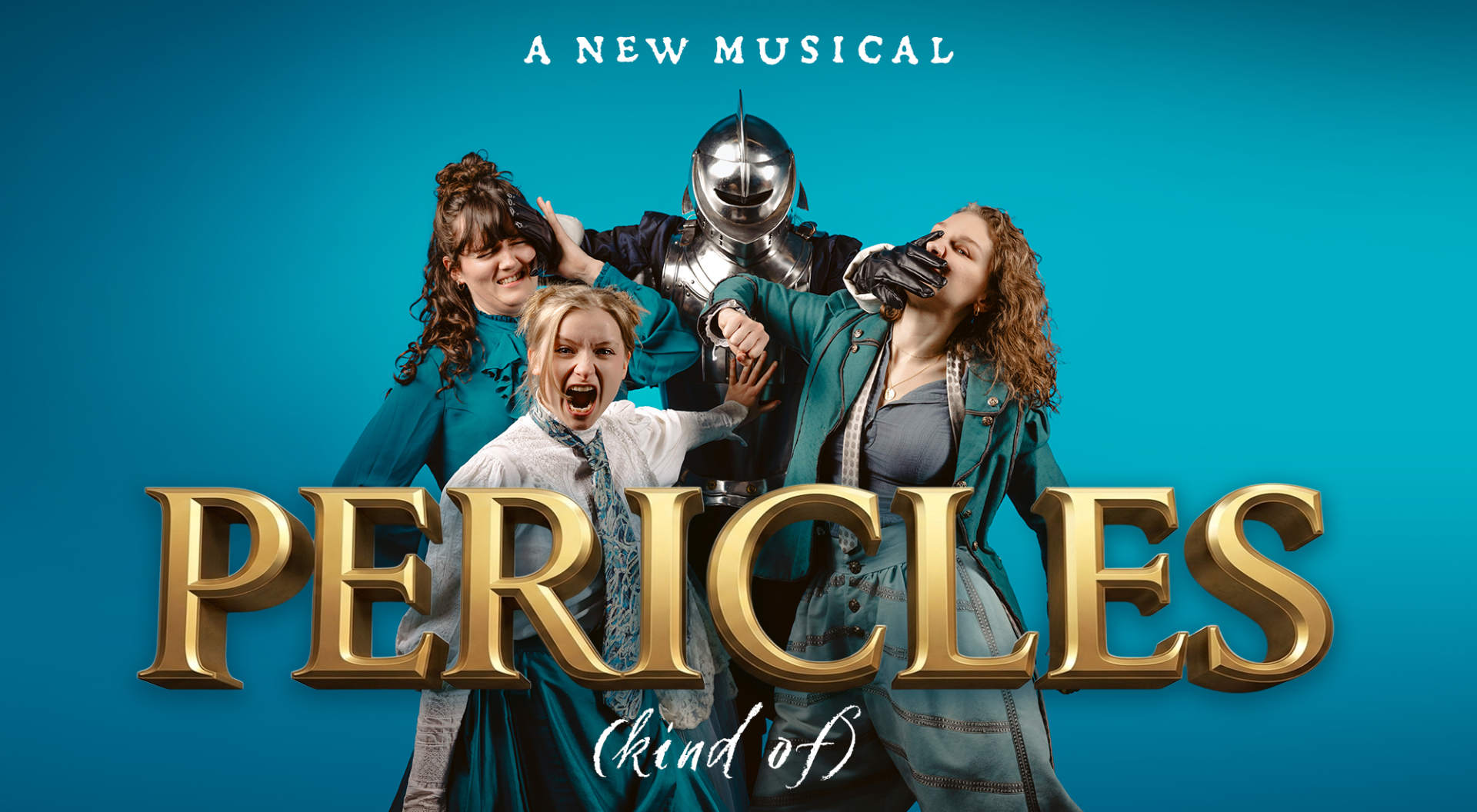
There is a clue in the parenthesis. PERICLES (kind of) has little interest in preserving Shakespeare’s sprawling romance beneath museum glass. Nevermind Company takes the tale down from the shelf, shakes it vigorously, adds songs, pirates, shipwrecks and a suspicious quantity of phallic weaponry, then hands much of the narrative to the women who were previously expected to wait patiently while its wandering prince enjoyed all the adventures.
Originally devised by members of the 2025 MFA Professional Acting cohort at Bristol Old Vic Theatre School, the musical combines the anarchic energy of an earlier 40-minute retelling with a later version placing the female characters more firmly at its centre. The company identifies The Princess Bride, Monty Python and the Holy Grail, Hadestown and Operation Mincemeat among its influences. Those are useful signposts, although the resulting show has its own cheerfully unruly identity.
The central joke is that Pericles still believes this is his story.
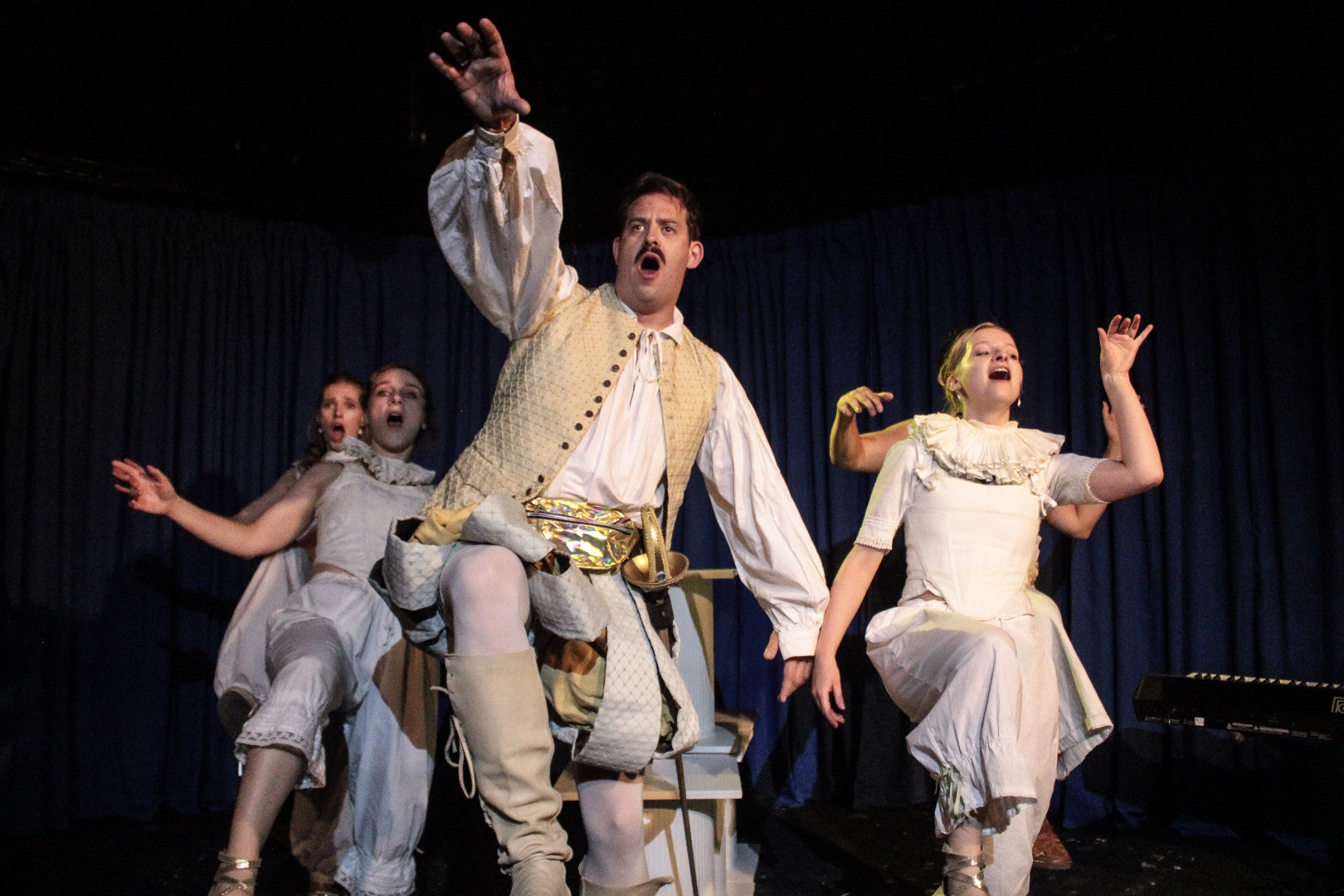
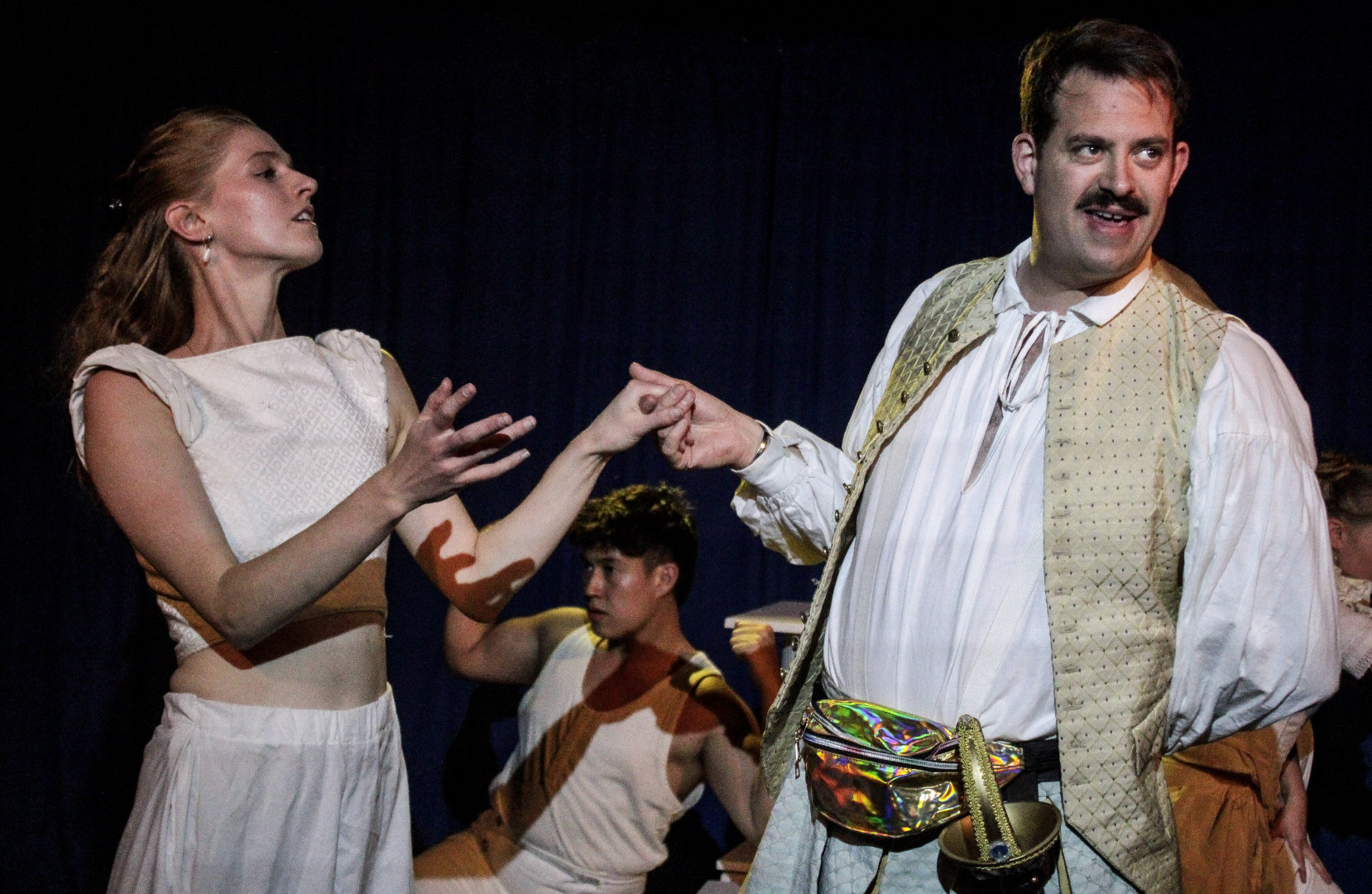
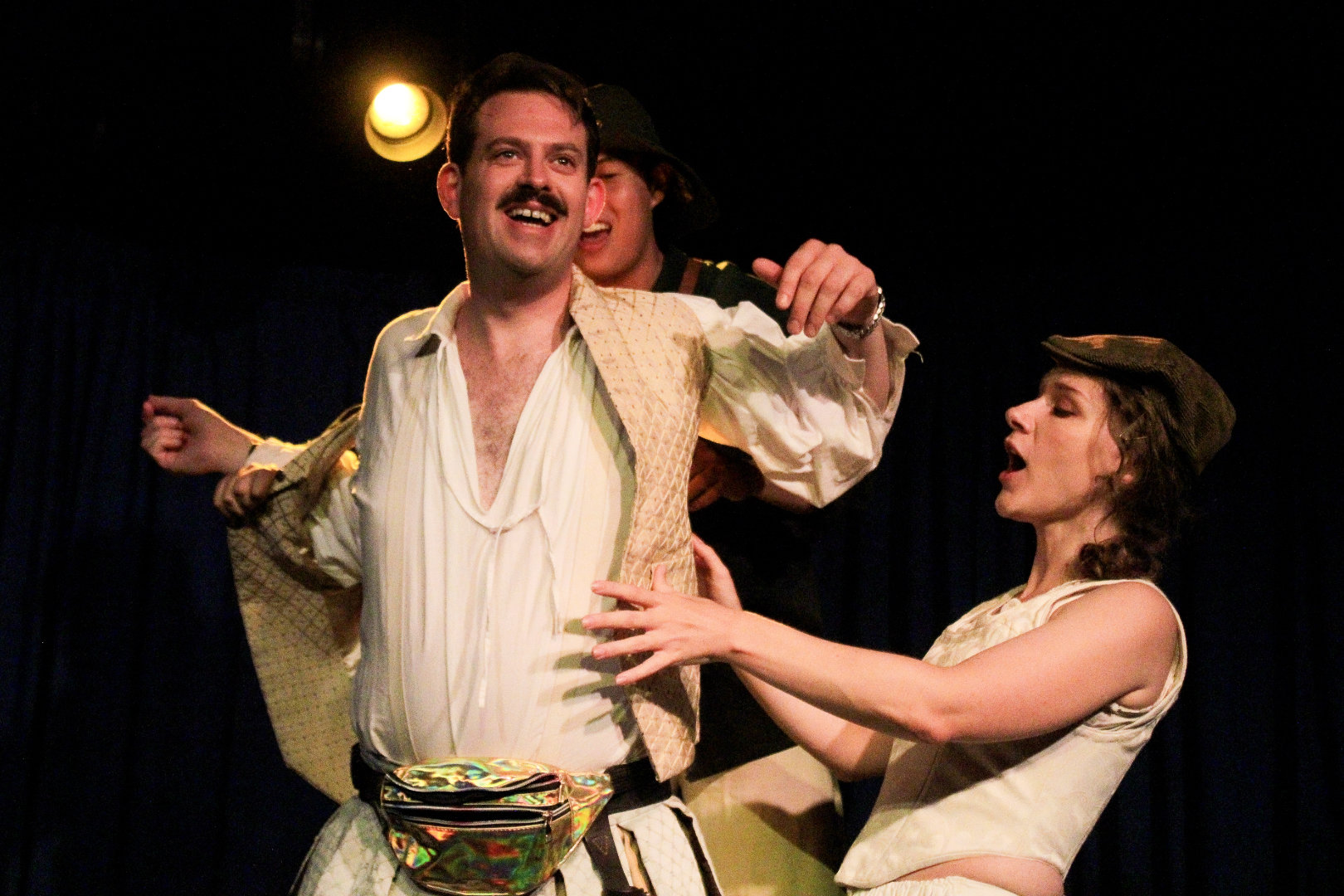
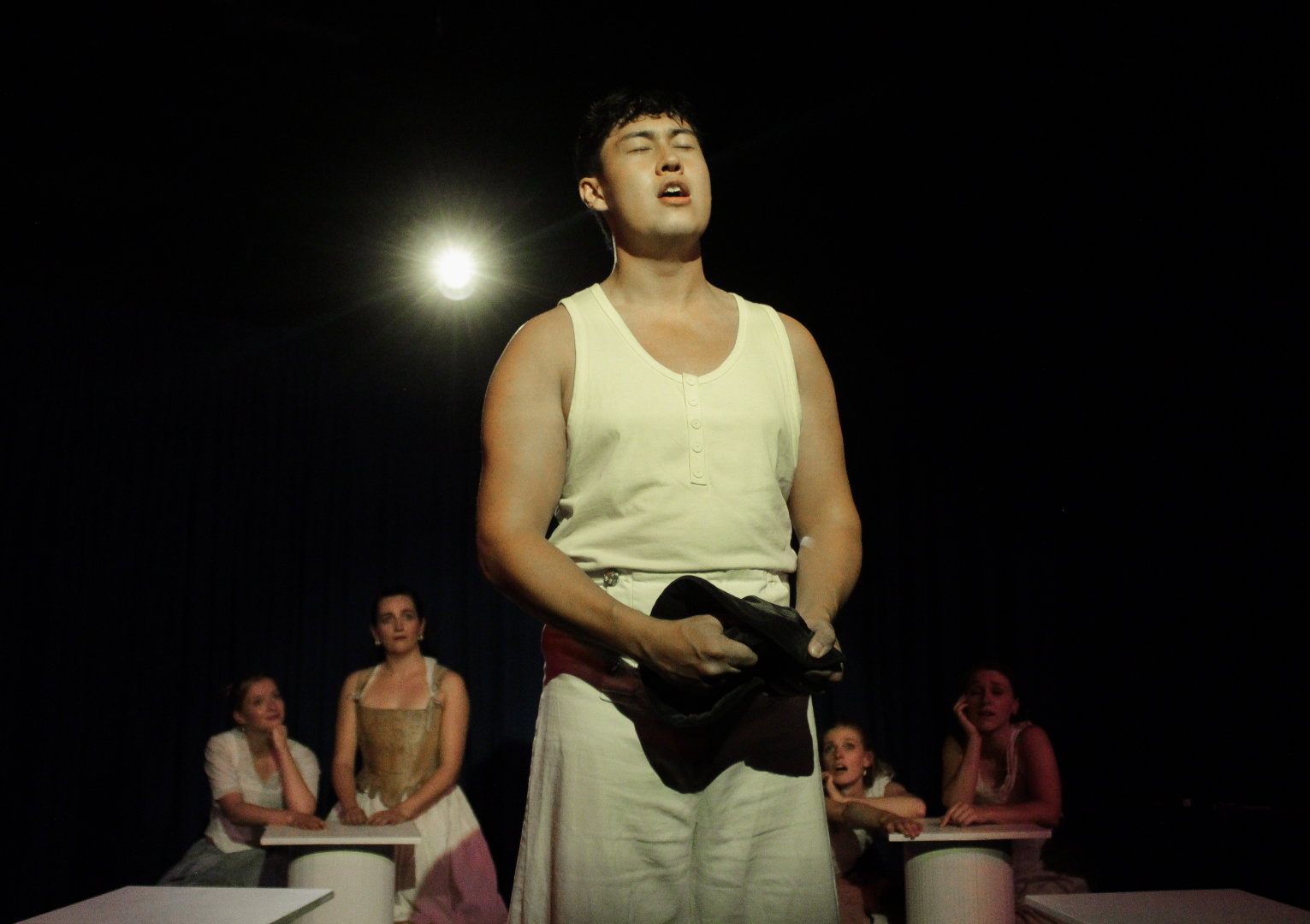
Michael Cowan makes Pericles enormously enjoyable company, even while presenting a prince whose opinion of himself is substantially higher than anybody else’s. Much of the comedy comes from his exchanges with the women he pursues, with Cowan repeatedly allowing Pericles’ heroic self-image to collide with the rather less flattering reality unfolding around him.
The musical writing gives him plenty of opportunities to expose that vanity. One particularly funny early moment sees a grand romantic declaration collapse into the sudden realisation that he does not even know the woman’s name. Cowan’s timing makes the reversal land beautifully.
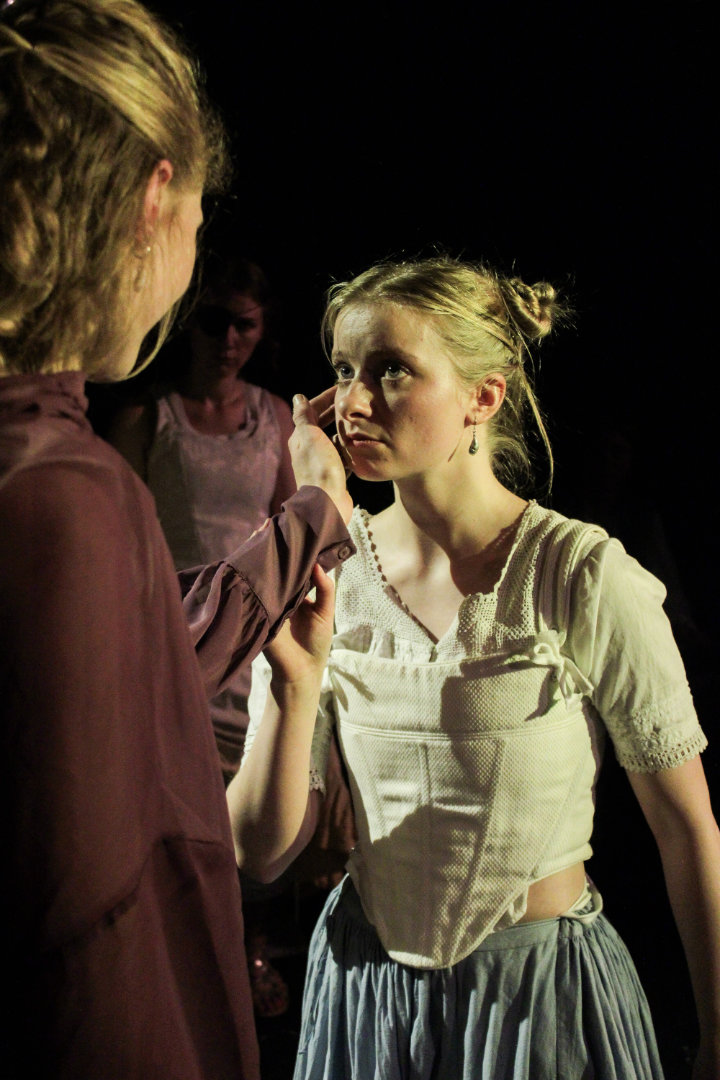
Anna McAuley is particularly impressive as Jane, combining comic sharpness with perhaps the strongest singing voice in the company. Her vocal delivery has considerable presence, while Jane’s frustration at being reduced to an unnamed figure in somebody else’s story gives McAuley something more substantial to play beneath the comedy. She handles both sides confidently, able to command a musical passage before puncturing the moment with an equally well-judged comic turn.
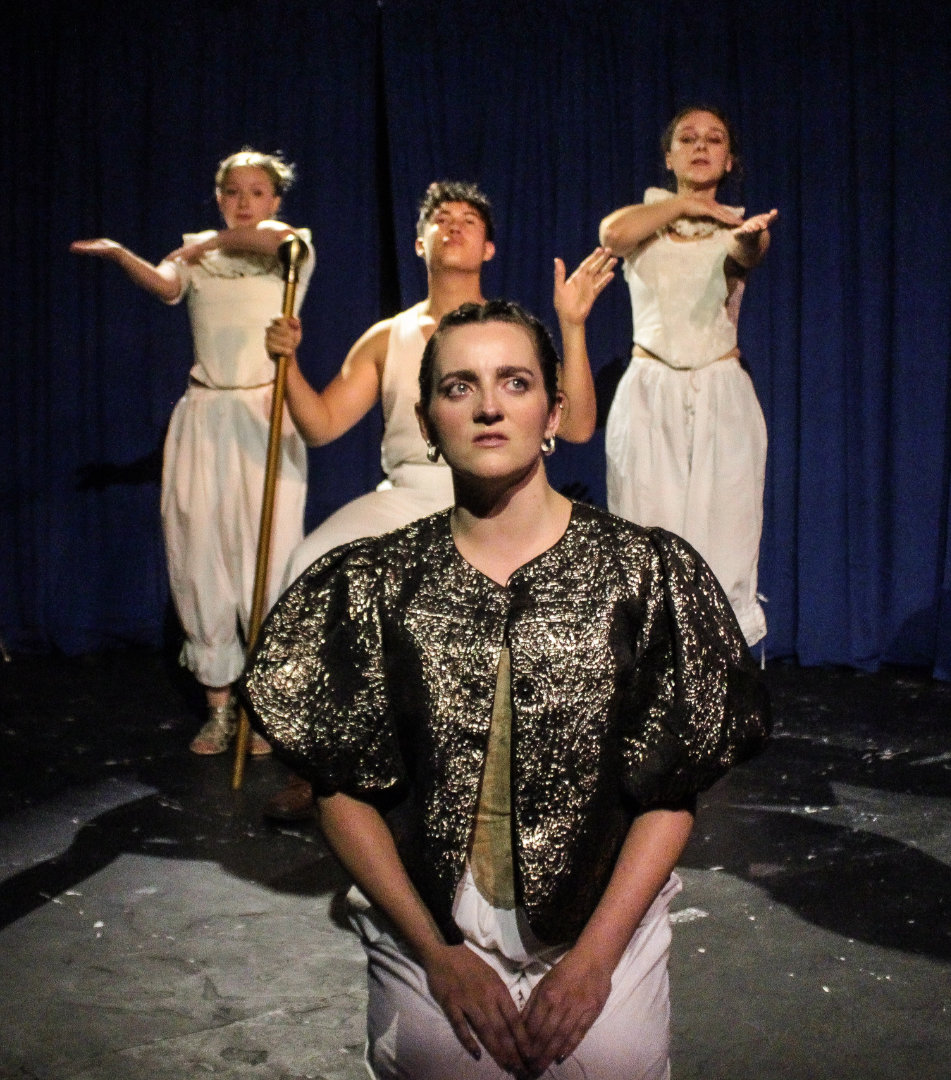
Cari Griffiths proves particularly funny as Tarsia, the princess who encounters Pericles during his travels. Griffiths plays confidently into the absurdity of their courtship, and her exchanges with Cowan are among the production’s most enjoyable comic pairings. As the story develops, she is also able to bring warmth to material that occasionally edges towards romantic cliché, helping the later stages acquire some genuine affection without requiring the comedy to disappear.
Zara Stokes-Neustadt plays Marina with warmth and an appealing straightforwardness. Raised in distinctly unconventional surroundings, Marina gradually becomes one of the story’s strongest moral influences. Her ideas about love, respect and how men should treat women begin to rub off on those around her, culminating in the wonderfully direct philosophy of thinking with the heart rather than another part of the anatomy. Even Pericles is eventually confronted with the concept of feminism, although getting the word itself out correctly proves another comic challenge.
That mixture of message and irreverence is one of the show’s strengths. It is capable of making a serious point about the way women are treated within inherited stories without suddenly turning into a lecture.
Hollie Hurrell brings energy and versatility to an assortment of supporting parts, changing characters at the brisk pace demanded by the storytelling. She performs with infectious exuberance, projects strongly and clearly relishes the comic possibilities of her various roles. That enthusiasm is especially apparent in her individual musical passages, where even relatively brief contributions are delivered with plenty of personality.
That visible enjoyment is shared across the company. There is a generosity to the ensemble playing, with performers throwing themselves into constantly changing characters, songs and increasingly ridiculous situations. Their pleasure in performing the piece becomes contagious, and the audience responds with frequent laughter throughout.
Late addition D’Angelo Poskitt proves another particularly notable vocalist. Having joined the company shortly before this performance, he nevertheless appears completely at home within the production. There is no sense of somebody still finding his way around recently inherited material. Poskitt sings and performs with considerable confidence, is very funny in his various roles, and in one of his more substantial vocal moments opens up his voice to reveal impressive power and versatility.
Musically, PERICLES (kind of) often embraces familiarity. Some of the delivery and melodic writing carries an old-time British music-hall flavour, while other numbers draw on the recognisable shapes and progressions of contemporary musical theatre. At times the melodies can feel formulaic, with phrases that seem to echo musical-theatre conventions heard elsewhere, but this appears largely intentional. The writers know the style they want to inhabit and project it confidently. What distinguishes the songs is less their musical novelty than the wit, character and specificity of the lyrics and situations. The result remains buoyant, accessible and fun.
“We’re Having a Joust!” is a particularly good example, carrying an almost old-time British music-hall quality in its jaunty melody, rhythmic delivery and comic phrasing. Much of the comedy is embedded directly within the musical writing, with recurring melodies and ideas sometimes returning in altered form to produce another joke.
James Hancock-Evans, as musical director and keyboardist, provides the live accompaniment from the side of the stage. His visible presence suits the production’s stripped-back theatricality, and one brief interaction with a member of the cast playfully draws him into the action.
Rafael Solimeno-Harris directs with a briskness well suited to the material. Characters, songs and locations tumble into one another without the complicated narrative becoming cumbersome, and the constant changes of role are handled smoothly. There is considerable momentum throughout.
Only occasionally might the production benefit from trusting an audience response for another second or two. On one occasion the next number began while applause for the previous song was still continuing, leaving its opening few words partially swallowed by the clapping. It is a very minor issue, and one caused by the audience responding enthusiastically, but allowing a little more breathing space after particularly successful numbers would prevent that enthusiasm competing with what follows.
Physically, this remains a decidedly fringe-scale production. The Old Red Lion’s intimate black-box room is dressed with little more than a simple blue curtain across the rear of the playing space and four white stool-like blocks. These are repeatedly rearranged, lined together, separated or used as platforms, while performers emerge through the curtain whenever the story requires another character.
The economy becomes part of the joke. One particularly delightful example is the tiny toy galleon employed to represent Pericles’ ship as another maritime disaster approaches. Its heroic inadequacy for the task earns exactly the laughs intended.
There is nevertheless obvious scope for the production to grow if developed for a larger theatrical space. More substantial scenic elements, backdrops or inventive representations of its constantly changing locations could expand the visual world considerably. The challenge would be to retain the playful resourcefulness that makes the present production work rather than burying it beneath scenery.
The closing stages bring greater warmth, even if some of the emotional resolutions feel a little neat and occasionally verge on cliché. Importantly, they do so without abandoning the irreverent spirit that has carried the preceding hour.
Beneath the dirty jokes, songs, miniature ships and overextended swords, PERICLES (kind of) is interested in who gets to own a story. Who is allowed to be its hero? Who gets remembered by name? And what happens when characters who have traditionally occupied the margins decide that they would rather tell the story themselves?
Nevermind Company has created an enjoyable, confidently performed and frequently hilarious piece of fringe musical theatre. Its cast attack the material with infectious enthusiasm, its songs know exactly what theatrical traditions they are playing with, and its deliberately modest physical production leaves tantalising room for further development.
PERICLES (kind of) may not reinvent musical theatre, but it has enormous fun reinventing Pericles. On this evidence, it is a production worth developing further.
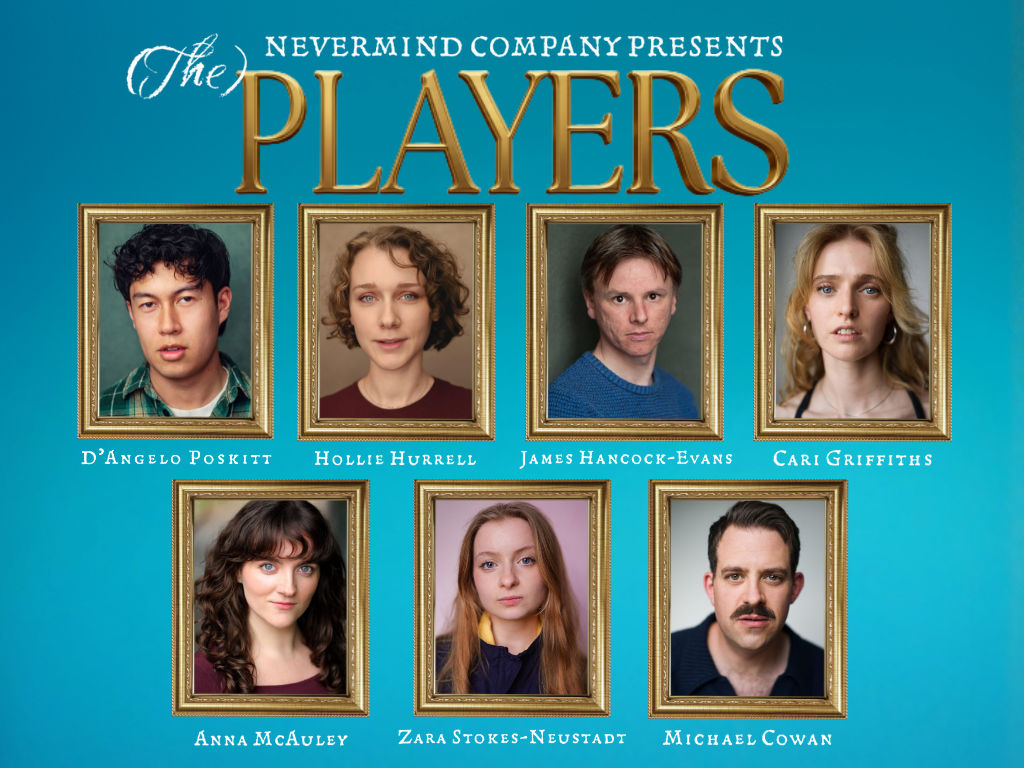
Cast & Creatives
- Showing: 24th – 27th August 2026
- Venue: Old Red Lion Pub & Playhouse, 418 St John Street, London EC1V 4NJ
- Buy Tickets: https://thewardrobetheatre.com/shows/pericles-kind-of/
- Presented By: Nevermind Company
- Book, Music & Lyrics: Hollie Hurrell, James Hancock-Evans, Rafael Solimeno-Harris
- Director: Rafael Solimeno-Harris
- Producer: Hollie Hurrell
- Musical Director: James Hancock-Evans
- Set & Costume Designer: Miranda Cattermole
- Lighting Designer: Kalila Suckley
- Stage / Production Manager: Lydia Tricks
- Photography: Ed Felton
- Cast:
Anna McAuley as Player 1: Jane / Henrik / O’Feel’ya
Cari Griffiths as Player 2: Tarsia / Desde’moan’a
Zara Stokes-Neustadt as Player 3: Marina / Steward 1 / Alberto
D’Angelo Poskitt as Player 4: Antioch / Fisher Josef / Vlad / Hugh
Hollie Hurrell as Player 5: Steward 2 / Fisher Karl / Hans / Irene
A Riotous, Inventive Musical Retelling With Infectious Ensemble Energy
Summary
Nevermind Company turns Pericles into a fast, funny and knowingly chaotic musical, driven by an enthusiastic cast, strong comic performances and a buoyant score. Beneath the bawdy humour sits a thoughtful reworking of whose stories get told, while the production shows plenty of potential for further development.


Add comment