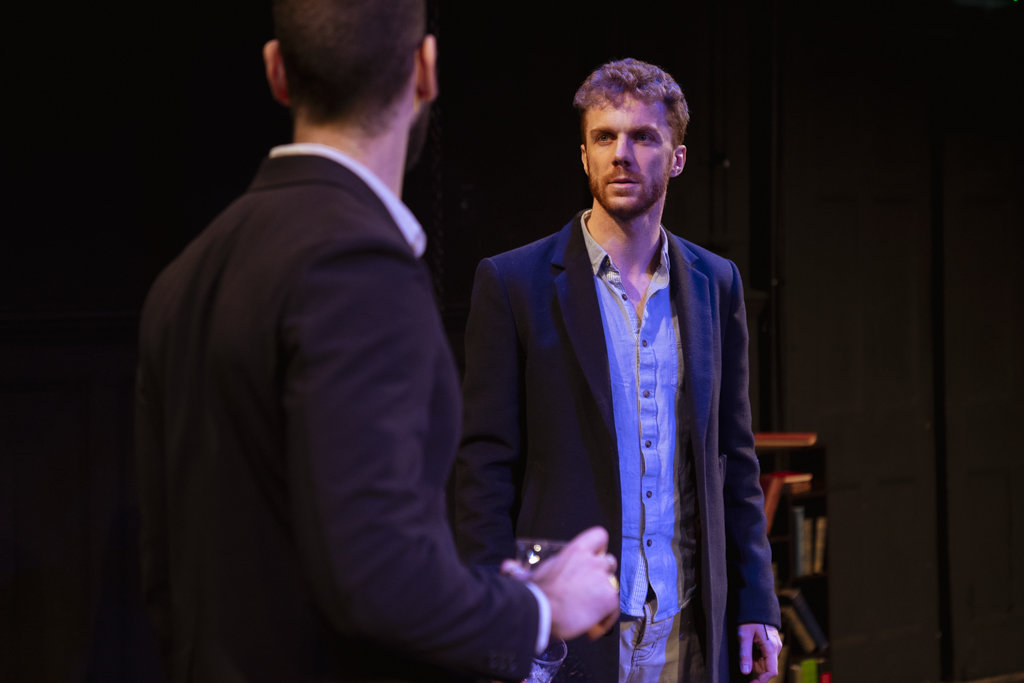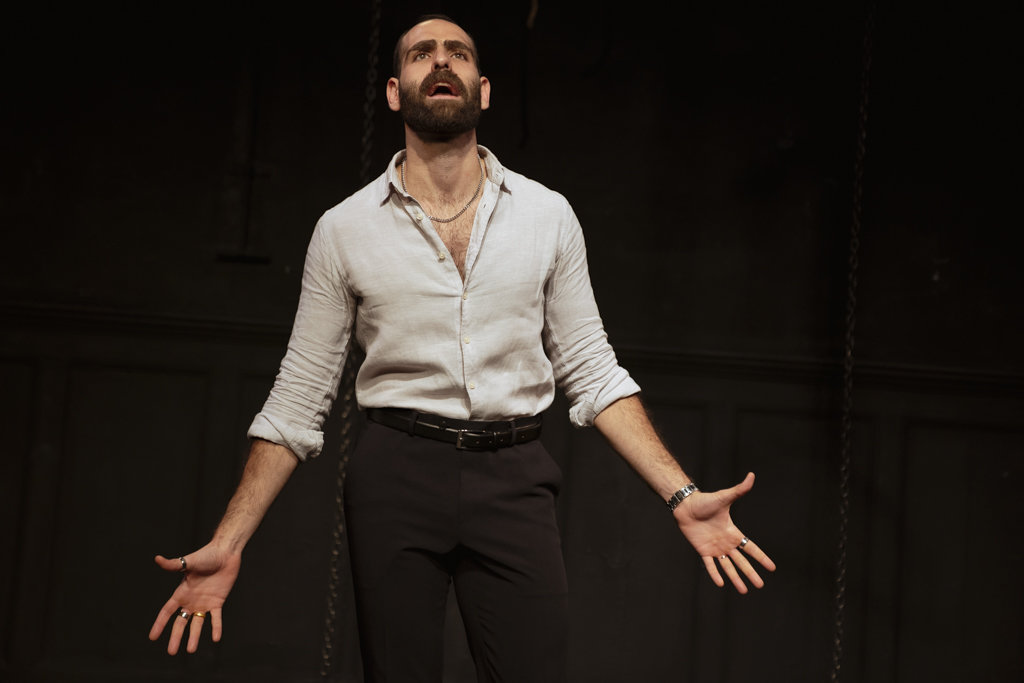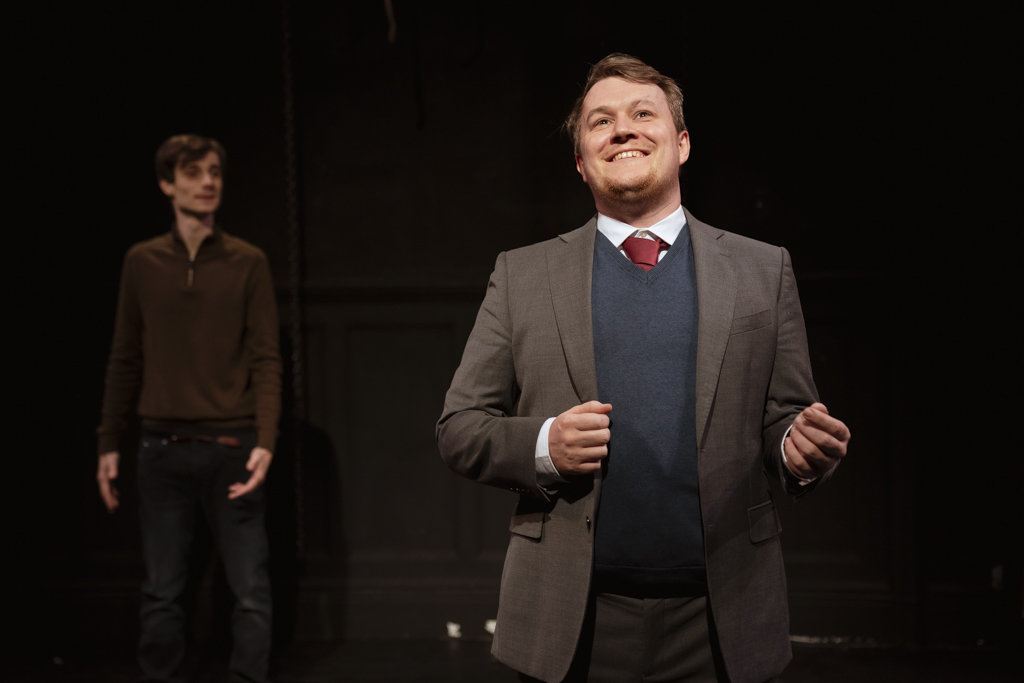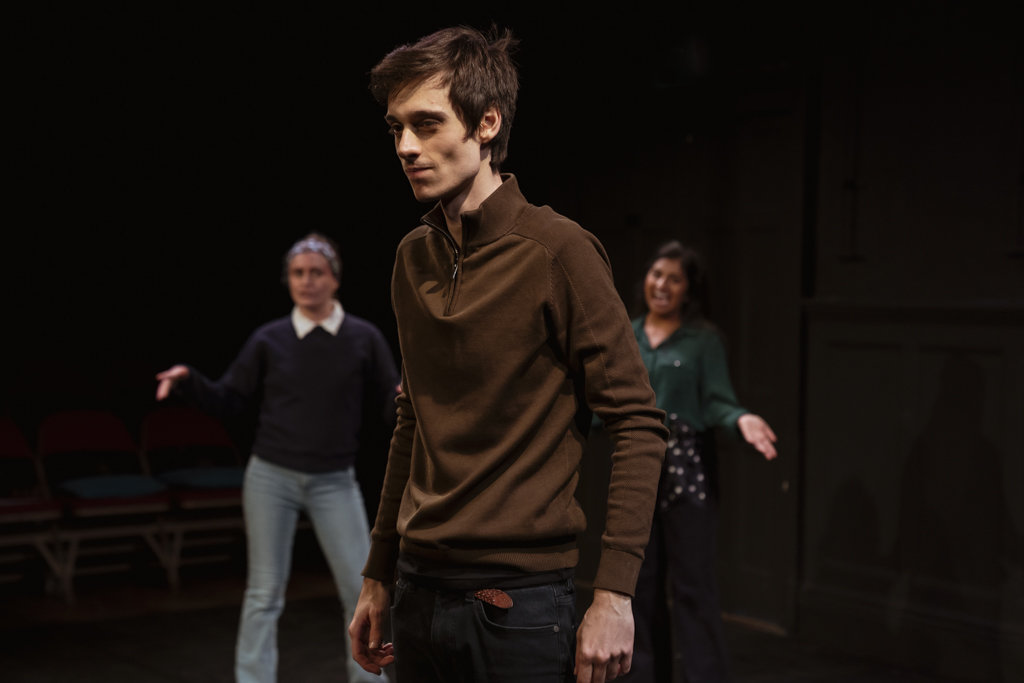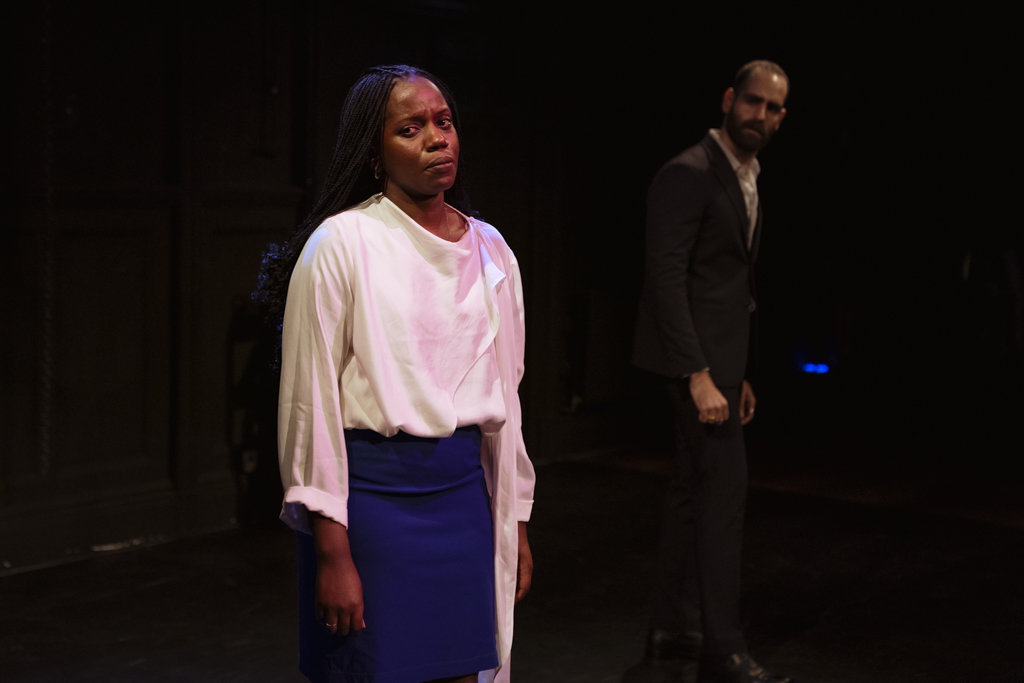
Jester Collective’s production of Hamlet, directed and adapted by Mark Prince, brings Shakespeare’s celebrated tragedy into the intimate surroundings of Theatro Technis in Camden. Stripping away much of the political spectacle associated with the Danish court, this is a powerful and moving account of grief, betrayal, revenge and the devastating consequences of mistrust. With the audience seated close to the action, the emotional struggles of the characters take on an immediacy that makes the tragedy feel intensely personal.
The story begins with Prince Hamlet mourning the death of his father, the former King of Denmark. His grief is compounded by his mother Gertrude’s hasty marriage to his uncle Claudius, who has now taken the throne. When the Ghost of his father appears and reveals that Claudius murdered him, Hamlet is drawn into a dangerous pursuit of truth and revenge. Yet his determination to uncover what really happened increasingly distances him from those around him, as suspicion and manipulation begin to overwhelm the relationships that might otherwise sustain him.
The production’s intimate setting reinforces the sense of confinement within Elsinore. Hamlet’s famous declaration that “Denmark’s a prison” seems particularly appropriate in a world where almost everyone is watching, questioning or manipulating somebody else. Polonius uses his daughter Ophelia to investigate Hamlet’s behaviour, while Rosencrantz and Guildenstern are summoned to discover the cause of his apparent madness. Meanwhile, Hamlet himself becomes increasingly suspicious of those closest to him. This atmosphere of surveillance creates a suffocating environment in which genuine affection and loyalty struggle to survive.
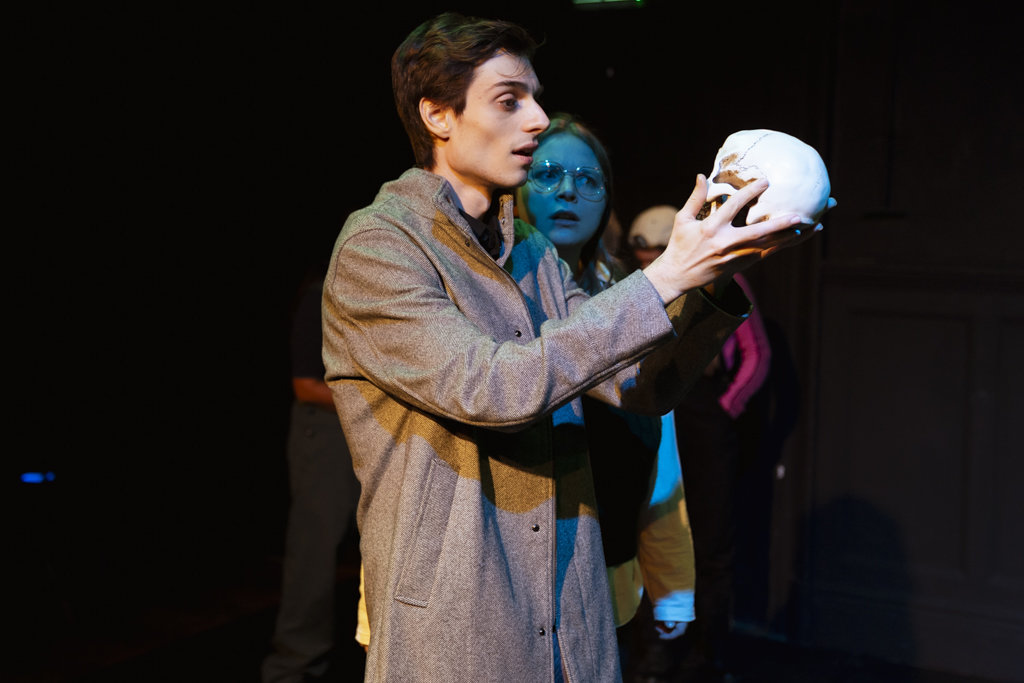
At the centre of the production, Conrad O’Callaghan delivers a compelling performance as Hamlet, capturing the prince’s emotional turmoil with considerable conviction. His expressive delivery conveys the grief, anger and uncertainty of a young man struggling to reconcile his love for his father with the terrible responsibility of avenging his murder. O’Callaghan possesses a strong, commanding voice, projecting Shakespeare’s language clearly throughout the performance, something particularly important given the configuration of Theatro Technis and the audience’s position around the stage. His vocal strength is matched by his emotional expressiveness, especially during those scenes in which Hamlet’s grief and vulnerability are brought to the surface.
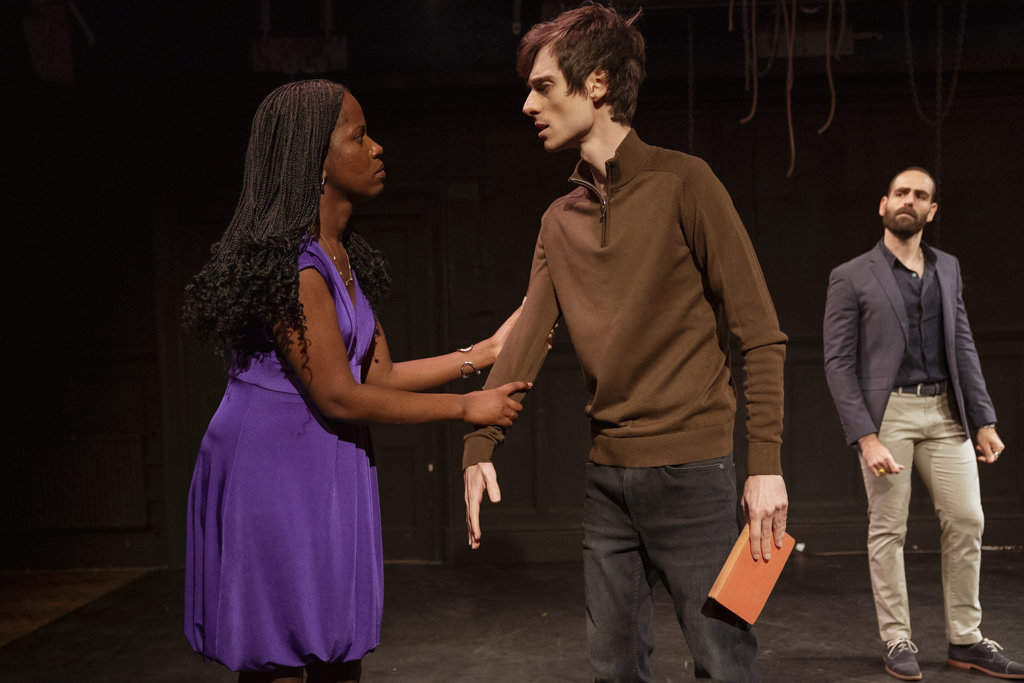
Among the most affecting performances is Judit Denes as Ophelia, a young woman caught between her affection for Hamlet and the demands of her father and brother. Her position becomes increasingly difficult as Hamlet’s behaviour changes and the court attempts to exploit their relationship for its own purposes. Denes gives Ophelia a sympathetic and affecting presence, making her vulnerability and emotional distress particularly poignant. Although the romantic possibilities between Hamlet and Ophelia are not extensively explored, their encounters nevertheless convey the painful distance developing between two people whose relationship has become another casualty of the surrounding mistrust. Denes brings considerable emotional weight to these scenes, making Ophelia’s eventual tragedy all the more affecting.
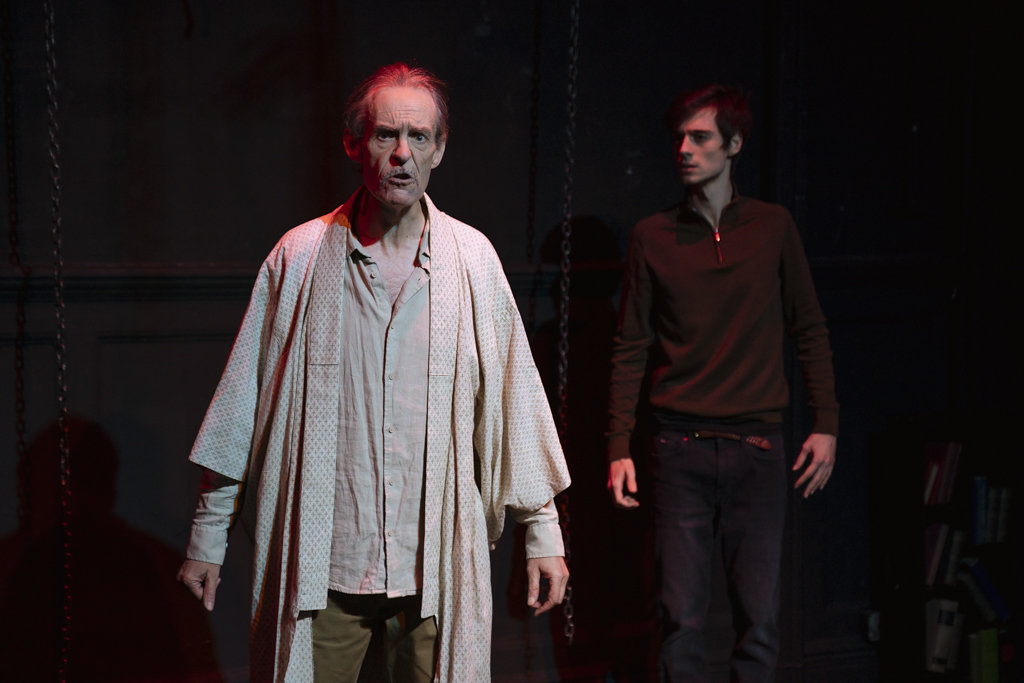
Some of the evening’s most powerful moments occur during Hamlet’s encounters with the Ghost of his father, portrayed by Ian O’Rorke. His commanding vocal delivery gives the Ghost an imposing presence, while the exchanges between father and son carry considerable emotional force. These encounters are more than simply supernatural revelations that propel the revenge plot forward. They are deeply personal moments in which Hamlet confronts both the loss of his father and the terrible obligation now being placed upon him. The performances of O’Callaghan and O’Rorke complement one another particularly well, creating scenes that are both profound and moving.
The accompanying soundscape makes these encounters even more memorable. A low, repetitive booming sound provides an unsettling background to the Ghost’s appearances, adding a sense of foreboding and intensifying the emotional atmosphere. Its steady recurrence creates an almost ominous presence of its own, lending greater depth to the exchanges between Hamlet and his father. Sound and lighting designer Gabriel Burns deserves particular recognition for this atmospheric contribution, demonstrating how relatively simple theatrical elements can generate considerable dramatic power.
Another interesting aspect of Prince’s adaptation is the transformation of Hamlet’s closest friend, Horatio, into Horatia, played by Alice Fernyhough. This change introduces a different emotional dynamic to their relationship, replacing the traditionally masculine friendship with a female confidante whose loyalty offers Hamlet a rare source of reassurance amid the increasingly hostile atmosphere of Elsinore. In a court dominated by suspicion, ambition and manipulation, Horatia represents one of the few relationships in which Hamlet can place genuine trust.
The adapted text reinforces the depth of this attachment. When Hamlet praises Horatia as a woman who is “not passion’s slave”, and declares that he will carry her in his “heart’s core”, the words suggest an affection extending beyond the ordinary courtesies of friendship. Whether interpreted as profound companionship or something approaching romantic devotion, the relationship introduces a tenderness that contrasts with the increasingly destructive behaviour of those surrounding Hamlet. It is a subtle but significant change, giving additional emotional meaning to the tragedy’s final moments.
That significance becomes particularly apparent during the devastating conclusion. As Hamlet lies dying, Horatia declares, “I am more an antique Roman than a Dane”, expressing her willingness to follow him in death rather than endure life without him. Hamlet prevents her from drinking the poisoned wine, leaving her to survive the destruction that has consumed the Danish court. Her final words, “Now cracks a noble heart. Good night, sweet prince, and flights of angels sing thee to thy rest”, bring the tragedy to an intimate and deeply poignant conclusion. With Horatia left to face the loss of her closest companion, the familiar farewell acquires an additional sense of personal heartbreak.
Prince’s adaptation makes several changes to Shakespeare’s original play, condensing portions of the text and largely removing the wider political storyline involving Fortinbras. This shifts the emphasis towards the family relationships, personal betrayals and emotional consequences of Hamlet’s pursuit of revenge. Rather than dwelling upon the political future of Denmark, the production concentrates on the human cost of the tragedy. The decision to end with Horatia’s farewell reinforces that approach, allowing the emotional devastation to remain the audience’s final impression.
Despite the seriousness of its themes, the play also retains flashes of Shakespeare’s characteristic wit, particularly in Hamlet’s sharp exchanges with Polonius and his verbal sparring with those attempting to uncover his intentions. These moments of dark humour provide a welcome contrast to the mounting tension, while revealing another side of Hamlet’s intelligence and increasingly unpredictable behaviour.
The play-within-the-play provides another important dramatic turning point. Hamlet arranges for a group of actors to perform a scene resembling his father’s murder, hoping that Claudius’s reaction will reveal whether the Ghost’s accusation is true. Theatre becomes a means of exposing deception, with Hamlet turning the court’s own appetite for performance against it. Claudius’s abrupt interruption of the entertainment confirms that Hamlet’s suspicions have struck a nerve, bringing the first half to a dramatic conclusion and setting in motion the increasingly violent events that follow.
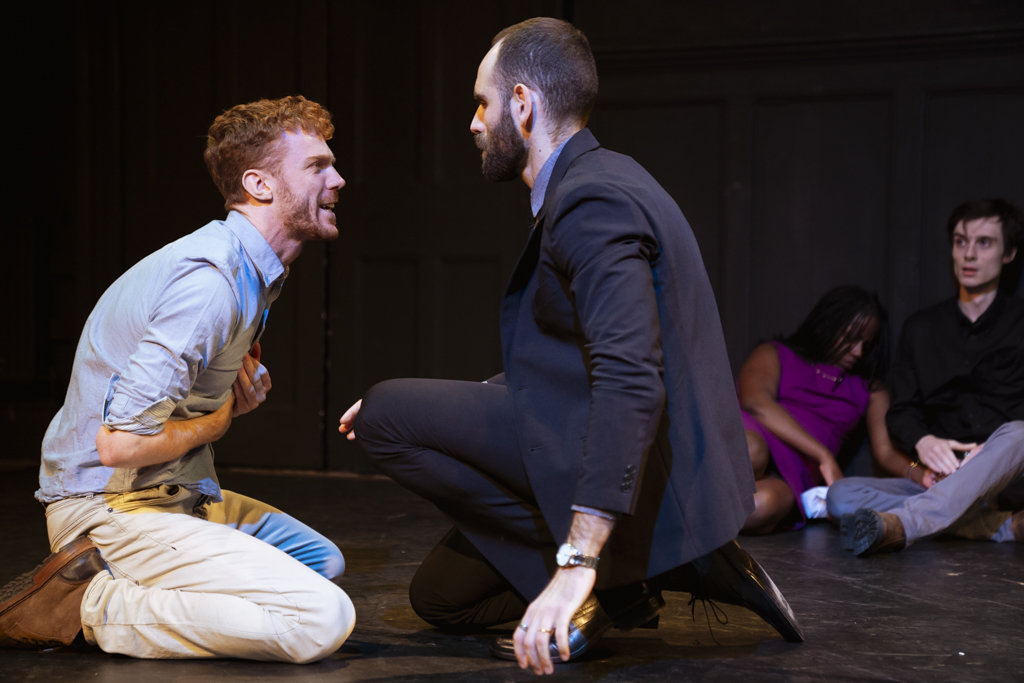
The supporting cast also makes a valuable contribution to the unfolding tragedy. Leonardo Cavaletti brings a commanding presence to Claudius, his strong, well-projected voice lending authority to the Danish king, while Pacifique Noa gives Queen Gertrude a dignified and sympathetic presence, conveying the difficult position of a mother caught between her husband and her increasingly troubled son. David Nicol brings welcome touches of humour to the meddlesome Polonius, whose interference has increasingly tragic consequences. Adam Davies-Knight gives an energetic portrayal of Laertes, capturing the young man’s mounting anger and determination as grief turns towards revenge. Amelia Rawlinson and Rajaishree Armugam bring an engaging liveliness to Rosencrantz and Guildenstern respectively, while demonstrating their versatility in several additional roles. Together, the ensemble provides a strong supporting foundation for the principal performances, helping to bring the troubled world of Elsinore convincingly to life.
What makes this production particularly effective is its concentration on the emotional experiences of the characters rather than the grandeur of the Danish court. The close proximity of the audience, the expressive performances and the atmospheric use of sound bring Shakespeare’s familiar tragedy into a setting where grief, guilt and betrayal feel immediate. O’Callaghan’s Hamlet provides a strong emotional centre, while Denes’s affecting Ophelia and O’Rorke’s imposing Ghost contribute some of the evening’s most memorable encounters. Fernyhough’s Horatia adds another dimension to the story, giving its conclusion a particularly tender sense of loss.
Ultimately, Jester Collective delivers a powerful and moving interpretation of Hamlet, demonstrating that Shakespeare’s tragedy loses none of its emotional impact when presented on a smaller scale. By concentrating on the relationships at the heart of the story, Mark Prince’s production reminds us that behind the familiar tale of murder and revenge lies something profoundly human: a grieving son, a family torn apart by betrayal, and the devastating consequences of a world in which love and trust are gradually overwhelmed by suspicion.
Cast & Creatives
- Showing: Saturday 10th October 2026 at 7.30pm; Sunday 11th October 2026 at 1pm and 5pm.
- Venue: Theatro Technis, 26 Crowndale Road, Camden, London NW1 1TT
- Buy Tickets: https://www.theatrotechnis.com/whatson/hamletjester
- Running Time: Approximately 2 hours, including interval
- Production: Jester Collective
- Written By: William Shakespeare
- Adapted & Directed By: Mark Prince
- Assistant Director: David Nicol
- Producer: Abigail Moss of Miller Moss
- Sound & Lighting Designer: Gabriel Burns
- Costume & Set Designer: Jennifer Taillefer
- Production Photography: Veronika Casarova
- Cast:
Judit Denes as Ophelia
Ian O’Rorke as Ghost of King Hamlet and Gravedigger
Alice Fernyhough as Horatia
Leonardo Cavaletti as King Claudius
Pacifique Noa as Queen Gertrude
David Nicol as Polonius
Adam Davies-Knight as Laertes and Francisco
Amelia Rawlinson as Rosencrantz, Marcellus and Other Gravedigger 1
Rajaishree Armugam as Guildenstern, Barnardo and Other Gravedigger 2
A powerful and moving Hamlet, brought vividly to life
Summary
Jester Collective delivers an intimate and emotionally compelling production of Shakespeare’s tragedy at Theatro Technis. Strong performances, particularly from Conrad O’Callaghan as Hamlet, Judit Denes as Ophelia and Ian O’Rorke as the Ghost, combine with an atmospheric soundscape to create some profoundly moving moments. The reimagining of Horatio as Horatia adds further emotional depth to this engaging interpretation.


Add comment