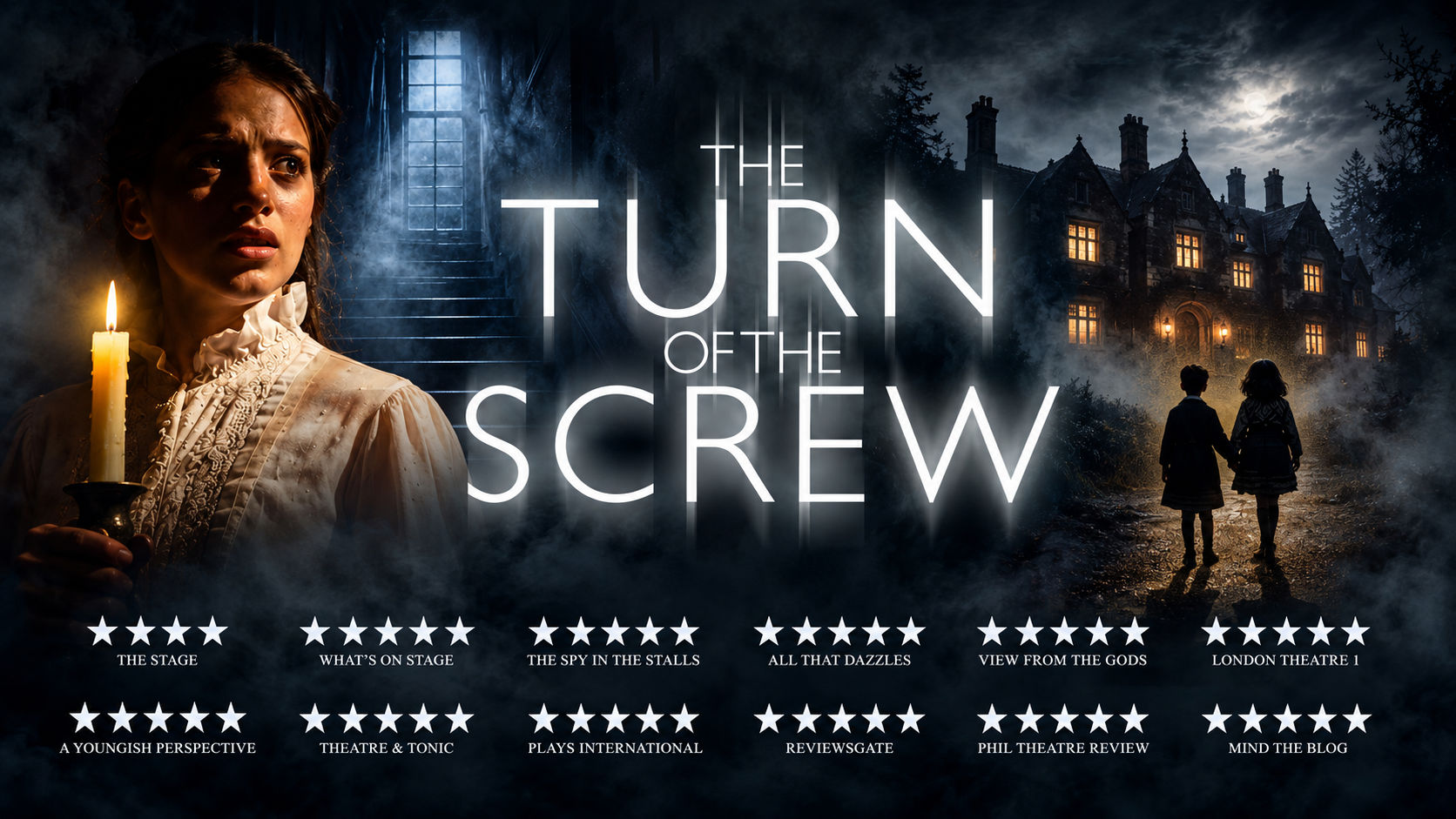
Having entered Theatre Royal Windsor with no prior knowledge of Henry James’s The Turn of the Screw, I initially imagined something reminiscent of The Secret Garden, with a young governess arriving at an imposing country house to care for two children. The prospect of a traditional period drama was quickly shattered by a startling scream, ominous sound effects and an atmosphere of mounting apprehension. Morgan Lloyd Malcolm’s new adaptation of James’s celebrated 1898 novella, presented by Blackeyed Theatre and Arcola Theatre and directed by Nicky Allpress, proved to be something altogether more sinister. Despite a narrative that occasionally proved difficult to unravel, I remained fully engaged, on the edge of my seat, throughout an evening distinguished by excellent performances and imaginative theatrical presentation.
The story centres on a young Governess who accepts her first appointment at Bly, a remote country estate, where she is entrusted with the care of two orphaned children, Miles and Flora. Their uncle, a seemingly charming but decidedly self-interested gentleman, insists that she assume complete responsibility for their welfare without troubling him with their affairs. What initially promises to be an agreeable position gradually becomes a disturbing experience as the Governess encounters troubling behaviour, unexplained occurrences and the possibility that the house is haunted by figures from its past.
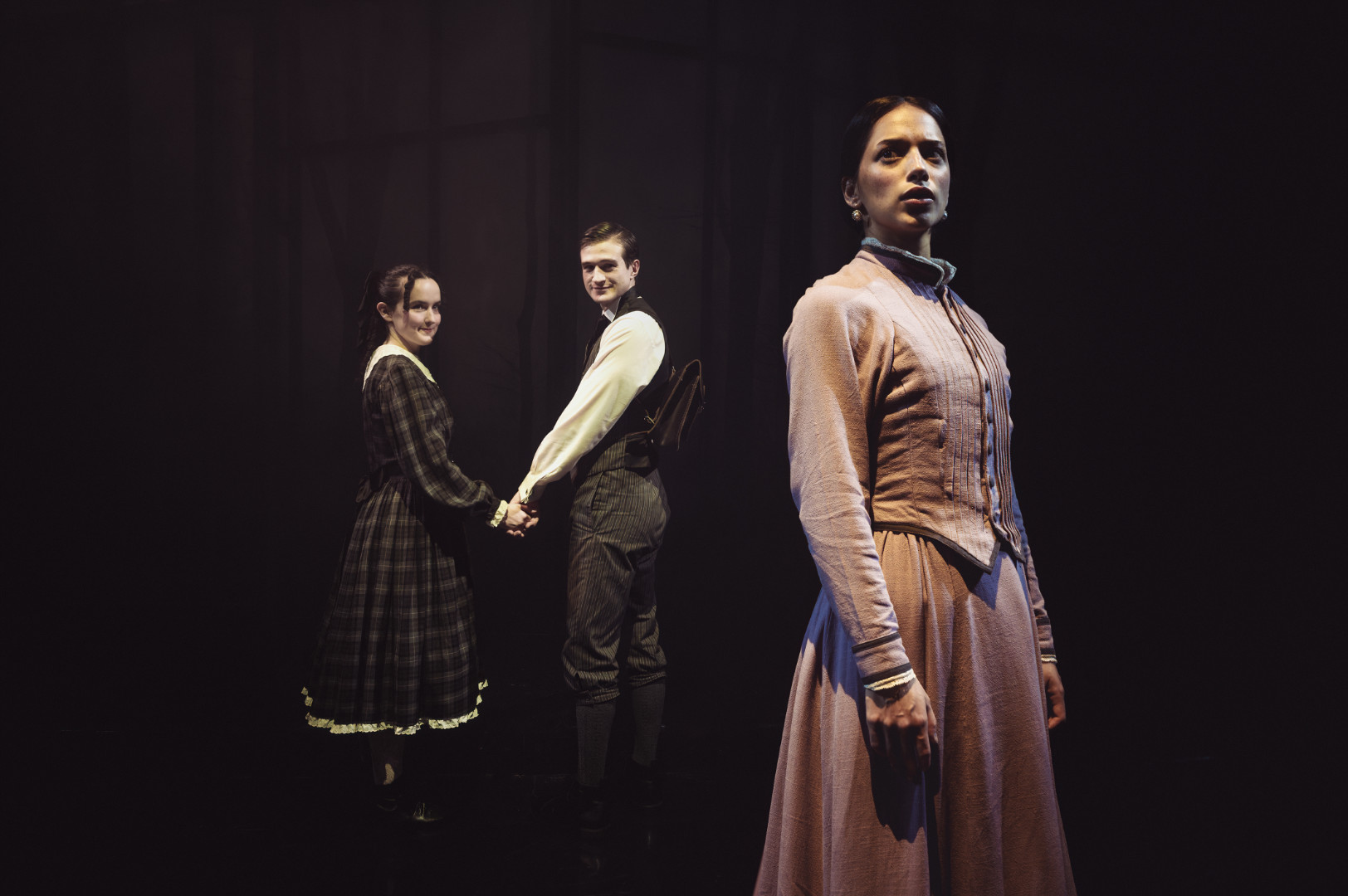
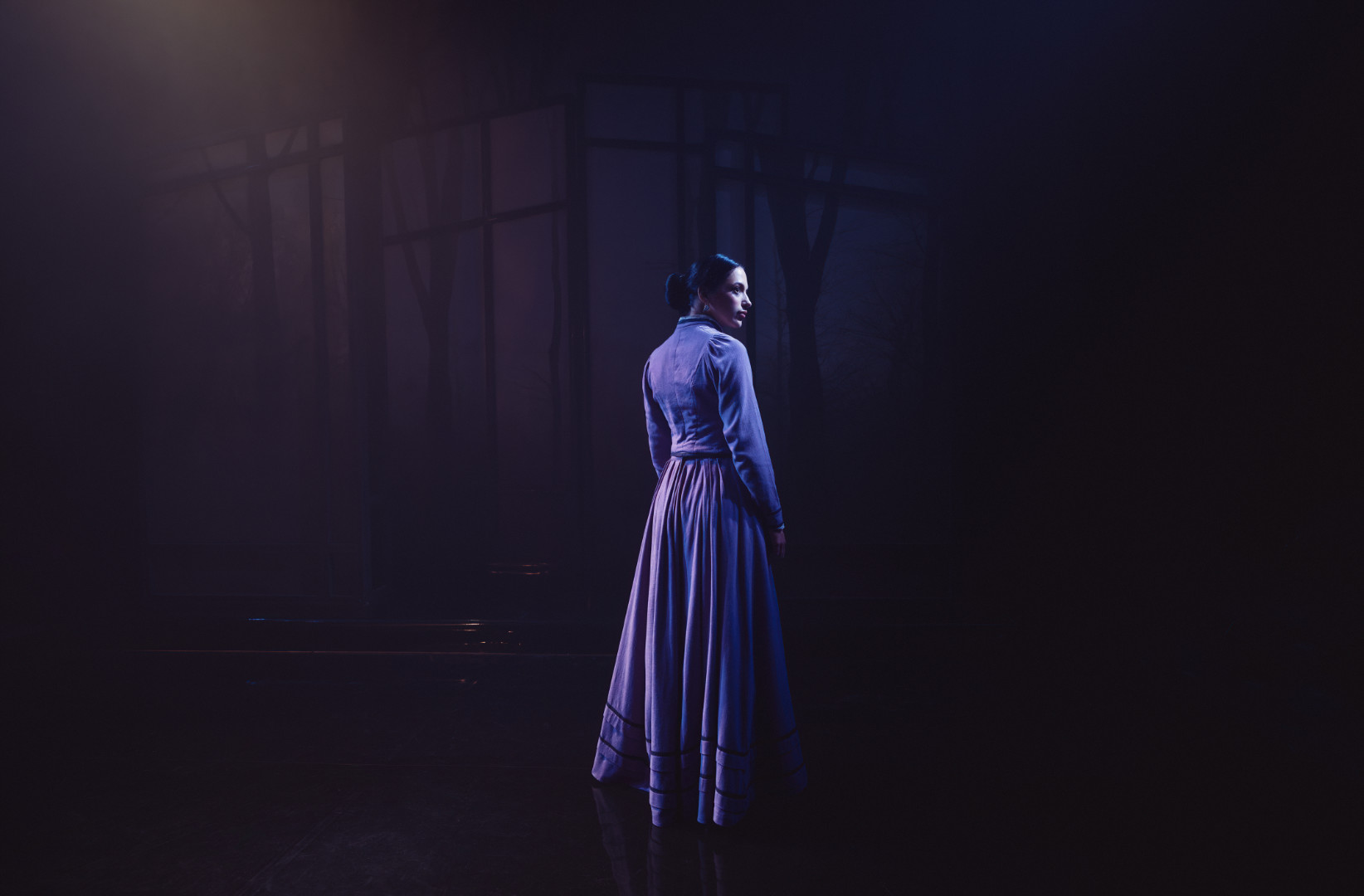
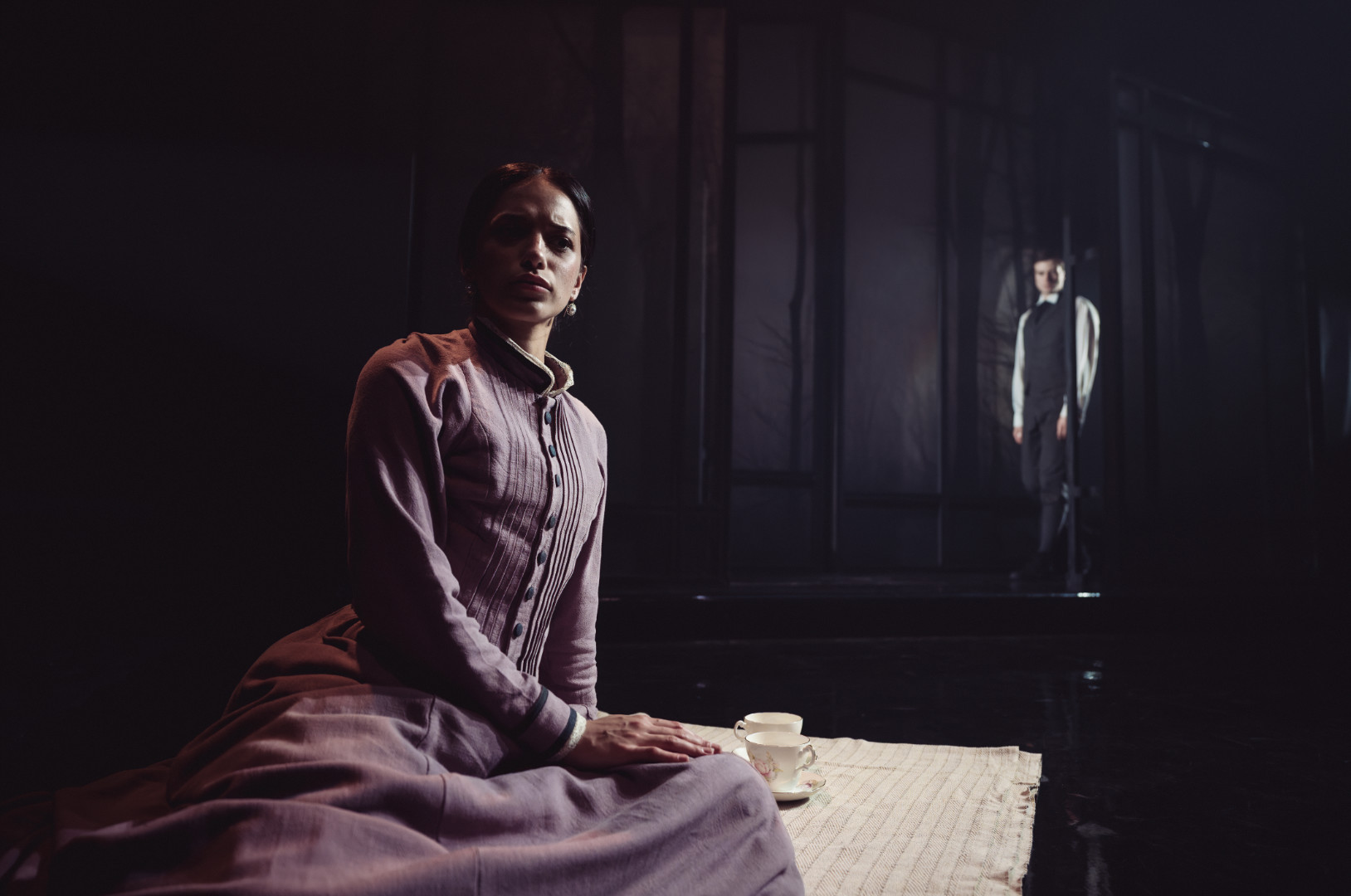
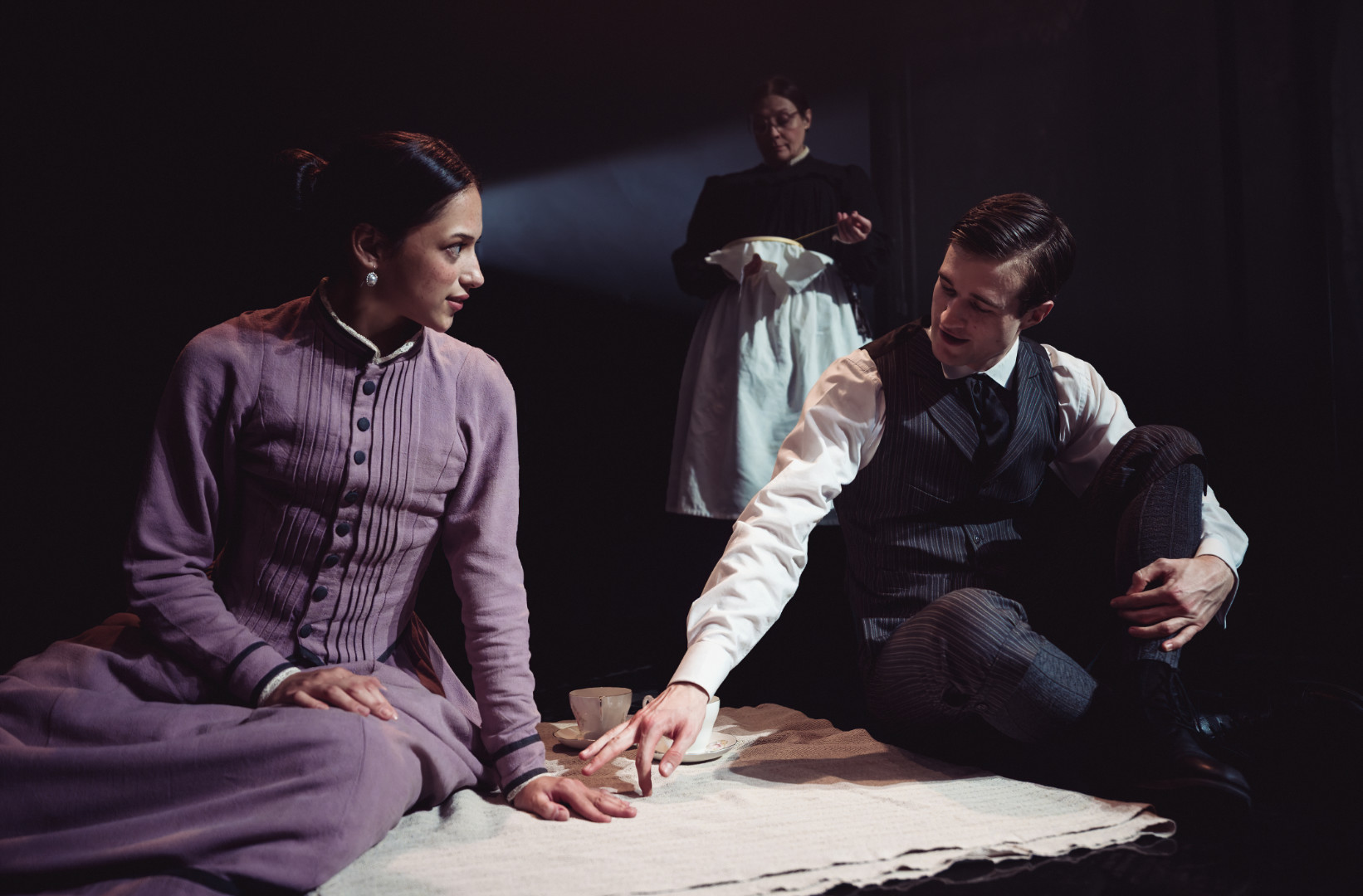
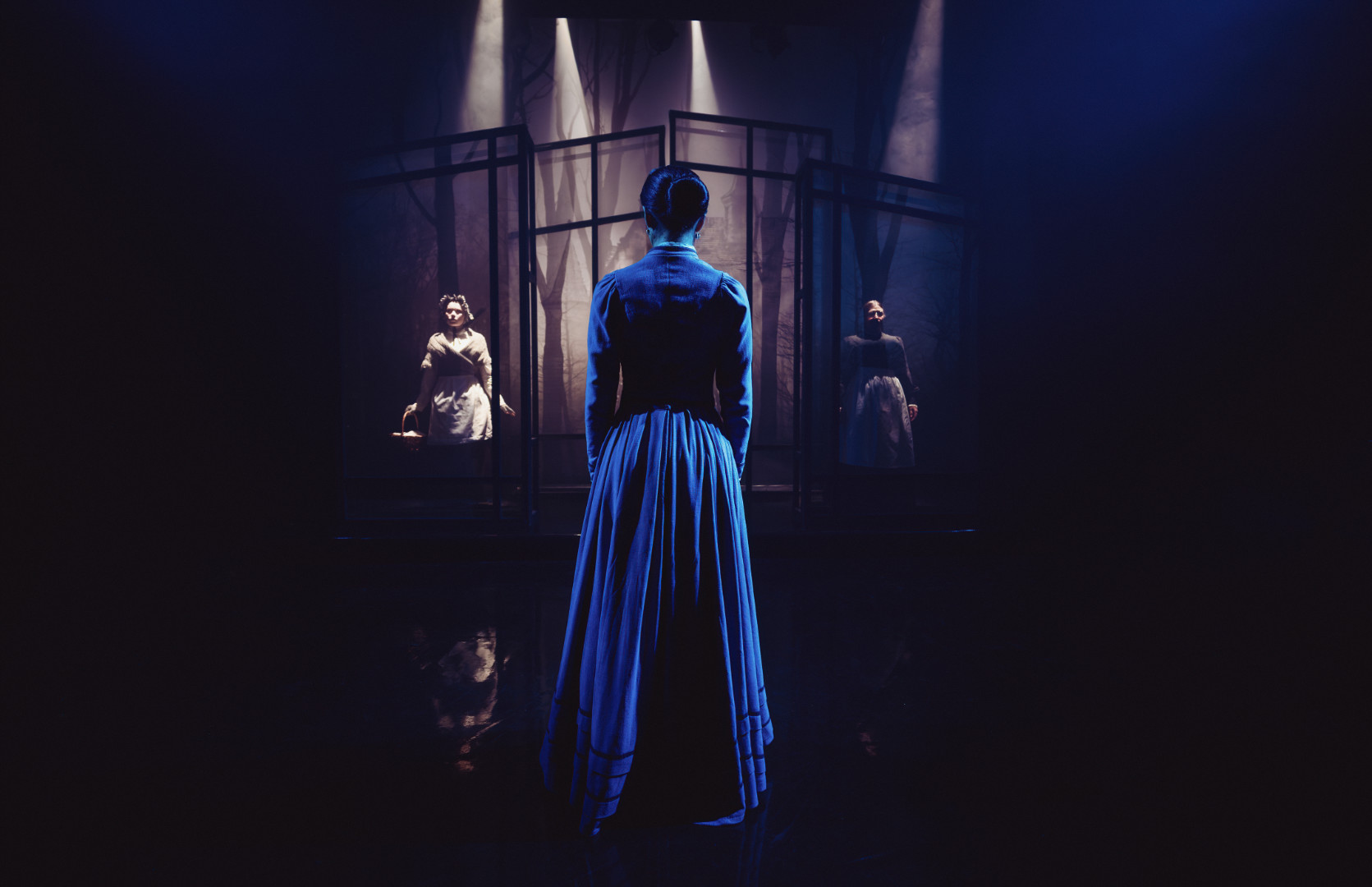
At the heart of the production is Amy Tara, whose portrayal of the Governess is quite outstanding. Her upright posture, composed manner and elegant period dress immediately establish a convincing young woman entering a profession governed by discipline, responsibility and strict social expectations. Tara inhabits the role with remarkable assurance, presenting a character whose determination to succeed is evident from her earliest exchanges with her prospective employer.
As the Governess becomes increasingly troubled by events at Bly, Tara carries much of the dramatic weight. Her performance moves convincingly between confidence, affection, apprehension and desperation, while retaining the audience’s sympathy even when the character’s interpretation of events becomes questionable. With considerable stretches of dialogue and an emotional journey that becomes increasingly demanding, she commands the stage throughout. It is a wonderfully sustained performance, forming the emotional centre of the production.
Jim Fish deserves particular praise for his accomplished portrayal of two distinctly unpleasant characters, the Master and the mysterious Man who interrogates the Governess. So convincingly differentiated are his performances that I did not realise until well into the play that both roles were played by the same actor. As the Master, Fish conveys the charm and entitlement of a gentleman accustomed to having his wishes obeyed, while his apparent indifference towards the children raises uncomfortable questions about his responsibilities. As the interrogator, he becomes cold, persistent and intimidating, repeatedly challenging the Governess’s recollections and undermining her confidence. Fish brings a different quality to each character, demonstrating impressive versatility while contributing considerably to the production’s psychological tension.
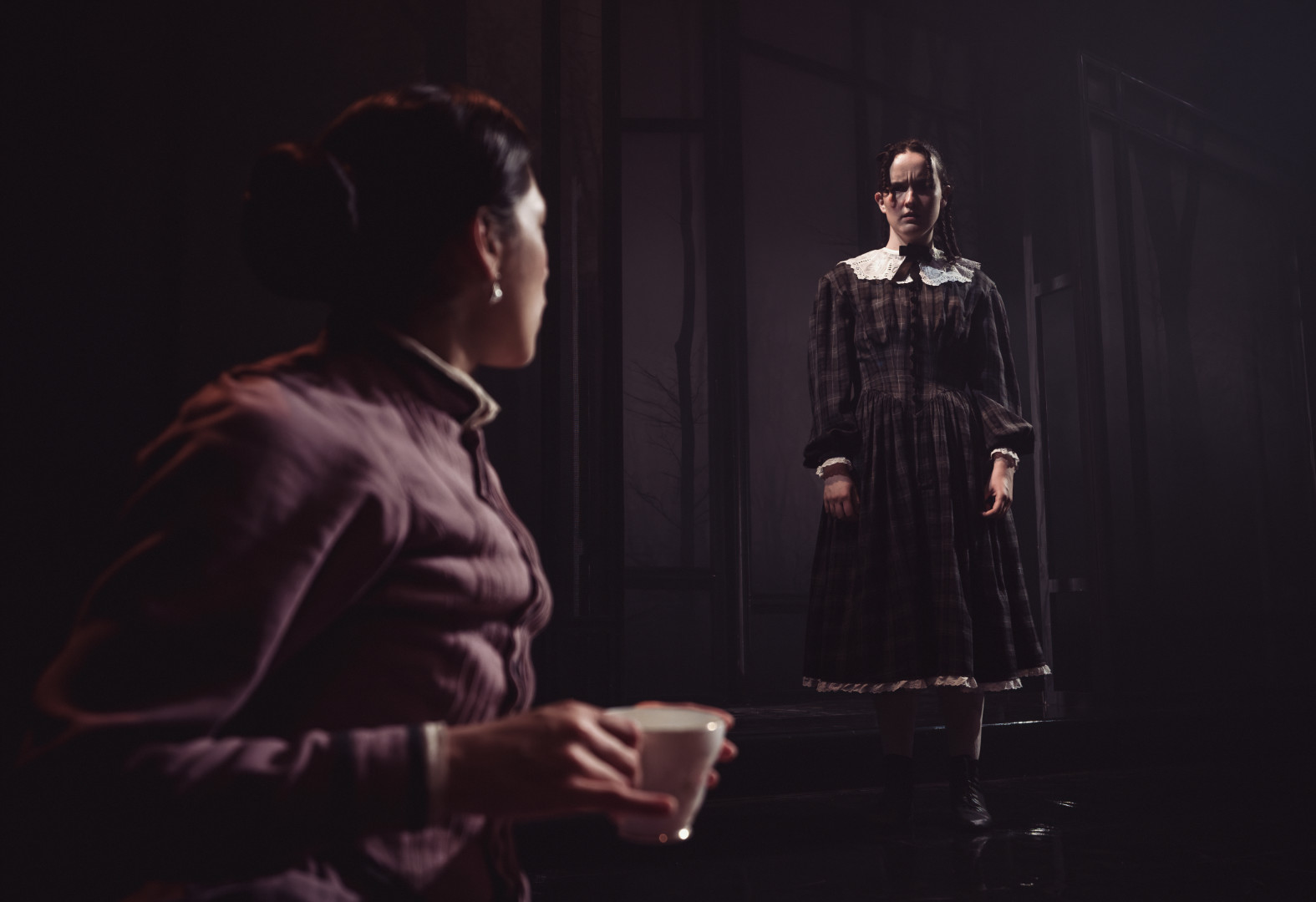
The children are equally fascinating, their behaviour continually shifting between apparent innocence and something considerably more disturbing. Toby Beynon portrays Miles with an unusually mature manner, his polite conversation and carefully measured speech frequently suggesting someone far older than his years. At times charming and considerate, he can suddenly become unsettling, adopting an authority that seems entirely inappropriate for a young boy. Beynon handles these changes convincingly, leaving the audience uncertain whether Miles is concealing disturbing knowledge, influenced by supernatural forces or reflecting troubling experiences. His additional portrayal of Peter Quint strengthens this uncertainty.
Kathleen McAuley Irvine gives an equally accomplished performance as Flora, initially presenting a lively, affectionate girl who delights in games and the arrival of her new Governess. Yet her seemingly innocent behaviour can change dramatically, revealing moments of hostility and an unsettling coldness. Irvine makes these transformations particularly effective without losing the character’s youthful qualities. Her doubling as the deceased Miss Jessel adds another dimension to the mystery, raising questions about whether Flora’s behaviour is being influenced by an unseen presence or shaped by events that remain concealed.
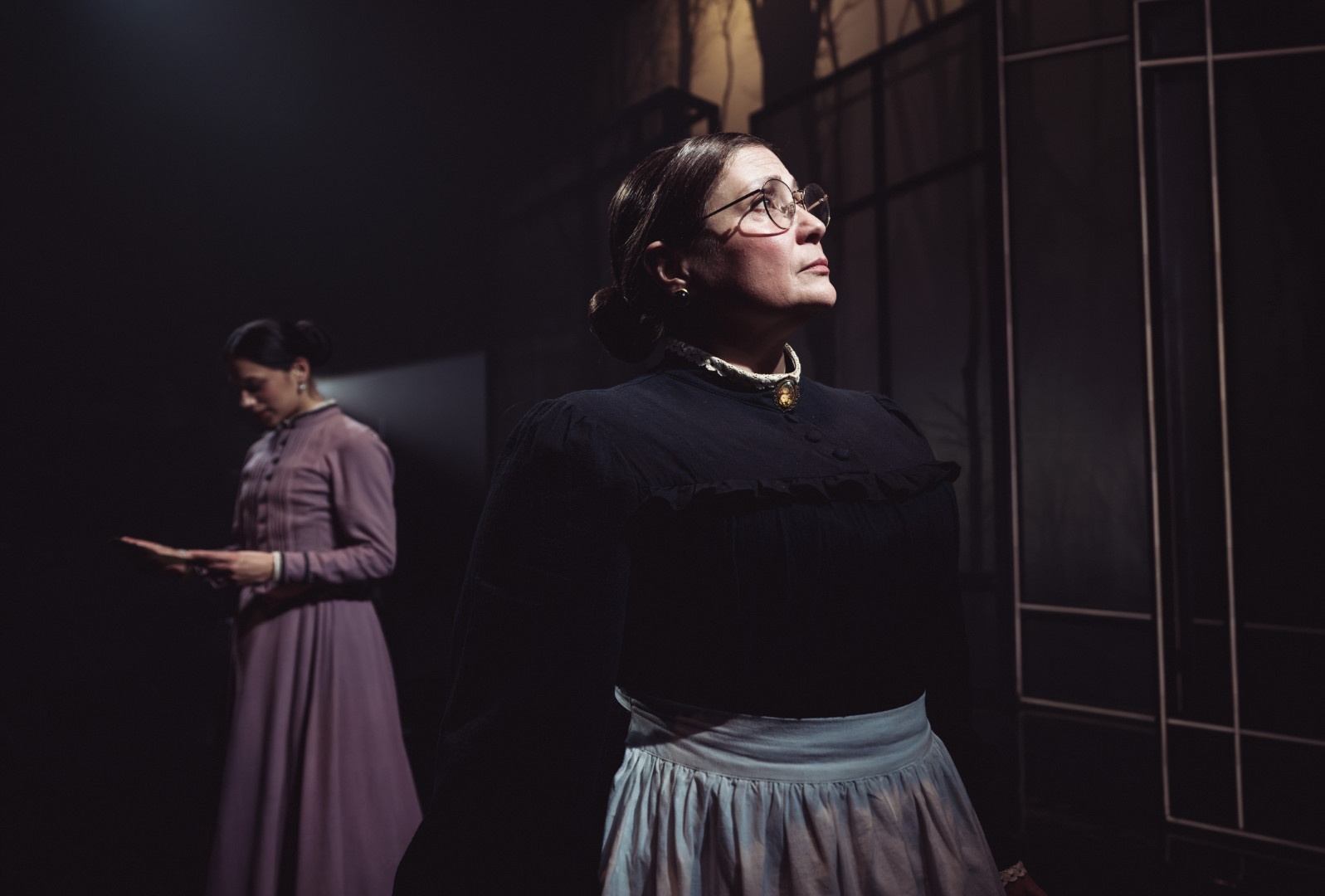
Katy Slater brings considerable assurance to Mrs Grose, the housekeeper, whose apparently dependable presence offers the Governess some initial reassurance. However, her guarded responses and reluctance to discuss the household’s history gradually suggest that she knows considerably more than she is prepared to reveal. Slater gives a convincing, carefully measured performance, making Mrs Grose an important part of the developing uncertainty. Janita Mikkola also contributes effectively to the ensemble, adding to the production’s unsettling theatrical atmosphere. Together, the company delivers performances of consistently high quality, with each actor making a valuable contribution to the unfolding mystery.
One of the production’s greatest achievements is Hattie North’s outstanding sound design. From the startling opening moments, the ominous soundscape establishes a persistent sense of unease that continues throughout the performance. It is far more than an accompaniment to the action. The sounds generate anticipation, heighten dramatic exchanges and help sustain the audience’s concentration, ensuring that even quieter moments carry an underlying suggestion of danger. At particularly dramatic points, sudden effects intensify the suspense considerably. The soundscape plays an instrumental role in holding the audience’s attention, even when the increasingly complicated story becomes difficult to follow.
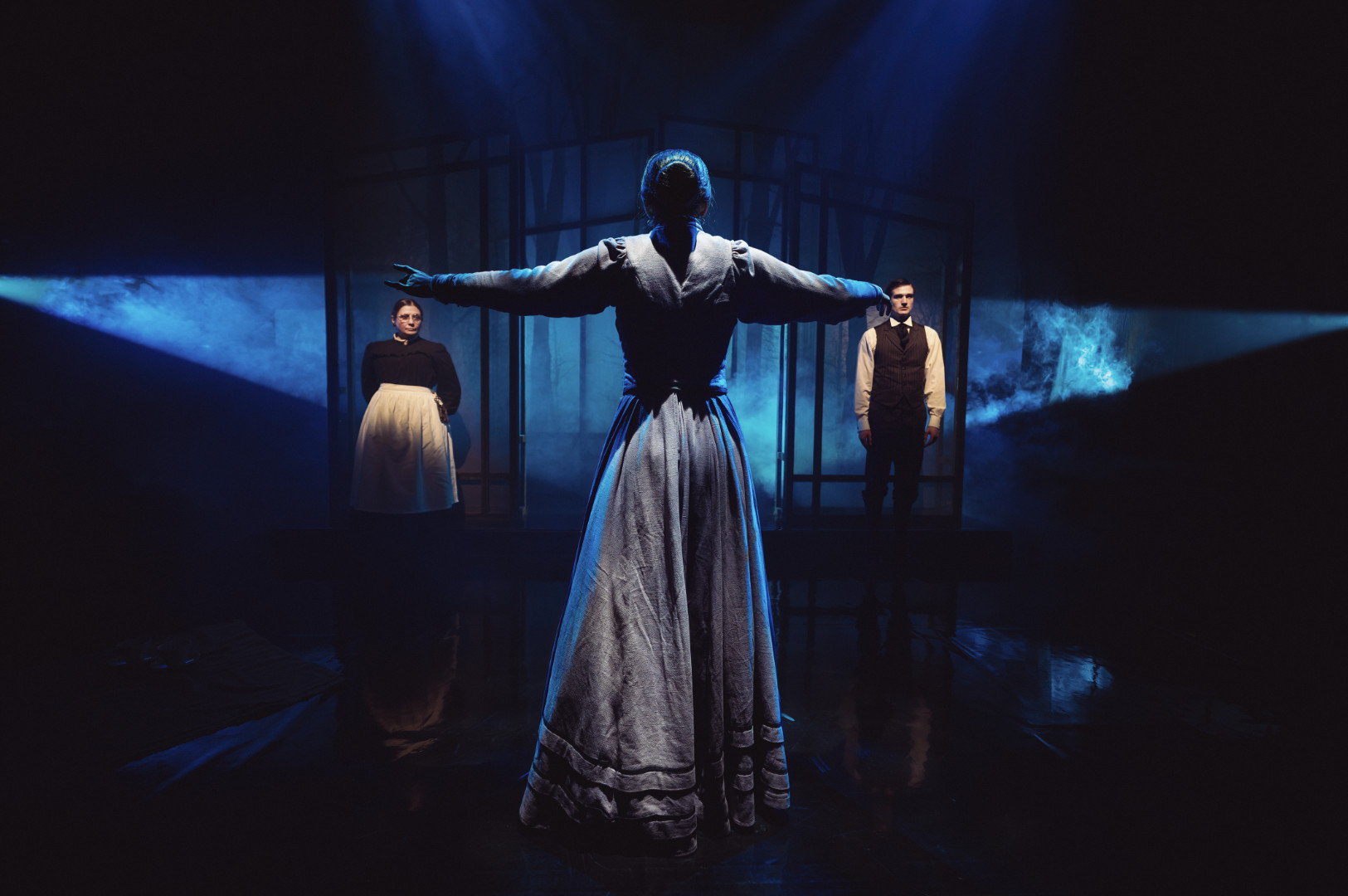
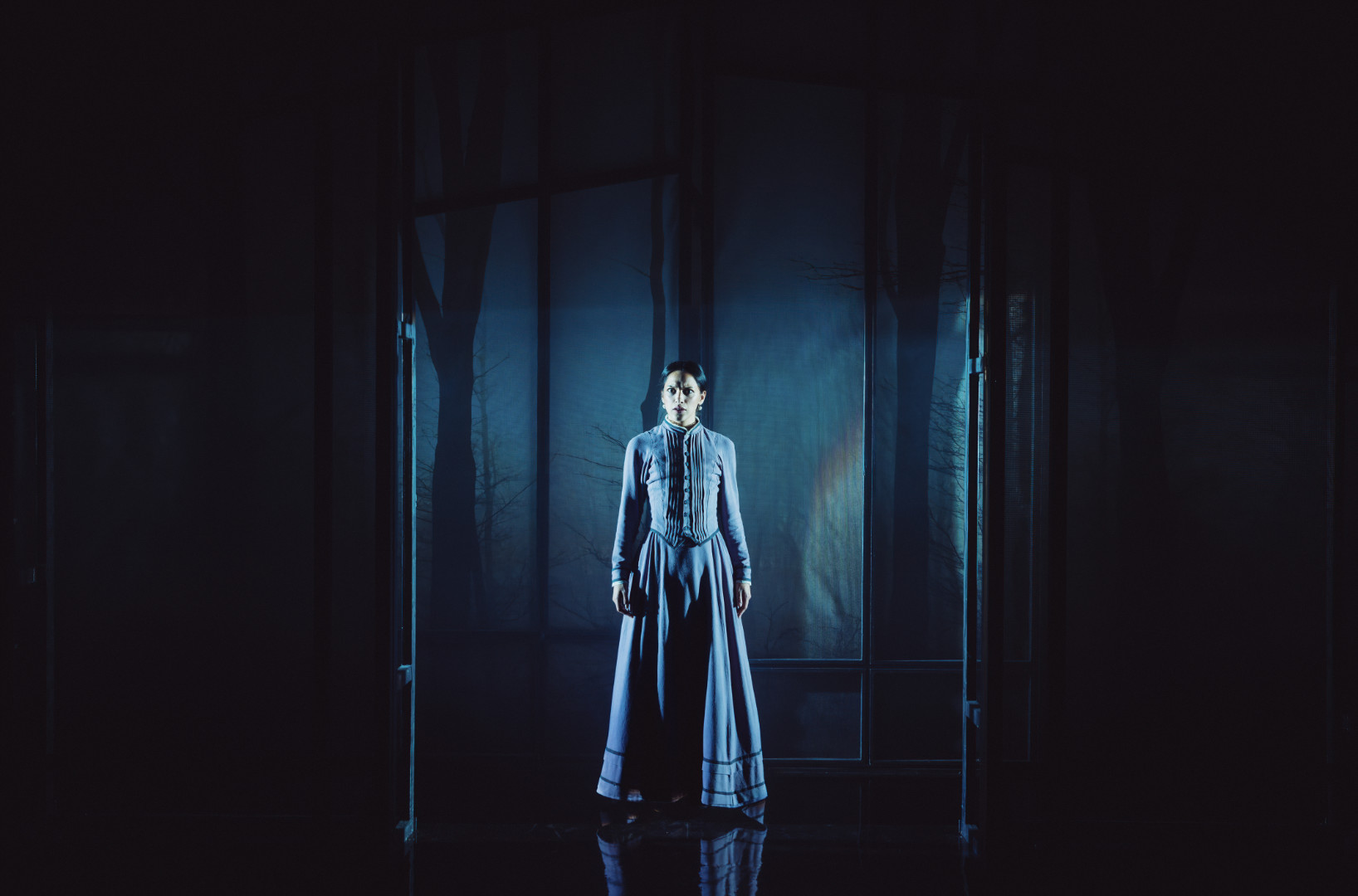
The visual presentation is equally imaginative. Matthew Cassar’s deceptively simple set features a series of tall, translucent frames arranged at different depths in front of a backdrop depicting bare trees and an imposing country house. The design establishes an eerie environment without relying on elaborate scenery, allowing the audience’s imagination to contribute to the sense of uncertainty. The translucent panels also allow figures to emerge from the surrounding darkness, creating the impression of mysterious presences lurking just beyond the Governess’s sight. Their overlapping arrangement gives the relatively simple setting a surprising sense of depth.
Oliver McNally’s lighting design transforms these structures into something considerably more atmospheric. Individual frames are illuminated at different moments rather than simultaneously, creating changing patterns of light and shadow that draw attention to particular areas of the stage. One especially memorable effect involves a sudden flash accompanied by a sharp, lightning-like electrical sound. It is a striking example of how effectively the lighting and sound work together, turning an otherwise straightforward scenic arrangement into an environment that feels unpredictable and threatening.
The contrast between deep shadows, shafts of cold blue light and drifting theatrical haze further enhances the supernatural atmosphere, with reflections across the glossy stage floor adding another dimension to the visual presentation. Wayne Fox’s special effects and Mandy Gordon’s movement and intimacy direction contribute to the production’s distinctive theatrical language. Under Allpress’s direction, these elements combine to create a sustained atmosphere of apprehension, with the technical presentation complementing rather than overwhelming the performances.
Nevertheless, the storytelling is not without its unanswered questions. Henry James’s original novella famously leaves readers questioning whether the ghosts are genuine supernatural beings or manifestations of the Governess’s increasingly troubled imagination. That uncertainty is fundamental to the story’s appeal, and Malcolm understandably preserves it. However, the introduction of the interrogator creates an additional layer of ambiguity that is intriguing but not always entirely satisfying.
Who exactly is this man, and what is the purpose of his persistent questioning? Is he connected to the Master, an independent investigator or something altogether less tangible? Equally, the children’s changing behaviour raises questions that remain difficult to resolve. At times, it becomes challenging to determine what is actually happening to the characters, particularly when apparent innocence gives way to hostility and the possibility of supernatural influence.
Ambiguity can greatly enrich psychological horror, encouraging audiences to consider conflicting interpretations long after the performance has ended. The final exchange returns almost word for word to the opening interrogation, suggesting that the Governess is trapped in a seemingly endless cycle of defending her account against someone determined to question its credibility. This introduces a thought-provoking theme concerning the struggle of women to have their experiences believed. Yet although the circular ending lends the interrogation greater purpose, the man’s identity, authority and place within the story remain frustratingly unclear. The distinction between deliberate ambiguity and unnecessary confusion therefore remains blurred, even if this did little to diminish the gripping experience of watching the drama unfold.
Conversations with other audience members afterwards suggested that I was not alone in finding aspects of the narrative perplexing. Yet those unanswered questions scarcely diminished the engrossing nature of the performance itself. The outstanding acting, atmospheric soundscape and imaginative lighting sustained the suspense throughout, leaving the audience captivated even as the story resisted easy explanation.
The Turn of the Screw is an absorbing and frequently unsettling theatrical experience, distinguished by a uniformly excellent company and a particularly impressive central performance from Amy Tara. Its storytelling may occasionally leave audiences searching for greater clarity, but its ability to generate suspense and sustain attention is undeniable.
Cast & Creatives
- Showing: Tuesday 20 – Saturday 24 October 2026
- Venue: Theatre Royal Windsor, 32 Thames Street, Windsor, Berkshire SL4 1PS
- Buy Tickets: https://theatreroyalwindsor.co.uk/screw-26/
- Running Time: Approximately 2 hours 10 minutes, including interval
- Age Guidance: 12+
- Production: Blackeyed Theatre and Arcola Theatre
- Adaptation: Morgan Lloyd Malcolm, based on the novella by Henry James
- Director: Nicky Allpress
- Assistant Director: Emma Wilkinson
- Set & Costume Designer: Matthew Cassar
- Lighting Designer: Oliver McNally
- Sound Designer: Hattie North
- Movement & Intimacy Director: Mandy Gordon
- Illusionist & Special Effects: Wayne Fox
- Production Photography: Alex Brenner
- Cast:
Jim Fish as The Man / The Master
Toby Beynon as Miles / Peter Quint
Kathleen McAuley Irvine as Flora / Miss Jessel
Katy Slater as Mrs Grose
Janita Mikkola as Ensemble
A Gripping And Atmospheric Gothic Drama With Outstanding Performances
Summary
An engrossing adaptation distinguished by excellent performances throughout, particularly Amy Tara’s outstanding portrayal of the Governess. Imaginative lighting and Hattie North’s ominous soundscape sustain an atmosphere of suspense, keeping the audience fully engaged and on the edge of their seats. Although aspects of the narrative remain unexplained, these lingering questions do little to diminish a gripping theatrical experience.


Add comment