The persistent demand that one woman prove her identity gives The Anastasia File its emotional force. Royce Ryton builds his play around the possibility that the woman later known as Anna Anderson, rescued from a Berlin canal in 1920, might be the Grand Duchess Anastasia, a survivor of the Romanov family’s execution. The investigation produces competing accounts, disputed memories and a succession of witnesses. Through it all runs a more intimate concern: what happens to someone whose account of herself is never allowed to be enough?
The story begins with the elderly Mrs Manahan, whose marriage has brought her a measure of happiness after decades of scrutiny. An inspector’s son arrives with his father’s papers and a renewed appetite for the case. That framing gives the flashbacks a particular sadness. For him, the mystery promises a book; for her, it means returning to experiences she has already spent a lifetime explaining.
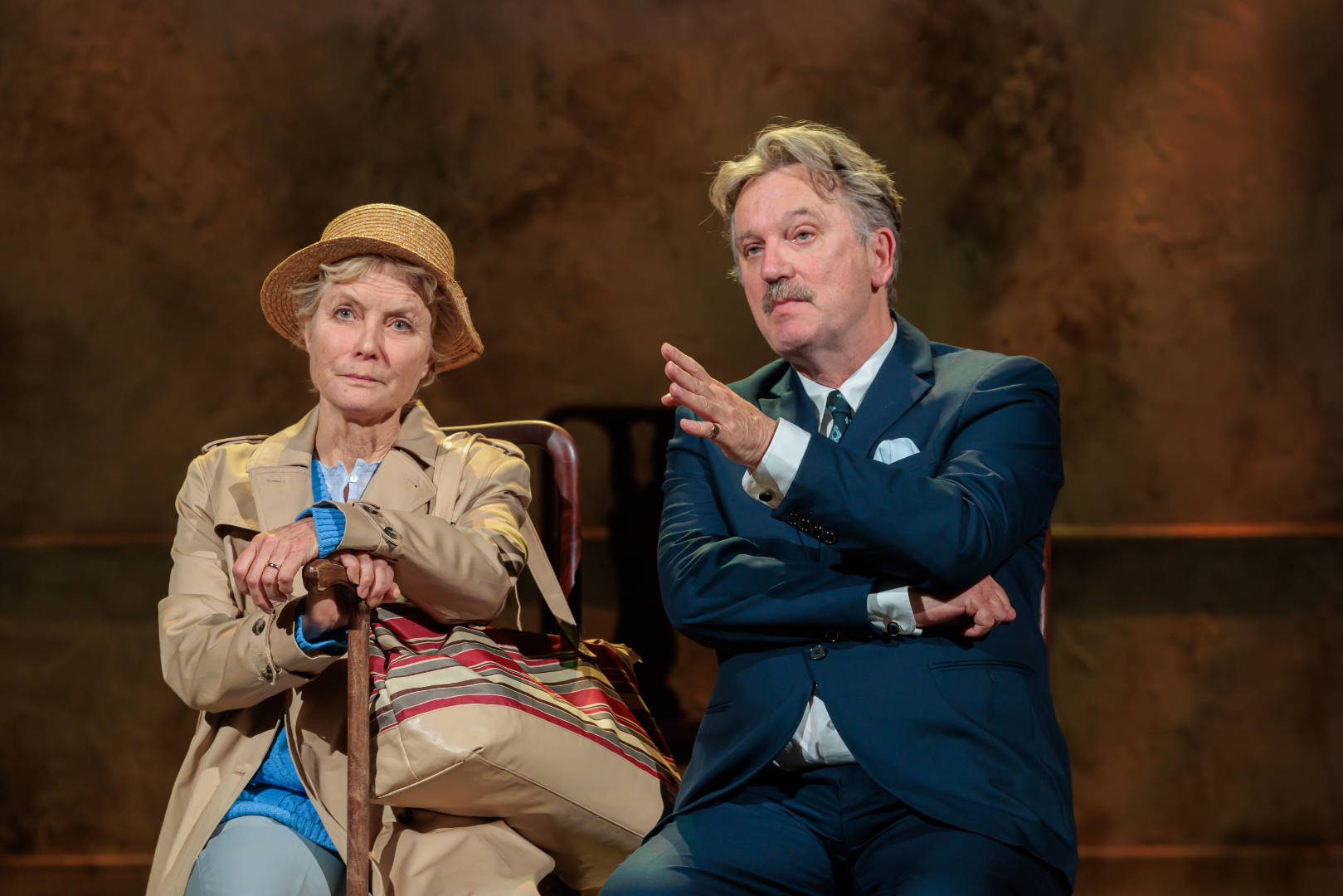
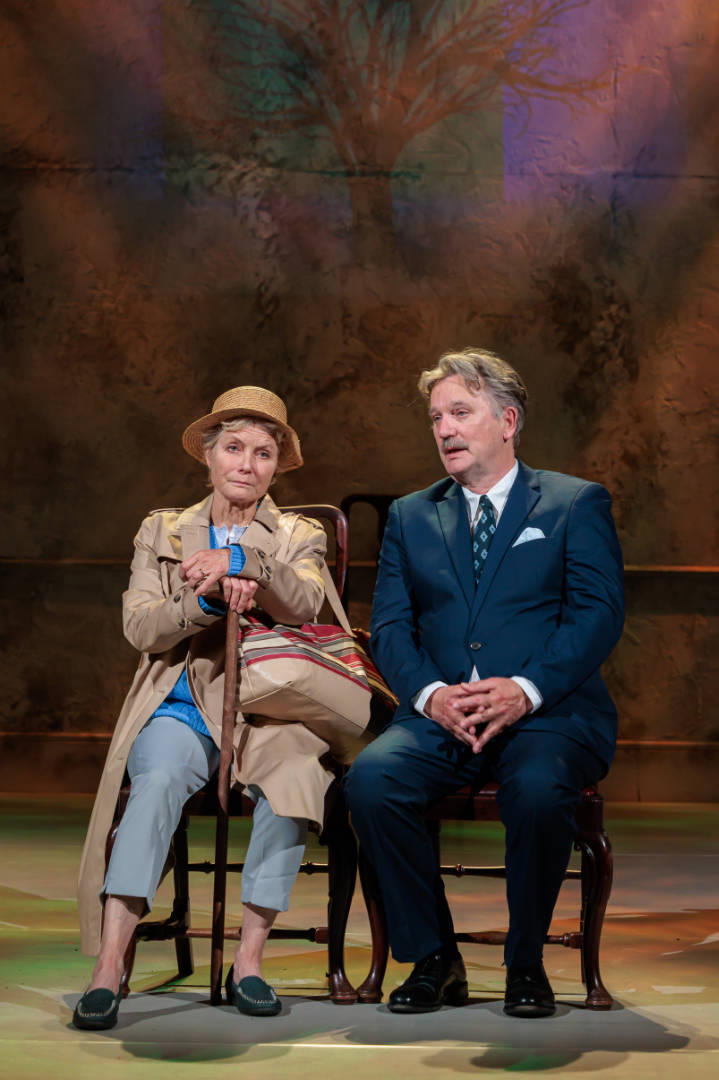
Jenny Seagrove plays Mrs Manahan across those different periods, while Simon Shepherd takes the roles of the Inspector and his son. Their performances give the investigation its central relationship, with all the complications of kindness, attachment and an increasingly personal need to establish the truth.
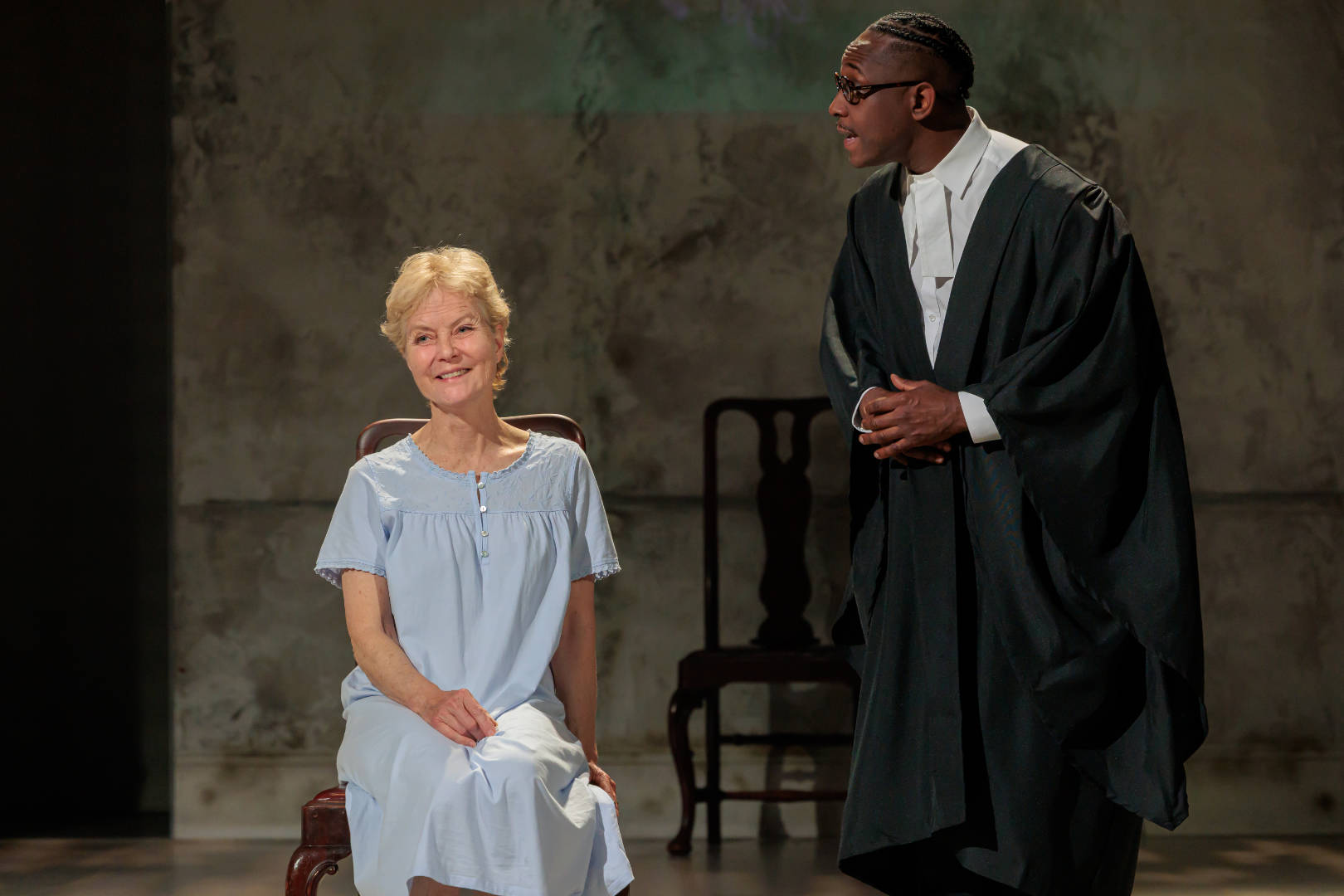
Seagrove brings a regal air to her portrayal, with a believable Russian accent sustained across the changes in age and a poise that lends credibility to the suggestion of an aristocratic upbringing. When the nurse remarks that the woman appears to have been taught deportment, it is easy to believe from the way Seagrove carries herself. She also brings considerable energy to the role, making several sprightly runs offstage that add a striking vitality to her performance.
Seagrove’s character is particularly engaging in the tension between her vulnerability and her stubborn self-possession. The elderly woman’s weariness is threaded with sharp wit: she understands perfectly well why people keep returning to her story, and her request to be left alone has both dignity and an edge. In the younger woman’s scenes, guardedness, flashes of indignation and the need for reassurance sit beside an insistence that she knows exactly who she is. These contradictions give the role its humanity. A particularly touching detail is her pleasure in having a married name that no one can challenge. After decades of disputed identity, the ordinary certainty of being Mrs Manahan carries considerable emotional weight.
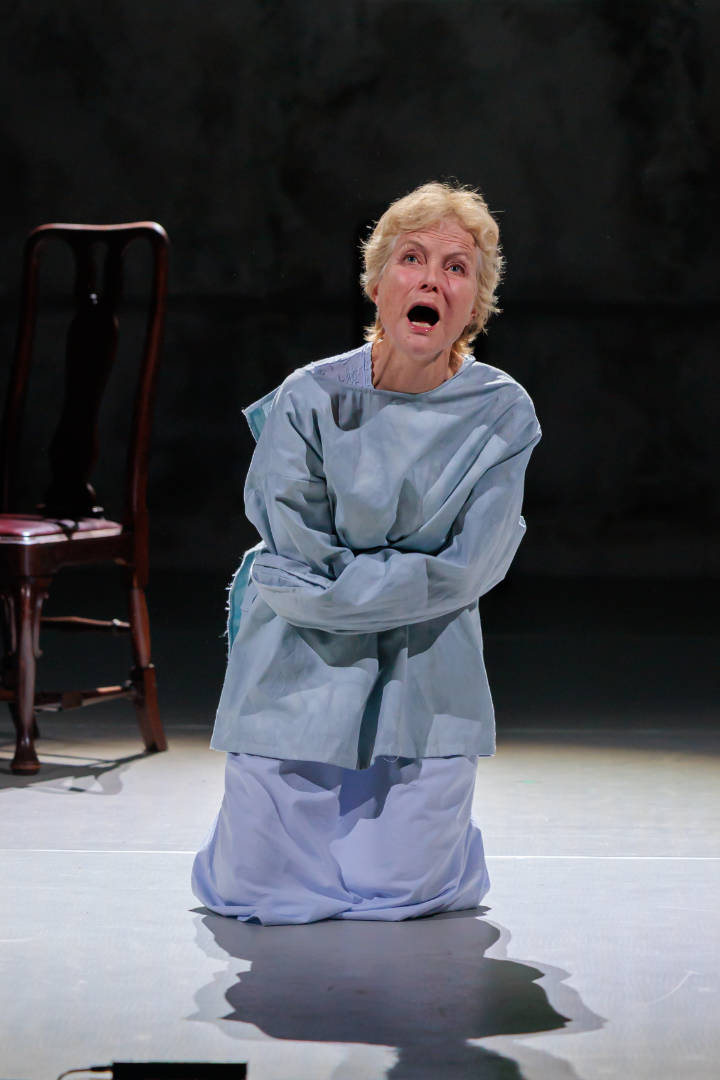
The movement from assurance to fear is especially revealing when the younger woman launches into a forceful account of the Kaiser and the Serbian ultimatum. For a moment, she speaks with political confidence and authority. Then the question “Who are you?” brings terror. Her cowering and gestures of warding off blows give that change a disturbing physical immediacy. Information has emerged, but the person supplying it has been driven back into distress.
Her humour is tart and particularly enjoyable in the cinema sequence, where she corrects the film’s costumes and court etiquette with the assurance of someone who has known that world. It is funny, but also revealing: an apparently unguarded response becomes another piece of evidence for the people watching her. Even an ordinary outing can be converted into a test.
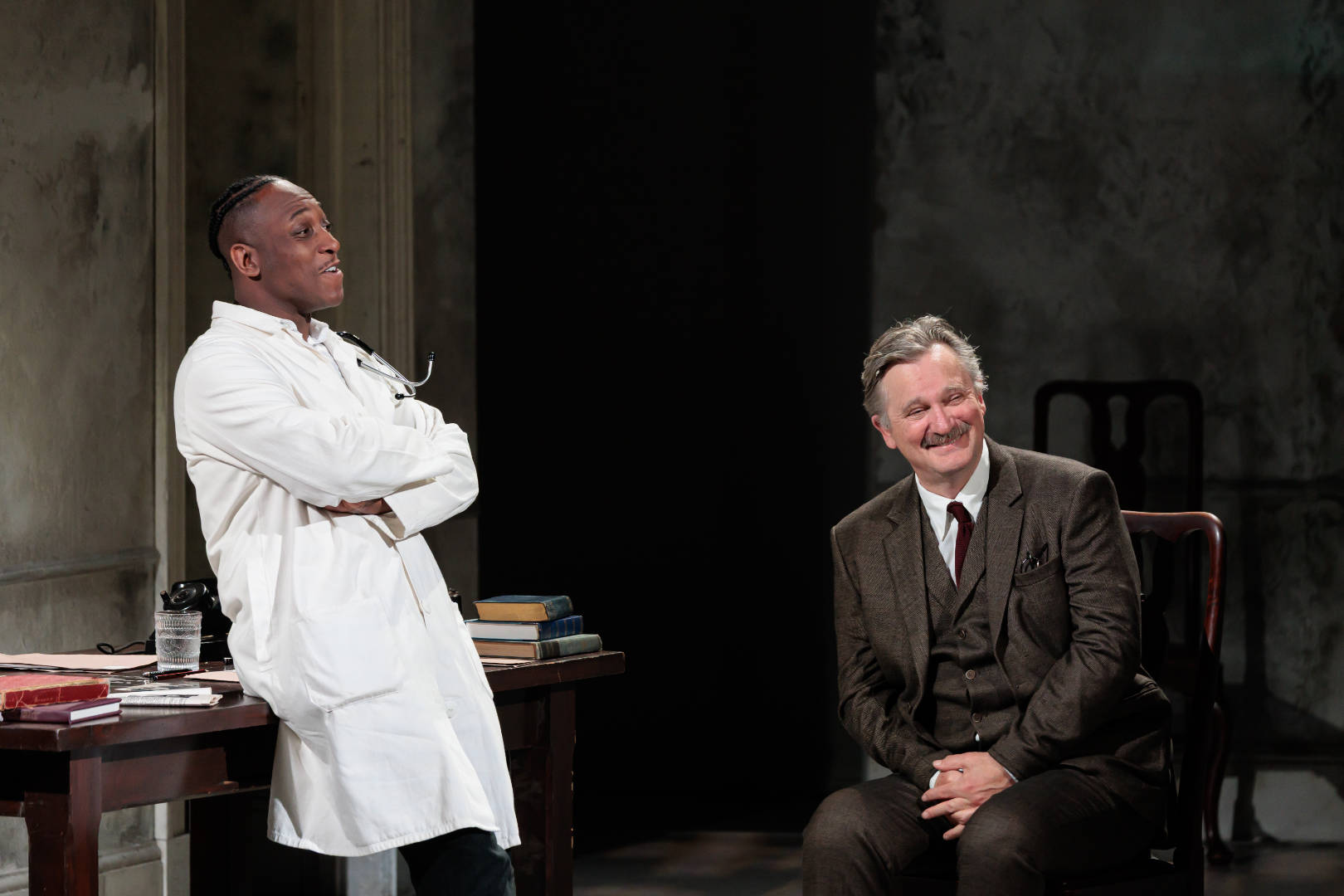
Shepherd gives the father a patience that gradually becomes attachment. The warmth Mrs Manahan remembers in him is persuasive, yet his kindness develops into a need for her to be Anastasia. His protection brings comfort and another set of expectations. The son is cooler and more concerned with the account he might produce, his declared open mind carrying its own professional assurance. Casting Shepherd as both men makes the inherited obsession visible. The same face returns a generation later, still wanting the file closed; the case has outlived the man who began it. Mrs Manahan is encountering an old demand in a new form.
Ryton is particularly effective when apparently reasonable requests become oppressive. A language test, a physical examination or a question about a remembered relative can each be presented as a step towards recognition. Together, they make almost every encounter conditional. Photographs, teeth, ears and the question of whether she curtsied turn her body and behaviour into material for examination. The Inspector’s support cannot release her from that scrutiny.
As the questioning tightened, the house went very still. That quiet suggested an audience feeling the weight of each further demand upon her. The interrogation had become an event in itself: how much more would she have to produce before her account deserved consideration?
The alleged Romanov fortune sharpens that conflict. Within the play, the prospect of millions of roubles in gold deposited at the Bank of England changes what recognition might cost, and what denying it might preserve. Family affection, legal proof and financial interest become entangled. Ryton gives the meetings with possible relatives their sting by placing the hope of belonging beside the calculations that can extinguish it.
There is a revealing ambiguity in the Inspector’s reasoning. Evidence that appears to support the claim strengthens his conviction; a relative’s refusal to recognise the woman can also be interpreted as evidence of self-interest. His sympathy is understandable, but the investigation raises questions about how belief becomes certainty. The audience is invited to consider the motives of her supporters as well as those of her opponents.
Roy Marsden directs a four-person cast centred on Seagrove’s Mrs Manahan and Shepherd’s two Inspectors. Around those central figures, Ashley D. Gayle and Rosie Thomson populate the story with doctors, nurses, relatives and other people drawn into the dispute. Their contrasting characters give an extensive history a succession of distinct human encounters.
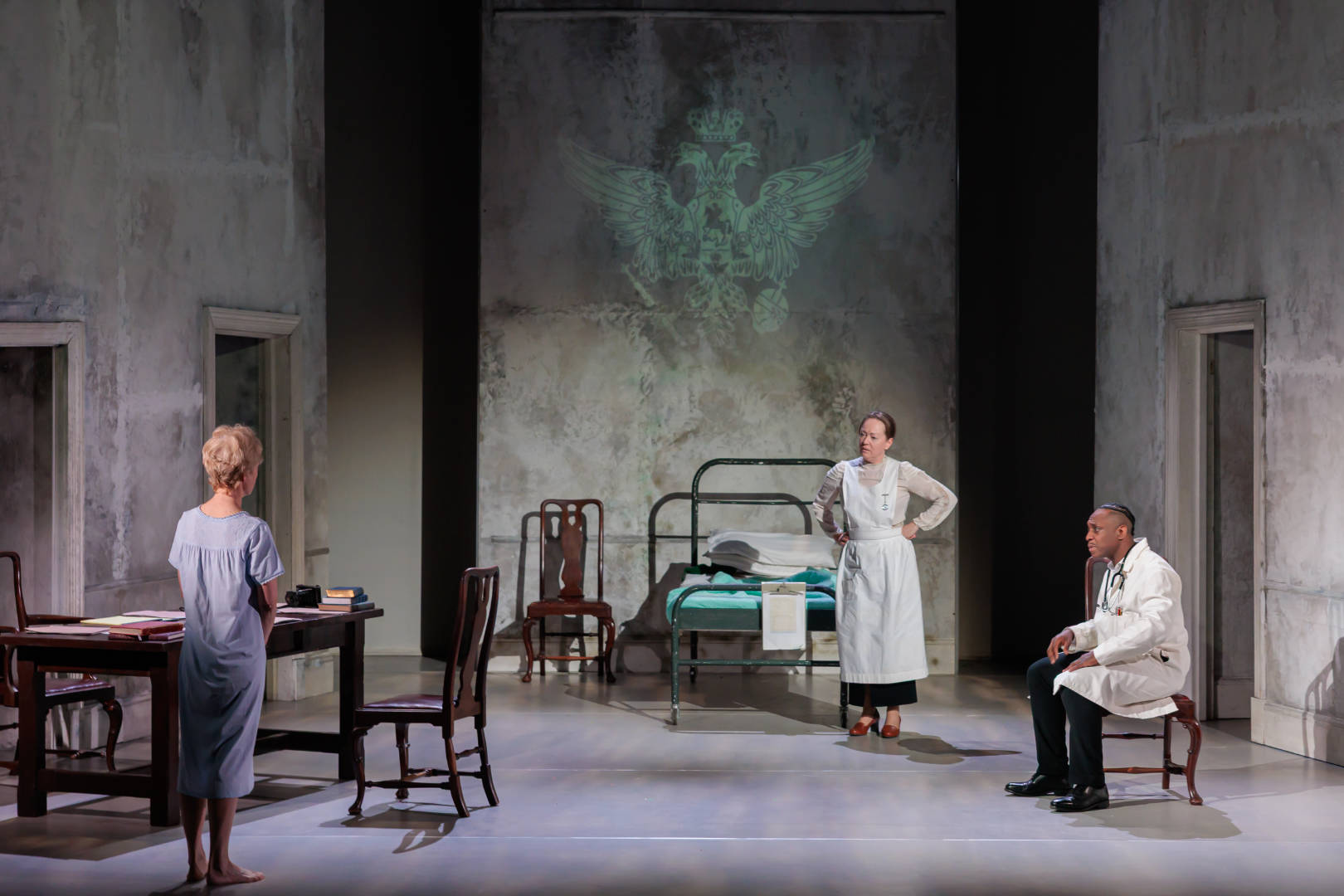
Gayle brings an effective contrast between practical medical concern and the more calculating forms of assistance offered later. His doctor’s examination of feet, scars and the evidence of childbirth shows how readily care can become an intrusive assessment. The American lawyer’s proposal to sell shares in the supposed fortune is particularly unsettling. Professional reassurance acquires a predatory edge as the woman’s claim becomes something in which other people can invest. Gayle’s different figures change the terms of each meeting: she may be a patient to help, a claimant to advise or a financial prospect.
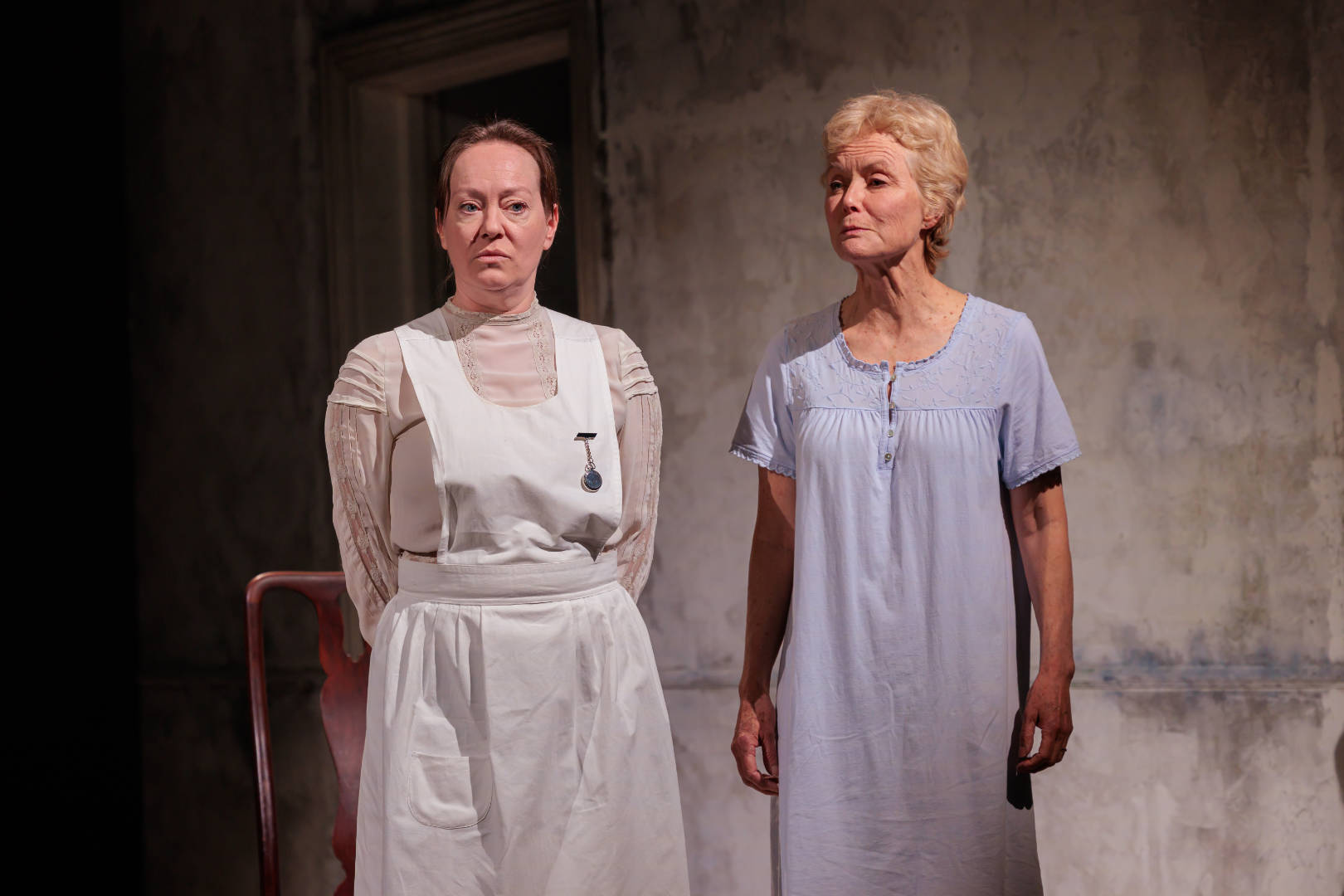
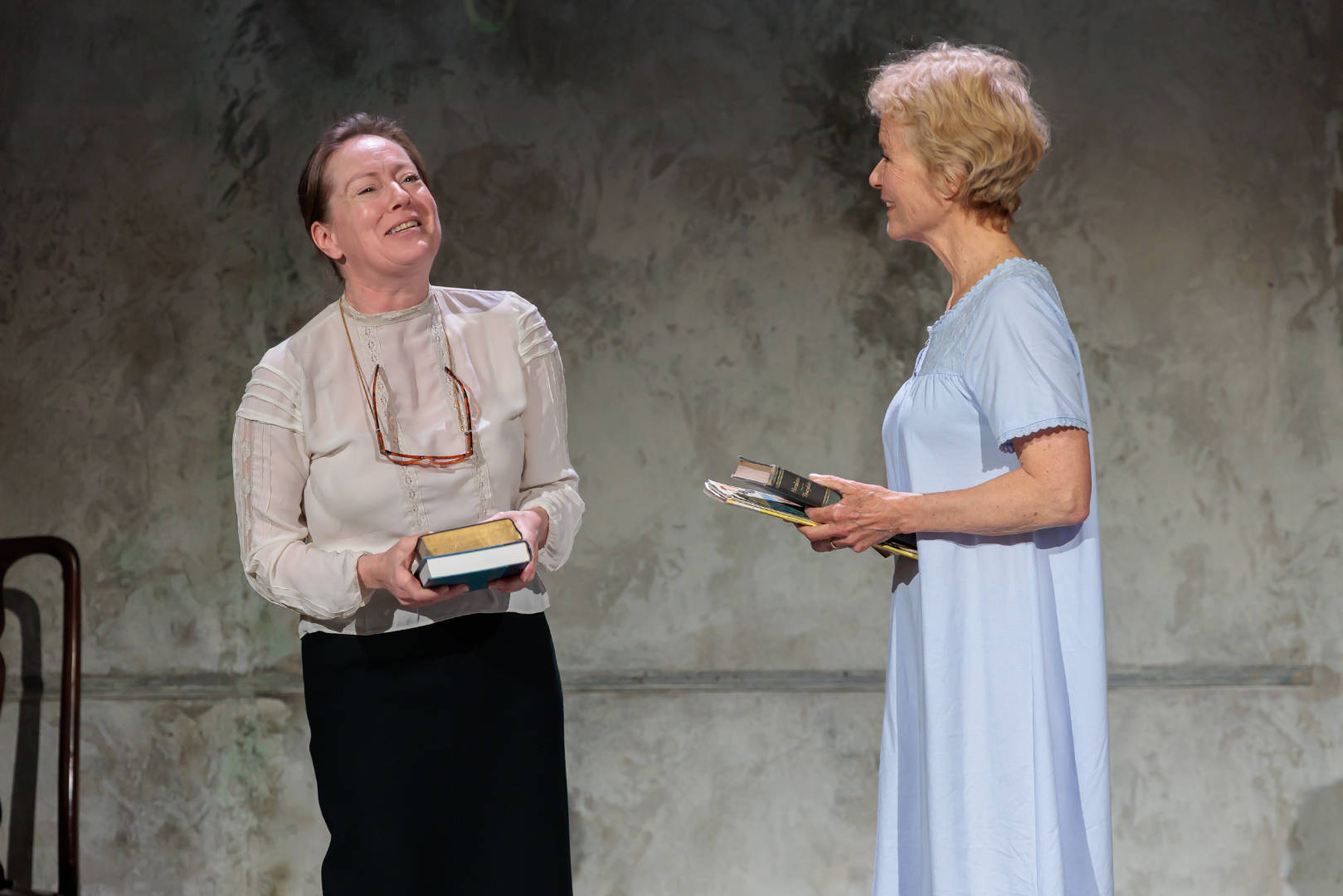
Thomson gives the nurse an ordinary kindness that allows the woman to exist as a patient before the imperial story takes over. Magazines, walks and the nurse’s attempts at English provide small opportunities for human contact. The more volatile Clara, a fellow patient whose recognition sets the rumour spreading, brings a very different energy. Later, Thomson’s Mrs Leeds gives the encounters a social sting: apparent acceptance is qualified by family approval and financial arrangements. Her supporting characters make the distance between sympathy and meaningful assistance painfully clear.
Three tall, weathered, stone-like walls frame the stage, their doorways and the gaps between them opening onto darkness. A wooden table and chairs, together with a metal hospital bed, establish an austere institutional setting. Projections on the rear wall include a tree silhouette and the crowned Russian double-headed eagle that features through much of the play. The eagle gives way to the Statue of Liberty when the story follows her to America. Those images supply the changing geography while the walls retain their institutional character.
The pale hospital gown and bare feet remain with Seagrove’s younger woman even as her story moves beyond the ward. It is an effective costume choice, keeping a visible vulnerability beneath her hauteur. However far she travels, the staging carries the experience of being a patient under observation with her.
Nick Richings’ lighting supports those shifts in emotional temperature, with warmer amber tones accompanying moments of trust and a cooler wash giving the examinations a starker atmosphere.
Dan Samson’s excellent soundscape is particularly effective in its timing and restraint. Mood gathers beneath the canal rescue, the ward scenes and the returns to Berlin, then recedes when the questioning can hold the room unaided. Those quieter passages give the dialogue and the audience’s stillness space to register. When the sound rises beneath the political collapse, the exploitation in America and the final refusal, it sharpens the dramatic turn in each scene.
The pace is generally taut, although the writing is less economical when it pauses to explain the political background. Dates, family connections and contradictory accounts accumulate, and the dossier sometimes threatens to overtake the person at its centre. The repeated questioning has a clear dramatic purpose, but it also creates a risk of repetition. The strongest passages change the woman’s relationship with the person facing her, giving the inquiry a human consequence.
The closing interrogation brings that pressure into sharp focus. Working backwards from the canal, the son tests the accounts of Romania and the alleged escape, then turns to the reports of the Romanovs’ execution. His search for certainty leaves the woman once again trying to make her own account of herself count.
Written before DNA testing resolved Anna Anderson’s claim, the play asks a modern audience to inhabit an earlier uncertainty. Knowing now that Anderson was not Anastasia gives its examination of her treatment a further poignancy: compassion cannot depend on her possessing the right name. Its treatment of identity belongs to that historical moment; its examination of the hunger for recognition reaches further. Ryton’s most compelling material concerns the cost of making a human life into a case that other people feel entitled to solve.
Meet the Performers
Jenny Seagrove
MRS MANAHAN
Jenny Seagrove is known for playing Jo Mills in Judge John Deed and the young Emma Harte in A Woman of Substance. Her film credits include Local Hero and Another Mother’s Son. Her extensive stage career includes West End productions of The Letter, The Constant Wife and The Night of the Iguana. She reprises her portrayal of Mrs Manahan in this production of The Anastasia File.

Simon Shepherd
INSPECTOR AND HIS SON
Simon Shepherd trained at Bristol Old Vic Theatre School and is familiar to television audiences as Dr Will Preston in Peak Practice. His stage credits include Art, Posh and Hay Fever in the West End, alongside Evening at the Talkhouse at the National Theatre. He has also appeared in Mrs Warren’s Profession and My Cousin Rachel at Theatre Royal Bath.

Ashley D. Gayle
DOCTOR AND OTHER ROLES
Ashley D. Gayle has worked with the Royal Shakespeare Company, Shakespeare’s Globe and Nottingham Playhouse. His Theatre Royal Windsor credits include The Lady in the Van, Hamlet and The Cherry Orchard. Elsewhere, he has appeared in The Shawshank Redemption and Exhibitionists, and played Caliban and Antonio in Regent’s Park Open Air Theatre’s reimagining of The Tempest. His work spans classical drama, contemporary plays and touring productions.

Rosie Thomson
NURSE AND OTHER ROLES
Rosie Thomson’s theatre credits include The Kitchen, The Cherry Orchard and The Hothouse at the National Theatre, and Yes, Prime Minister in the West End. Her screen work includes EastEnders, Doctors, A Touch of Frost and Enigma. She also first performed Duncan Macmillan’s Sleeve Notes, the short monologue that later developed into Every Brilliant Thing. Her previous touring work includes The Lady Vanishes.
Cast & Creatives
- Showing: Wednesday 30 September–Saturday 3 October 2026 at 7.30pm, with Thursday and Saturday matinees at 2.30pm
- Venue: Theatre Royal Windsor, 32 Thames Street, Windsor, Berkshire SL4 1PS
- Buy Tickets: https://theatreroyalwindsor.co.uk/anastasia-26/
- Running Time: Approximately 2 hours 5 minutes
- Production: Bill Kenwright Ltd – Theatre Royal Windsor Season on Tour
- Writer: Royce Ryton
- Director: Roy Marsden
- Lighting Designer: Nick Richings
- Sound Designer: Dan Samson
- Production Photography: Simon Vail (photographs from the 2025 production)
- Promotional Photography: Seamus Ryan
- Cast:
Jenny Seagrove as MRS MANAHAN
Simon Shepherd as INSPECTOR AND HIS SON
Ashley D. Gayle as DOCTOR AND OTHER ROLES
Rosie Thomson as NURSE AND OTHER ROLES
Jenny Seagrove brings regal poise and wounded humanity to the Romanov mystery
Summary
Jenny Seagrove’s regal poise, vulnerability and tart humour anchor a compelling revival, with strong support from Simon Shepherd, Ashley D. Gayle and Rosie Thomson. Stark staging and an excellent, moody soundscape sharpen the atmosphere. Historical exposition occasionally slows the momentum, but the questioning becomes absorbing and unsettling, revealing the human cost of a life subjected to endless demands for proof.


Add comment