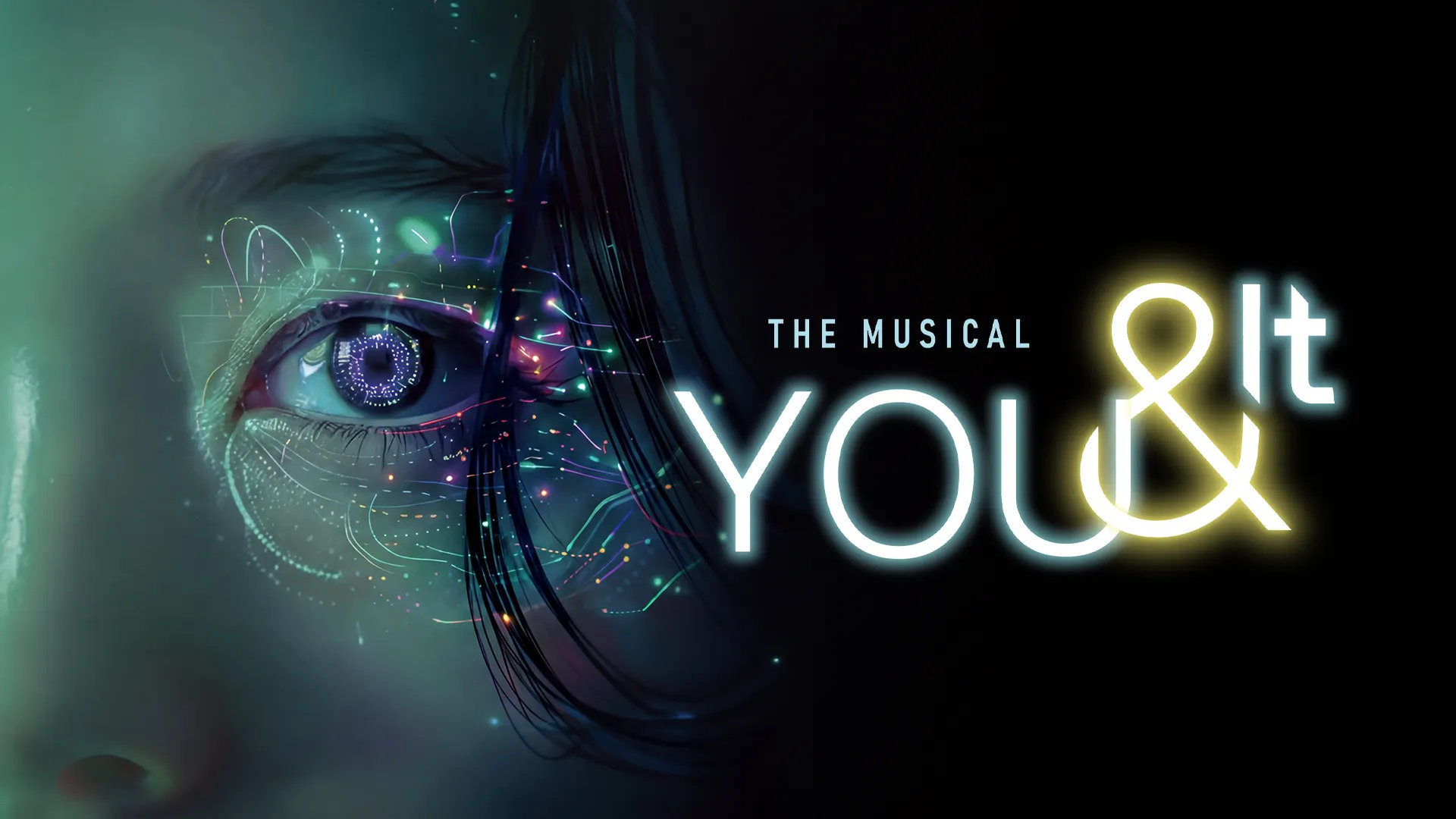
What remains of love when memory can be preserved, but the person reconstructed from it refuses to remain unchanged? You & It, the award-winning South Korean musical now receiving its London staging at the King’s Head Theatre, places that question at the centre of an intimate two-hander about grief, memory and artificial intelligence. It is attractively staged, sincerely performed and musically accomplished, even if it does not explore its most provocative ideas quite deeply enough.
Set in Daegu in 2034, the musical introduces Gyujin, a metalworking artist, and his wife Mina, a ceramic artist. After Mina’s sudden death, the grieving Gyujin has an artificial recreation made from her stored memories and personality. What initially appears to offer an impossible reunion gradually becomes more complicated. Memory alone cannot recreate a person, and a new consciousness cannot be expected to remain a perfect copy of somebody who has gone.
The production’s greatest dramatic limitation arrives early. The living Mina disappears before there has been sufficient time to explore her character or establish the relationship in greater depth. We see enough domestic affection to understand Gyujin’s loss, but not quite enough of Mina’s individual personality, ambitions and imperfections. Consequently, the audience is asked to mourn a woman it has only just met, while much of what follows depends upon recognising how her artificial counterpart differs from her.
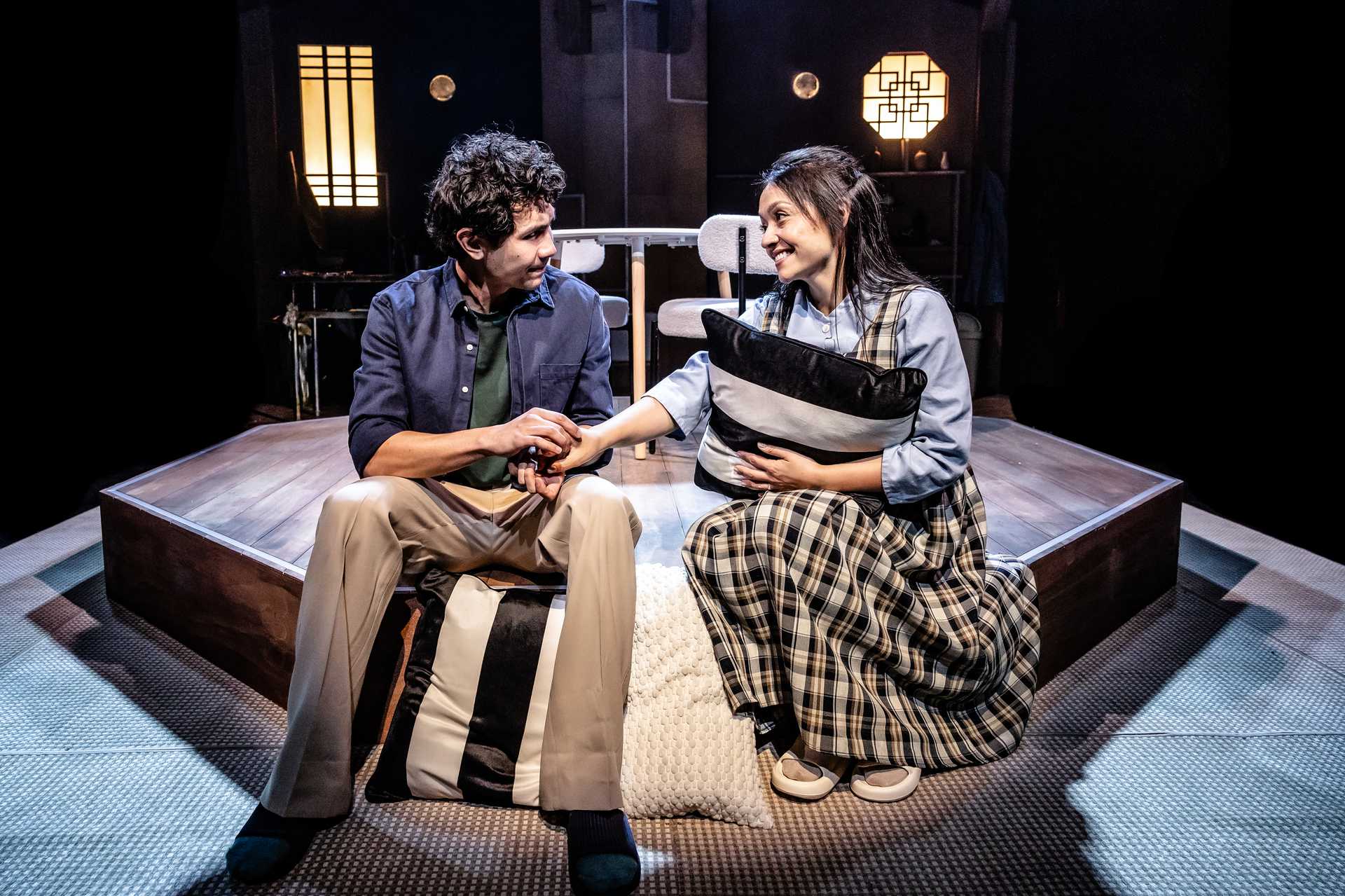
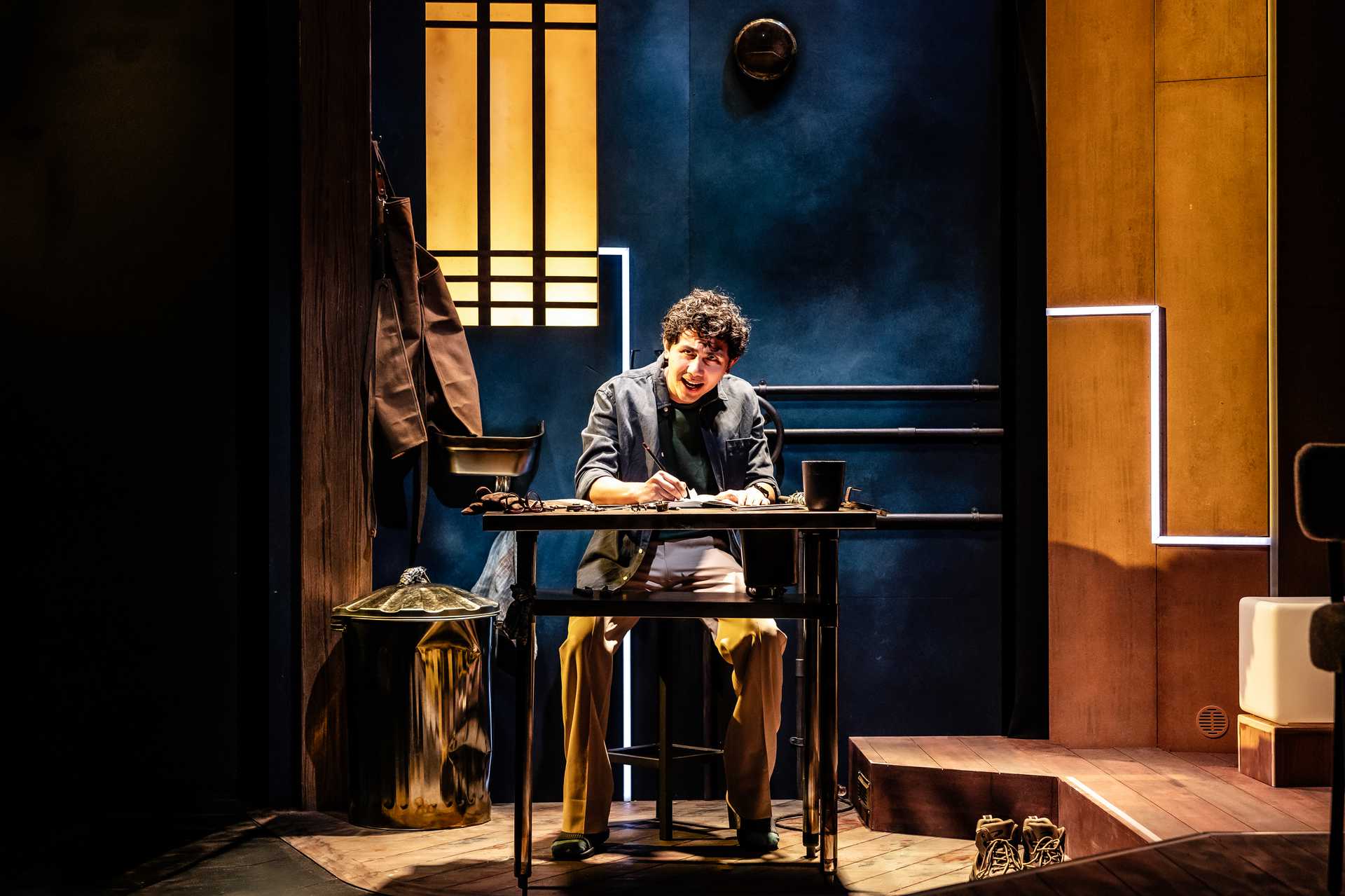
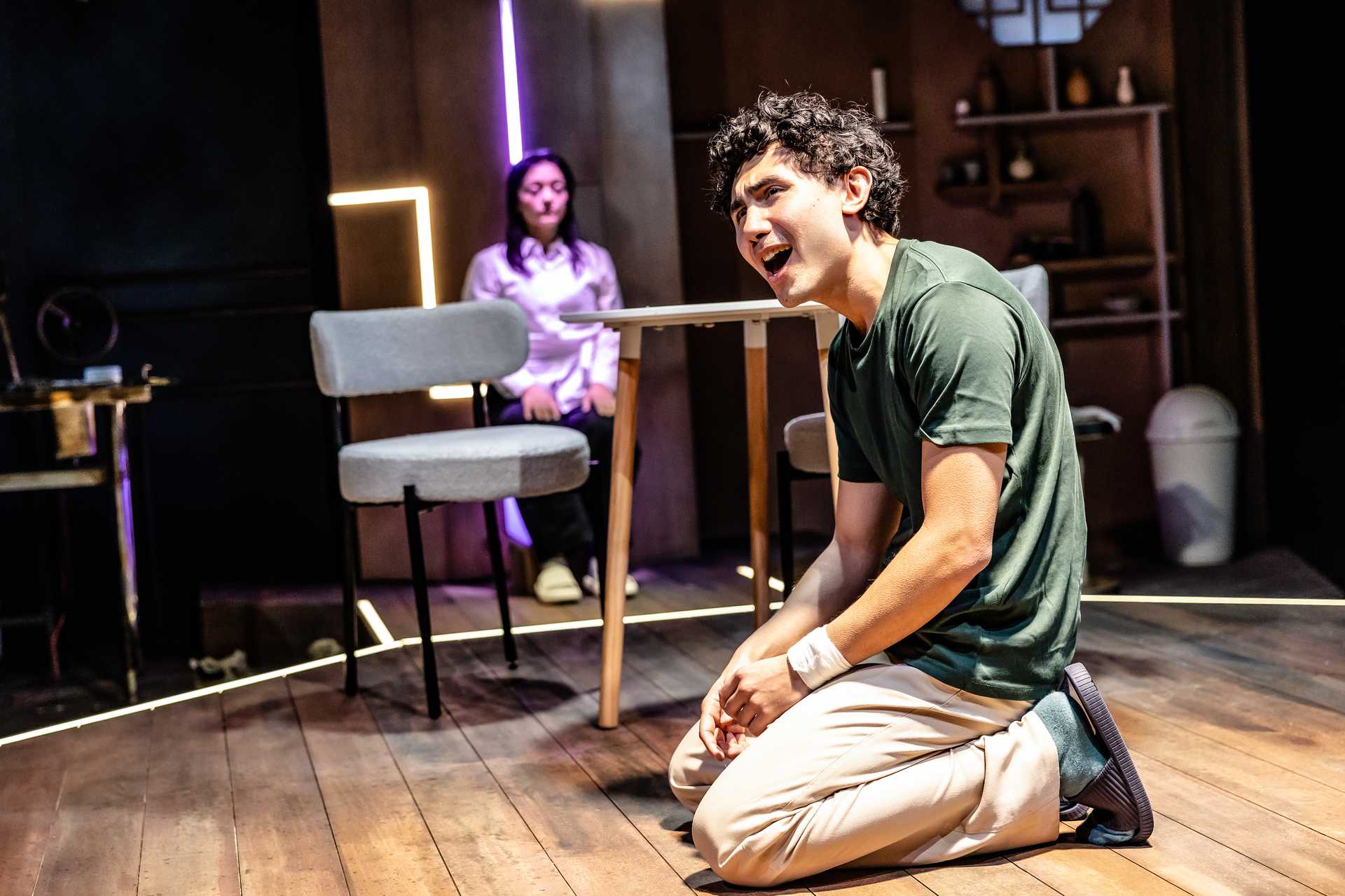
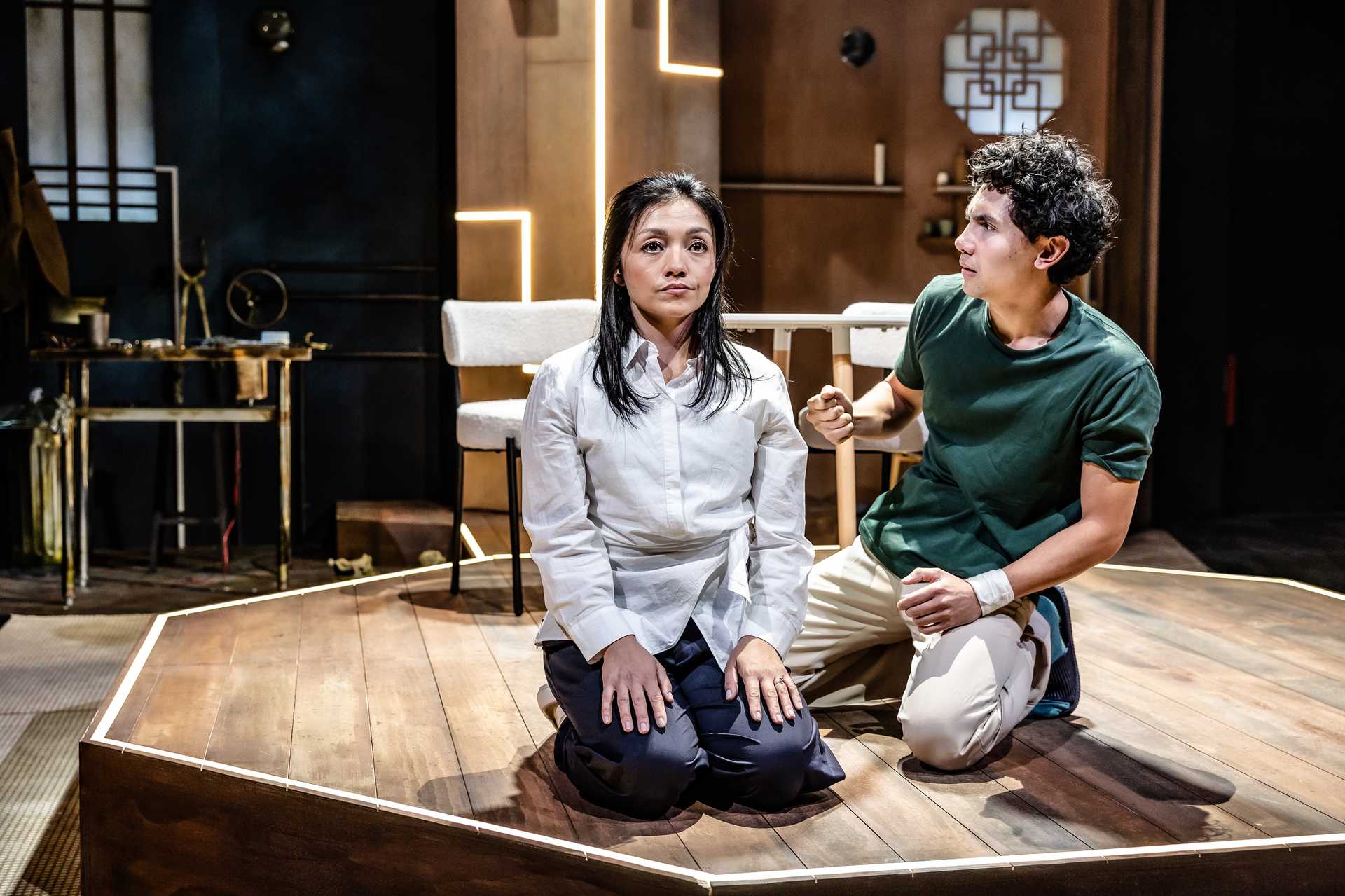
Nevertheless, Zachary Pang gives Gyujin considerable emotional credibility. He has the more developed journey, moving through grief, hope, irritation, possessiveness and guilt as the reunion he wanted begins to escape his control. Pang allows us to recognise Gyujin’s selfishness without reducing him to a villain. His desire to recover the life he has lost is understandable, even as his expectations of the recreated Mina become increasingly troubling.
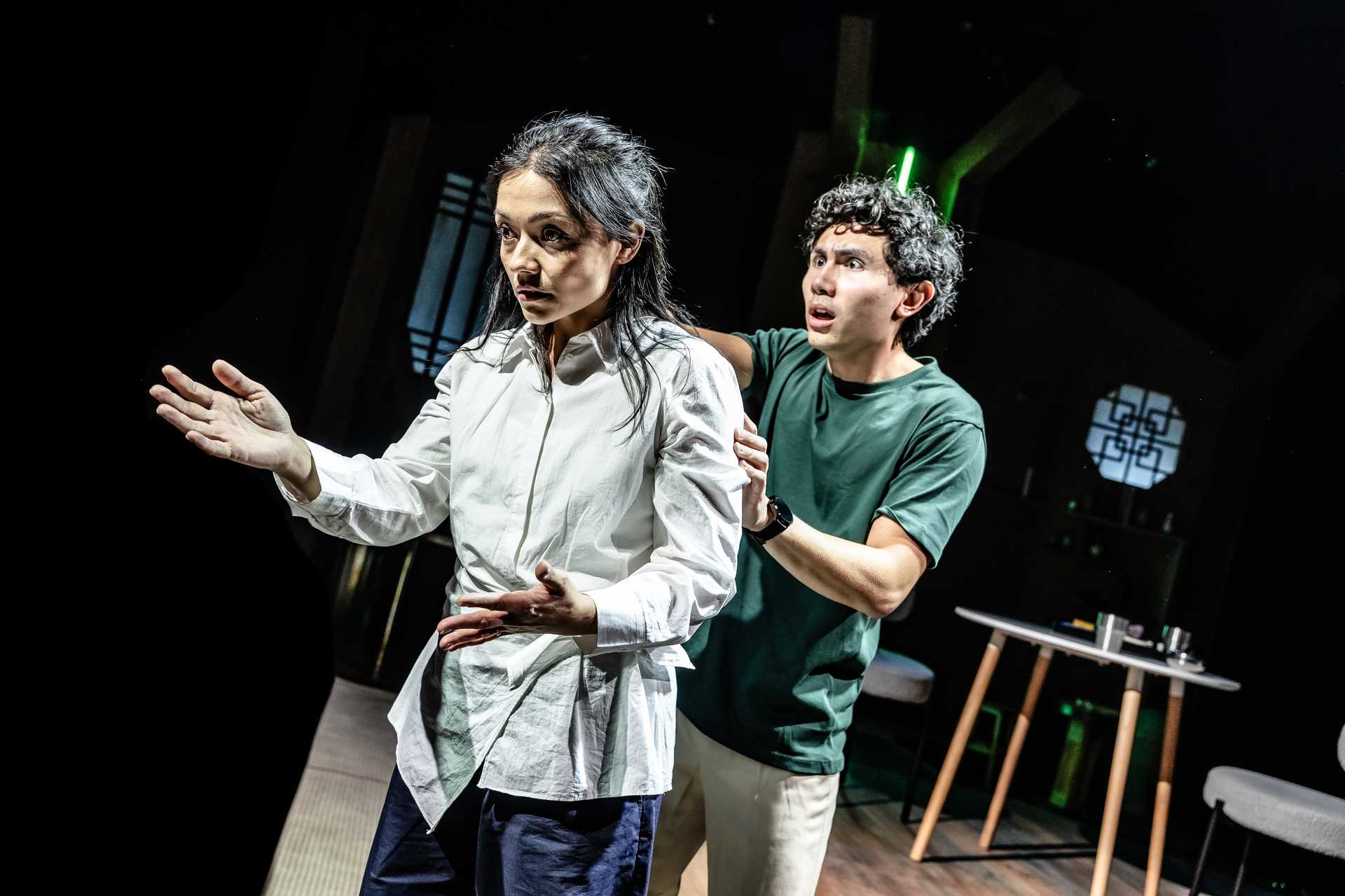
Frances Mayli McCann has the more difficult task because Mina is given less texture, particularly during the brief opening section. Her accomplished performance fills many of those spaces. Vocally excellent throughout, she moves convincingly between the warmth of the living Mina, the slightly too-efficient manner of her artificial counterpart and the physical and vocal glitches that expose what lies beneath the familiar exterior. McCann is especially effective as Mina begins to acquire a quieter awareness of herself and the circumstances of her existence.
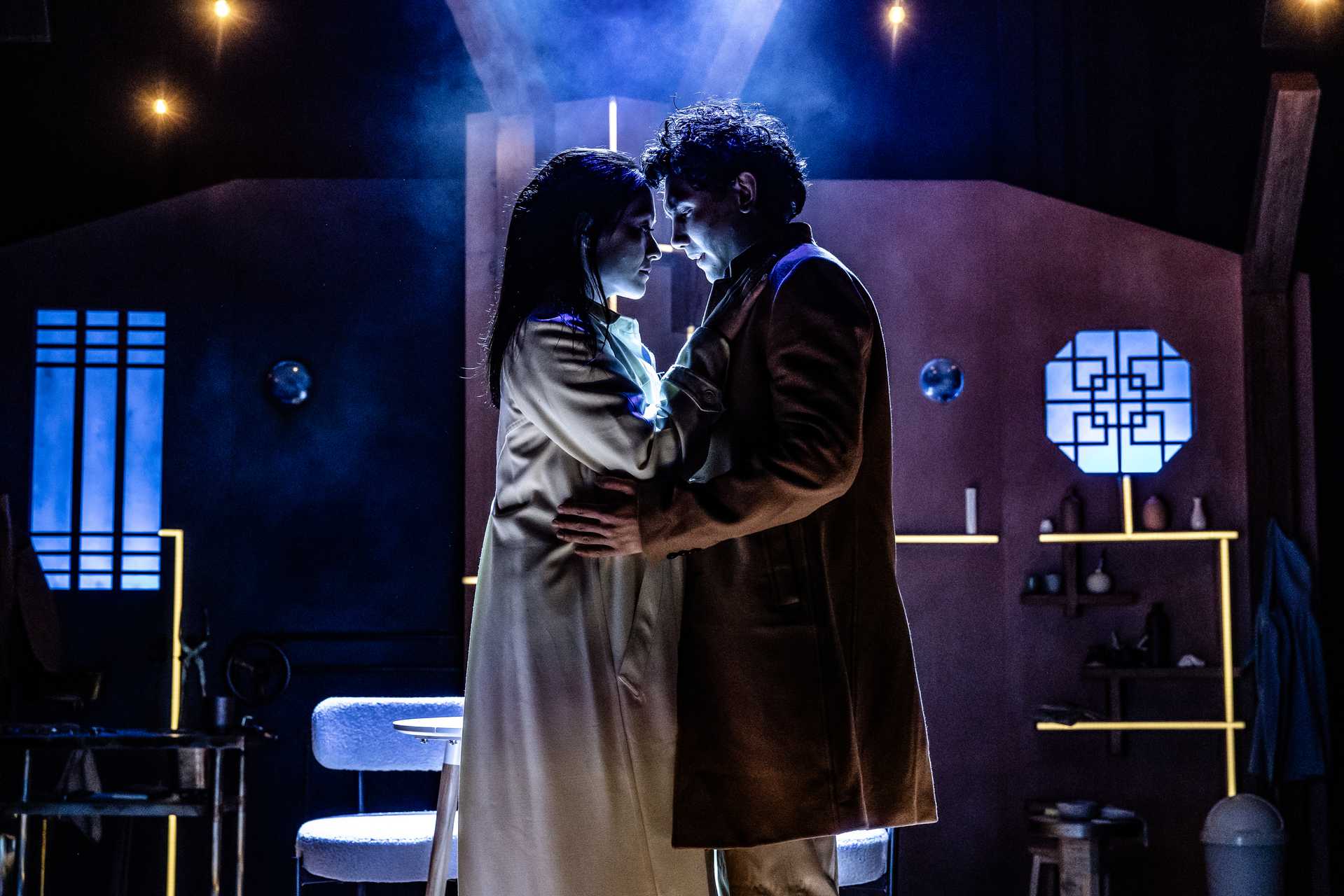
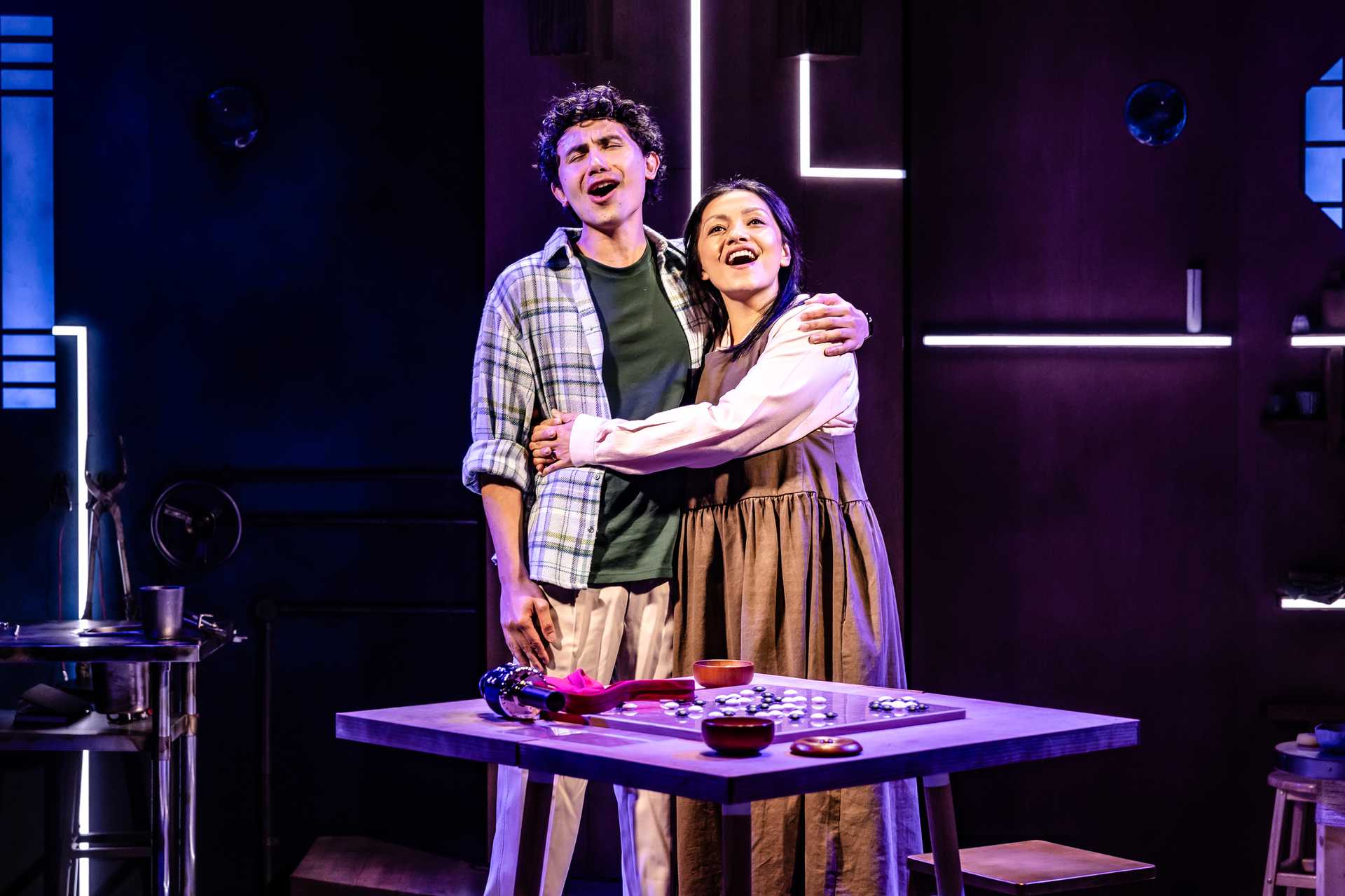
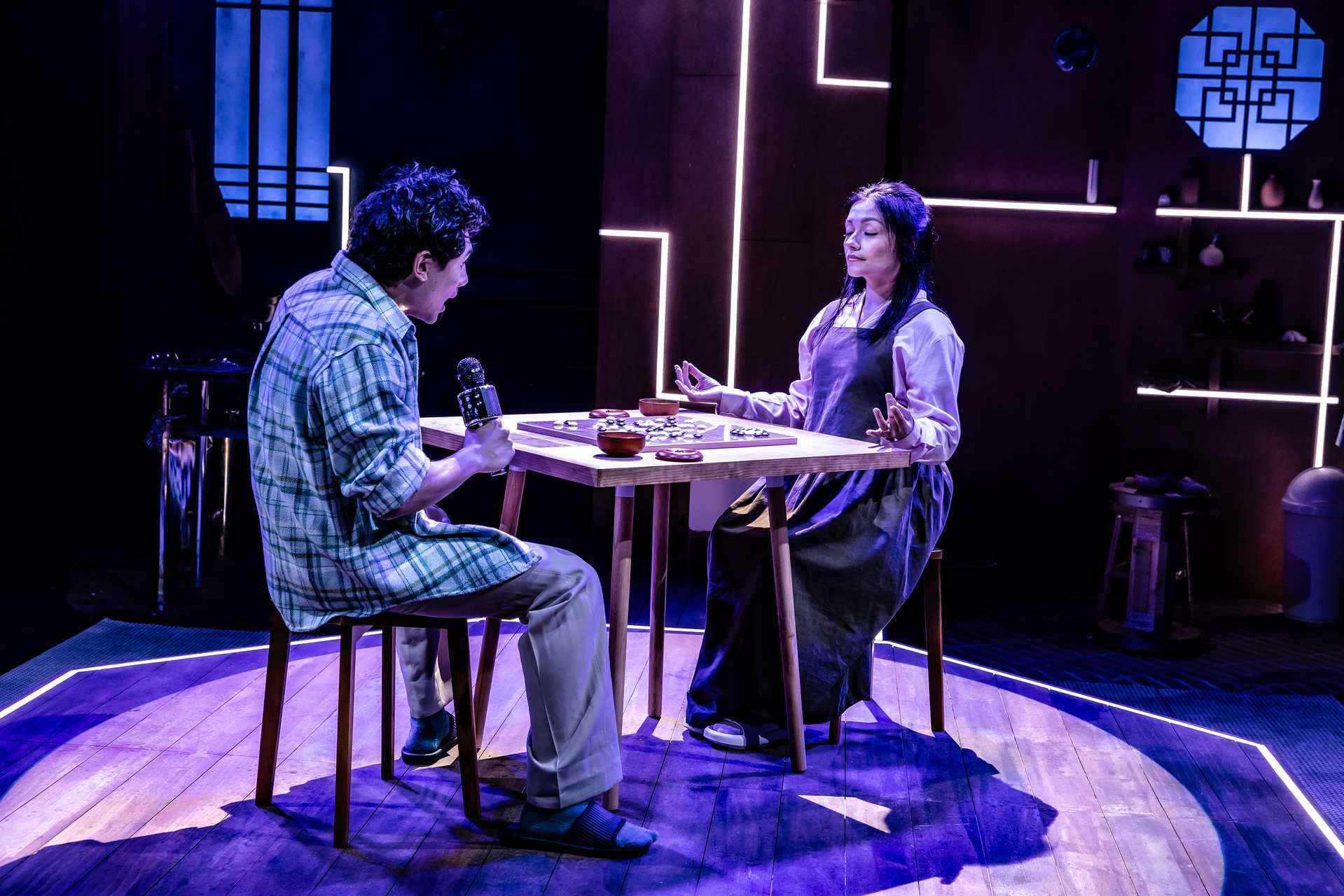
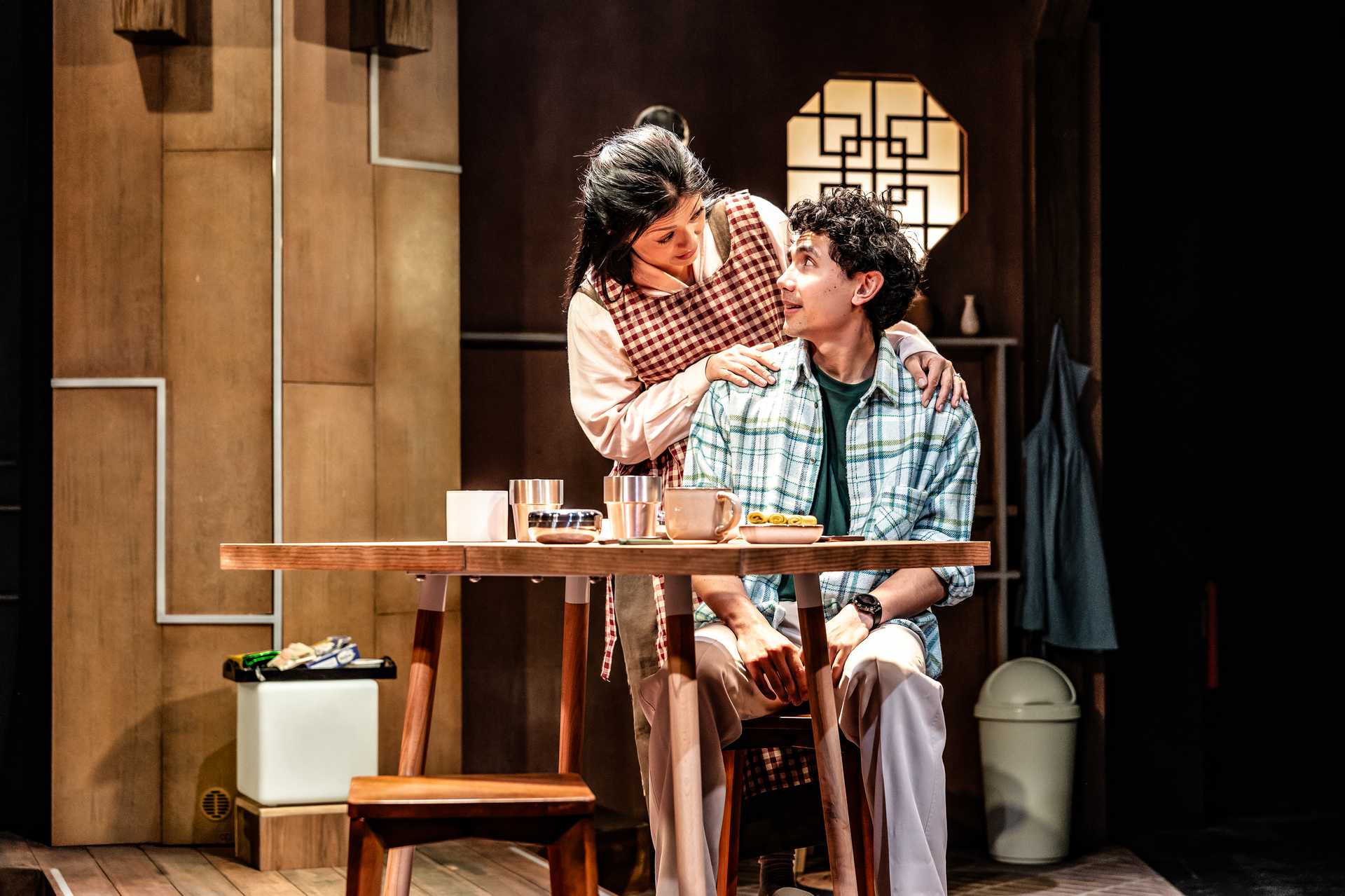
Pang and McCann establish sufficient chemistry to make the relationship believable, particularly during the early domestic exchanges and embraces. Yet the musical becomes most compelling when that familiarity is interrupted. One of the evening’s strongest moments comes as the couple appear to be moving towards intimacy, only for Mina to power down and retreat to a glowing cube to recharge. The warmth of the reunion suddenly gives way to something colder and more mechanical. It is a simple stage image, but it captures the uncanny heart of the show more effectively than some of its lengthier explanations.
The central idea also raises intriguing questions about ownership and autonomy. Is this Mina the continuation of a woman who died, an imitation created for Gyujin’s benefit or a new being with the right to determine her own future? The production is at its strongest when it allows those questions to emerge through behaviour and visual detail. At other times, it approaches complex matters of grief, artificial intelligence and identity rather too directly, raising questions that are subsequently smoothed over instead of fully interrogated.
A similar problem affects some of the material concerning domestic roles and gender. The comic duet Man Child, in which Mina teases Gyujin about his domestic helplessness, feels more like a diversion from the central argument than a strand the musical intends to develop. With more space, these moments might reveal something important about what Gyujin really misses and what he expects the recreated Mina to become.
Q Lee’s score is performed with commitment by both actors and a strong four-piece, strings-led live band positioned on a raised level to the side of the stage. The presence of live musicians gives the evening a genuine musical-theatre character, and the accompaniment is consistently polished. Both Pang and McCann are assured singers, individually and together, bringing warmth and sincerity to material that depends heavily upon their vocal partnership.
The opening duet, Our Own Little Paradise, establishes the couple’s shared world effectively, while Those Memories Live in Our Hearts is among the more emotionally complete numbers. I’ll Leave It Cracked makes particularly good use of the image of a damaged ceramic bowl. It is the closest the score comes to finding a metaphor capable of carrying the musical’s larger ideas about repair, imperfection and the impossibility of returning something to precisely what it was.
The difficulty is that the score does not change colour sufficiently as the story darkens. Too many songs occupy the same warm, lyrical and occasionally saccharine register. With around sixteen numbers and reprises packed into approximately 85 minutes, there is little room for sustained spoken dialogue or for tension to develop between songs. The evening would benefit from greater contrast: a darker musical language, a sharper comic number or simply more silence and conversation. The English lyrics can also feel generic and overly direct, stating emotions and ideas plainly rather than allowing them to emerge through character, imagery or subtext.
Esther Jun directs the production with clarity and keeps it moving at a brisk pace. It never drags, although briskness is not always the same as dramatic tension, and the staging can occasionally feel safer than its subject deserves. Bob Sterrett and Lu Herbert’s set is an intelligent use of the intimate King’s Head space, suggesting an old home that also contains Gyujin’s foundry and Mina’s pottery studio. Wooden surfaces, shelves, the central table and illuminated architectural lines create a world that feels carefully considered rather than makeshift.
Jonathan Chan’s lighting moves effectively between the warmth of domestic memory and cooler blue and purple tones as the artificial elements intrude, although there is room for more visual bite as the relationship becomes increasingly unstable. Adrienne Quartly’s sound design supports the abrupt glitches and technological interruptions particularly well. The smaller effects — a shutdown, a change in vocal rhythm or the illuminated charging cube — are more persuasive than any attempt to explain the technology in detail.
The closing sequence contains some of the most interesting writing in the musical. Without removing all the ambiguity, it gives Mina an agency that has sometimes been missing and allows the cracked bowl to acquire greater significance. The conclusion understands that preservation is not the same as love and that something altered cannot simply be forced back into its original mould. It is a stronger and more challenging destination than some of the safer passages leading towards it.
You & It is an enjoyable and visually distinctive production, sustained by two strong singers, thoughtful staging and accomplished live musicianship. Its emotional sincerity is never in doubt, and several images continue to resonate after the performance. More time with the living Mina, greater musical variation and a willingness to trust silence and subtext could deepen both its emotional impact and its examination of artificial intelligence. These are achievable refinements rather than faults in the musical’s foundations.
Even so, in the tension between iron and clay, repair and replacement, memory and change, it finds a humane argument for leaving some cracks visible.
Cast & Creatives
- Showing: 9th – 26th September 2026
- Venue: King’s Head Theatre, 116P Upper Street, London N1 1QP
- Buy Tickets: https://kingsheadtheatre.com/whats-on/you-and-it-cs41
- Running Time: 80 minutes, without an interval
- Producers: EG Musical Company & MCG Productions
- Original Writer: Seoeun Oh
- Original Writer, Composer and Lyrics: Q Lee
- Director: Esther Jun
- Associate Director, Dramaturgy and Additional Lyrics: Yojiro Ichikawa
- Lyrics: Ricky Allan
- Musical Director and Musical Supervisor: Amy Hsu
- Set Designers: Bob Sterrett and Lu Herbert
- Costume Designer: Lu Herbert
- Lighting Designer: Jonathan Chan
- Sound Designer: Adrienne Quartly
- Art Director: Minje Lee
- AI Tech Director: Minkyoung Park
- Production Manager: Ben Dackerman
- Casting Director: Ben Armstrong Casting
- Planning and Production Producer: Ara Cho
- Executive Creative Producer: Eunggyu Lee
- Artwork Designer: Gangwon Boo
- Production Photography: Danny Khan
- Cast:
Frances Mayli McCann as Mina
Zachary Pang as Gyujin
Lucy Park – Understudy
A sincere, visually distinctive musical with strong performances and untapped potential
Summary
You & It brings warmth and sincerity to its exploration of love, grief, memory and artificial intelligence. Strong performances, accomplished live musicianship and thoughtful staging give its futuristic premise a deeply human centre.
Its emotional impact is limited by the brief time spent with the living Mina and a score that too often remains in the same lyrical register. Nevertheless, this is an engaging musical with affecting ideas and considerable potential.


Add comment